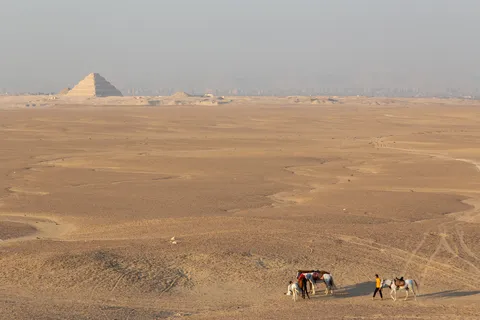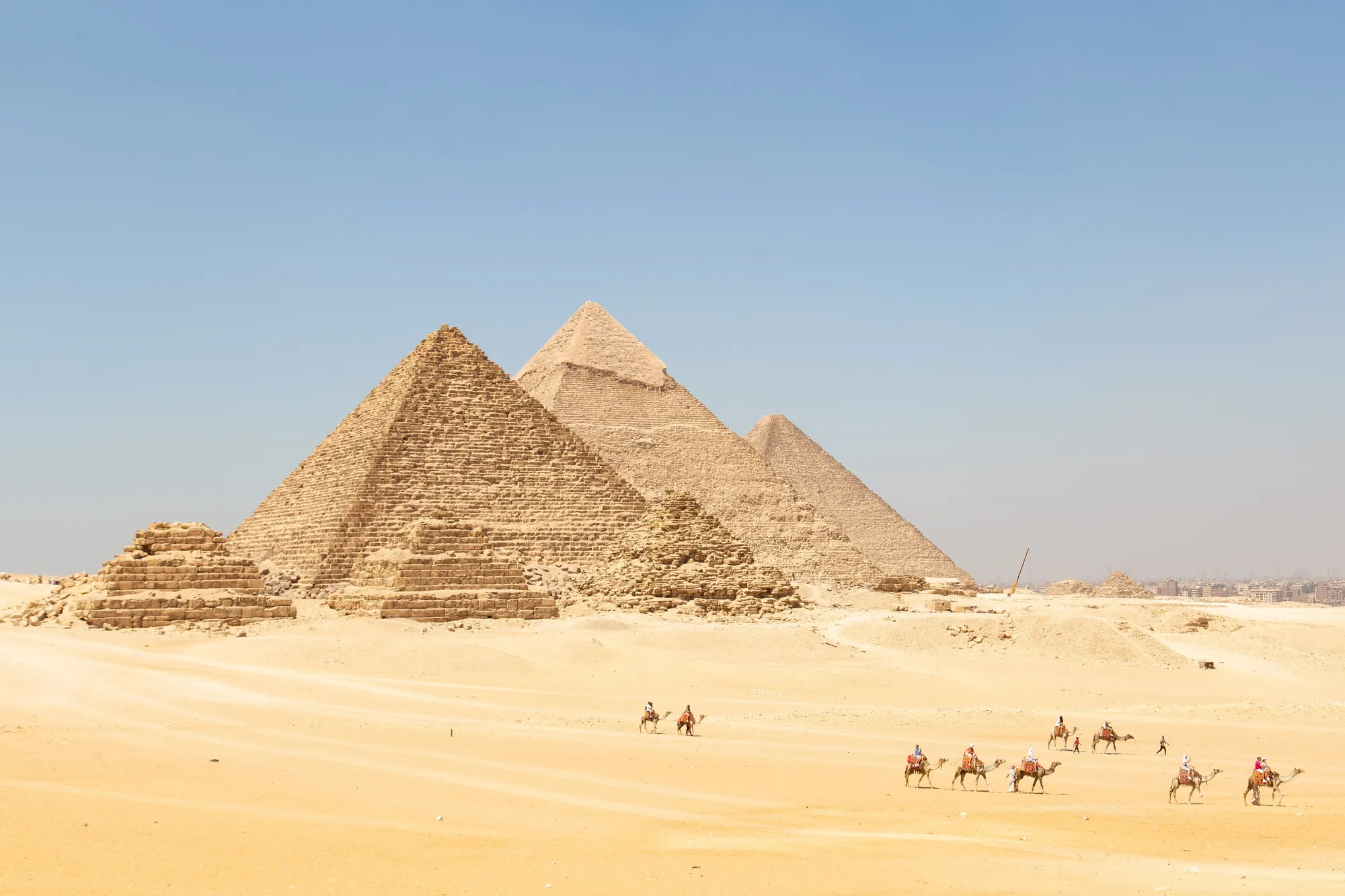
Camel caravan before the Pyramids of Giza, Egypt — Nicolas Marincic

Expeditions

Towards the Confluence

From the Nile Delta to Khartoum

11 July – 21 August 2021

days
42
km
3,568
countries
2Egypt · Sudan
photos
159

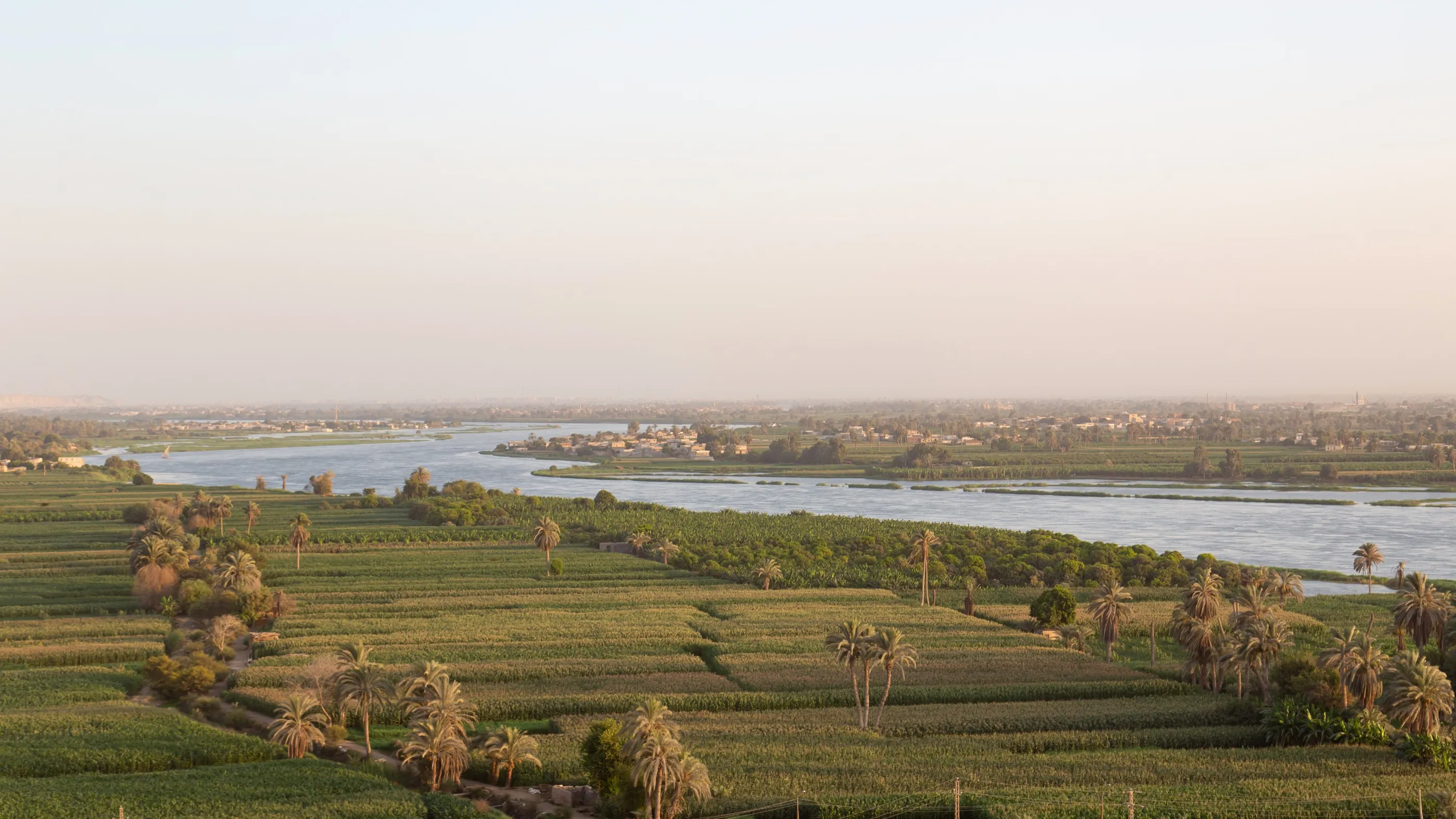
The plan was simple, almost naive: follow the Nile from its delta to its sources. We set out from Cairo in the heart of summer, travelling upriver through the Egypt of the pharaohs, then Nubia and the deserts of Sudan, where Kushite pyramids rise out of the sand.

Geopolitics decided otherwise: the journey ended in Khartoum, at the confluence of the White and Blue Nile. That meeting of two rivers became both an ending and a beginning — a promise to return one day, and to go further south.

  1. Days 1–3

    Cairo

    Egypt

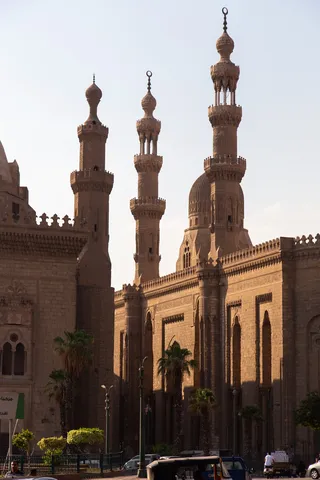
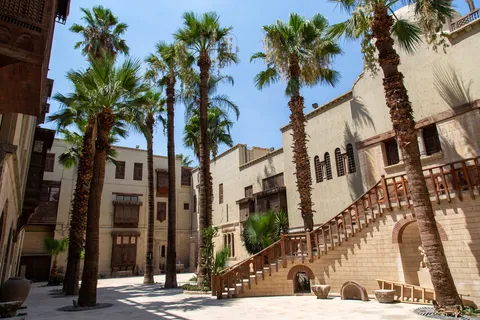
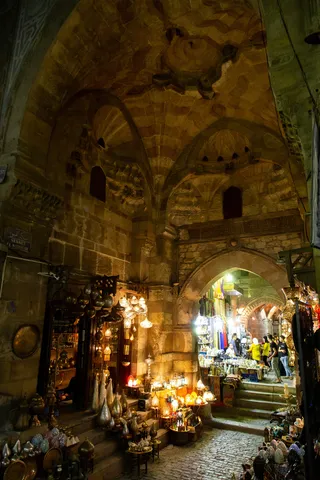
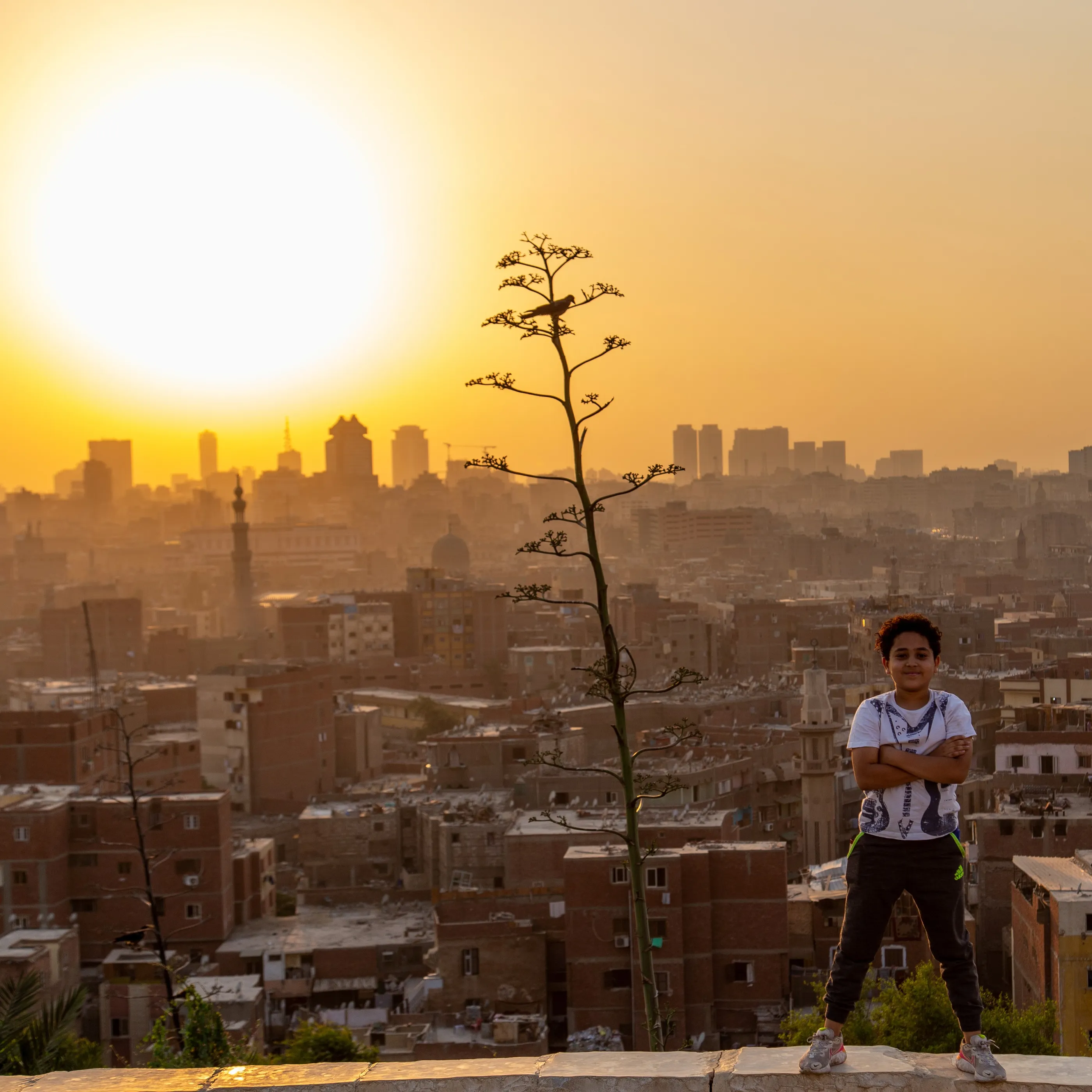
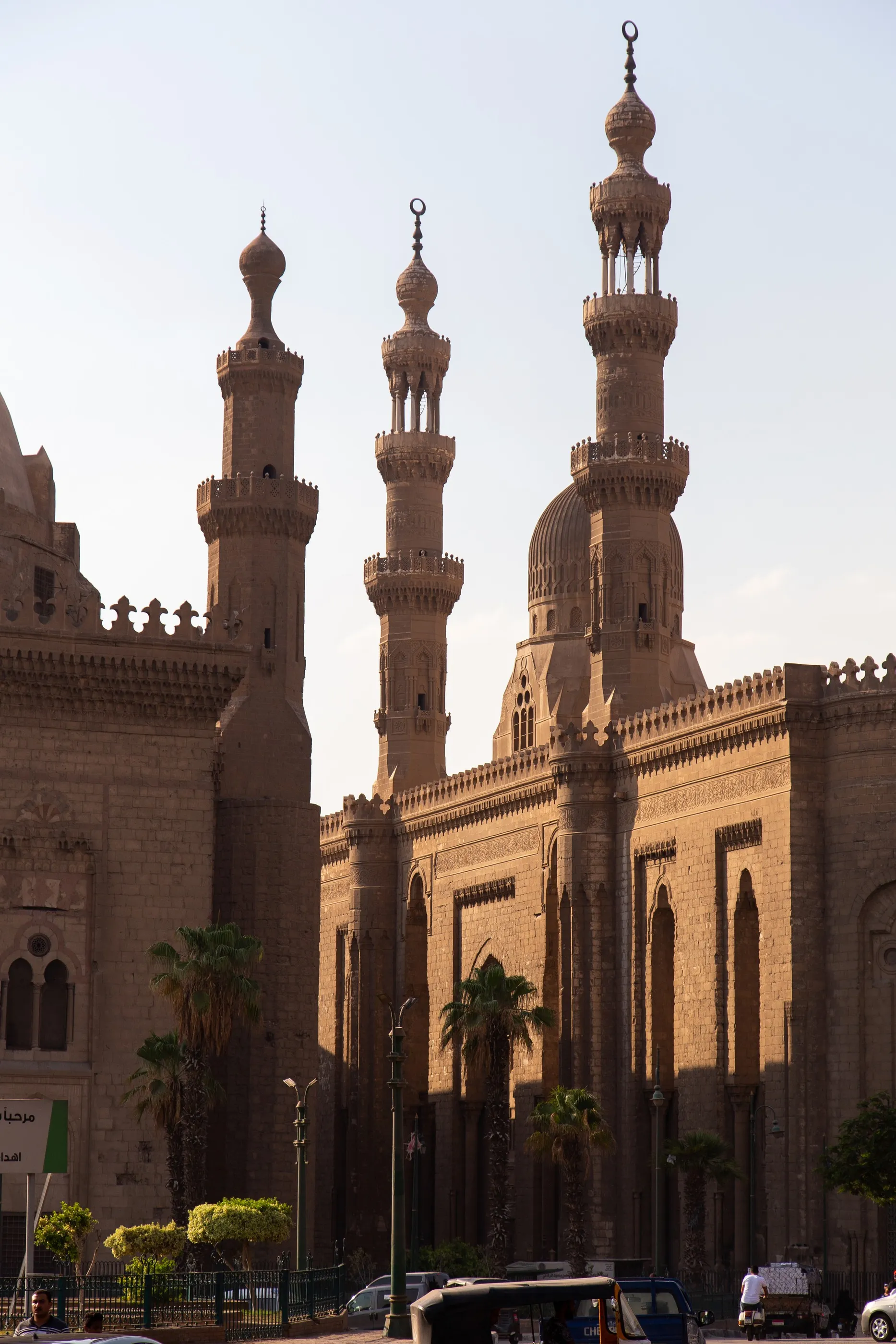
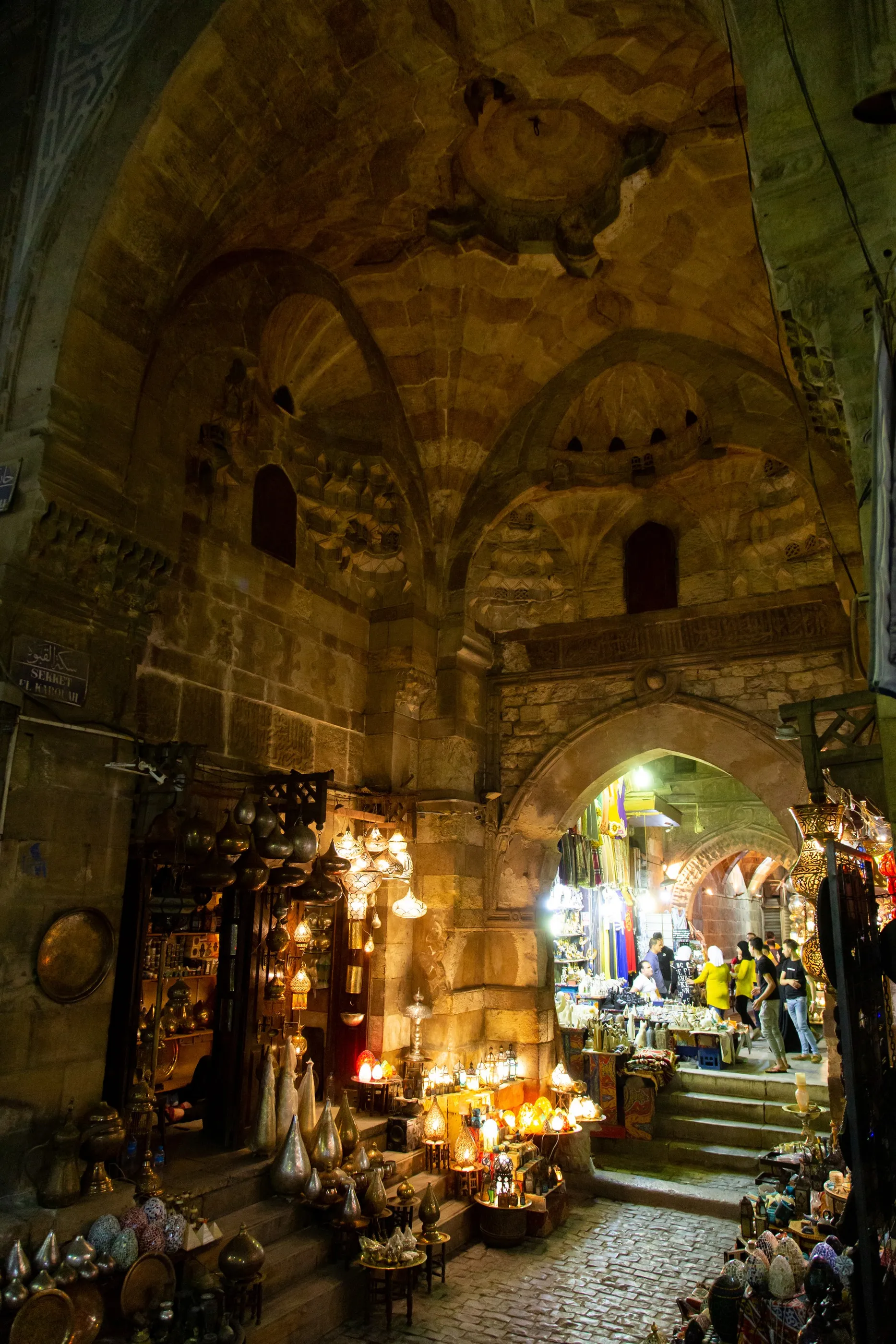
    It all begins in the bustle of Cairo. In the courtyard of Bayt al-Suhaymi and beneath the twin minarets of Sultan Hassan and al-Rifai, Islamic Cairo unfolds its centuries; at the Egyptian Museum the treasures of the pharaohs crowd together in the half-light of old display cases. In the evening, from the heights, the sun sets in a golden haze over a sea of rooftops, and then the lanterns of Khan el-Khalili come on.
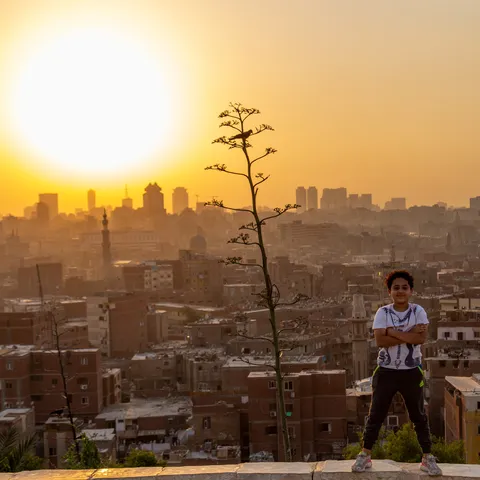
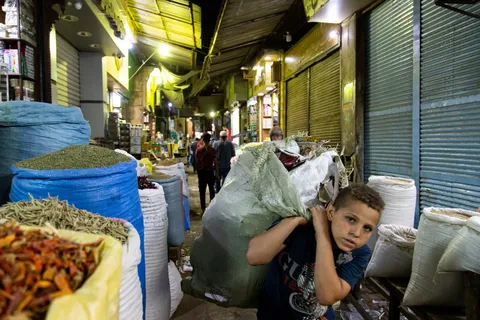
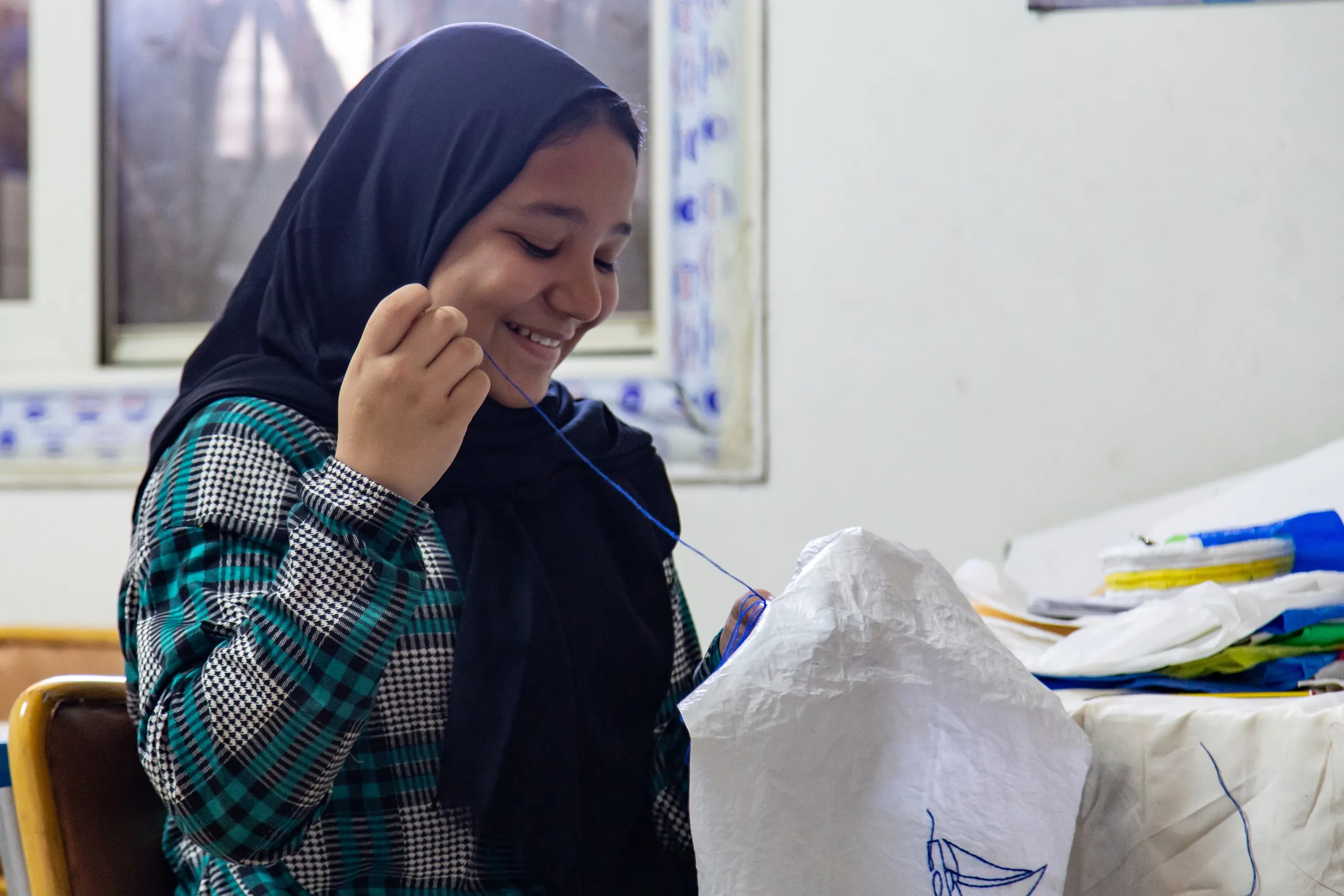
    Child before the sun setting over the city, Egypt — Nicolas MarincicSmiling young woman at work, Egypt — Nicolas MarincicBoy carrying a sack through the spice souk, Egypt — Nicolas MarincicMinarets of Sultan Hassan and al-Rifai, Cairo, Egypt — Nicolas MarincicCourtyard of Bayt al-Suhaymi, Islamic Cairo, Egypt — Nicolas MarincicMain hall of the Egyptian Museum, Cairo, Egypt — Nicolas MarincicLanterns of Khan el-Khalili at night, Cairo, Egypt — Nicolas Marincic
  2. By road↗ 12 km

    Day 3

    Giza

    Egypt

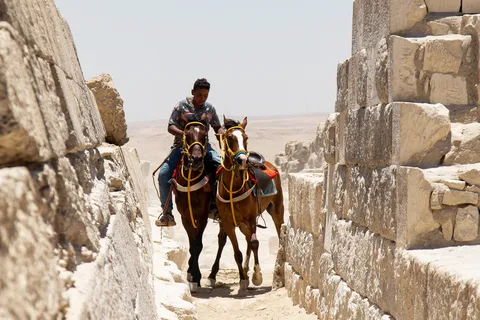
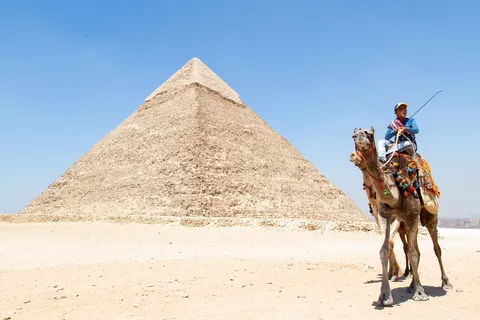
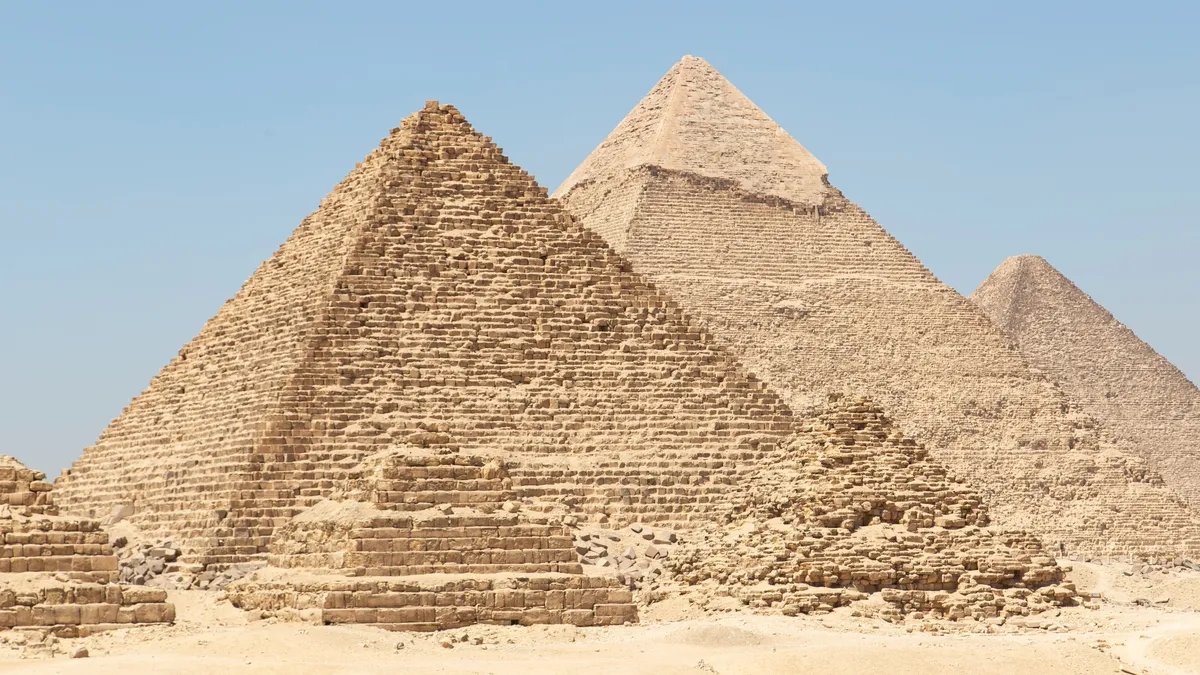
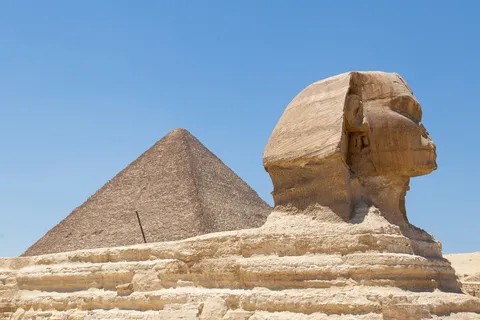
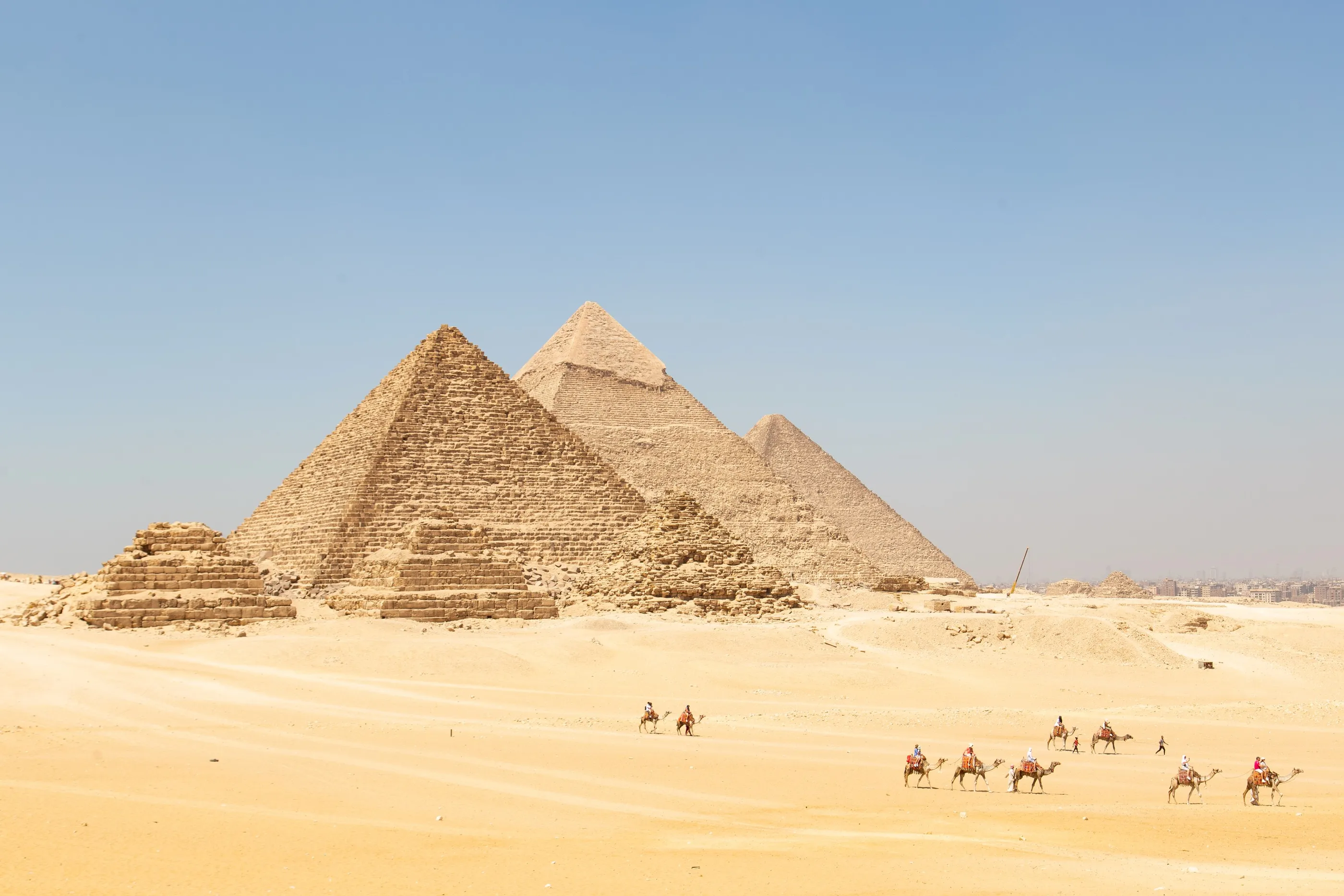
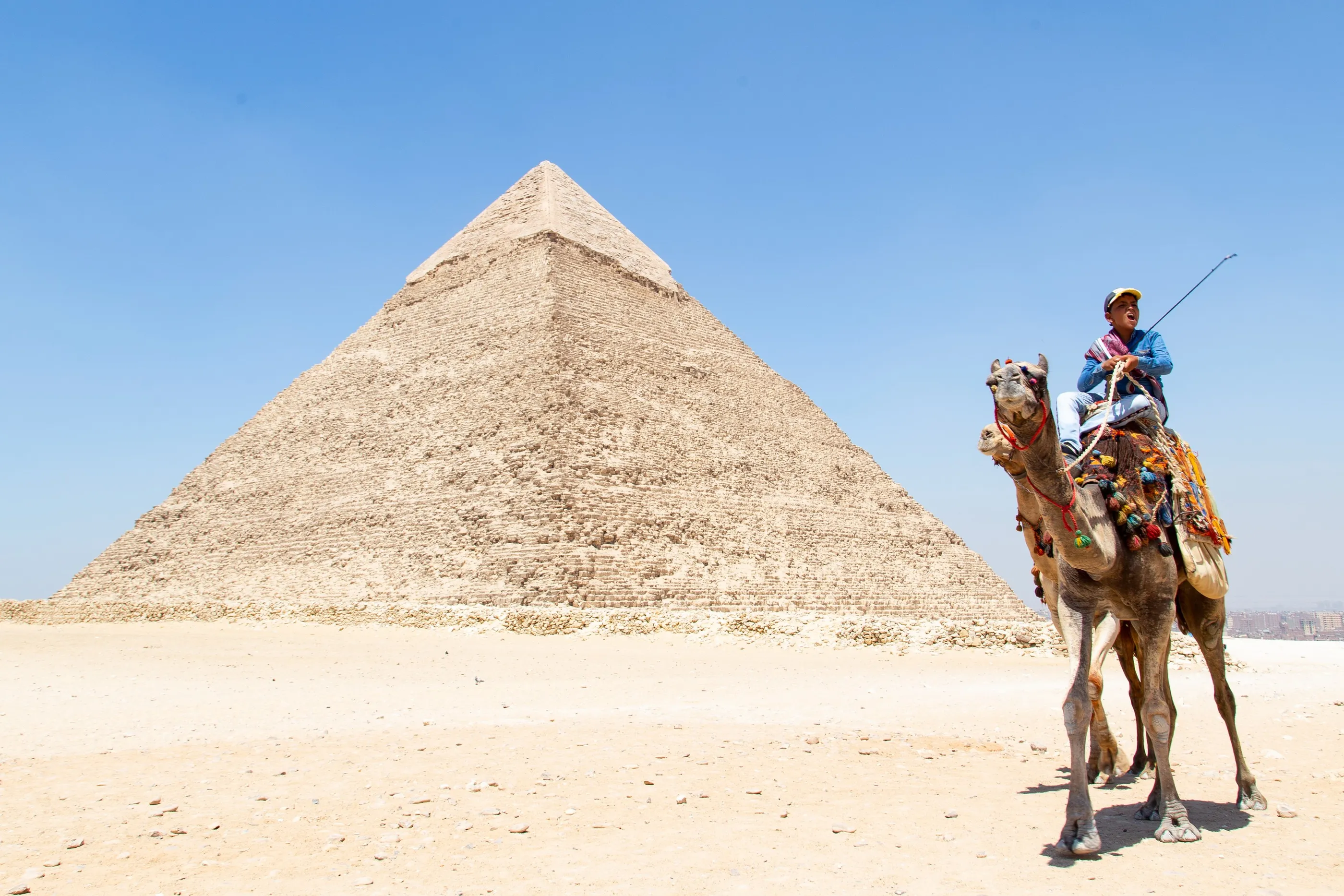
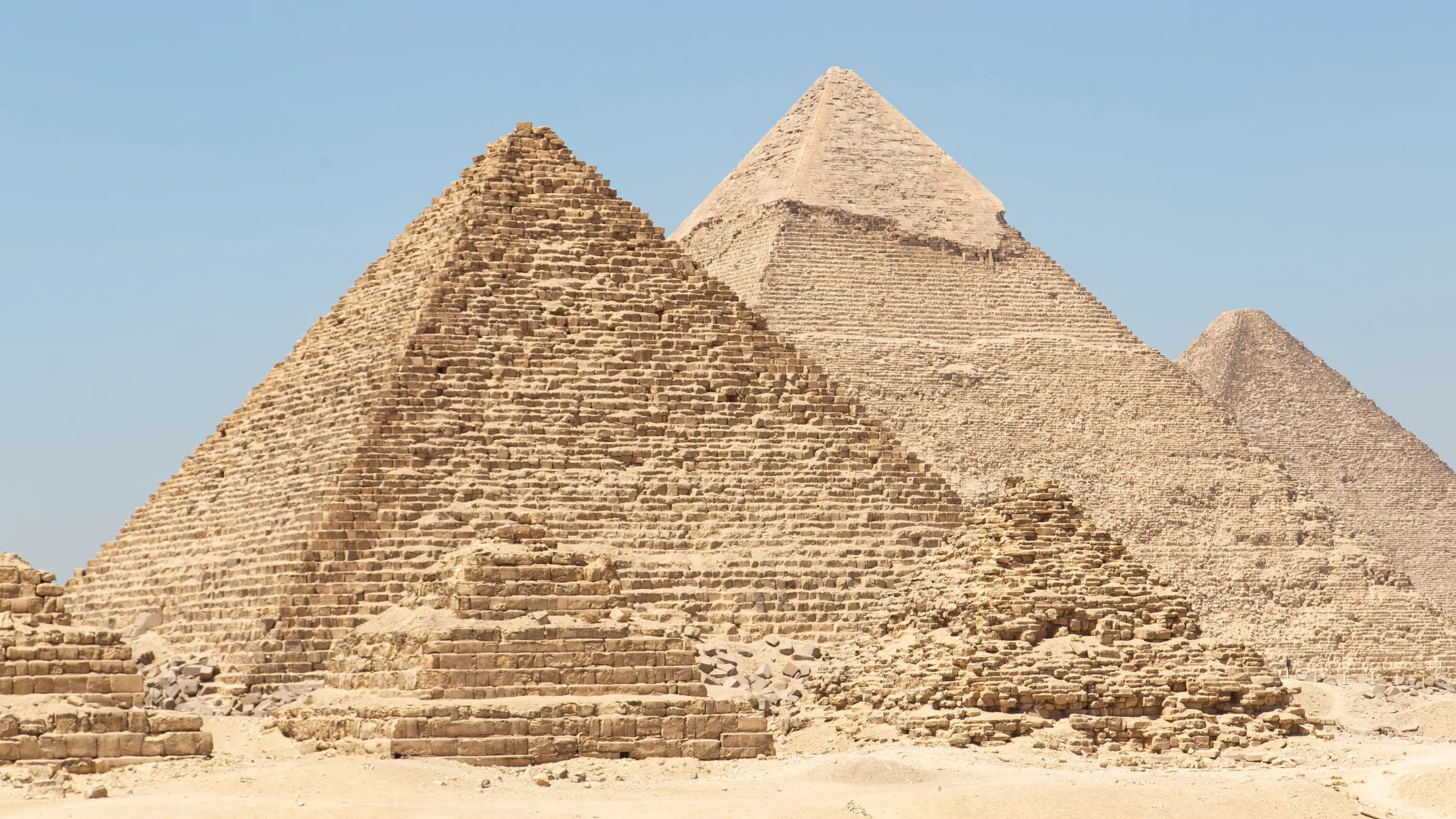
    The pyramids of Giza, overwhelming under the July light, with camel riders who seem to belong to another age. At the foot of the plateau the Sphinx keeps watch over the horizon, the pyramid of Khafre at its back. A first vertigo before the sheer age of this civilisation.
    Camel caravan before the Pyramids of Giza, Egypt — Nicolas MarincicCamel rider below the Pyramid of Khafre, Egypt — Nicolas MarincicRider and horses between stone walls, Egypt — Nicolas MarincicCamel rider before the Pyramid of Khafre, Egypt — Nicolas MarincicPyramids of Giza from the plateau, Egypt — Nicolas MarincicThe Sphinx with a pyramid behind, Giza, Egypt — Nicolas MarincicPyramid of Khafre framed between blocks, Giza, Egypt — Nicolas Marincic
  3. By road↗ 14 km

    Days 4–5

    Memphis, Dahshur and Saqqara

    Egypt

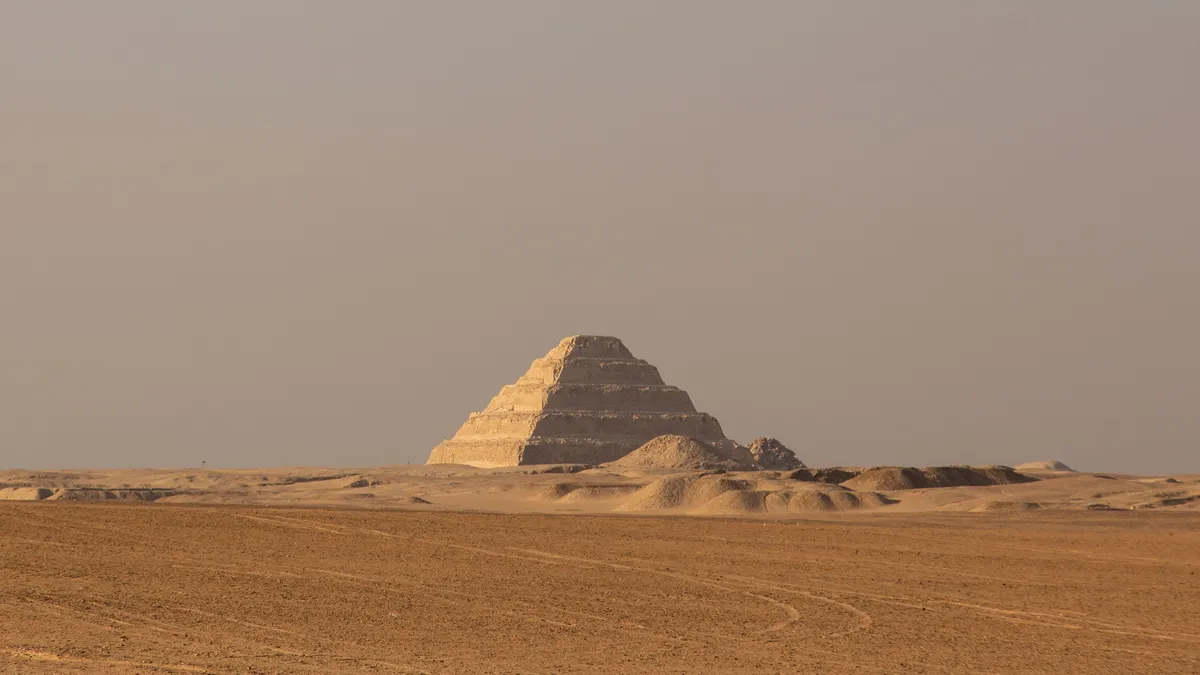
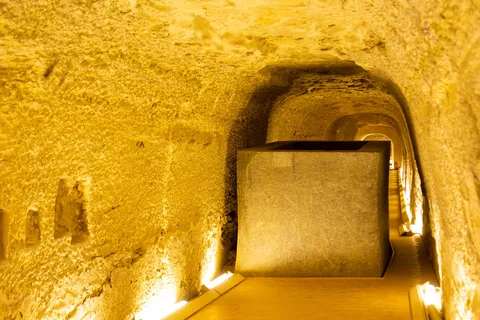
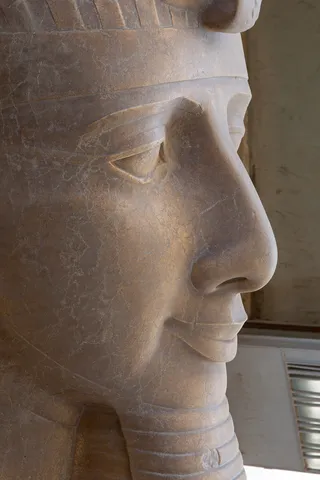
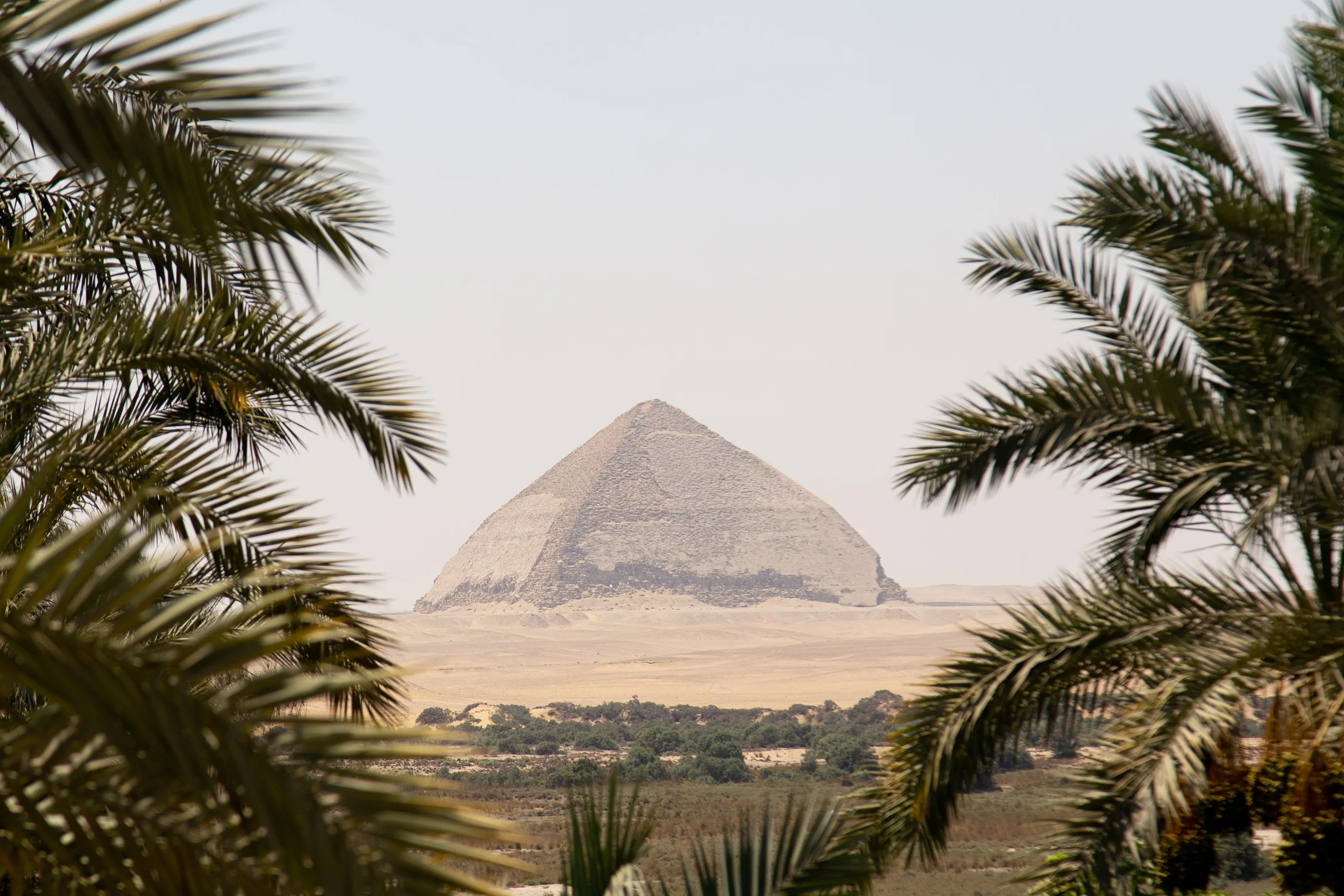
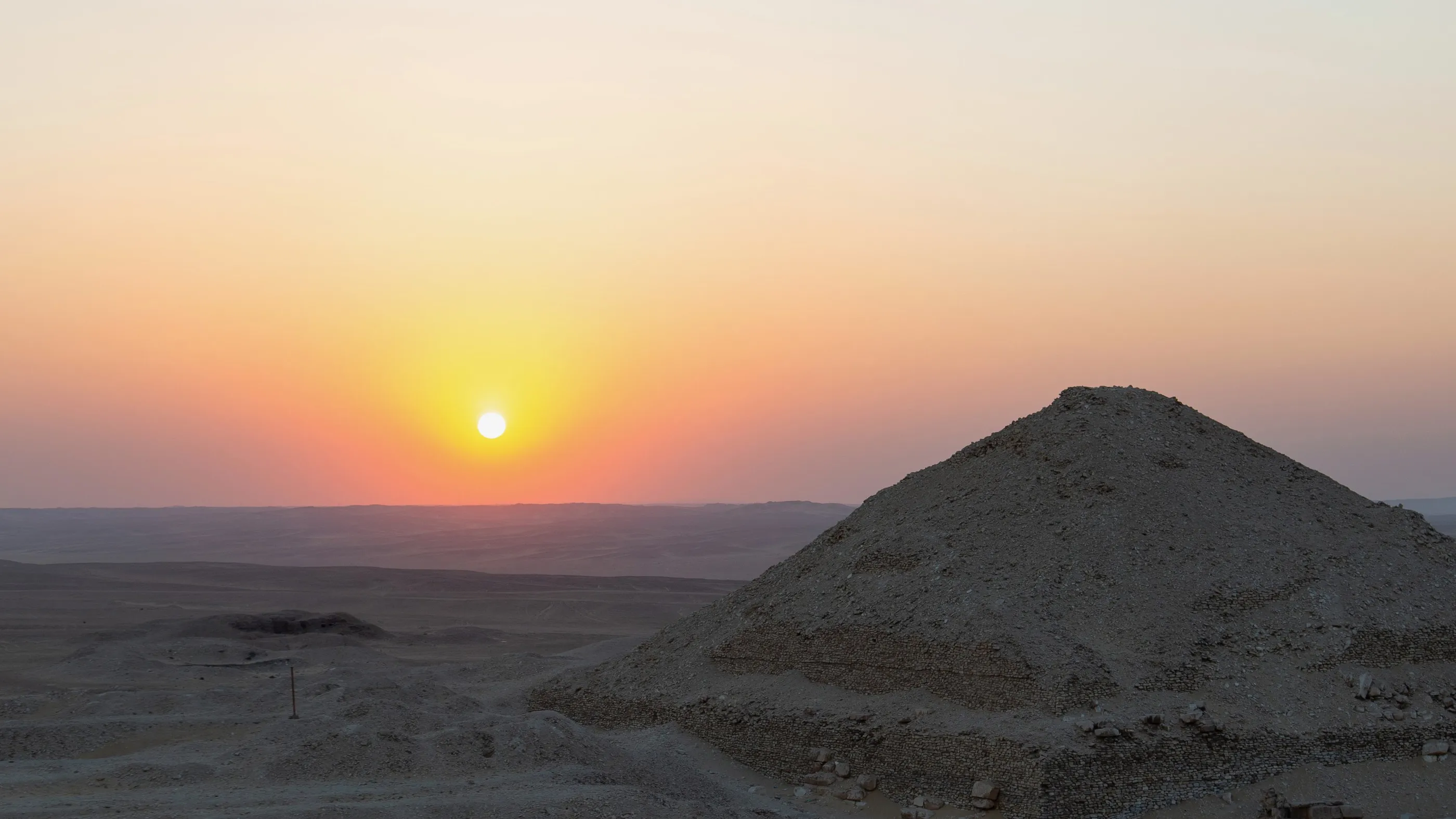
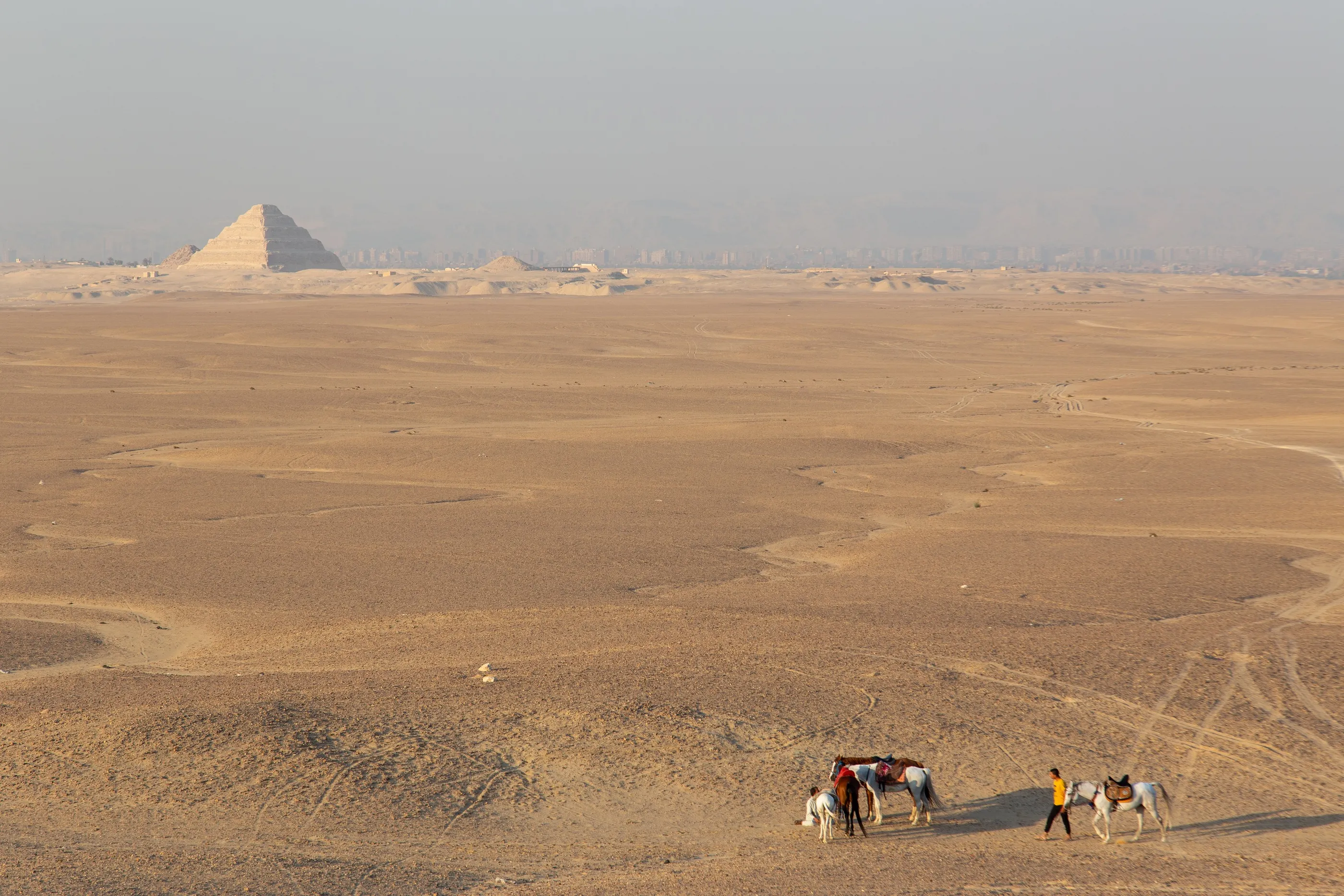
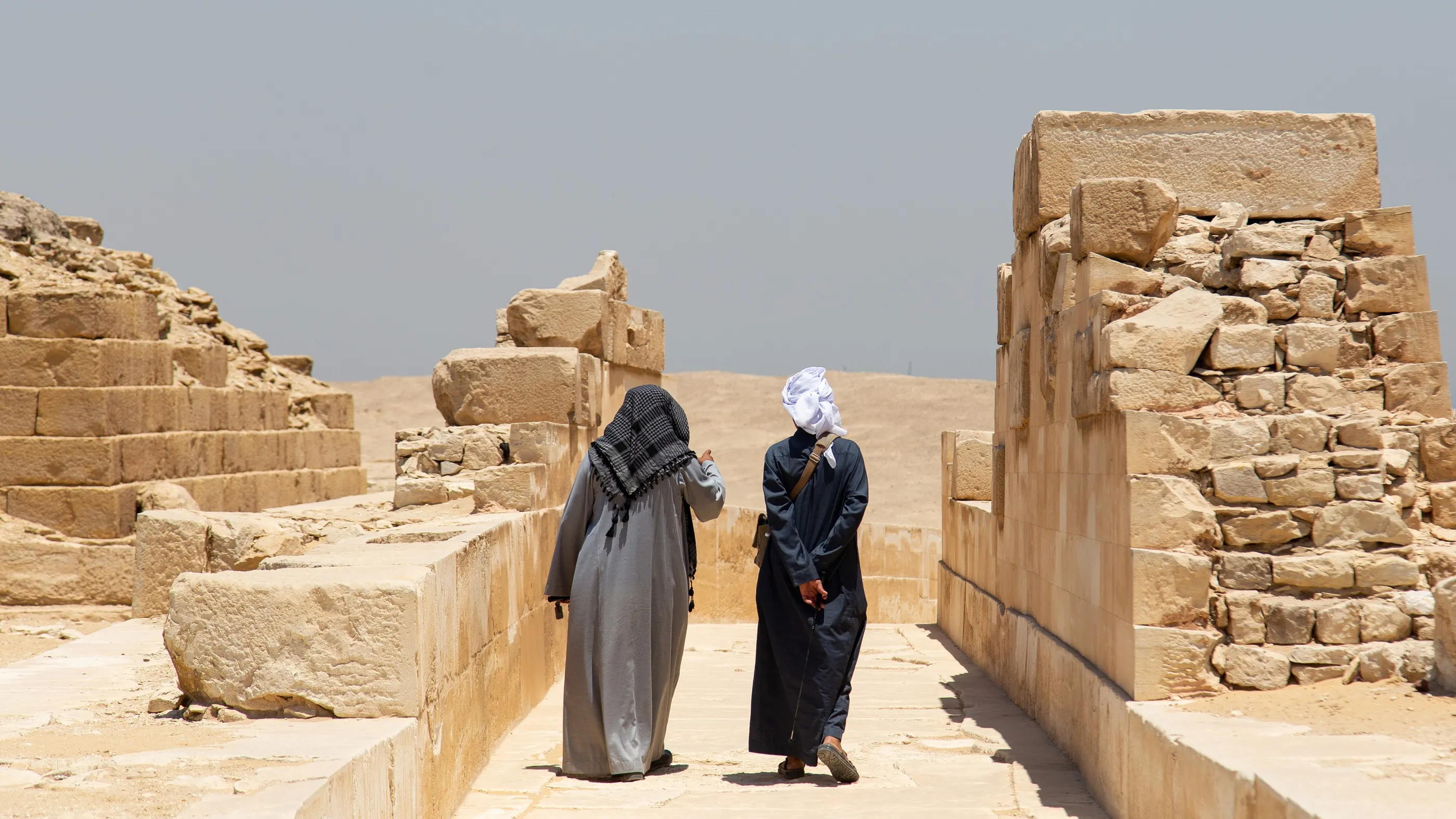
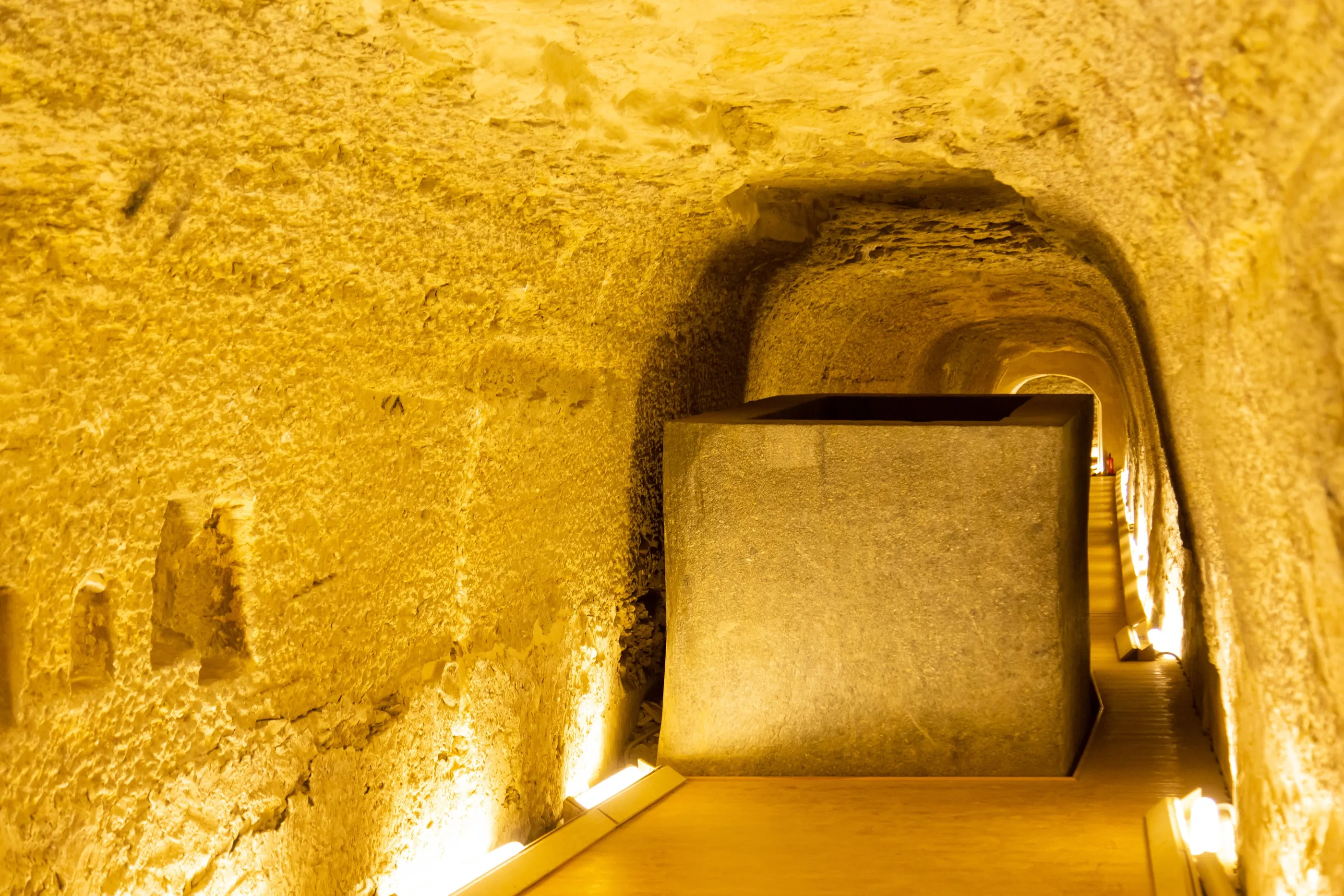
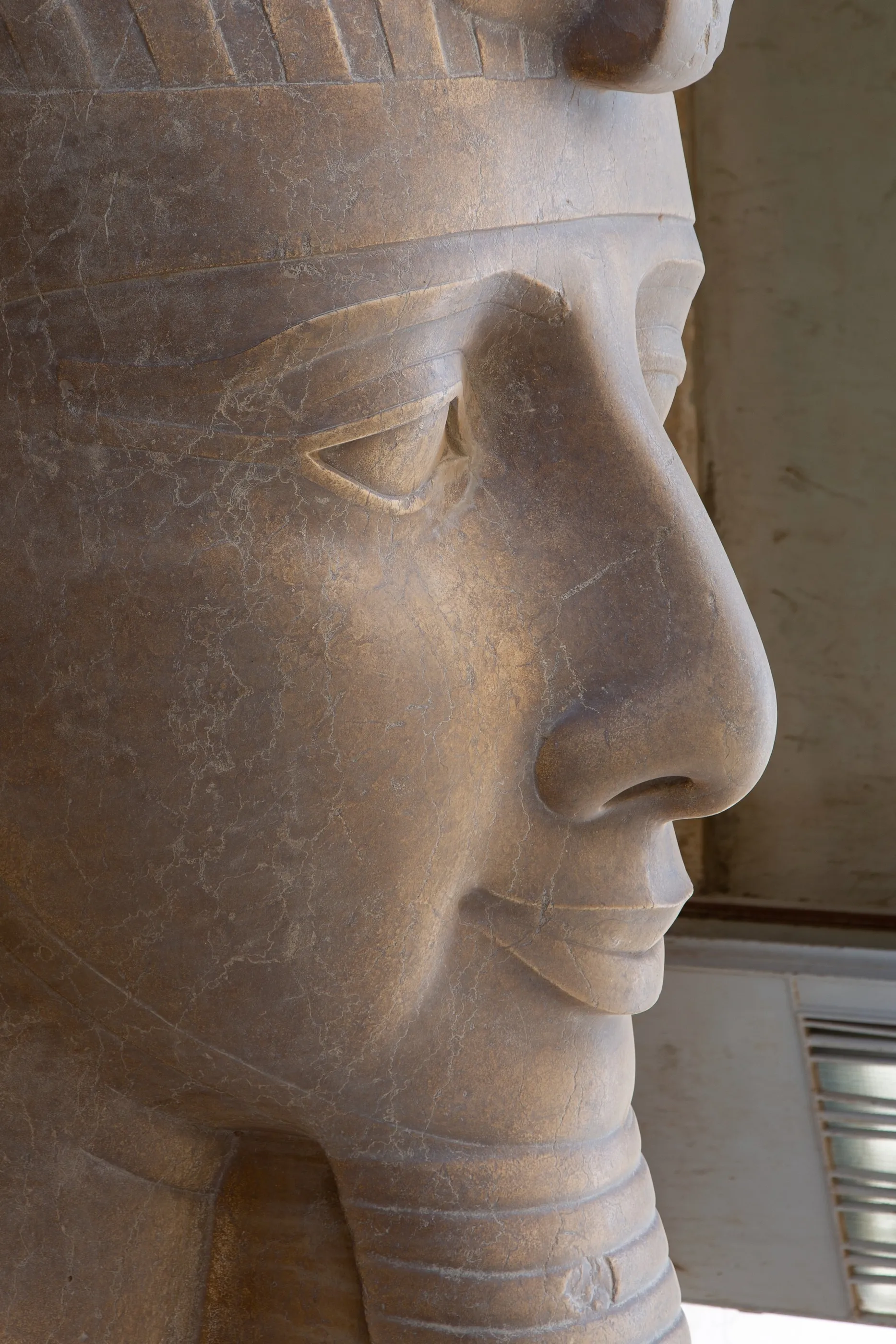
    Further south, at Memphis, the colossus of Ramesses II lies on its back, face turned to the sky. At Dahshur the Bent Pyramid stands almost alone in the desert, and we climb down into the corbelled chambers of the Red Pyramid. At Saqqara, Djoser’s Step Pyramid marks the beginning of it all, while underground, in the galleries of the Serapeum, huge granite sarcophagi wait in the gloom.
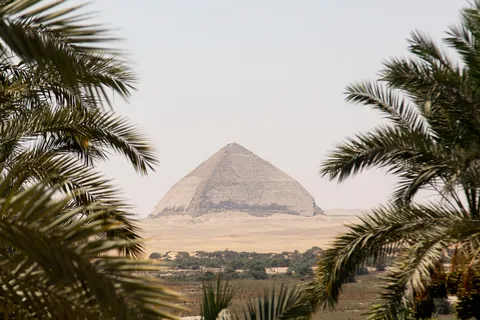
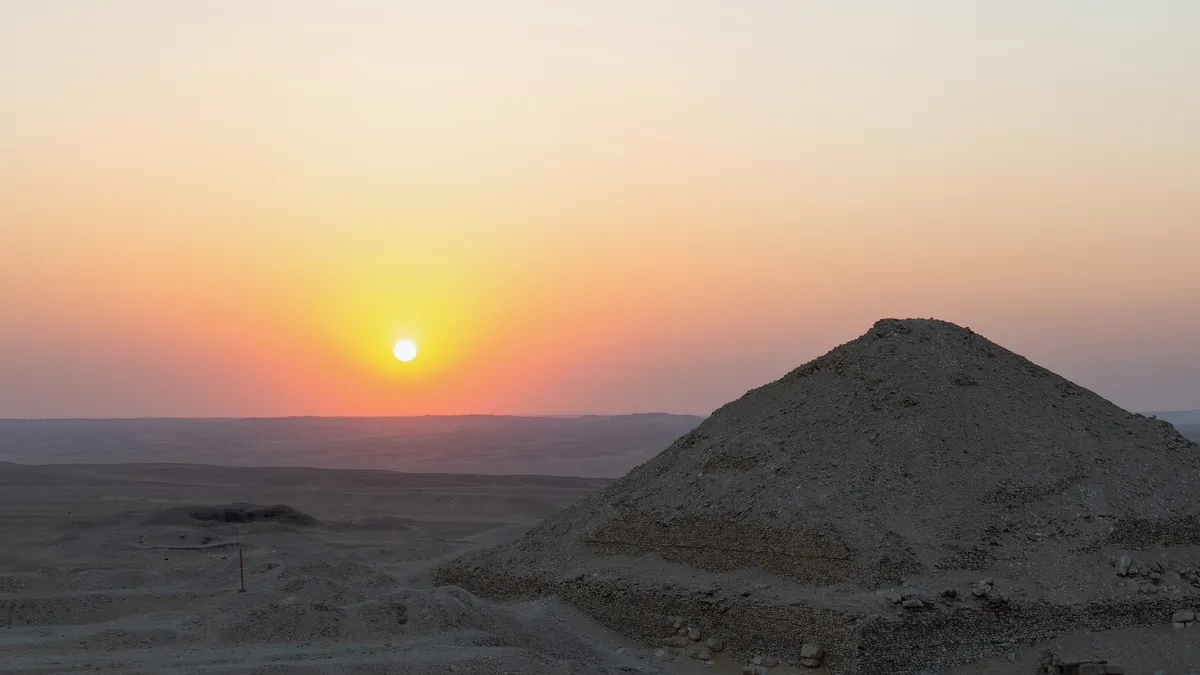
    Bent Pyramid of Dahshur framed by palms, Egypt — Nicolas MarincicSun setting over a ruined pyramid, Egypt — Nicolas MarincicRiders in the desert facing the pyramids, Egypt — Nicolas MarincicTwo men among temple blocks, Egypt — Nicolas MarincicStep Pyramid of Djoser in the desert, Saqqara, Egypt — Nicolas MarincicSerapeum gallery and granite sarcophagus, Saqqara, Egypt — Nicolas MarincicFace of the colossus of Ramesses II, Memphis, Egypt — Nicolas MarincicHorse rider silhouetted at sunset, Saqqara, Egypt — Nicolas Marincic
  4. By road↗ 193 km

    Day 6

    Alexandria

    Egypt

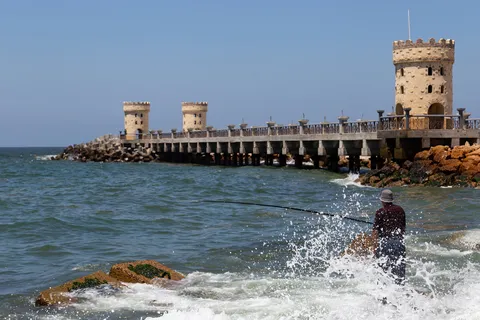
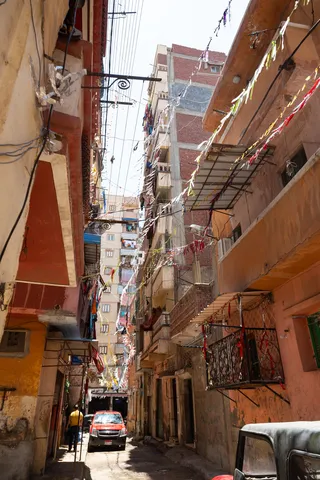
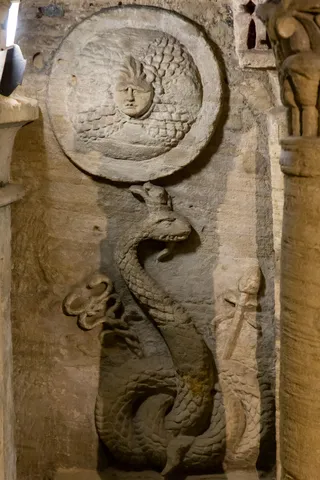
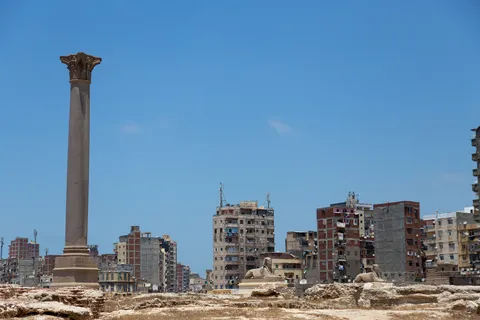
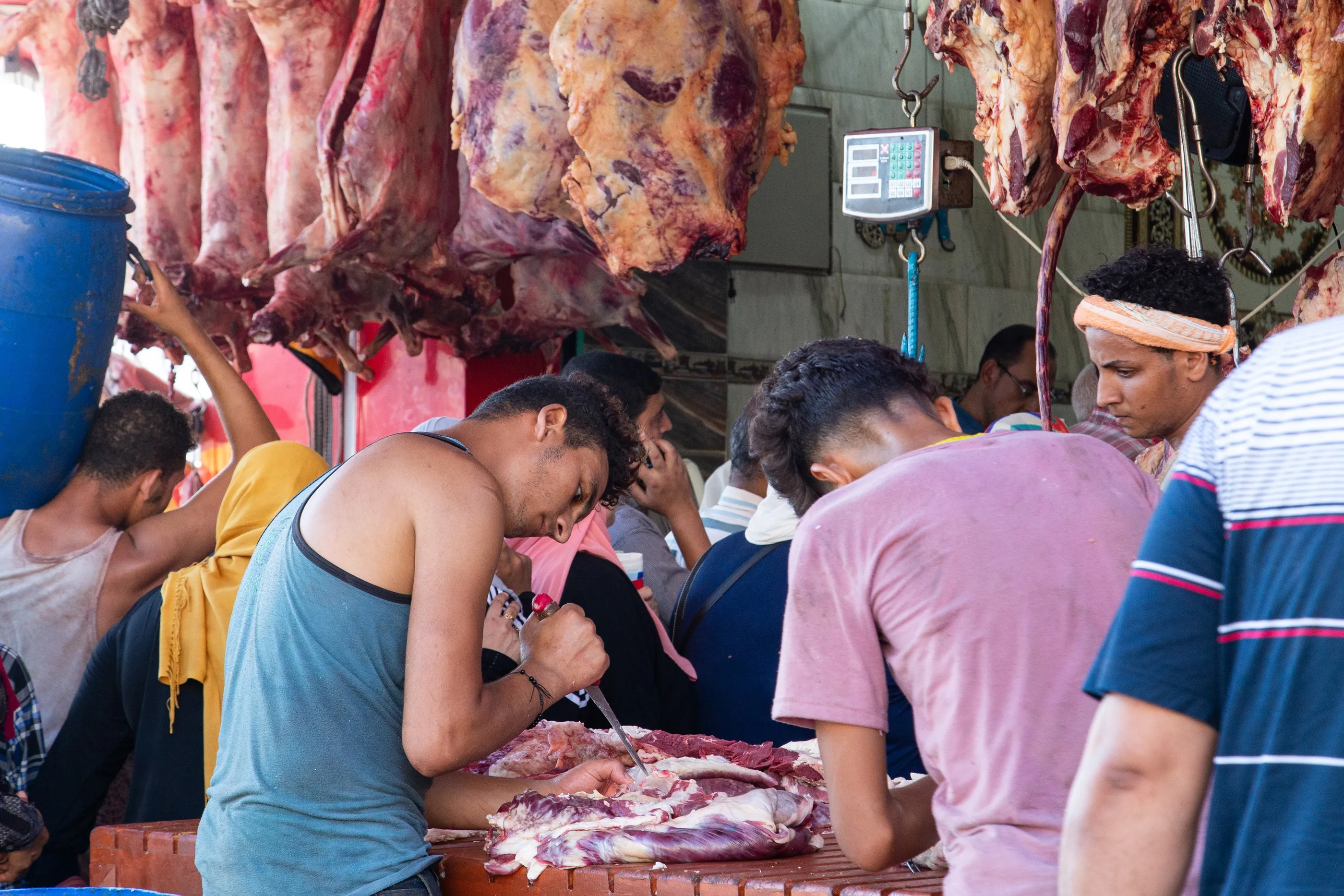
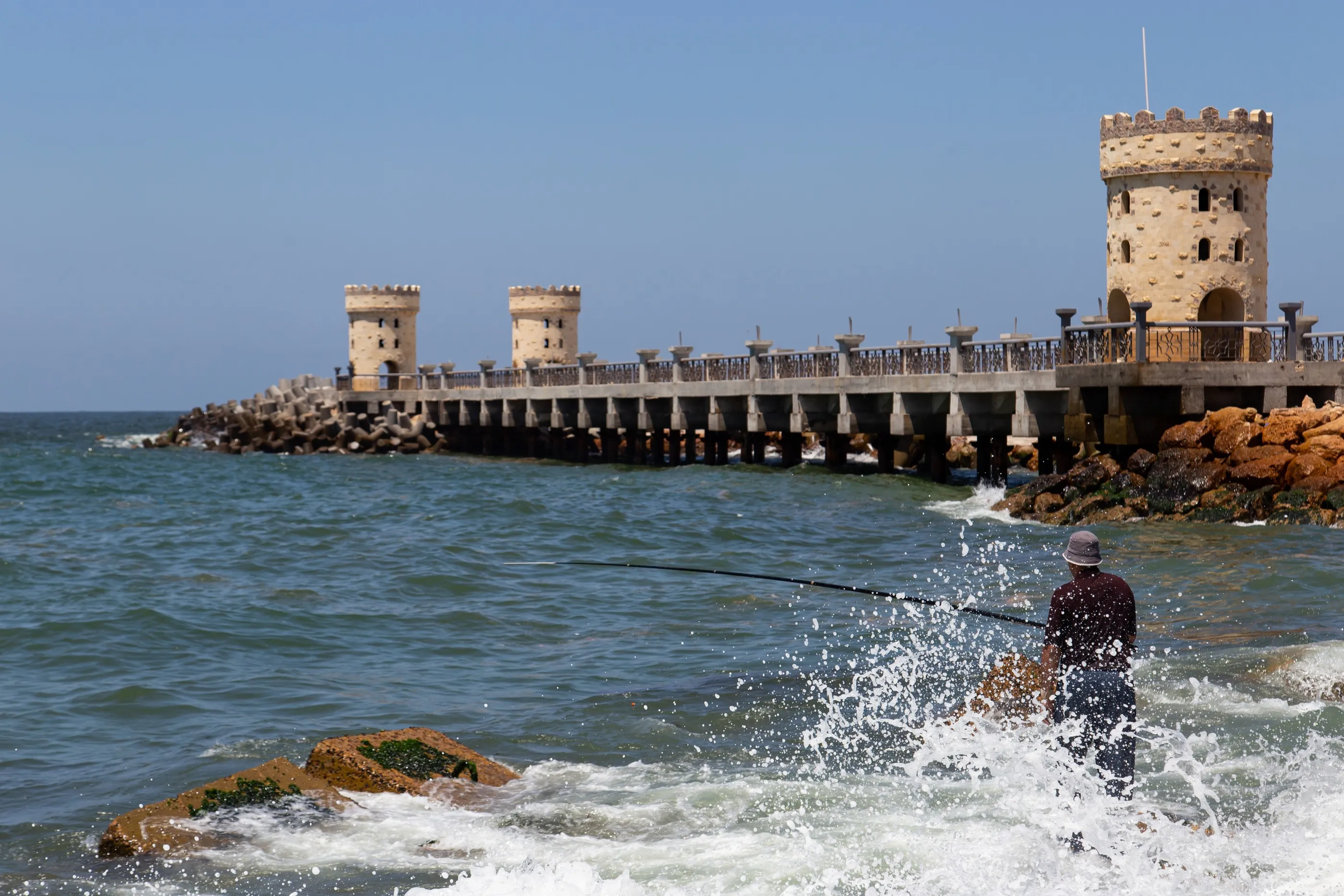
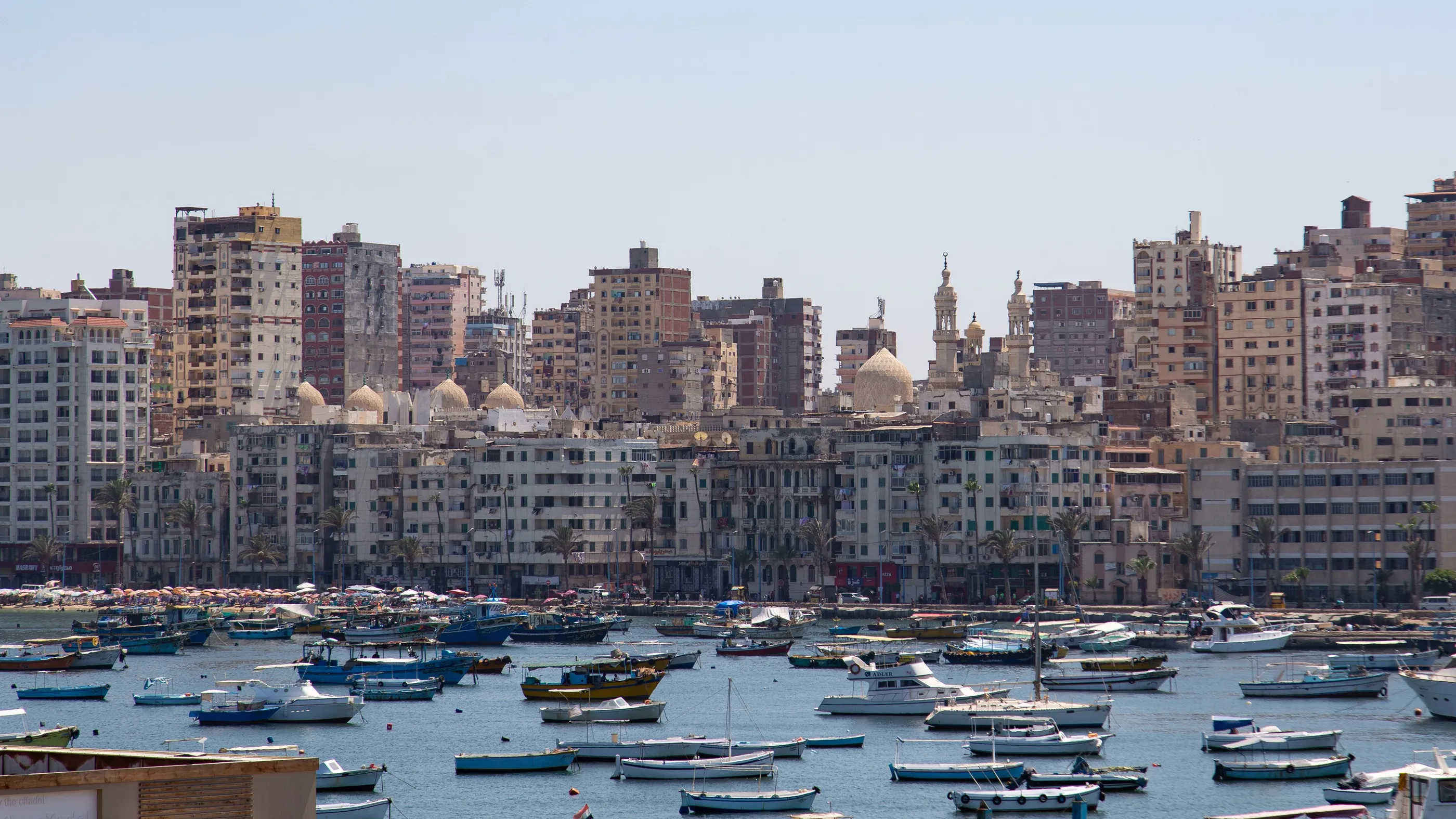
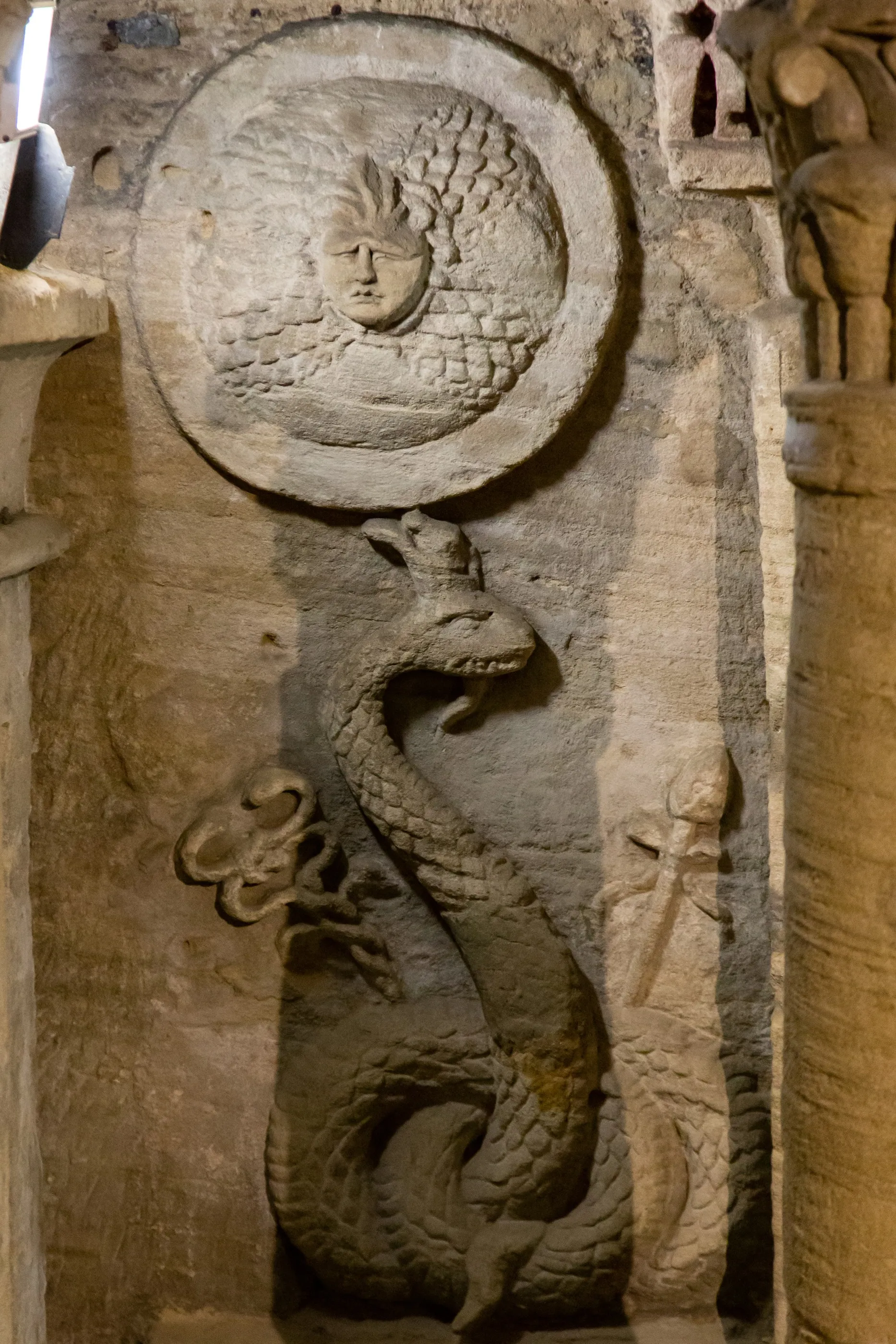
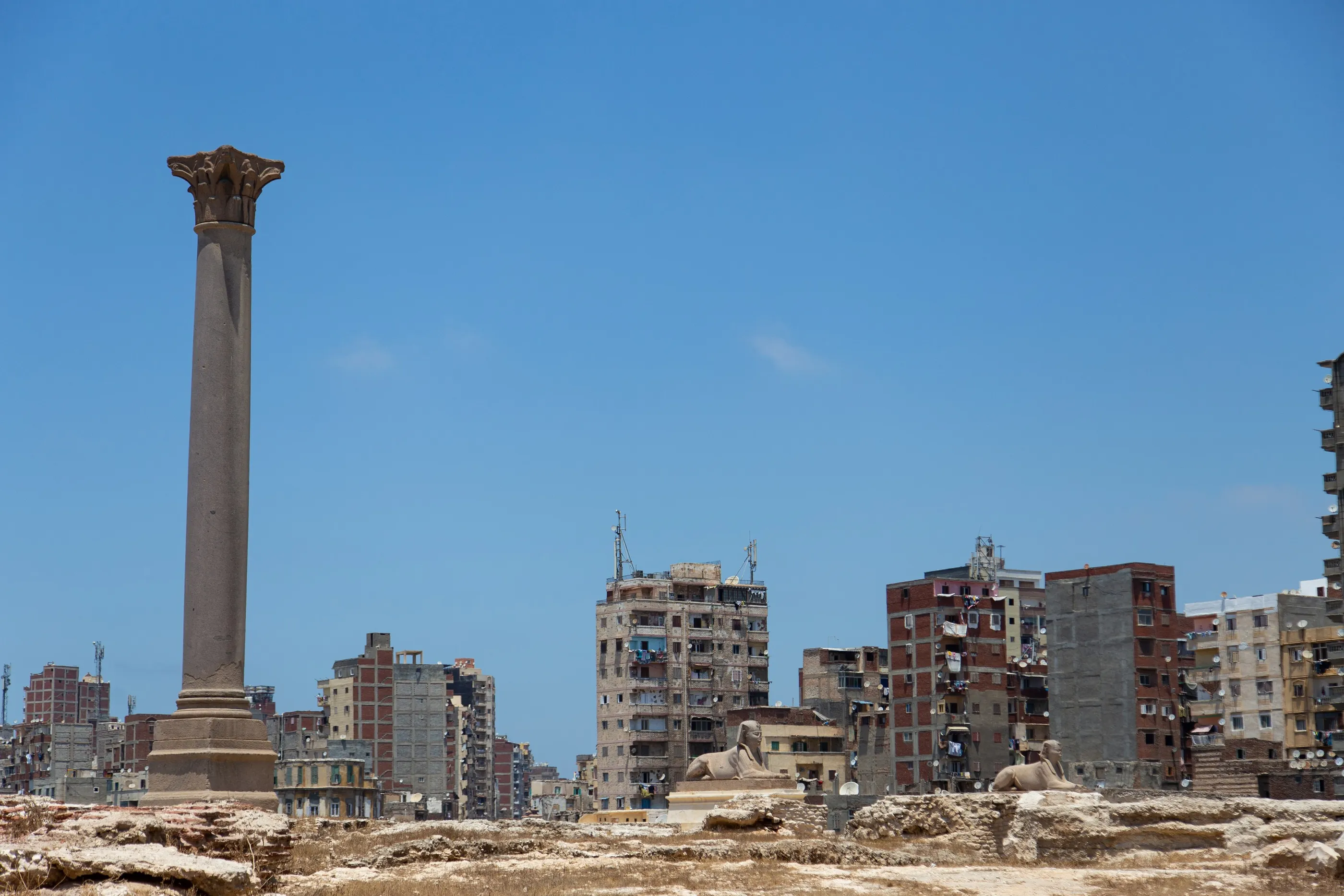
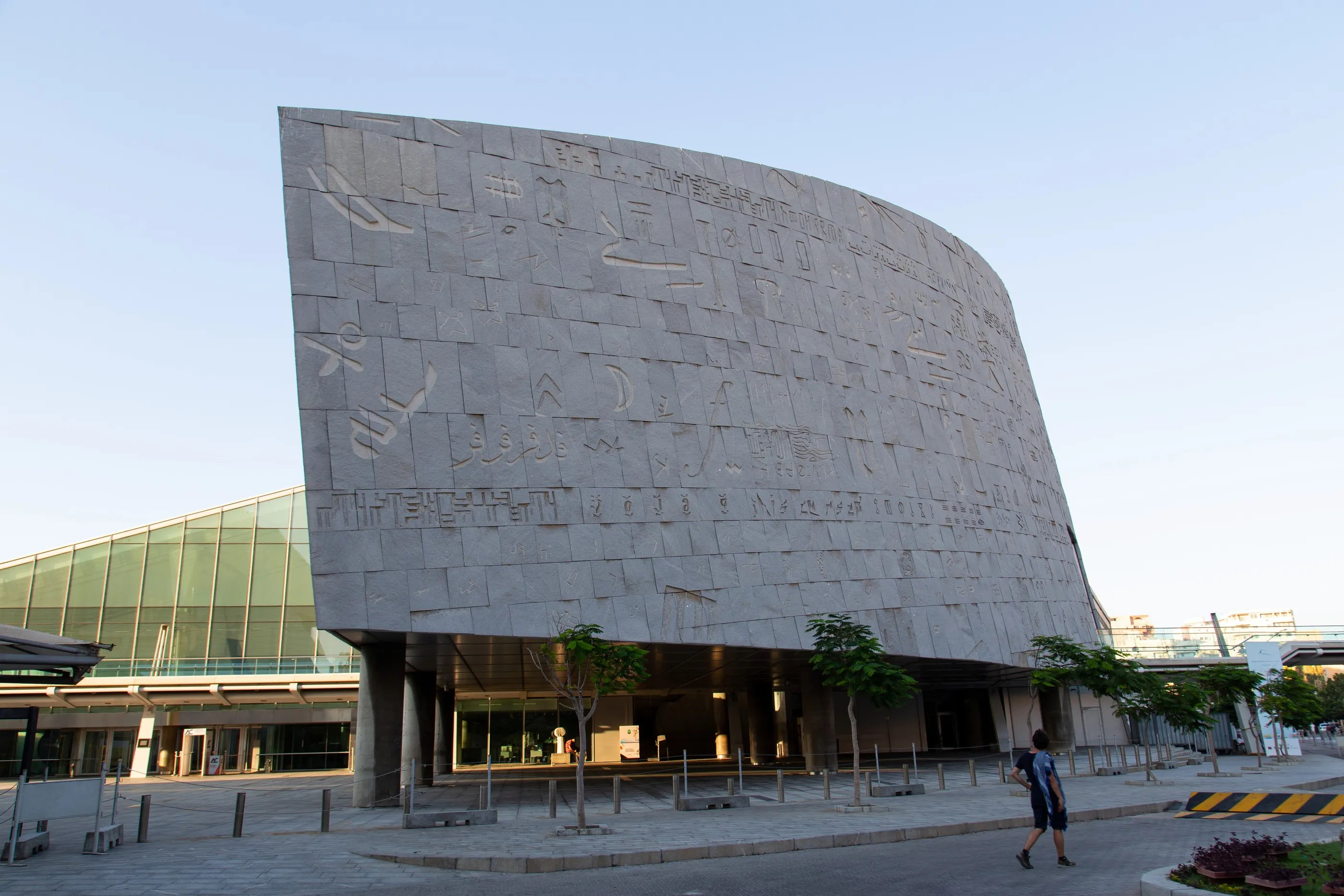
    Before heading upriver, a detour to the delta and the Mediterranean. Alexandria has kept something cosmopolitan in its weary façades, its old streets and its wave-battered seawalls. At the market, life is raw, generous and loud. Beneath the city, the catacombs of Kom el-Shoqafa blend Egyptian gods with a Greek Medusa.
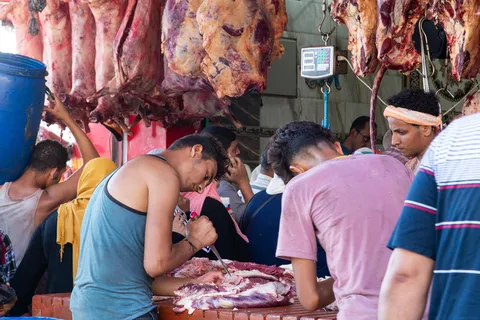
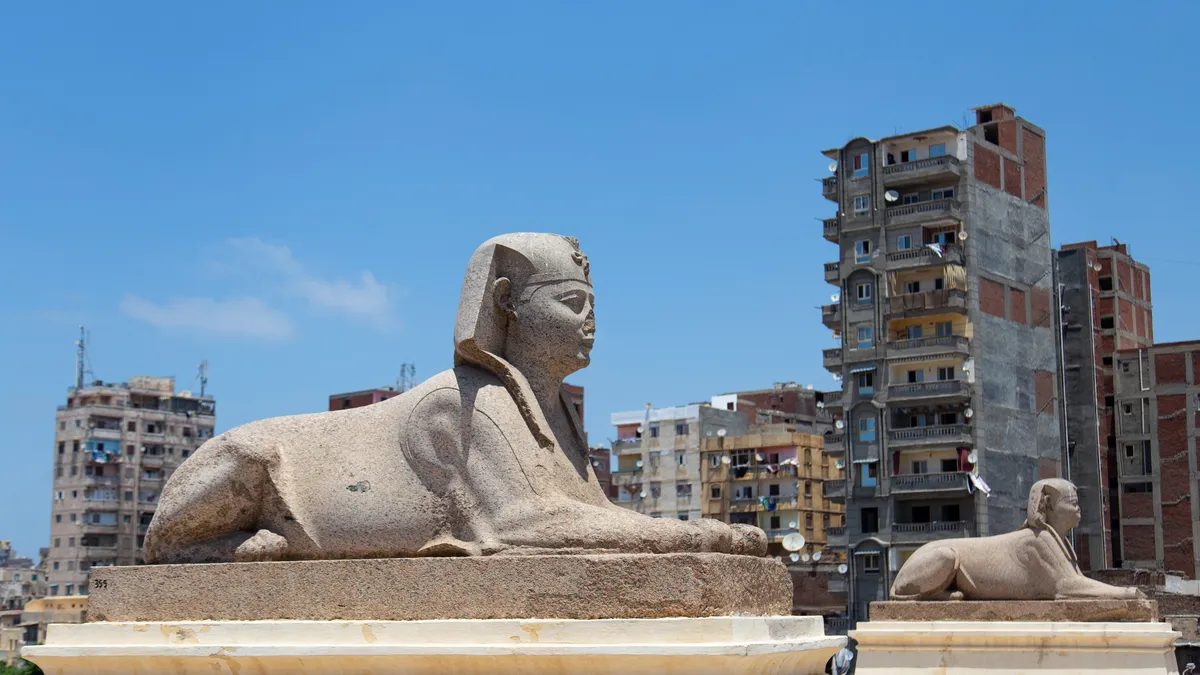
    Butchers at work beneath hanging carcasses, Egypt — Nicolas MarincicAncient sphinx before apartment blocks, Egypt — Nicolas MarincicFisherman by the Montaza bridge, Alexandria, Egypt — Nicolas MarincicAlley between tall apartment blocks, Egypt — Nicolas MarincicFishing boats in the Eastern Harbour, Alexandria, Egypt — Nicolas MarincicMedusa relief, Kom el-Shoqafa catacombs, Alexandria, Egypt — Nicolas MarincicPompey’s Pillar, Alexandria, Egypt — Nicolas MarincicBibliotheca Alexandrina, Alexandria, Egypt — Nicolas Marincic
  5. By road↗ 215 km

    Days 7–9

    Fayoum and Wadi el-Hitan

    Egypt

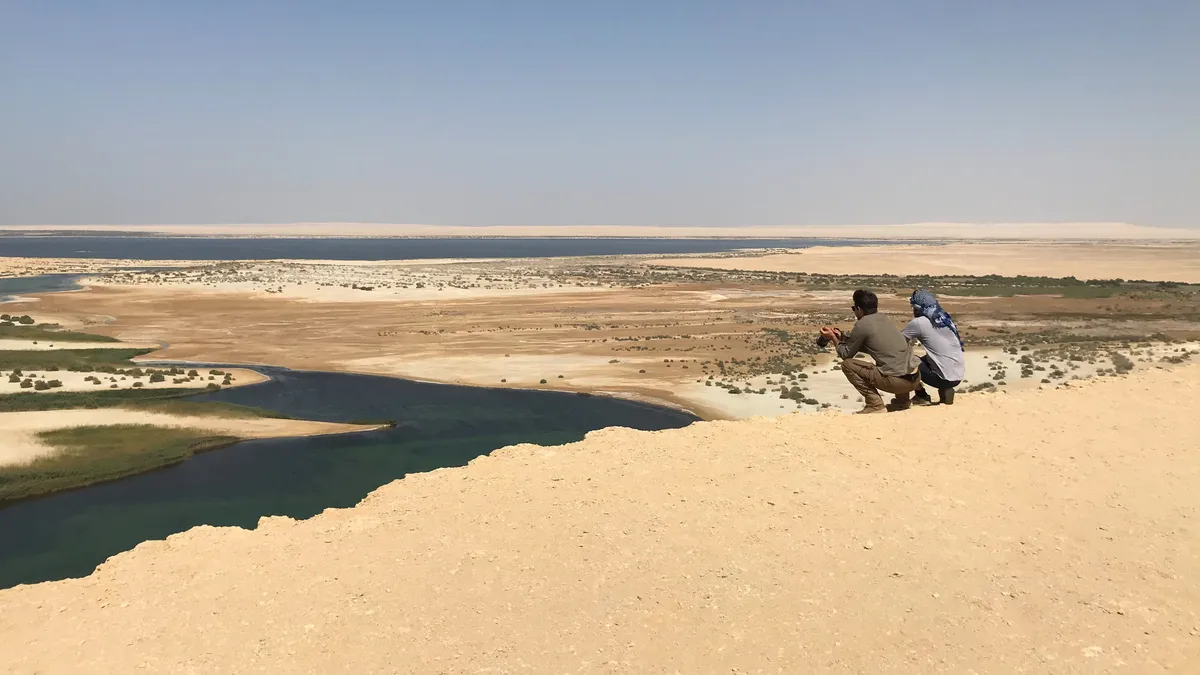
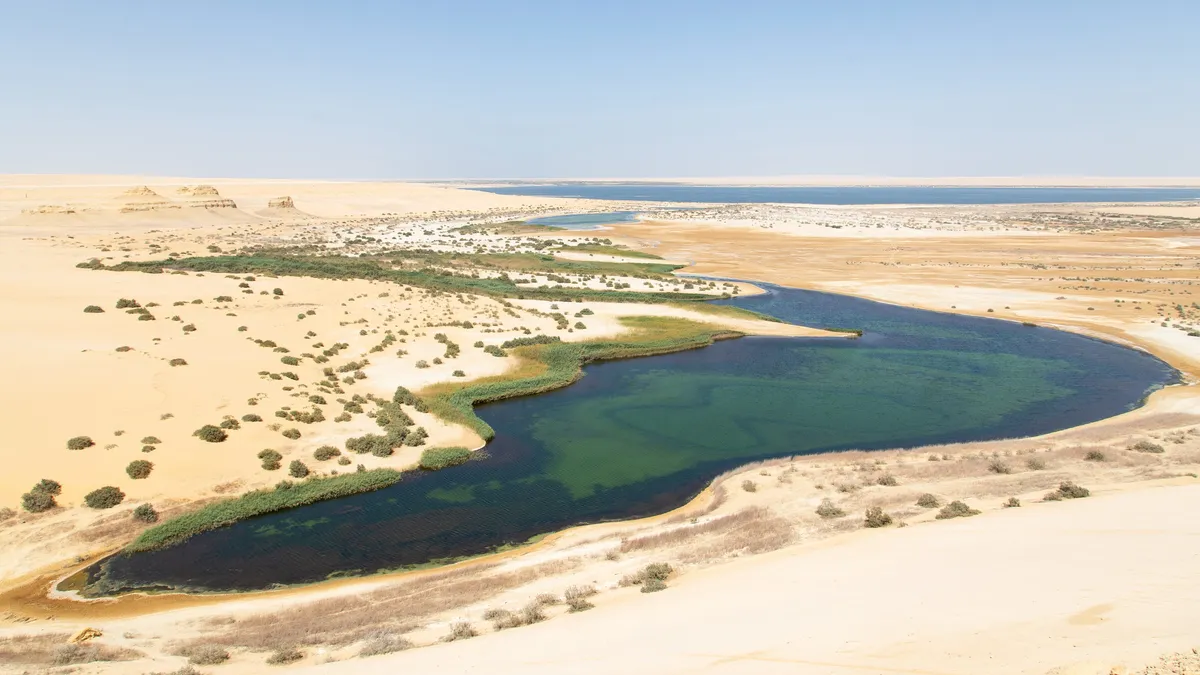
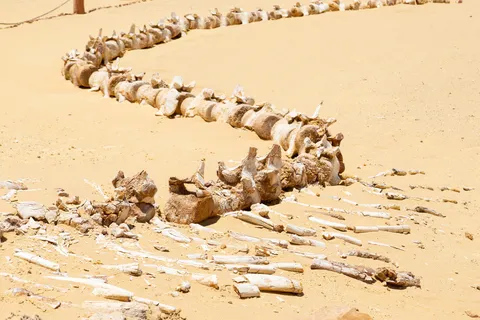
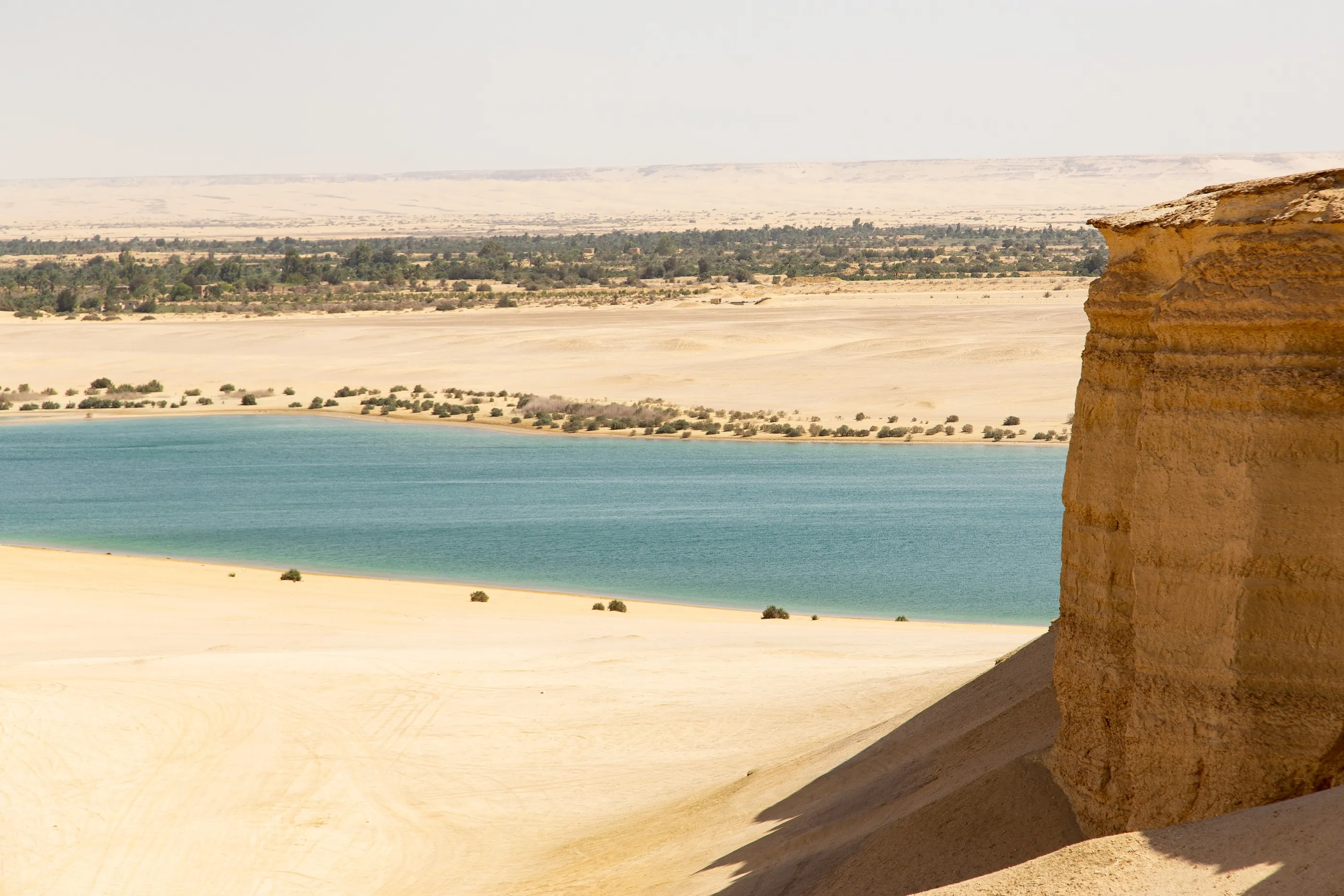
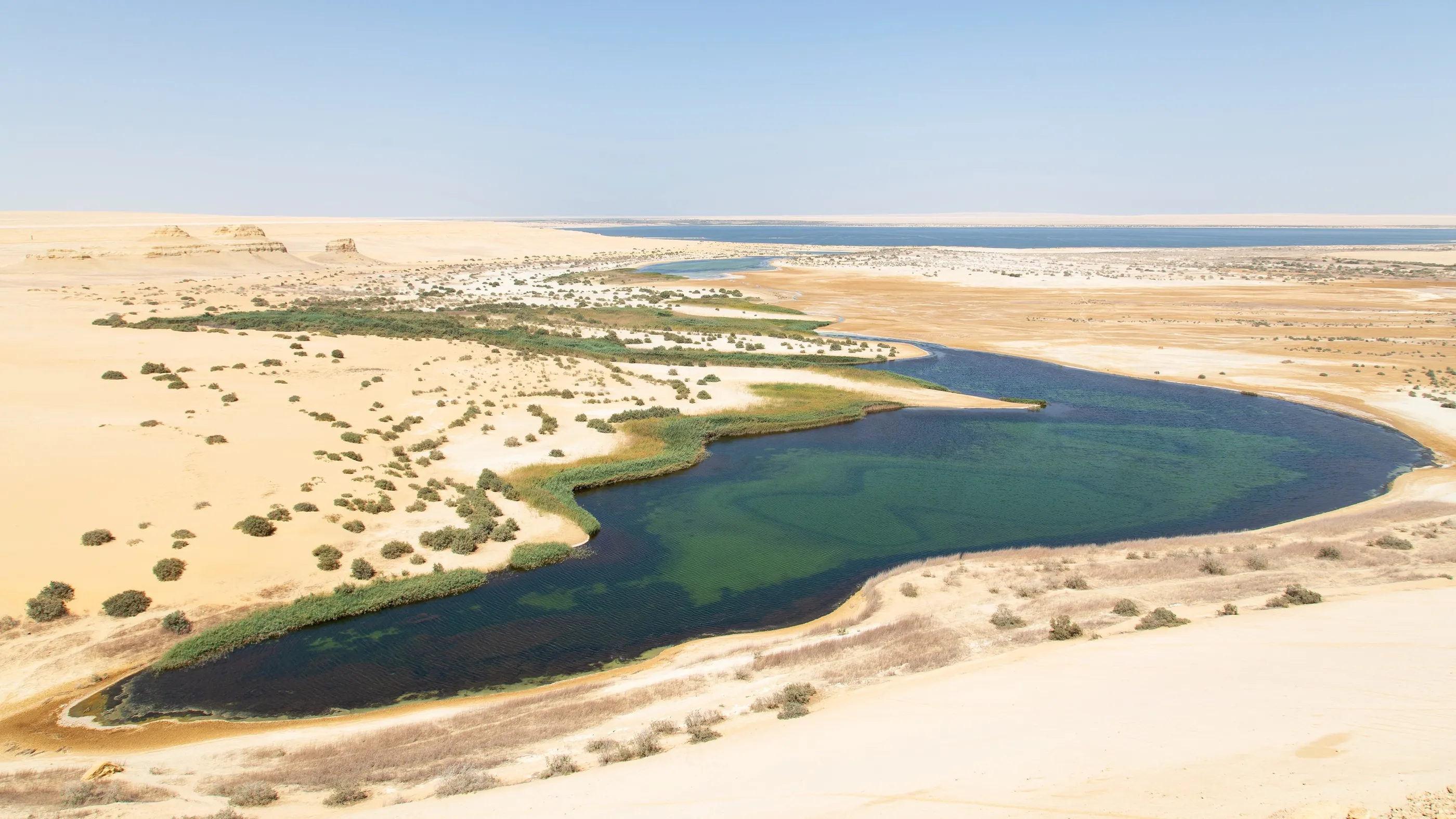
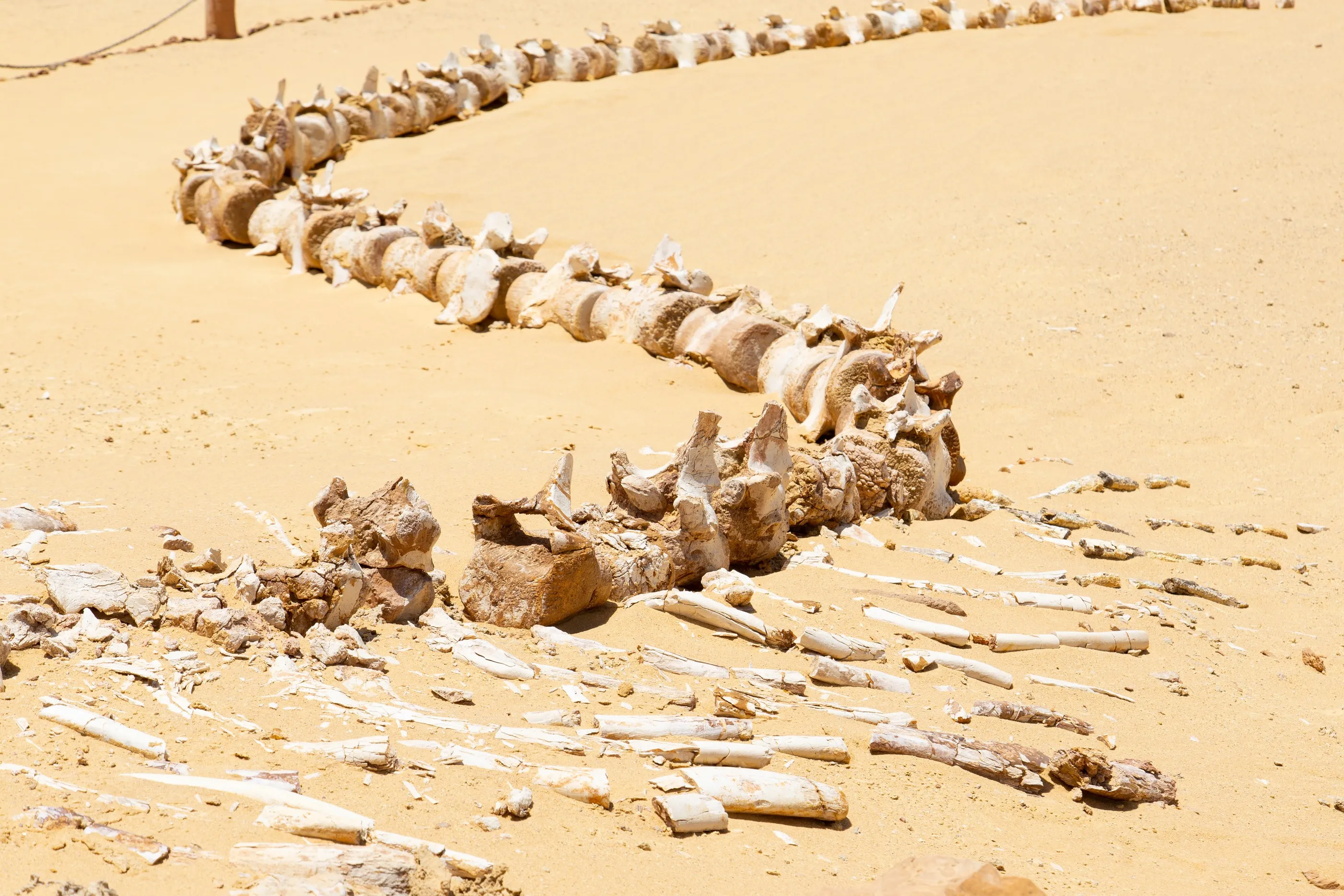
    In the Fayoum desert, the Valley of the Whales holds fossilised skeletons of forty-million-year-old cetaceans, lying in the open sand. Nearby, the Wadi Rayan lakes set a turquoise stain among the dunes. Egypt is not only the land of the pharaohs.
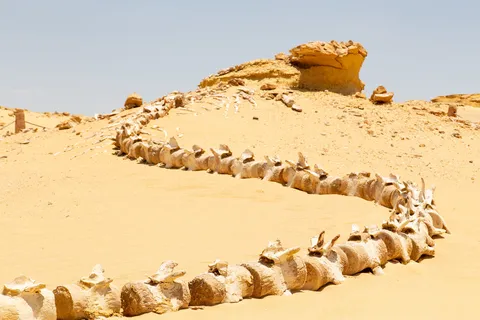
    Fossil whale skeleton at Wadi Al-Hitan, Egypt — Nicolas MarincicLake below dunes and cliffs, Egypt — Nicolas MarincicWalkers overlooking a desert lake, Egypt — Nicolas MarincicLakes and dunes of Wadi el-Rayan, Faiyum, Egypt — Nicolas MarincicFossil whale skeleton, Wadi al-Hitan, Egypt — Nicolas Marincic
  6. By road↗ 170 km

    Days 10–11

    Minya and Beni Hasan

    Egypt

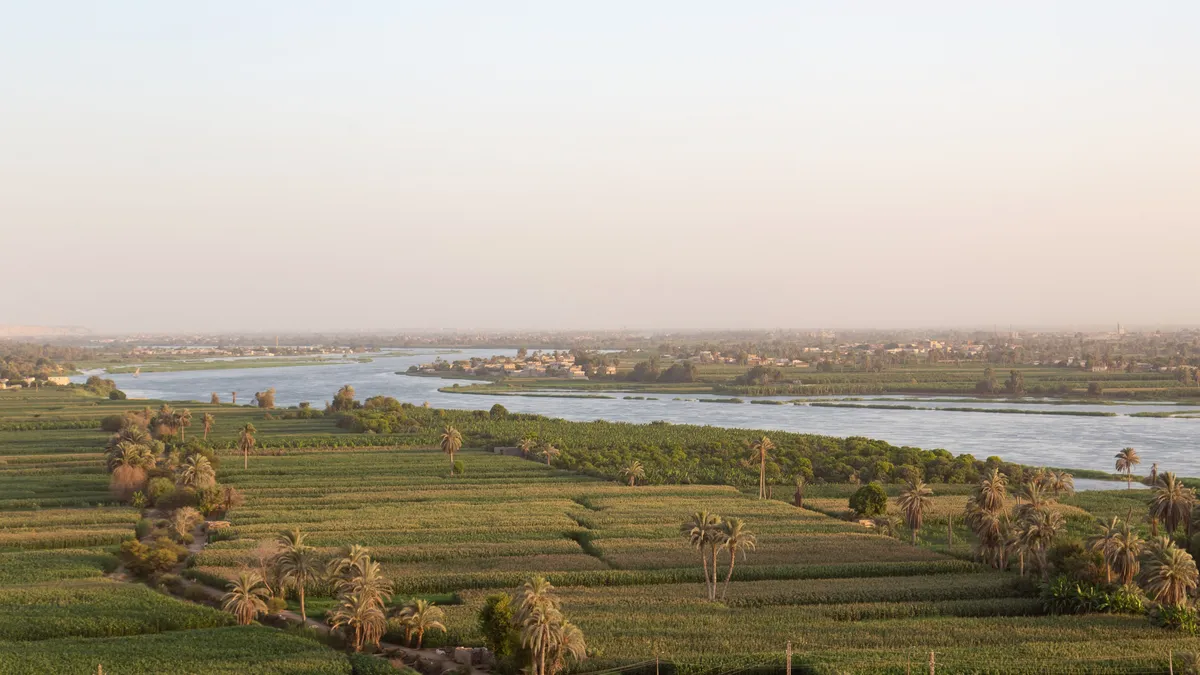
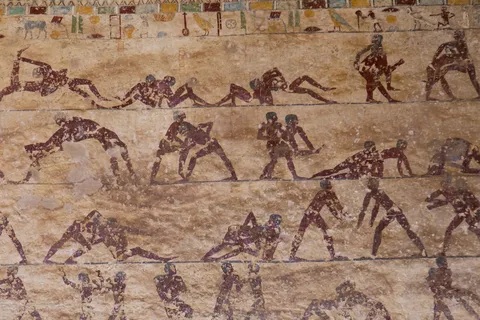
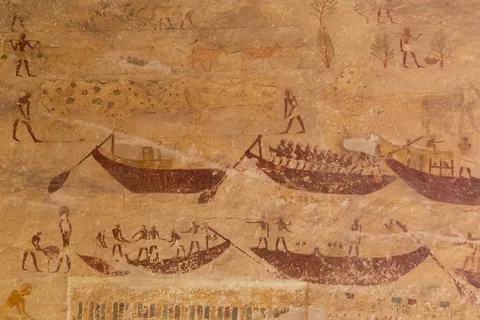
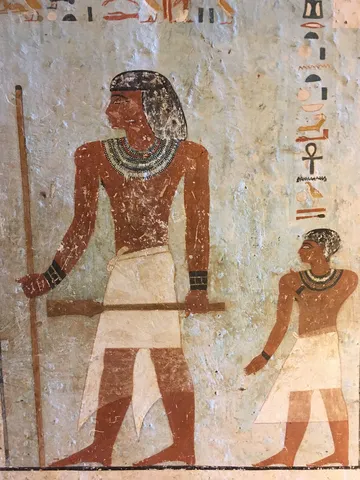
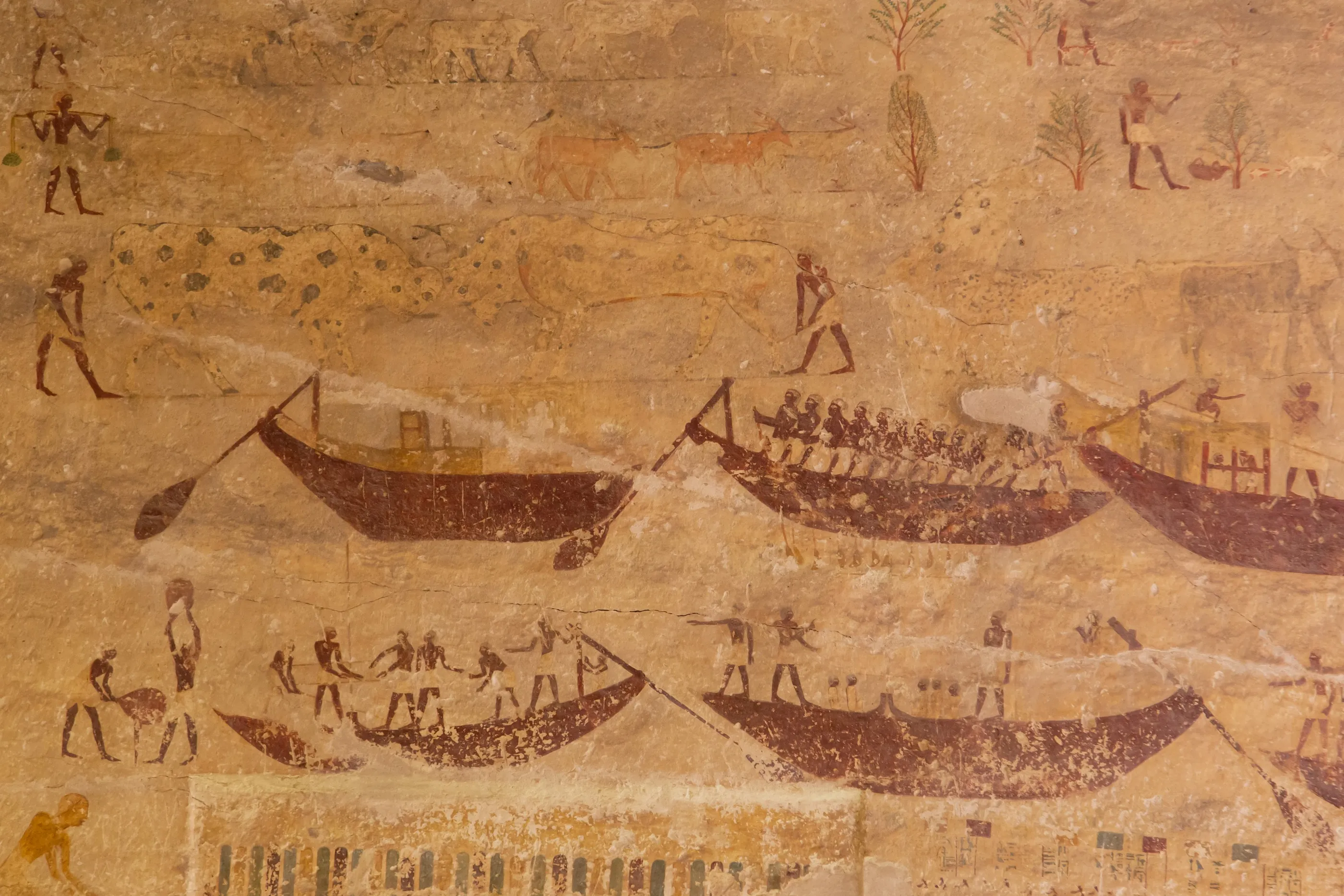
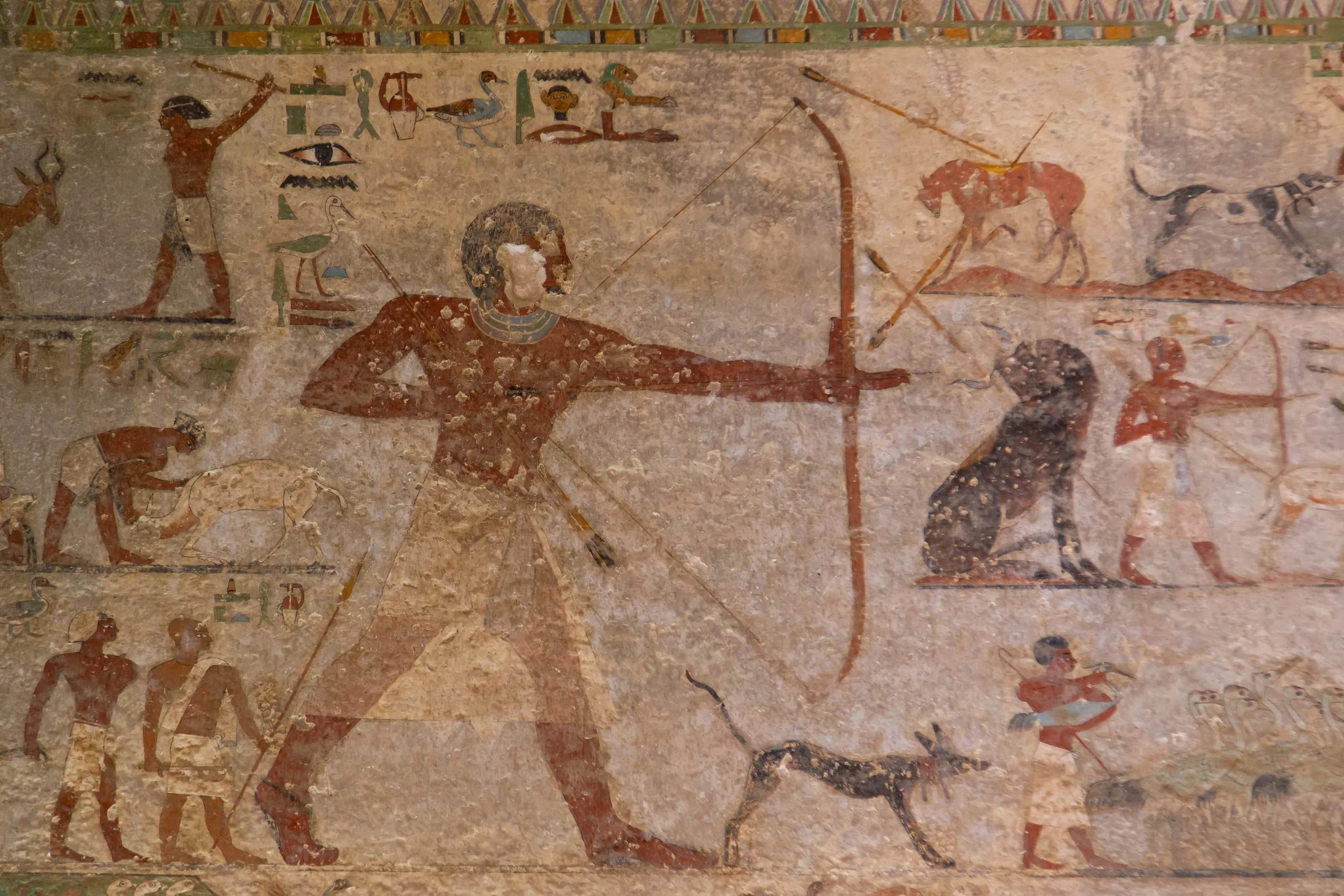
    We cross Middle Egypt, far from the usual routes, where the long green ribbon of fields stops abruptly at the foot of the desert cliffs. Farmers, donkeys laden with fodder, tombs cut into the rock: the rhythm of the river has not changed. At Beni Hasan, in the tombs of the nomarchs, painted wrestlers have been grappling on the walls for four thousand years.
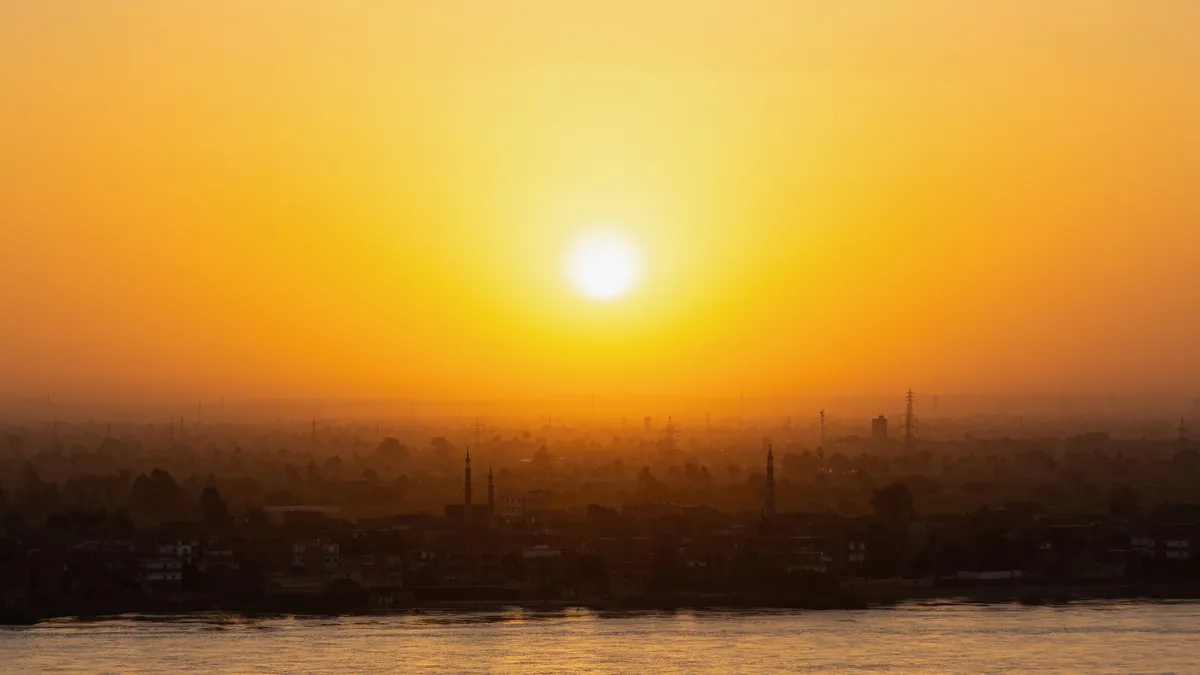
    Sun setting over the city in the haze, Egypt — Nicolas MarincicMinaret above the palm trees, Egypt — Nicolas MarincicGreen strip of the Nile valley and desert, Minya, Egypt — Nicolas MarincicWrestlers painted in a rock tomb at Beni Hasan, Egypt — Nicolas MarincicBoats on the Nile, Minya, Egypt — Nicolas MarincicArcher painting, Beni Hasan tombs, Egypt — Nicolas Marincic
  7. By road↗ 32 km

    Day 12

    Tuna el-Gebel and Amarna

    Egypt

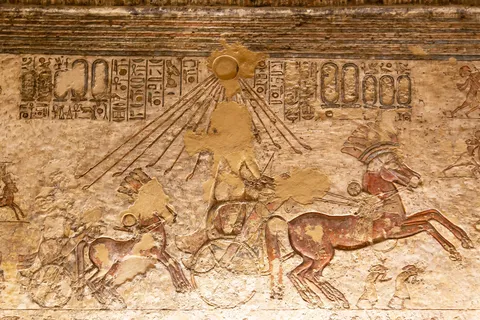
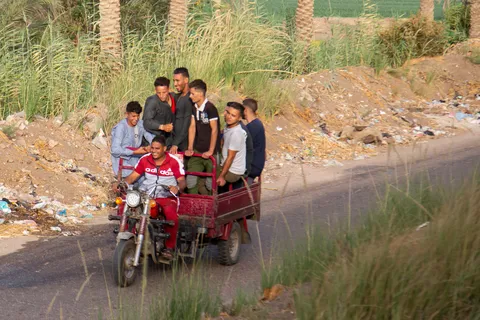
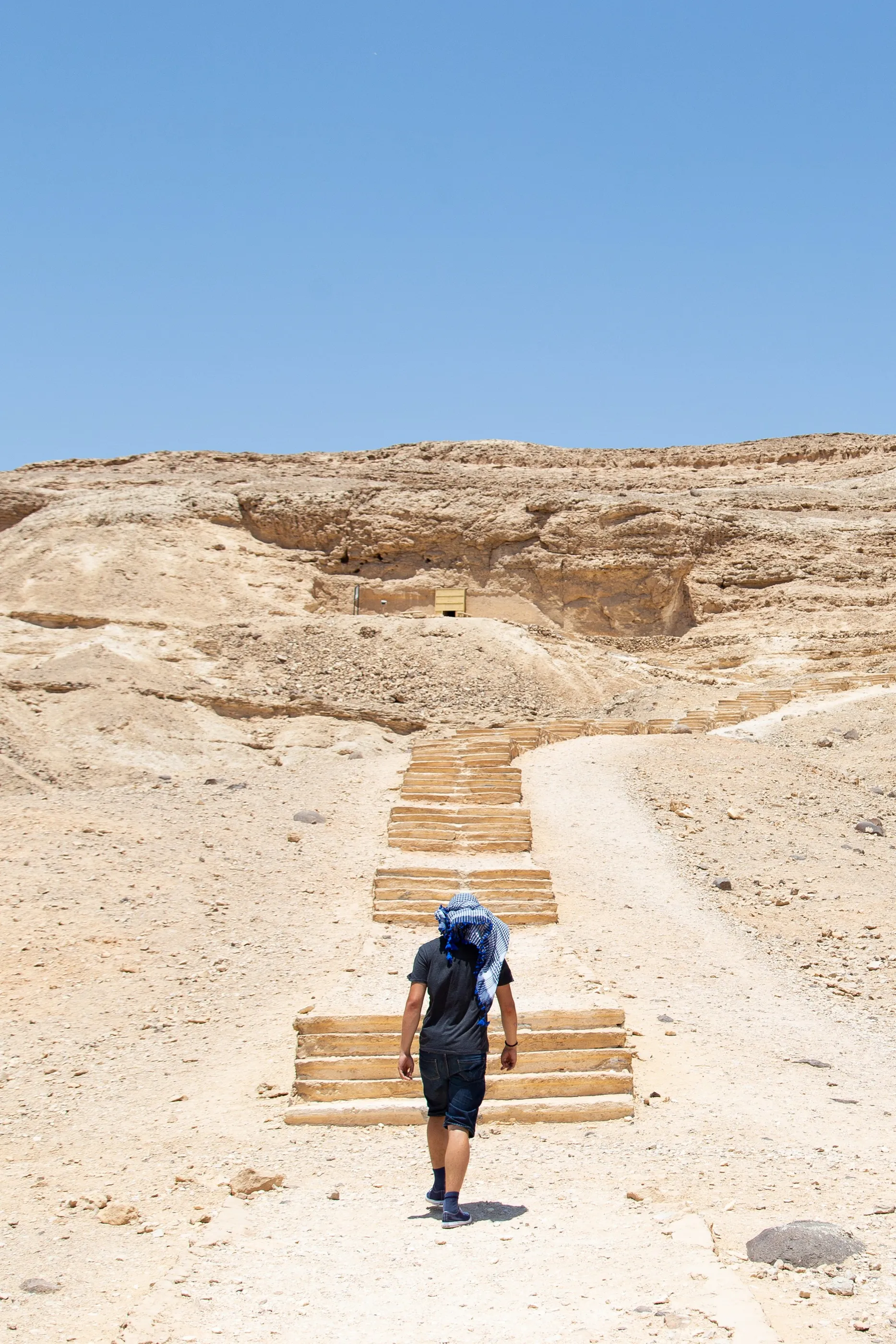
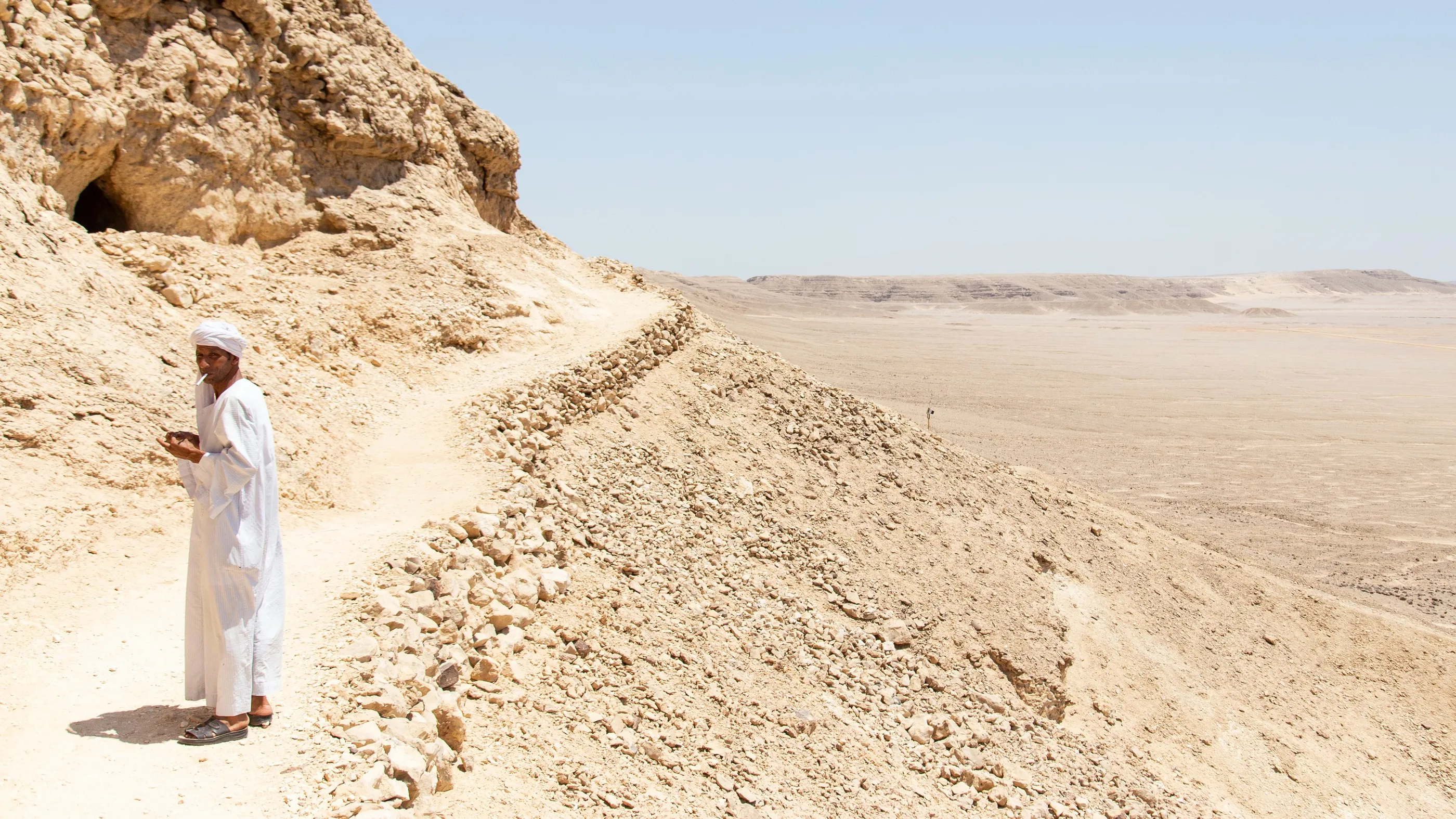
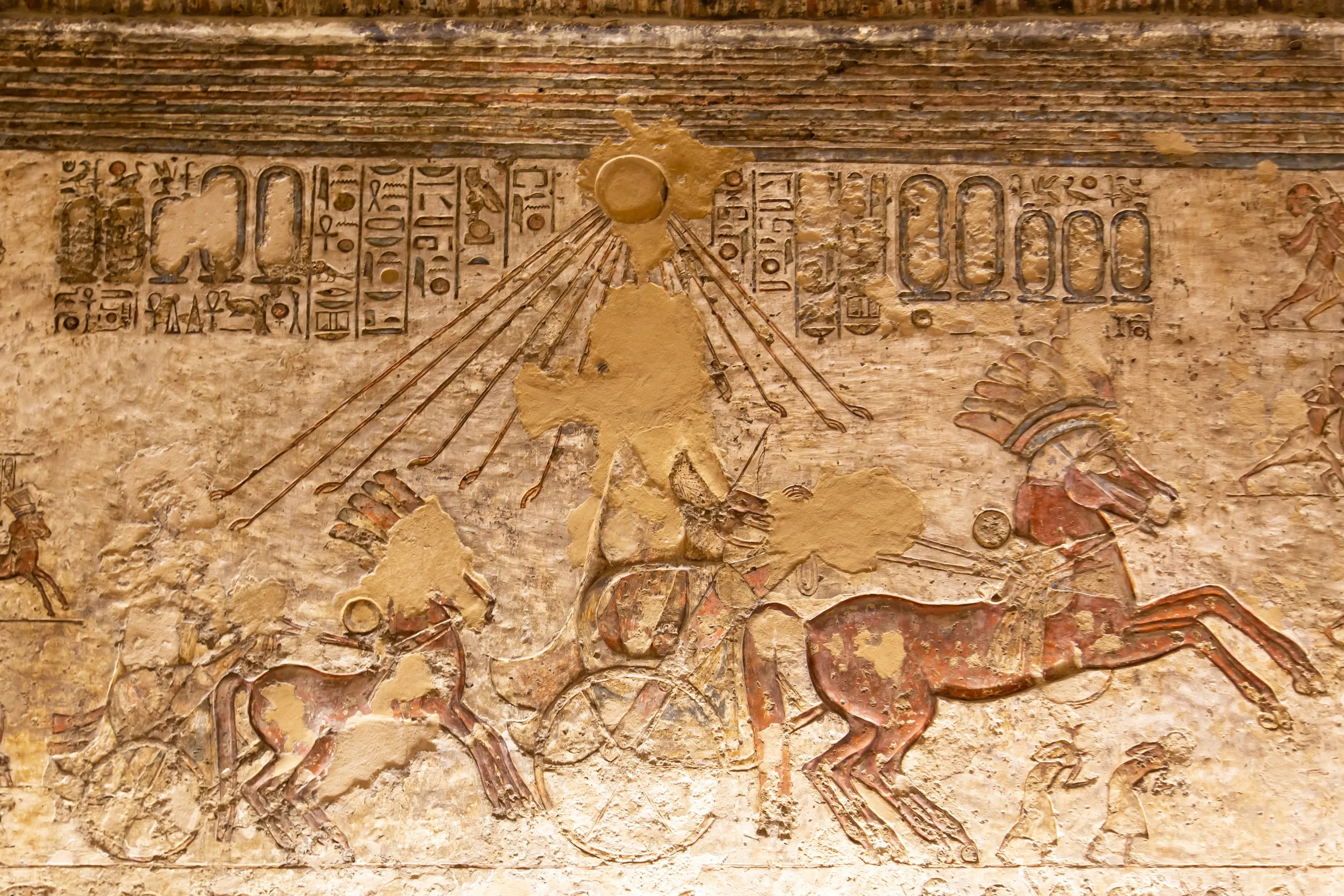
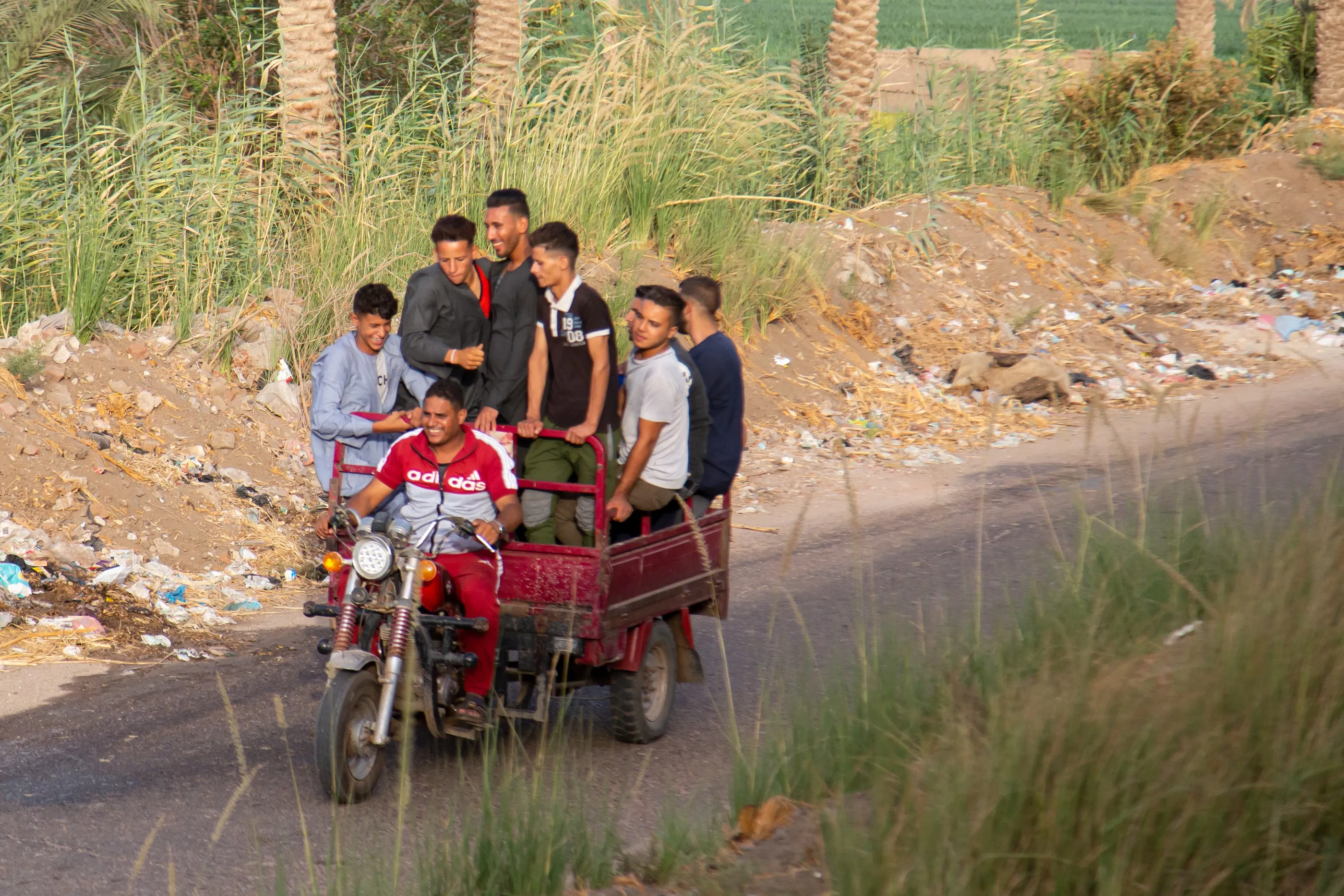
    At Tuna el-Gebel, the tomb of Petosiris already blends Egypt and Greece. A little further on lies Amarna, Akhenaten’s short-lived capital, where the disc of the Aten reaches its hands of light towards the king. Almost nothing remains of the city, only a path up the cliff, silence and heat. On the way back, children on motorbikes escort us between the canals.

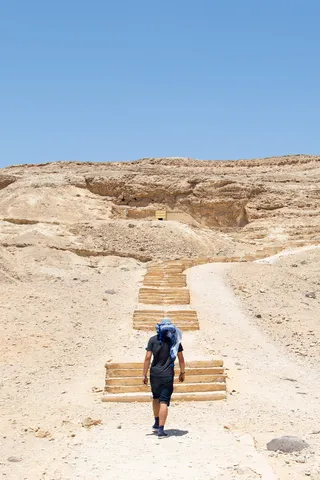
    Farmer and donkey between green fields, Egypt — Nicolas MarincicClimbing steps in the desert, Egypt — Nicolas MarincicMan in a galabiya on a desert path, Egypt — Nicolas MarincicAten relief, Tell el-Amarna, Egypt — Nicolas MarincicChildren on a motorbike in a Middle Egypt village, Egypt — Nicolas Marincic
  8. By road↗ 143 km

    Day 13

    Sohag, White and Red Monasteries

    Egypt

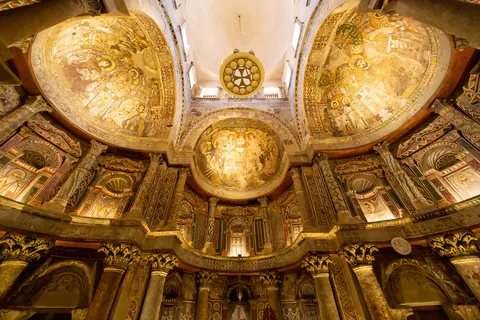
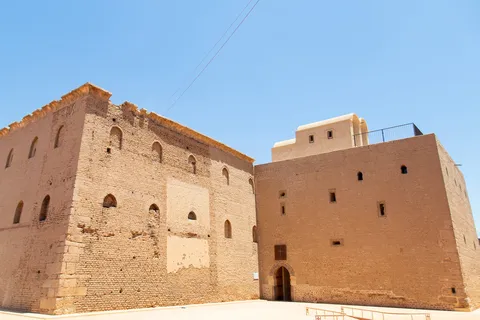
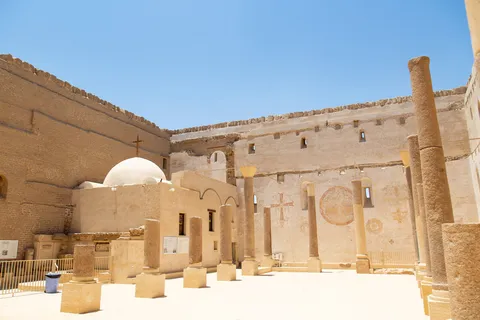
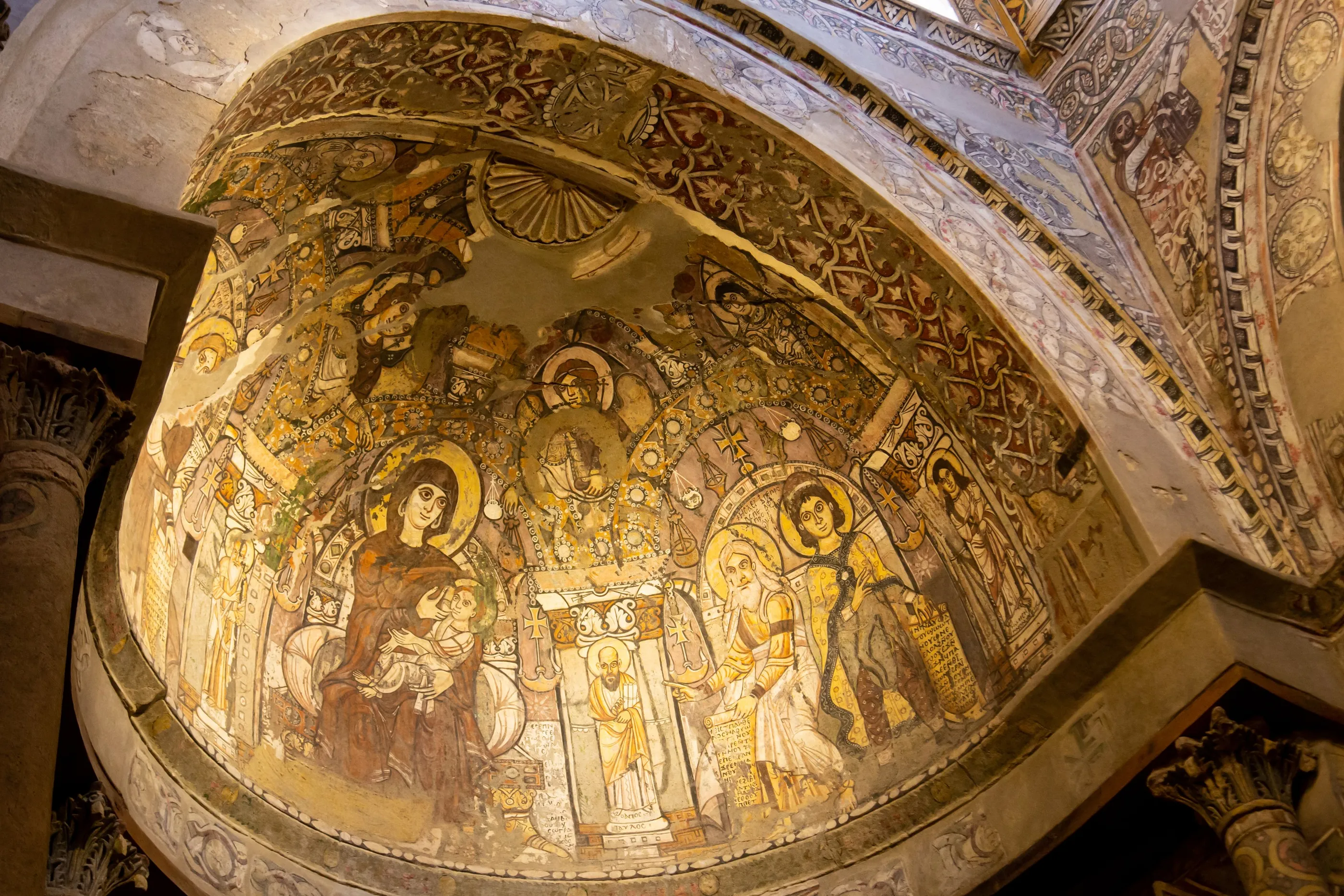
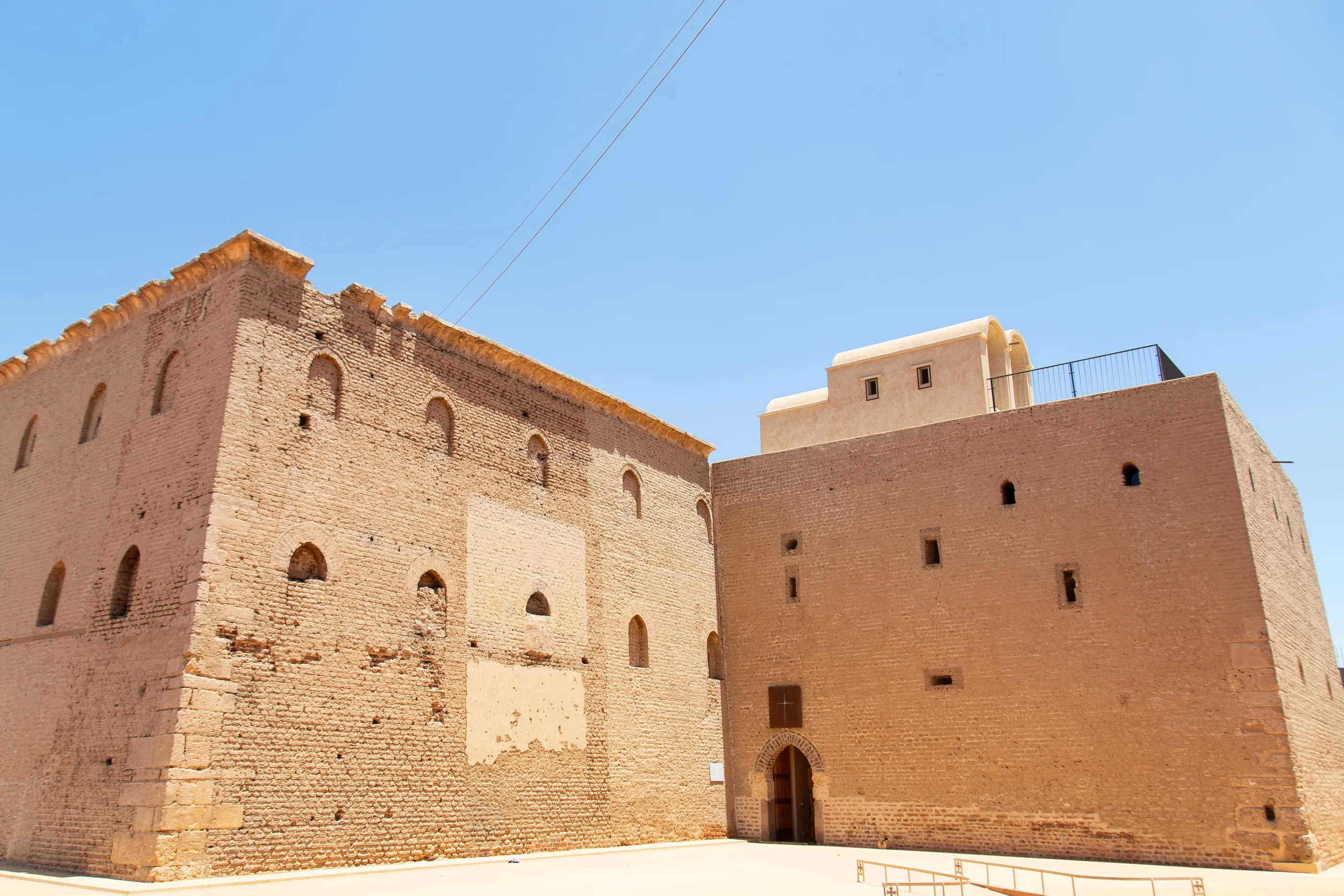
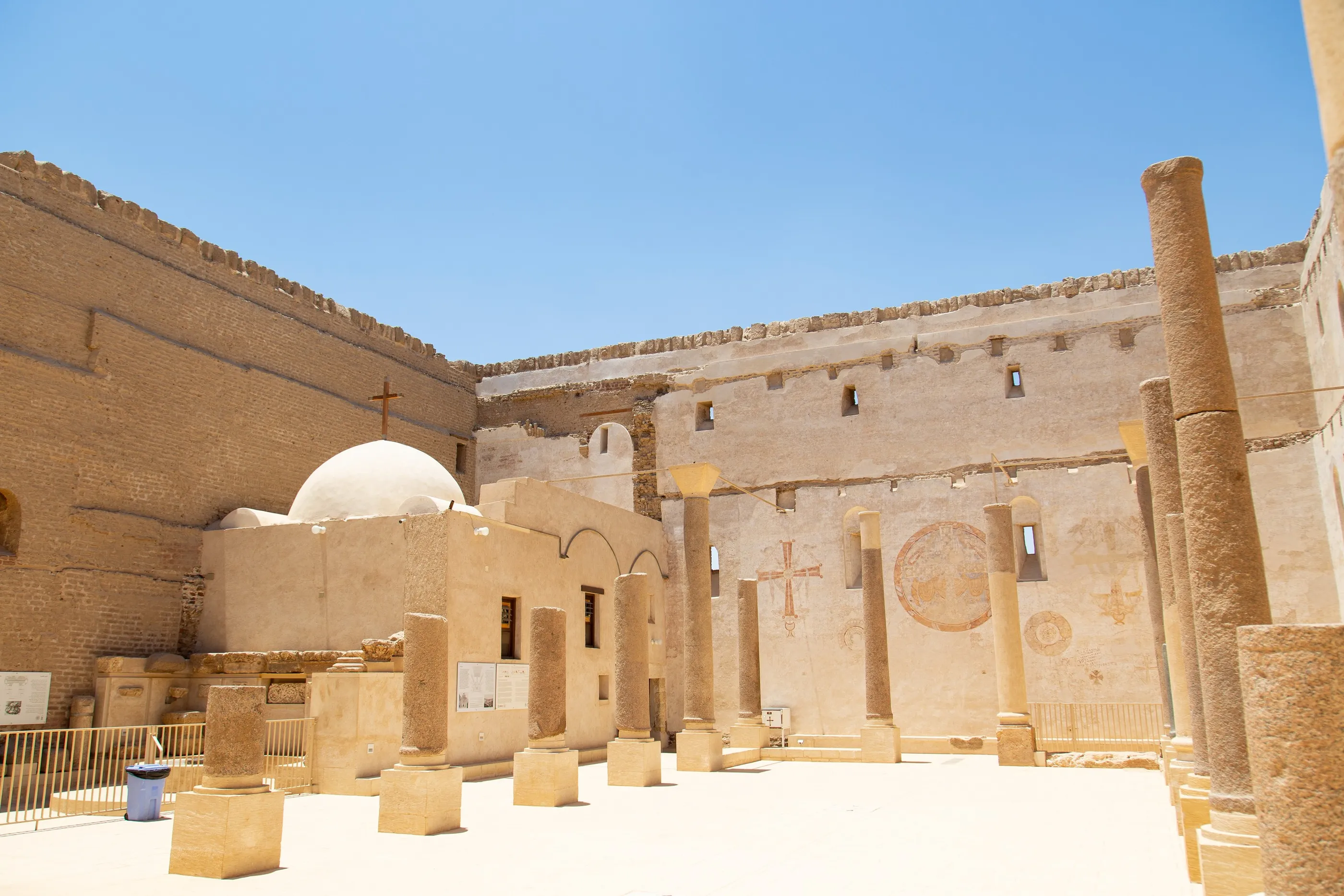
    Near Sohag stand two Coptic monasteries with fortress walls. The White Monastery, an open-air nave lined with columns, then the Red Monastery, whose restored apse has regained its colours: saints, angels and Christ in majesty rise over three tiers of gold and ochre. A Christian Egypt too often forgotten between two temples.
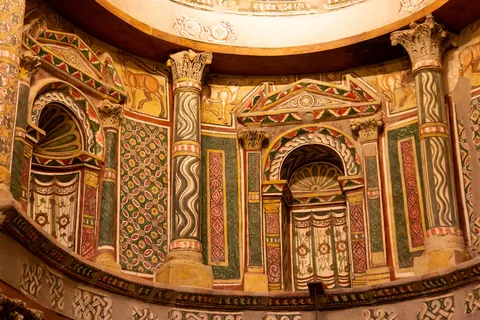
    Apse with Coptic murals, Red Monastery, Sohag, Egypt — Nicolas MarincicPainted semi-dome of the Red Monastery, Sohag, Egypt — Nicolas MarincicGilded domes of a church, Egypt — Nicolas MarincicWalls of a Coptic monastery, Egypt — Nicolas MarincicColumned courtyard of a Coptic monastery, Egypt — Nicolas Marincic
  9. By road↗ 132 km

    Days 14–15

    Luxor, west bank

    Egypt

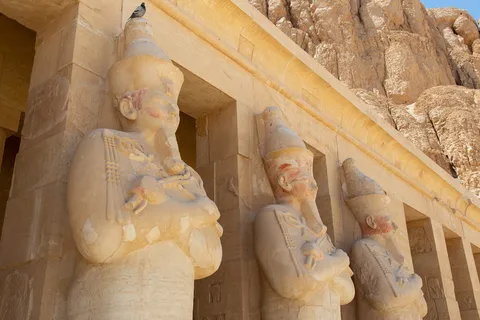
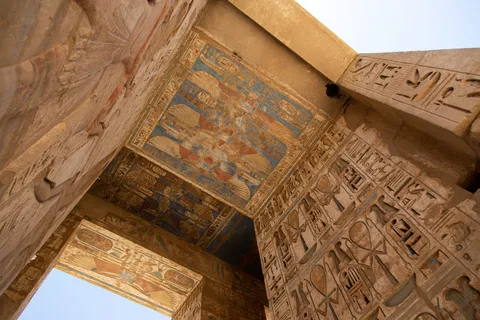
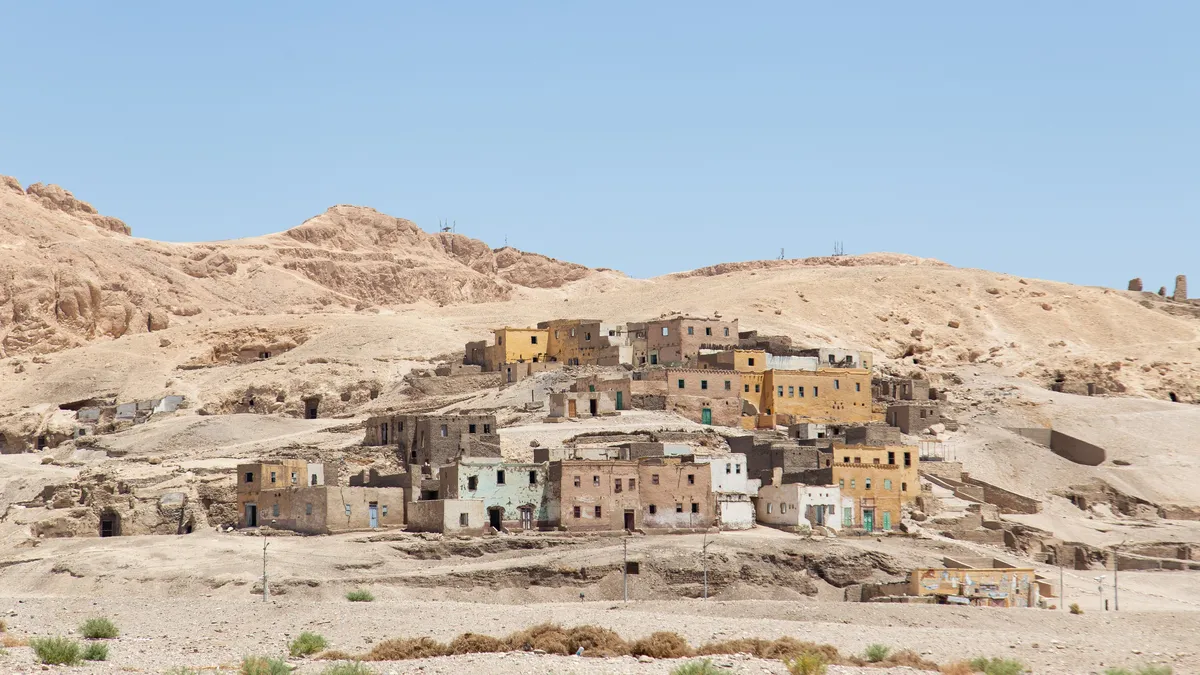
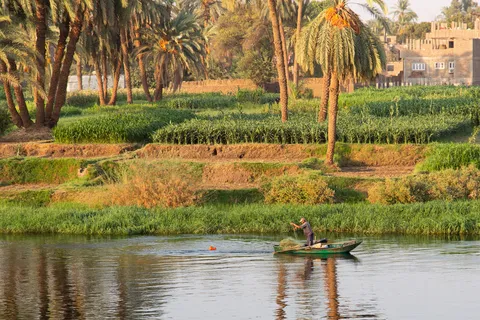
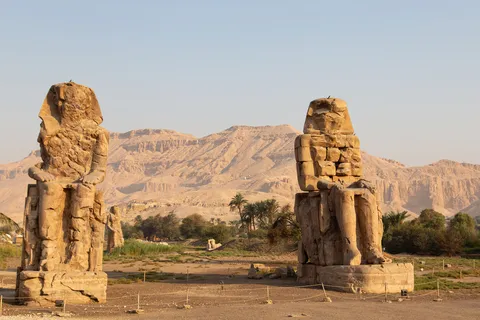
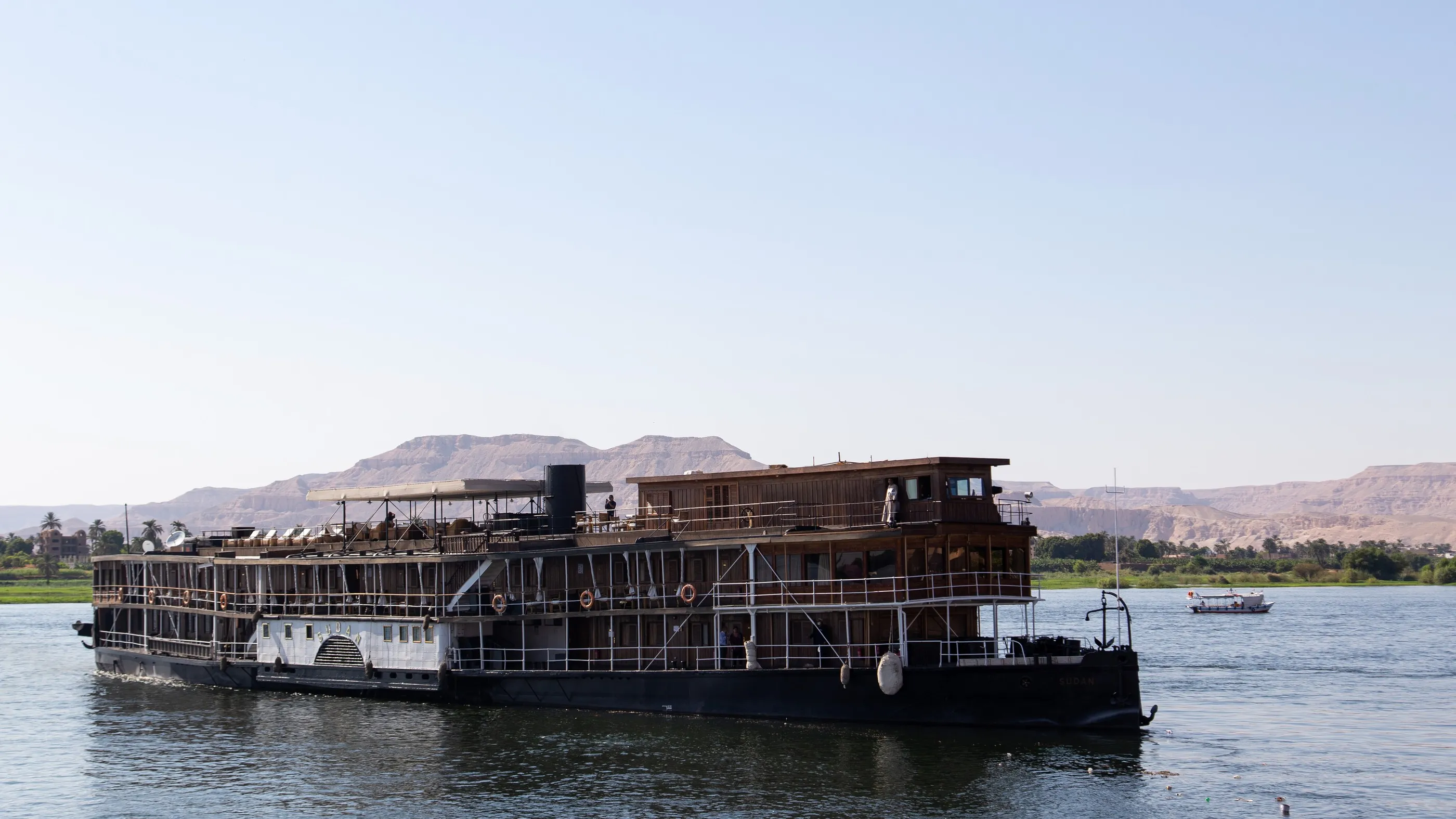
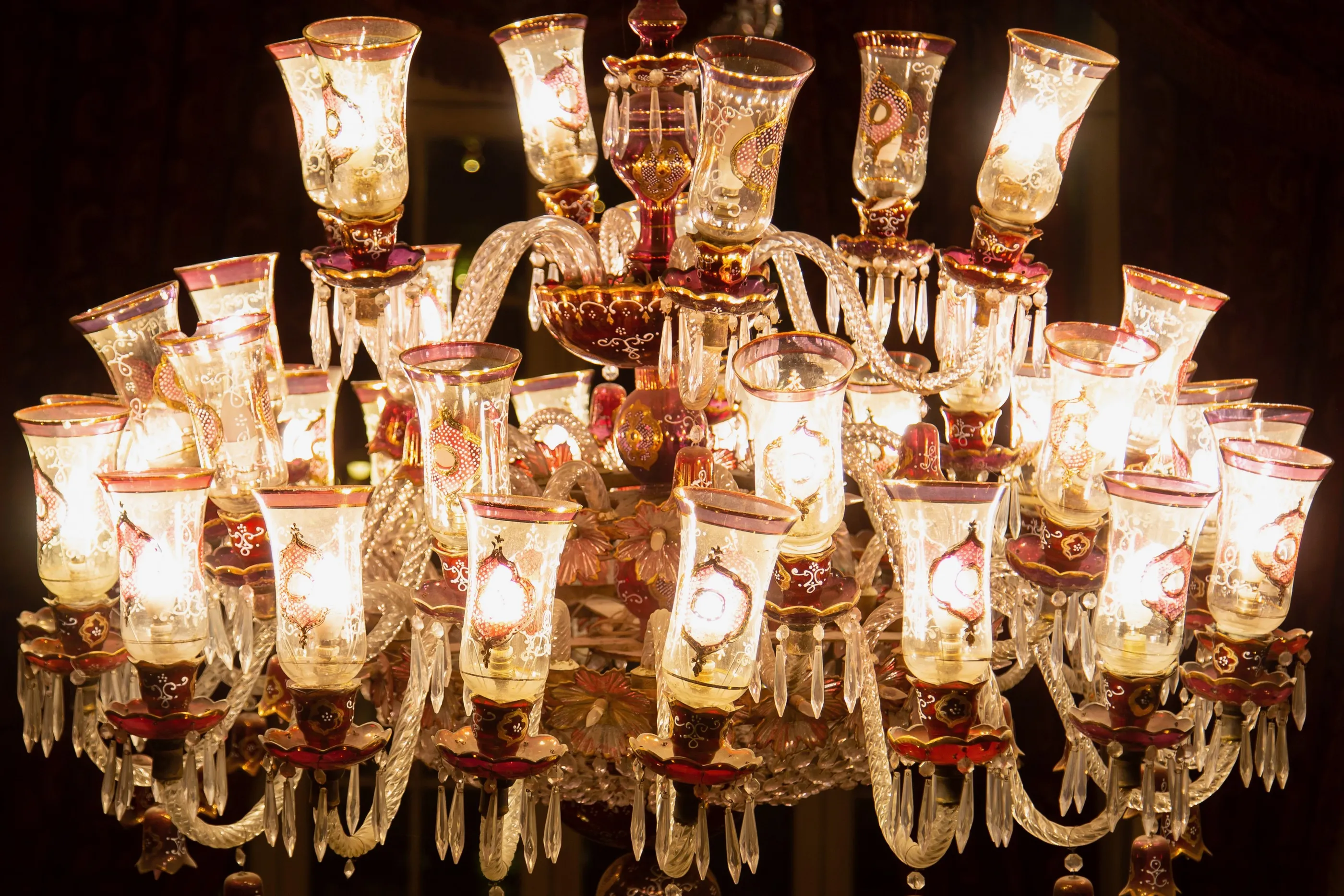
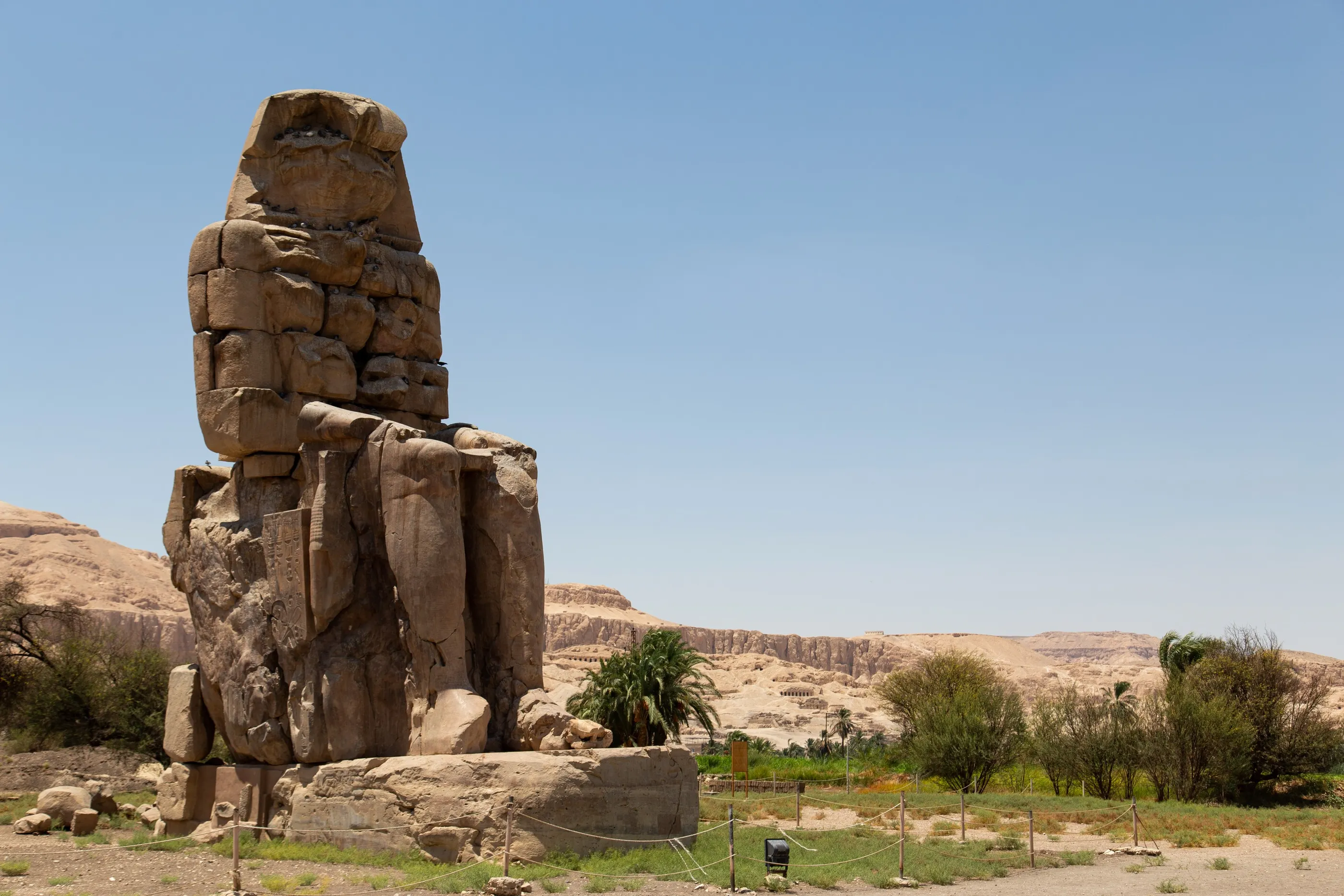
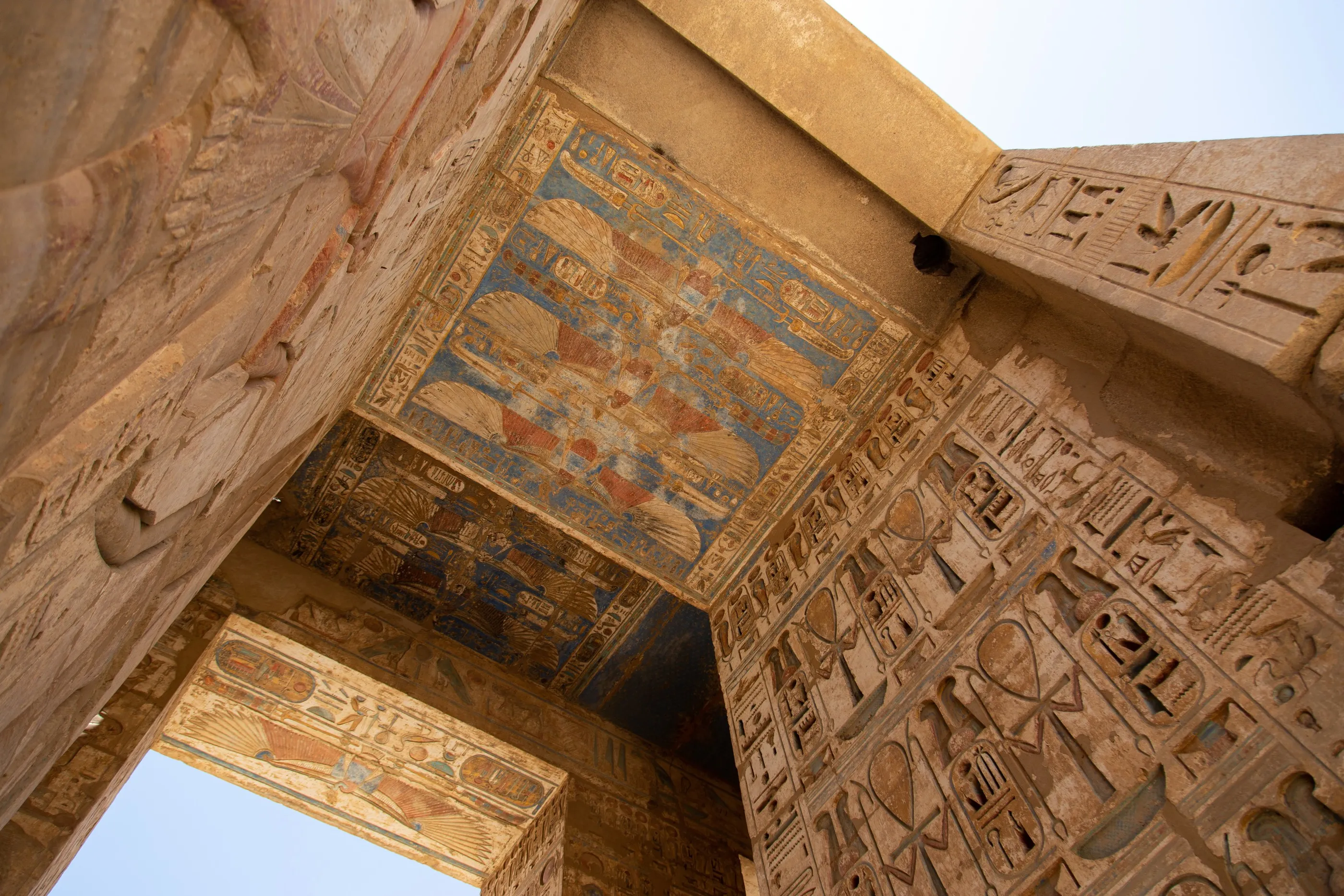
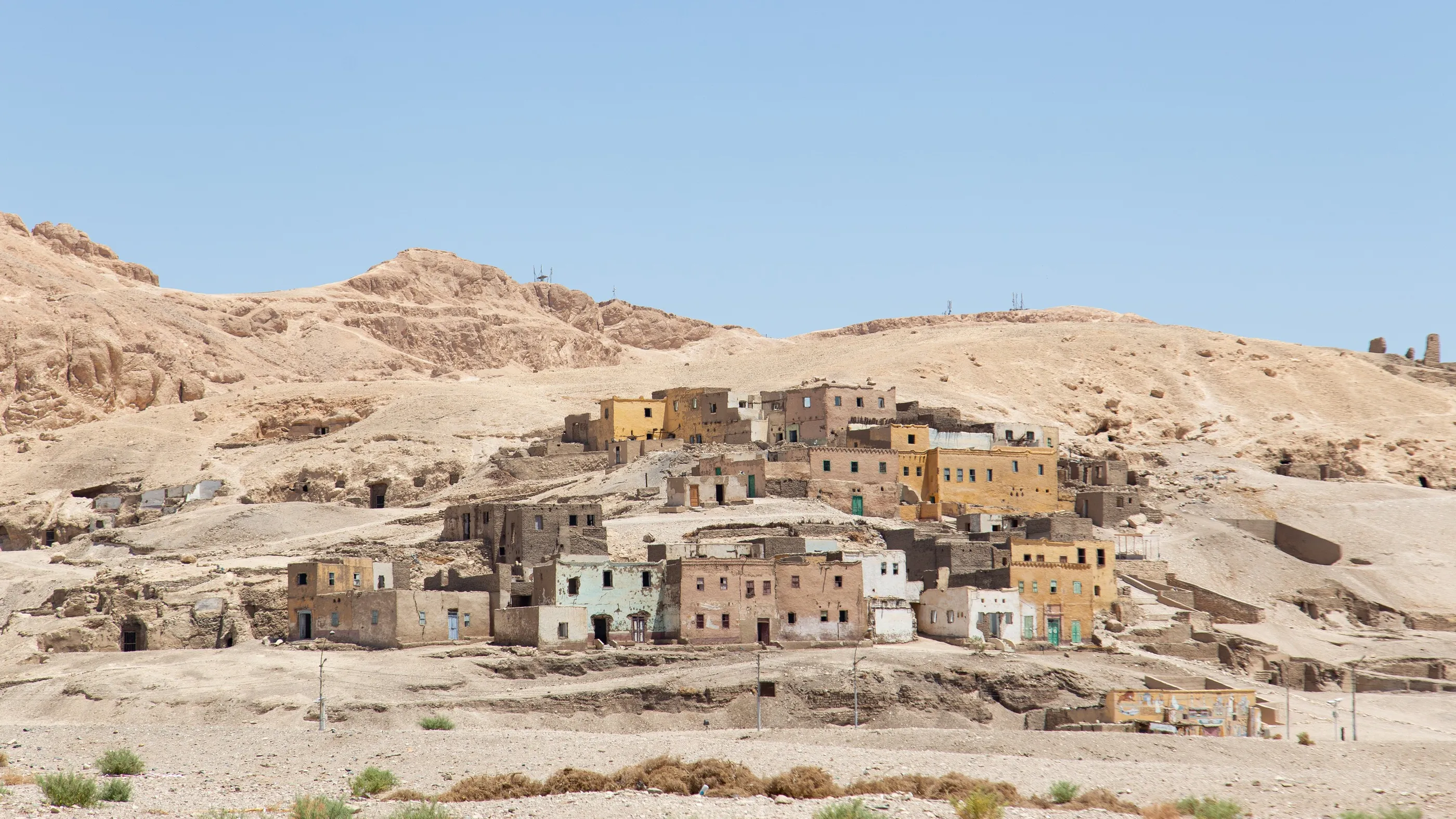
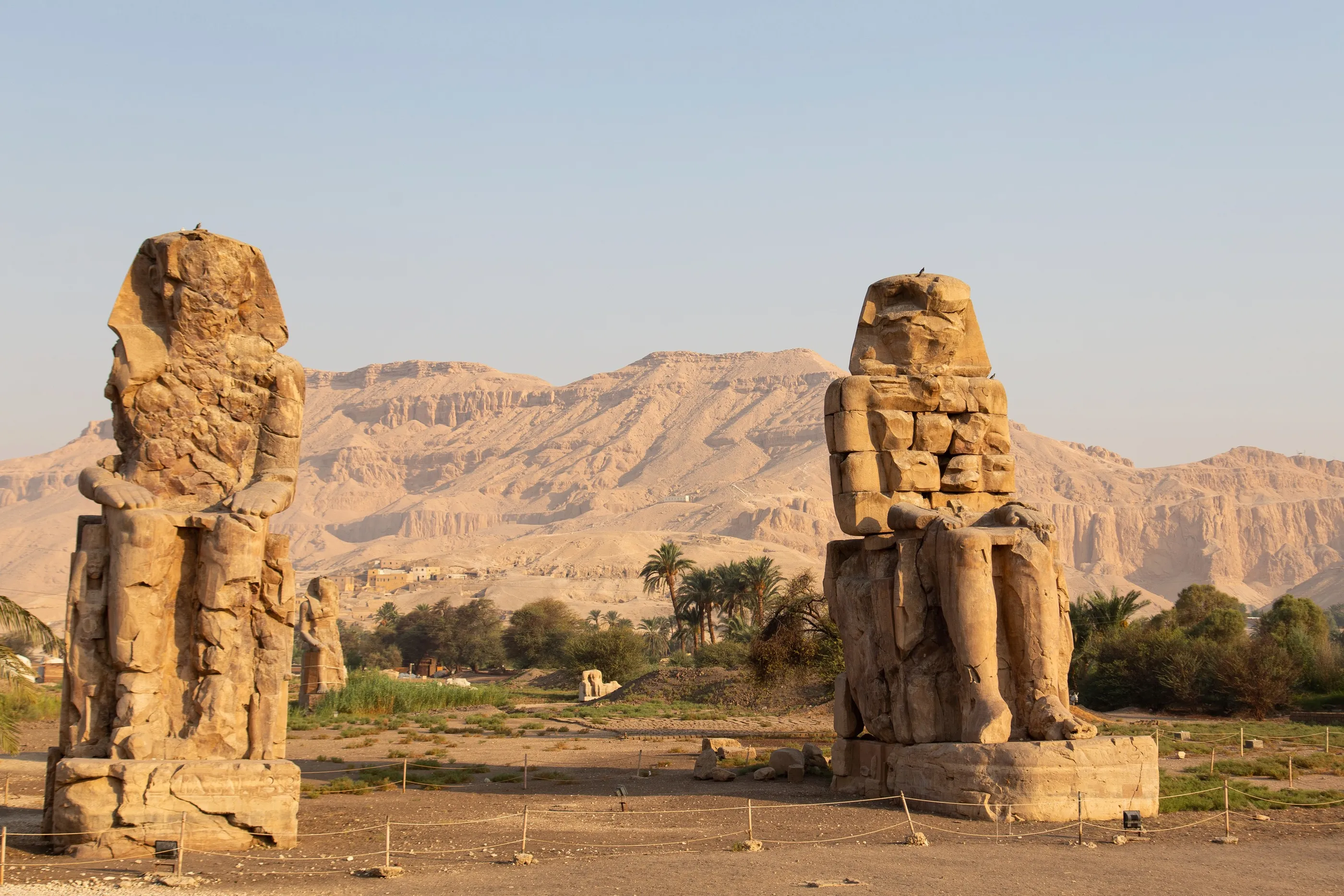
    Luxor, ancient Thebes. On the west bank, the Colossi of Memnon, Hatshepsut’s temple set against the cliffs of Deir el-Bahari and the still-painted ceilings of Medinet Habu. At sunset a felucca glides across the Nile before the hills where the pharaohs lie; old steamers moored along the quays recall the age of the first travellers.
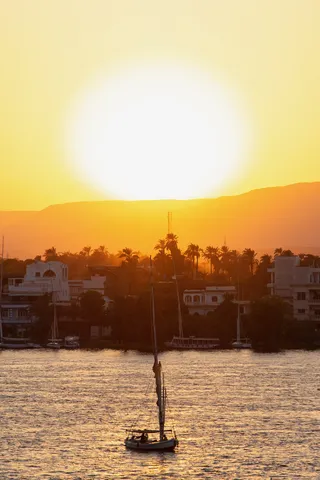
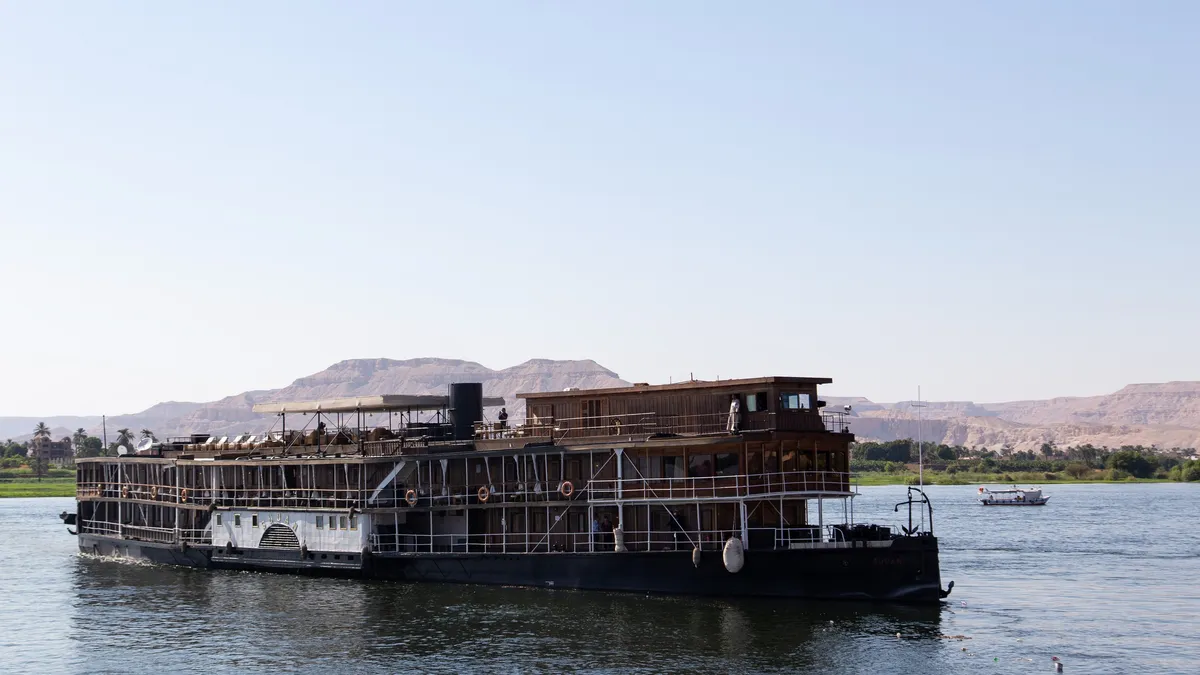
    Felucca on the Nile at sunset, Egypt — Nicolas MarincicPaddle steamer on the Nile, Egypt — Nicolas MarincicCrystal chandelier, Egypt — Nicolas MarincicTemple of Hatshepsut below the cliffs, Deir el-Bahari, Egypt — Nicolas MarincicColossus of Memnon, Luxor west bank, Egypt — Nicolas MarincicOsiride statues of Hatshepsut, Deir el-Bahari, Egypt — Nicolas MarincicPainted ceiling and architrave, Medinet Habu, Egypt — Nicolas MarincicQurna village on the Theban hillside, Egypt — Nicolas Marincic
  10. By train↗ 186 km

    Days 17–19

    Aswan

    Egypt

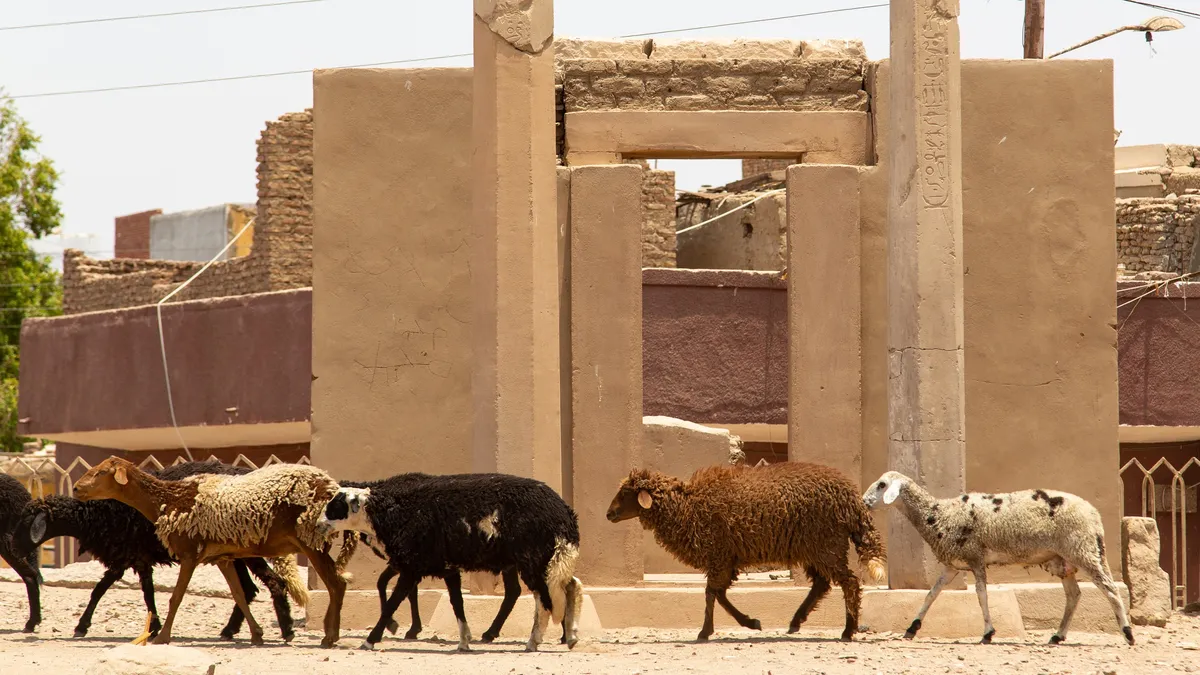
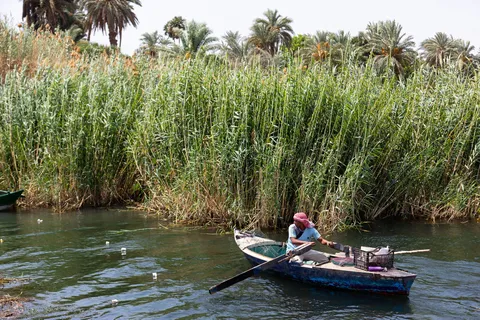
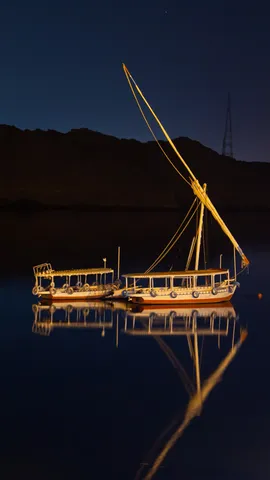
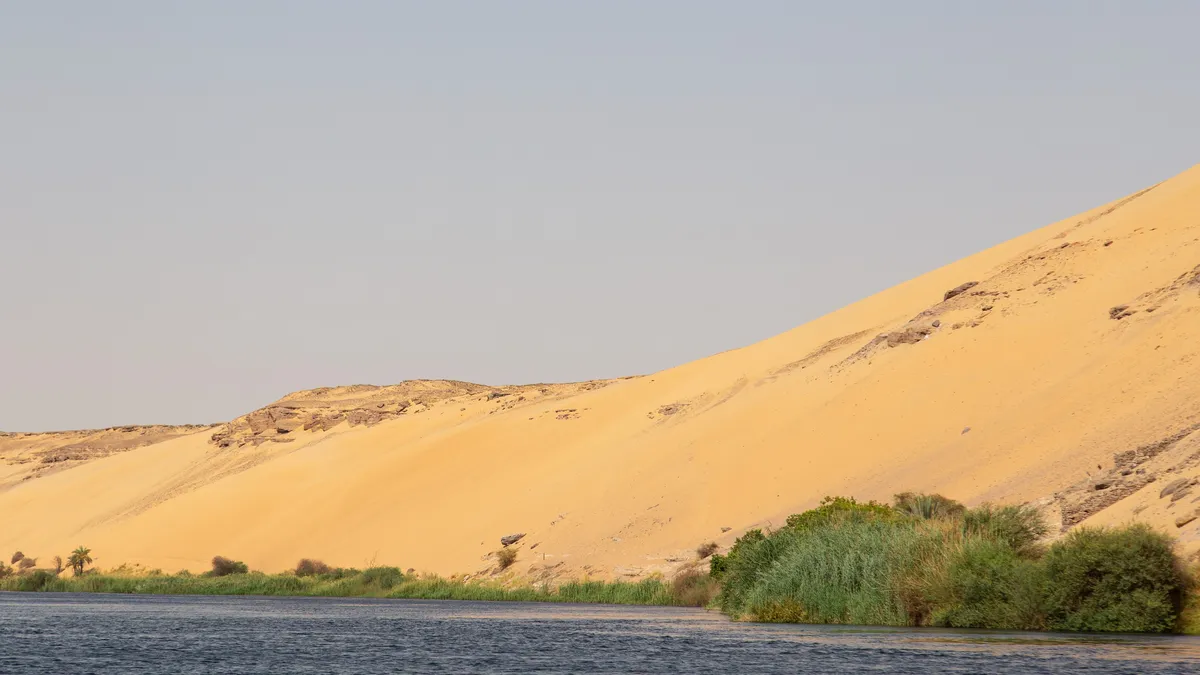
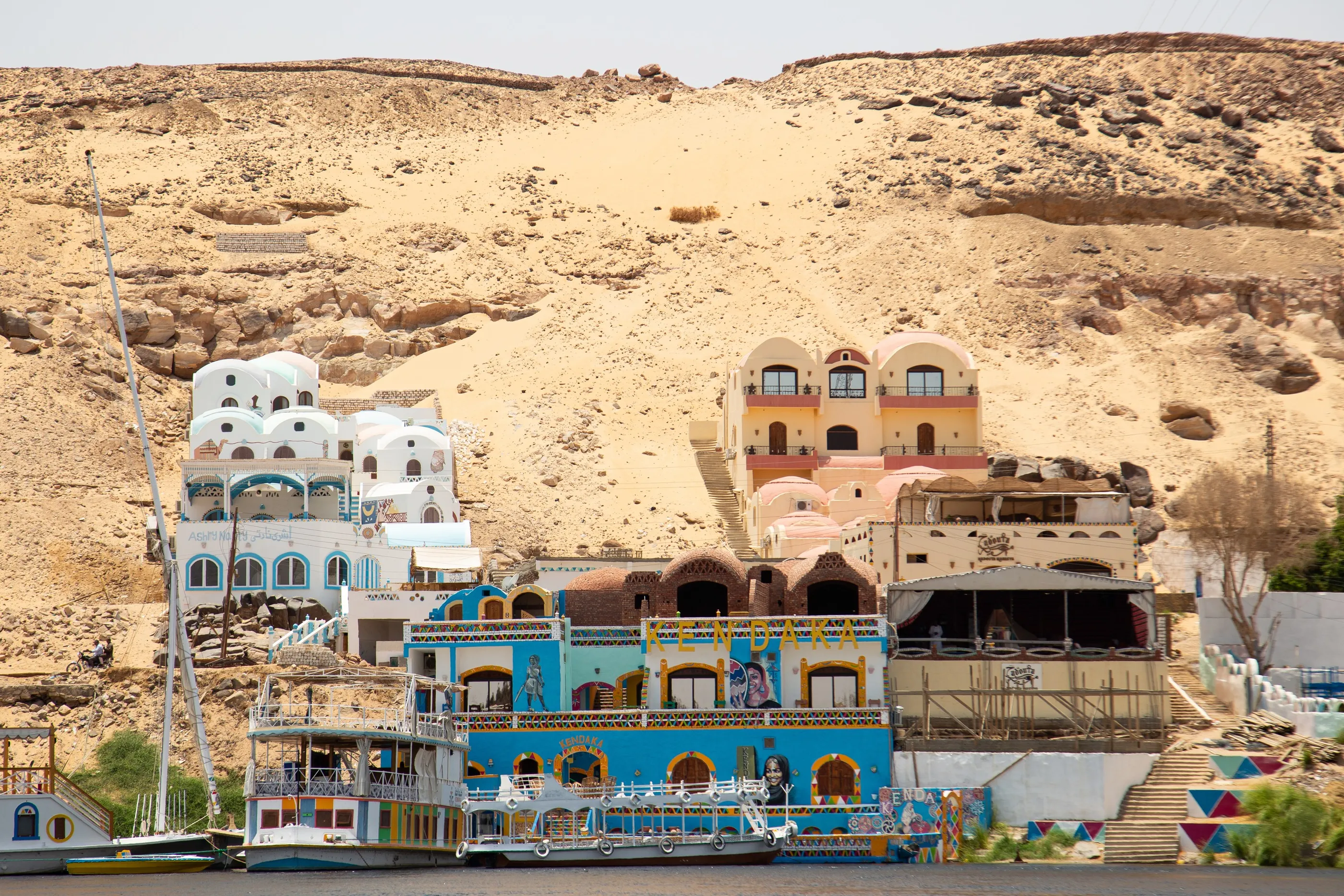
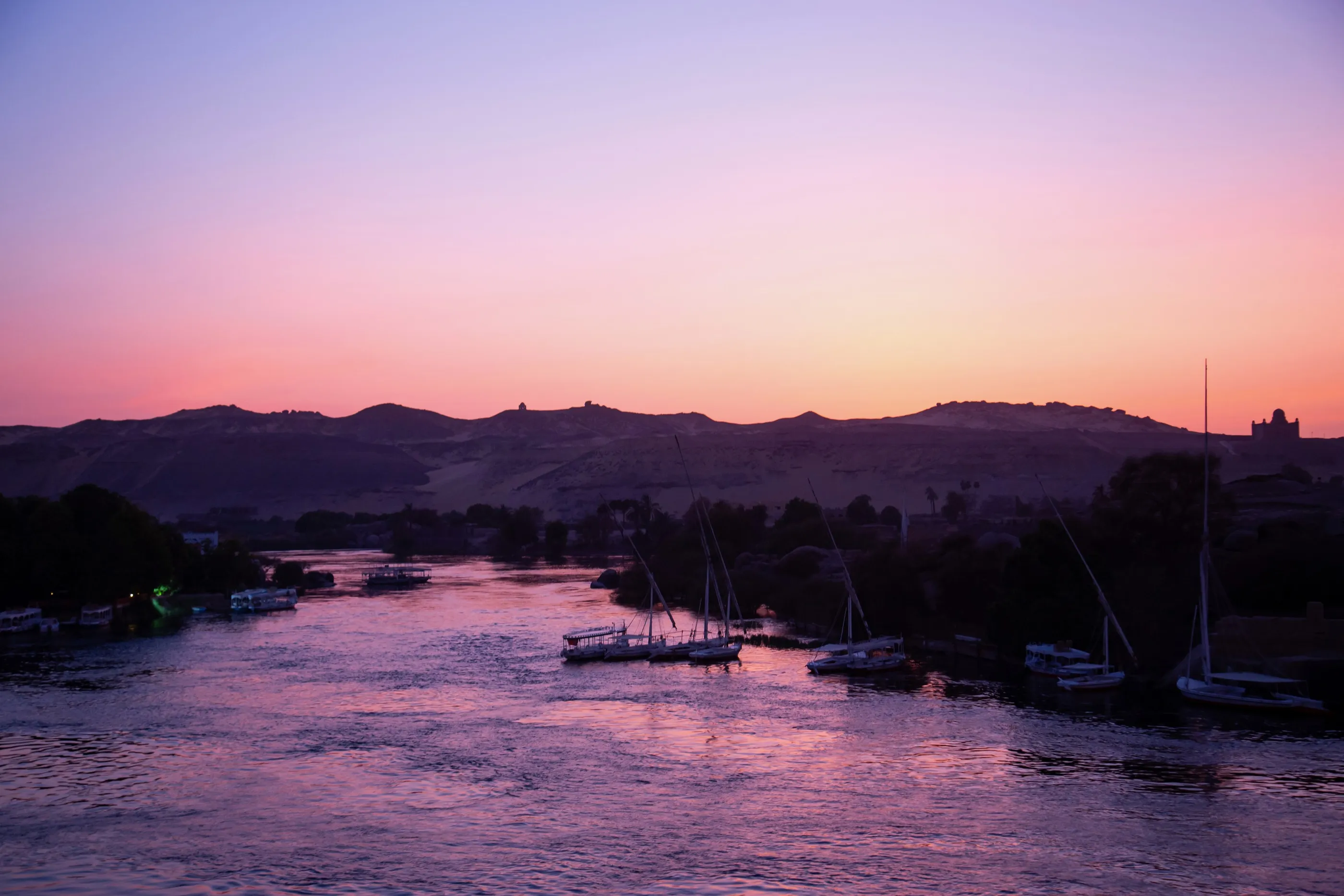
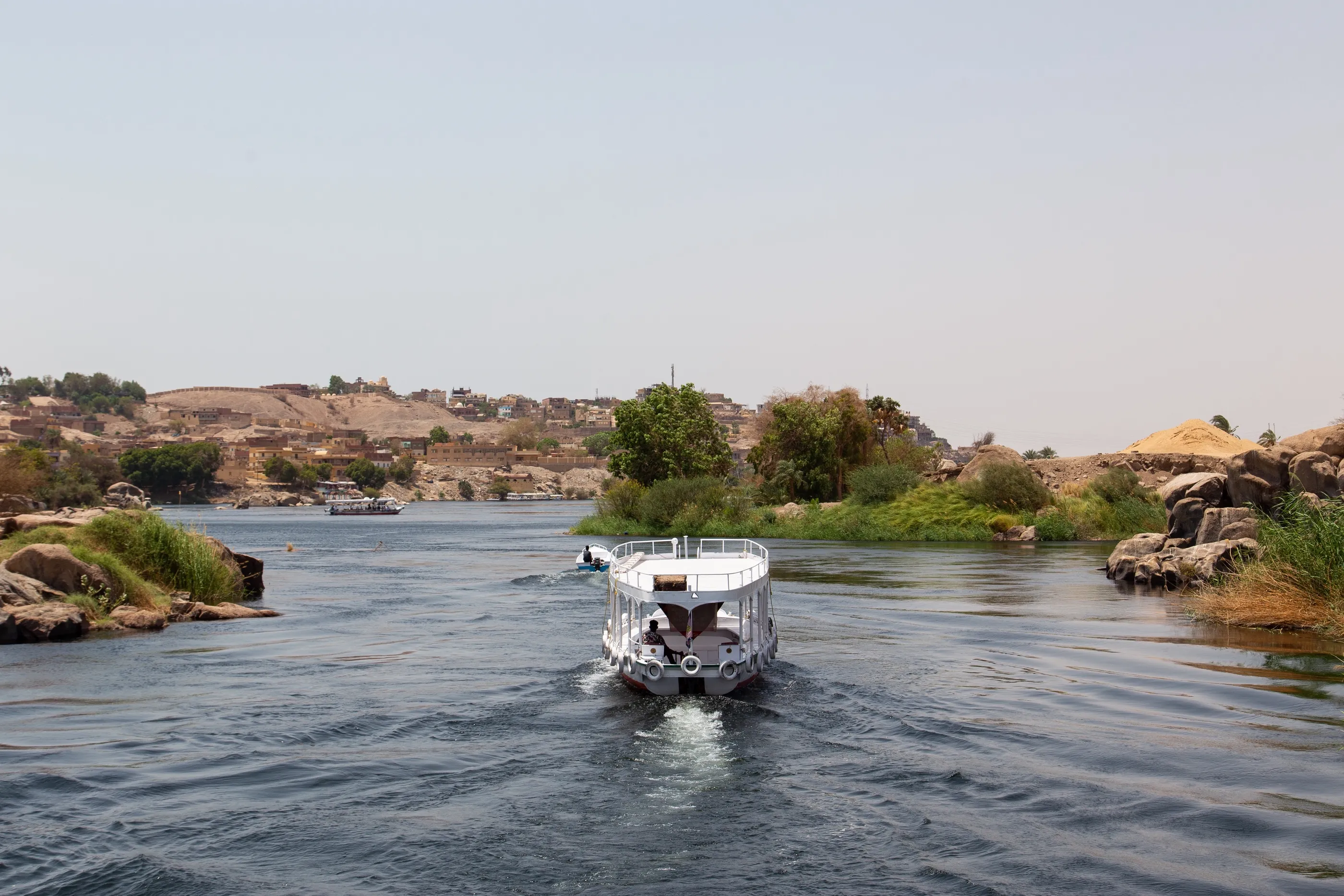
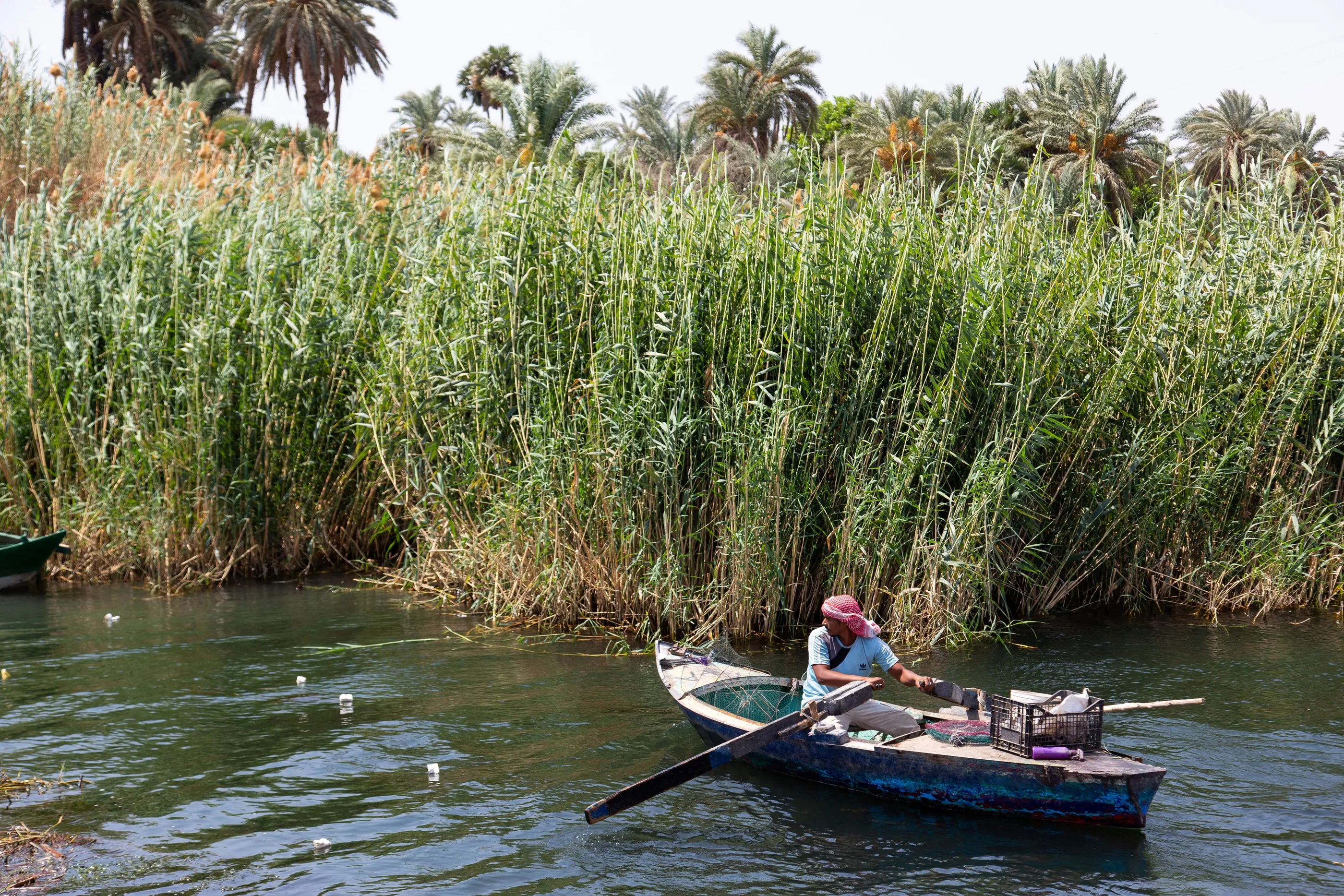
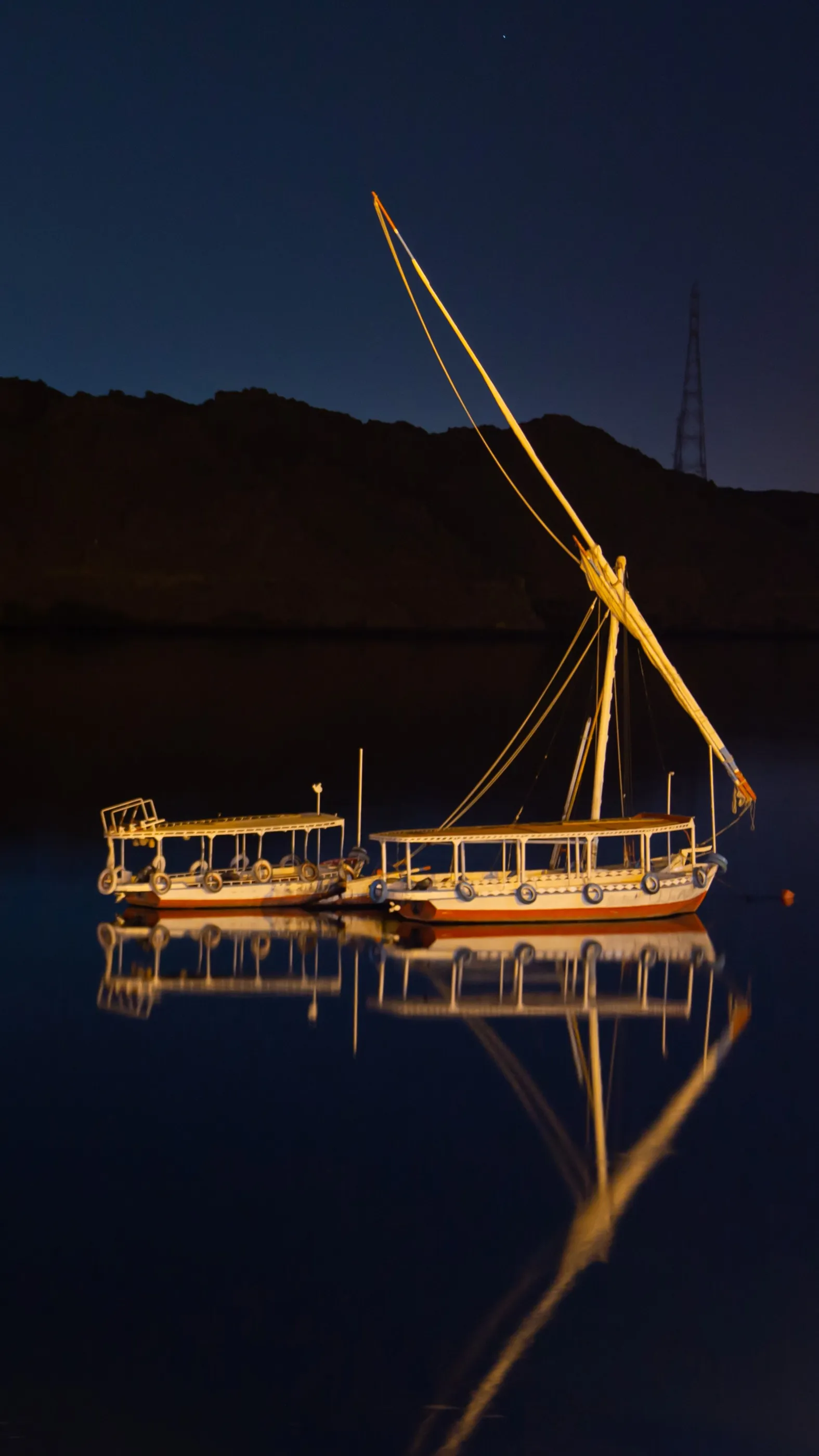
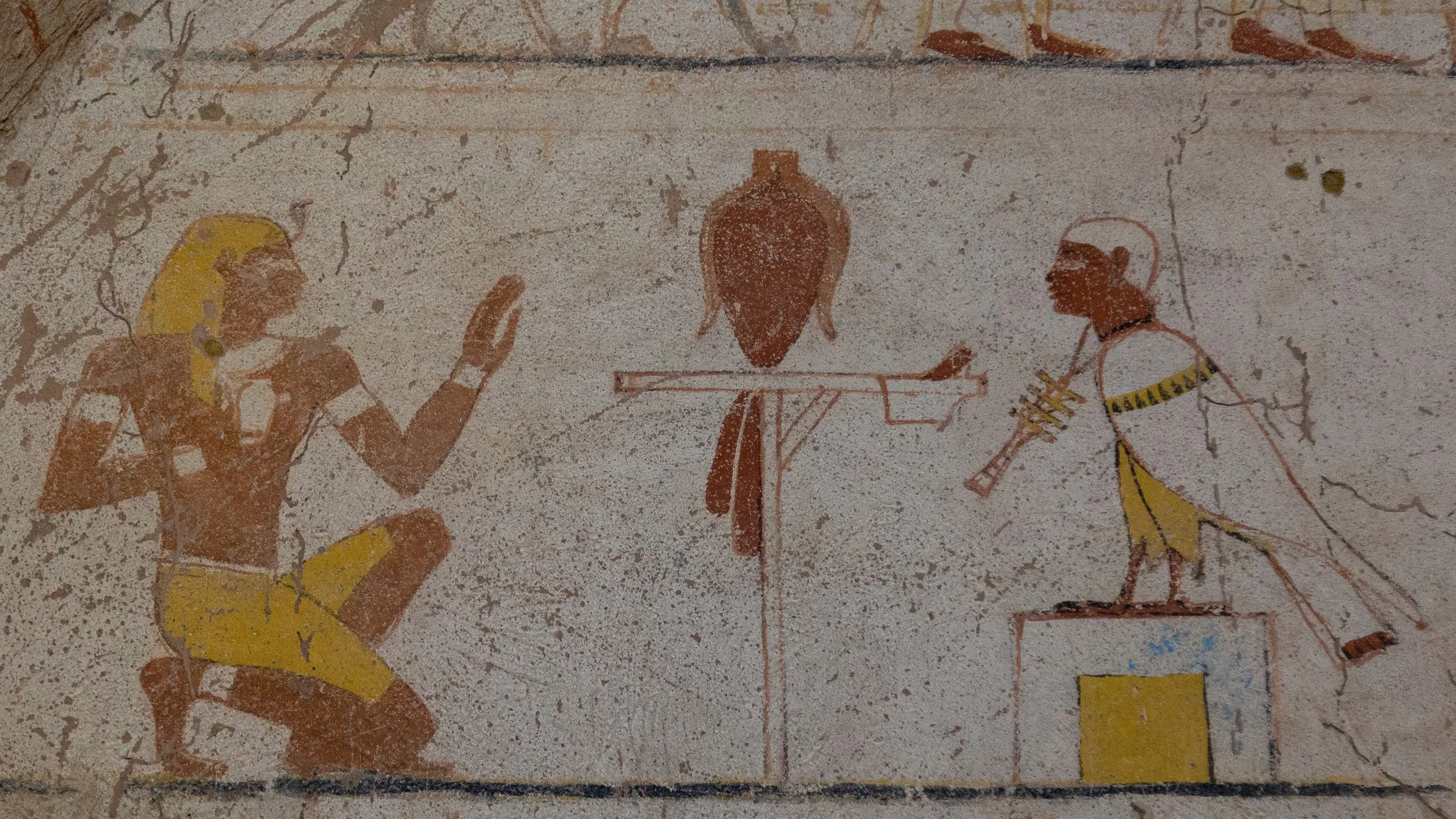
    In Aswan the Nile narrows between the granite boulders of the First Cataract. We sail between the islands to the Nubian villages of the west bank, with their houses painted blue and ochre. In the evening the river turns violet. On the west bank, the princes’ tombs of Qubbet el-Hawa overlook the river; at night the feluccas are mirrored in the still water.

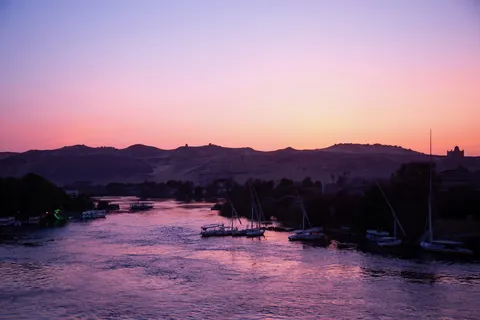
    Colourful Nubian houses on the Nile bank, Egypt — Nicolas MarincicPink dusk over the Nile, Egypt — Nicolas MarincicBoat among the rocks of the Aswan cataract, Egypt — Nicolas MarincicSheep passing a mud-brick house, Egypt — Nicolas MarincicFisherman rowing past Nile reeds, Egypt — Nicolas MarincicFeluccas reflected at night, Aswan, Egypt — Nicolas MarincicGolden dune sloping into the Nile, Aswan, Egypt — Nicolas MarincicPainted tomb of Sarenput, Qubbet el-Hawa, Egypt — Nicolas Marincic
  11. By boat↗ 7 km

    Day 20

    Philae

    Egypt

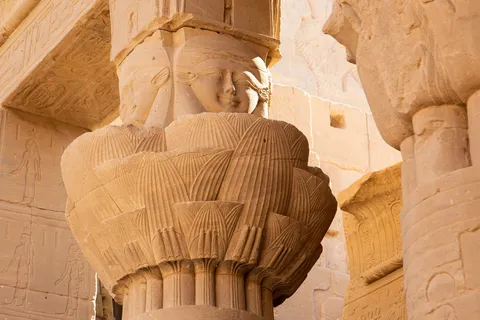
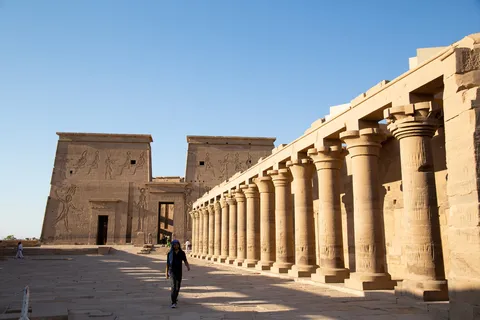
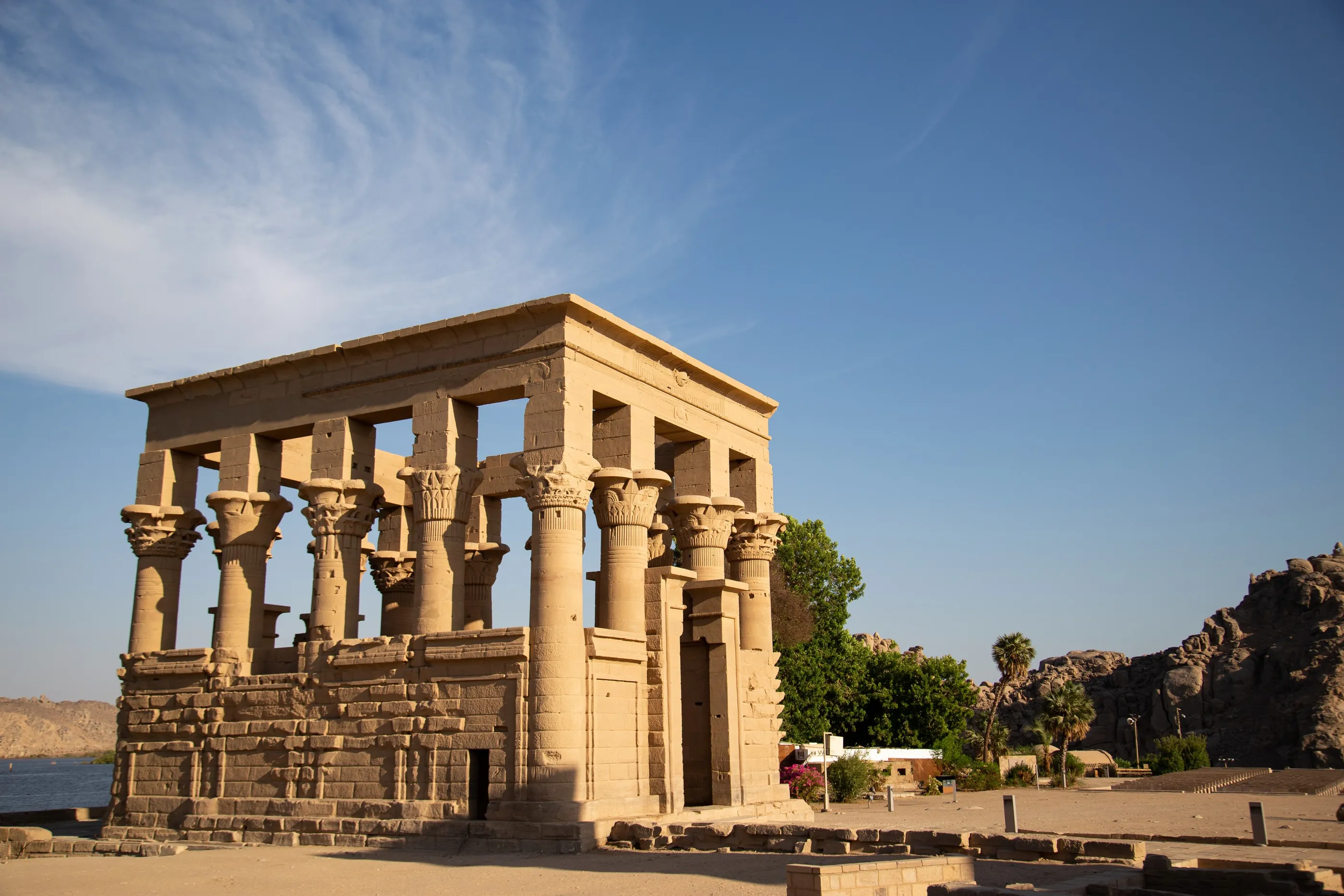
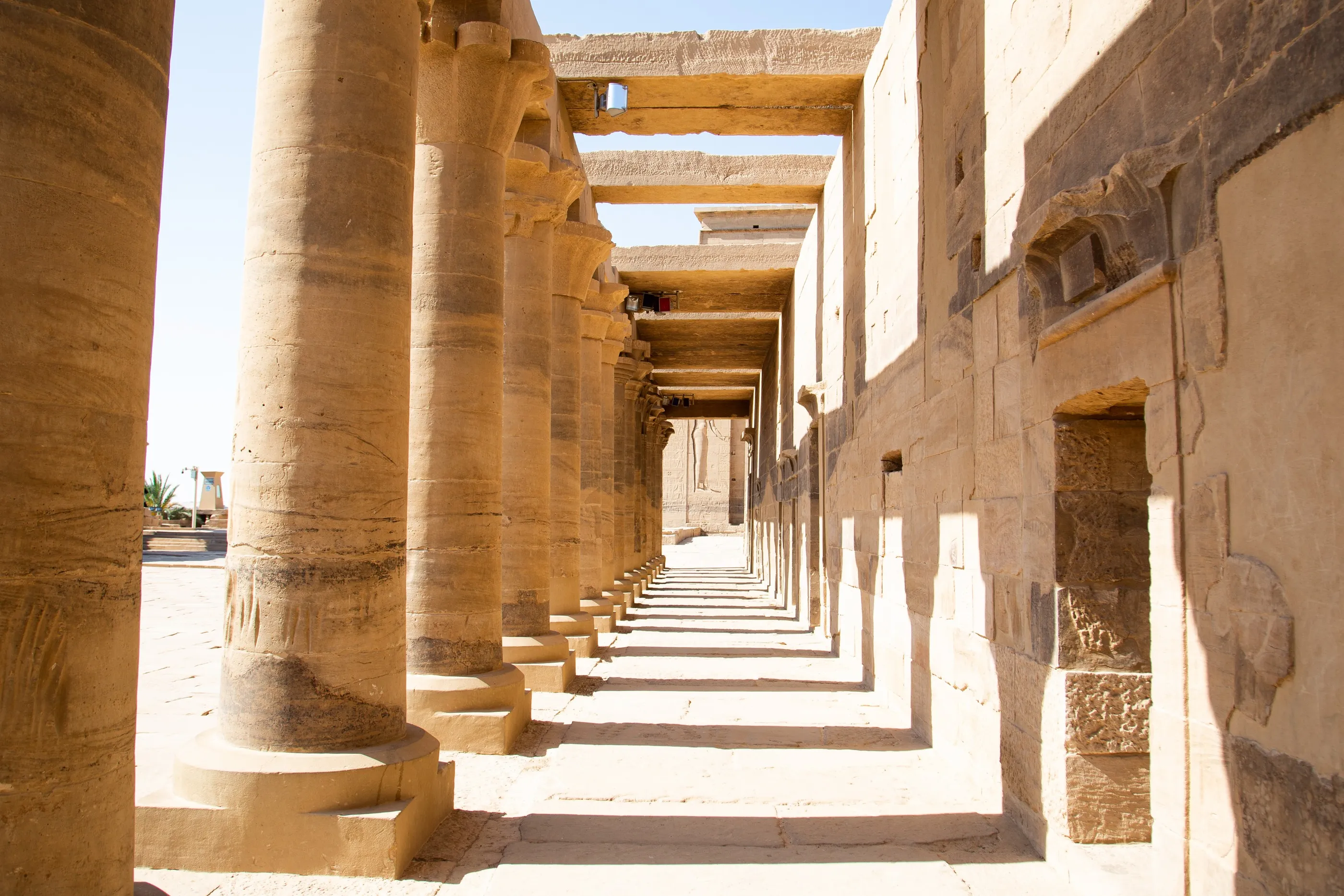
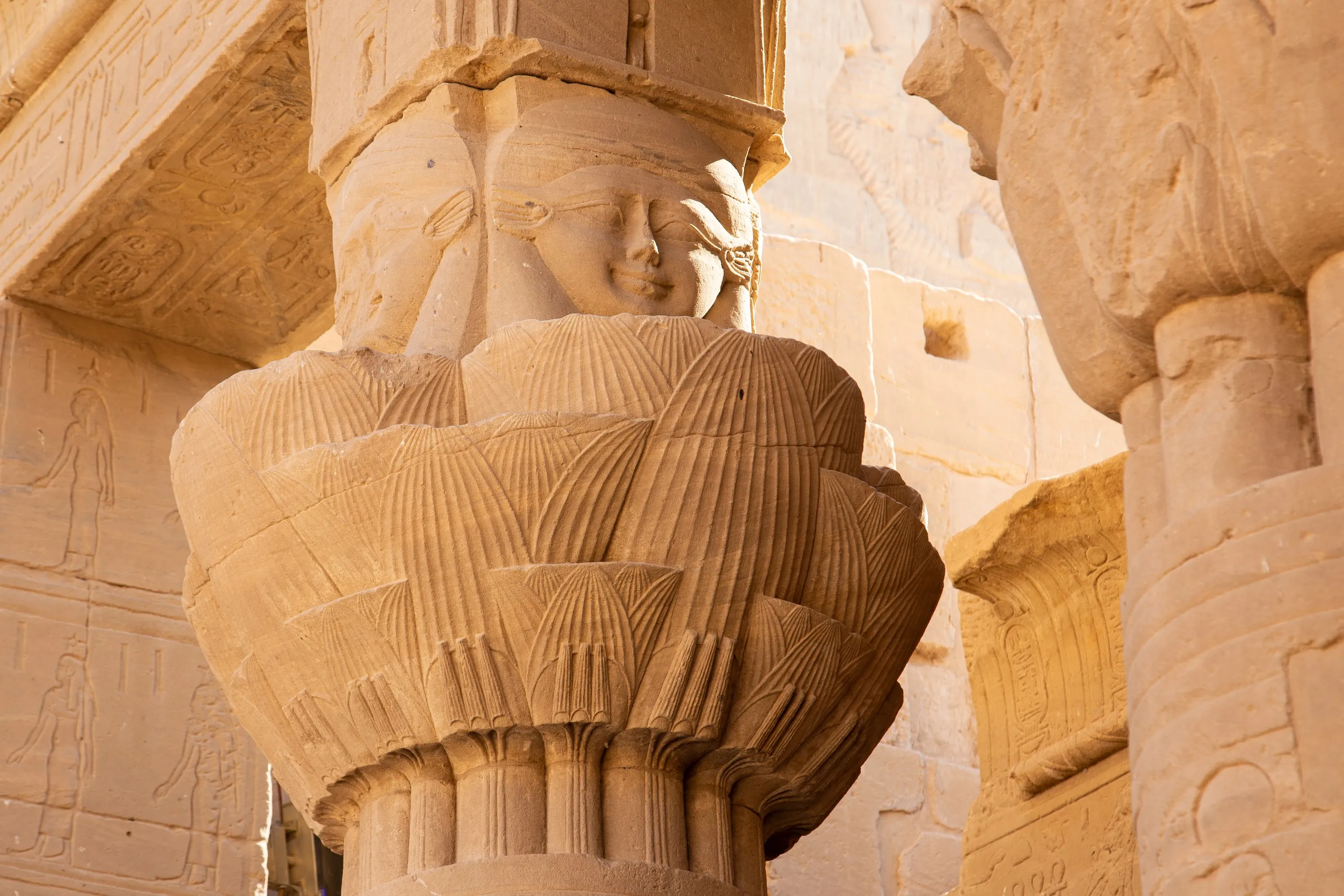
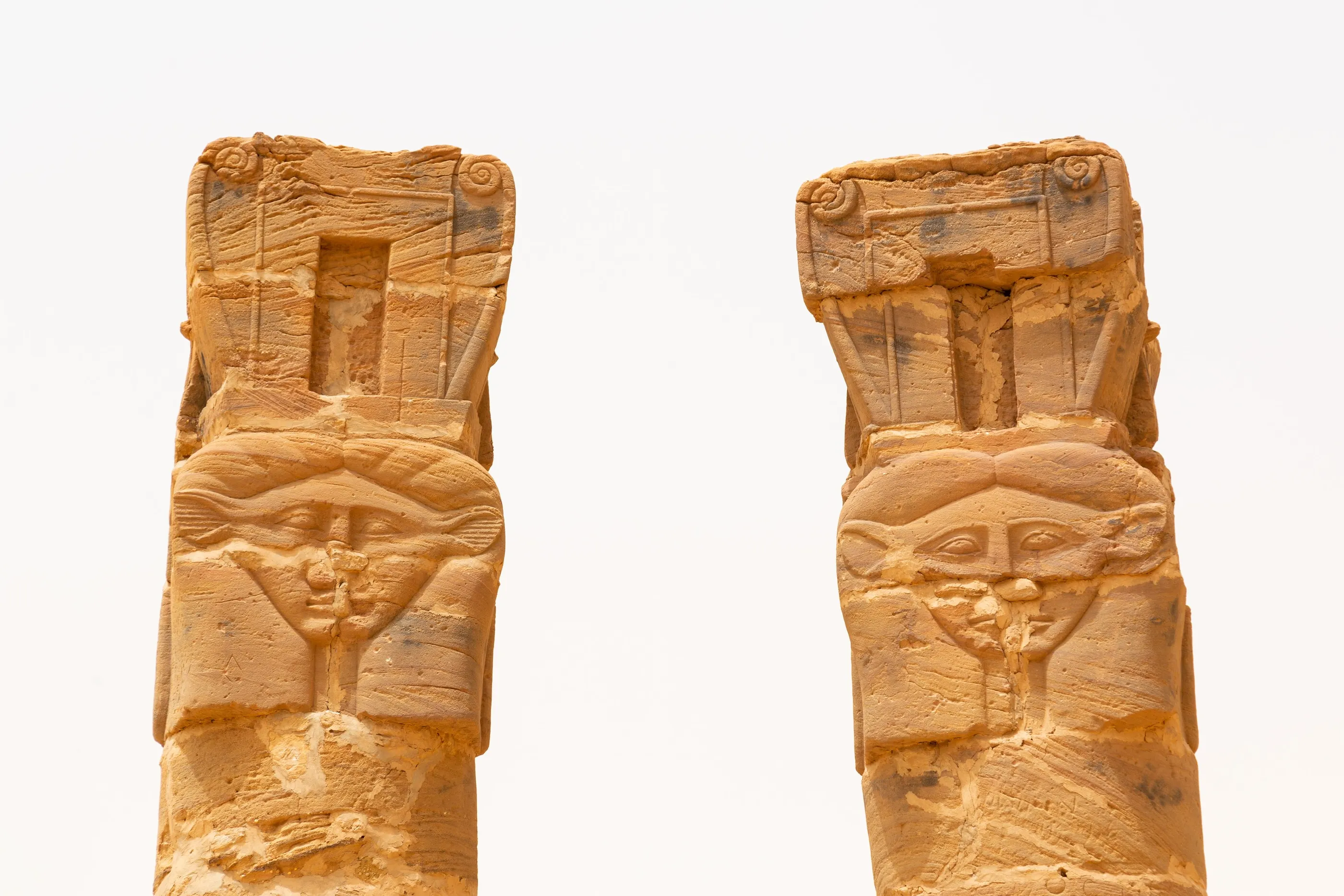
    We reach Philae by boat, as one approaches a sacred island. The temple of Isis, dismantled stone by stone and rebuilt on Agilkia island to escape the waters of the dam, has kept its Hathor capitals and long colonnades striped with shade. Trajan’s Kiosk, set at the water’s edge, seems to wait for a boat that will never come.
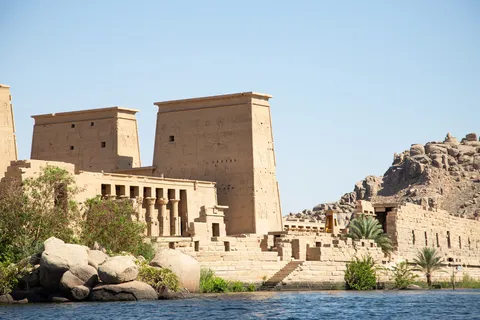
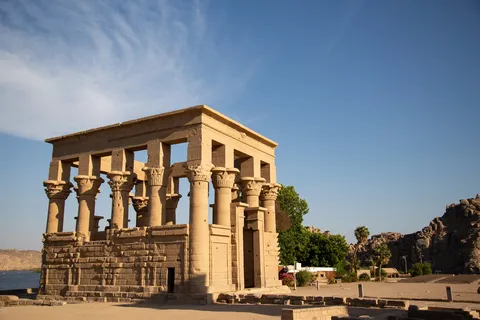
    Temple of Isis at Philae from the boat, Egypt — Nicolas MarincicTrajan’s Kiosk, Philae, Egypt — Nicolas MarincicColonnade and shadows, Philae, Egypt — Nicolas MarincicHathor capital, Philae, Egypt — Nicolas MarincicFirst pylon and colonnade, Philae, Egypt — Nicolas Marincic
  12. By boat↗ 106 km

    Day 21

    Aboard the Sudan: Kom Ombo and Edfu

    Egypt

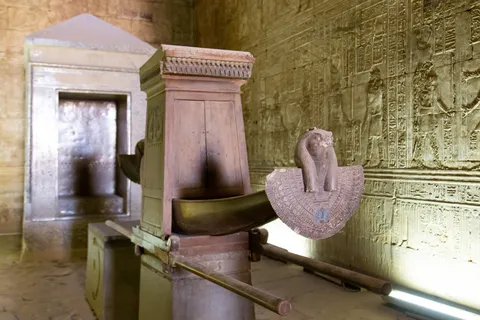
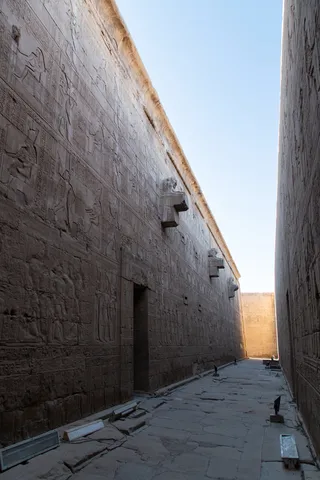
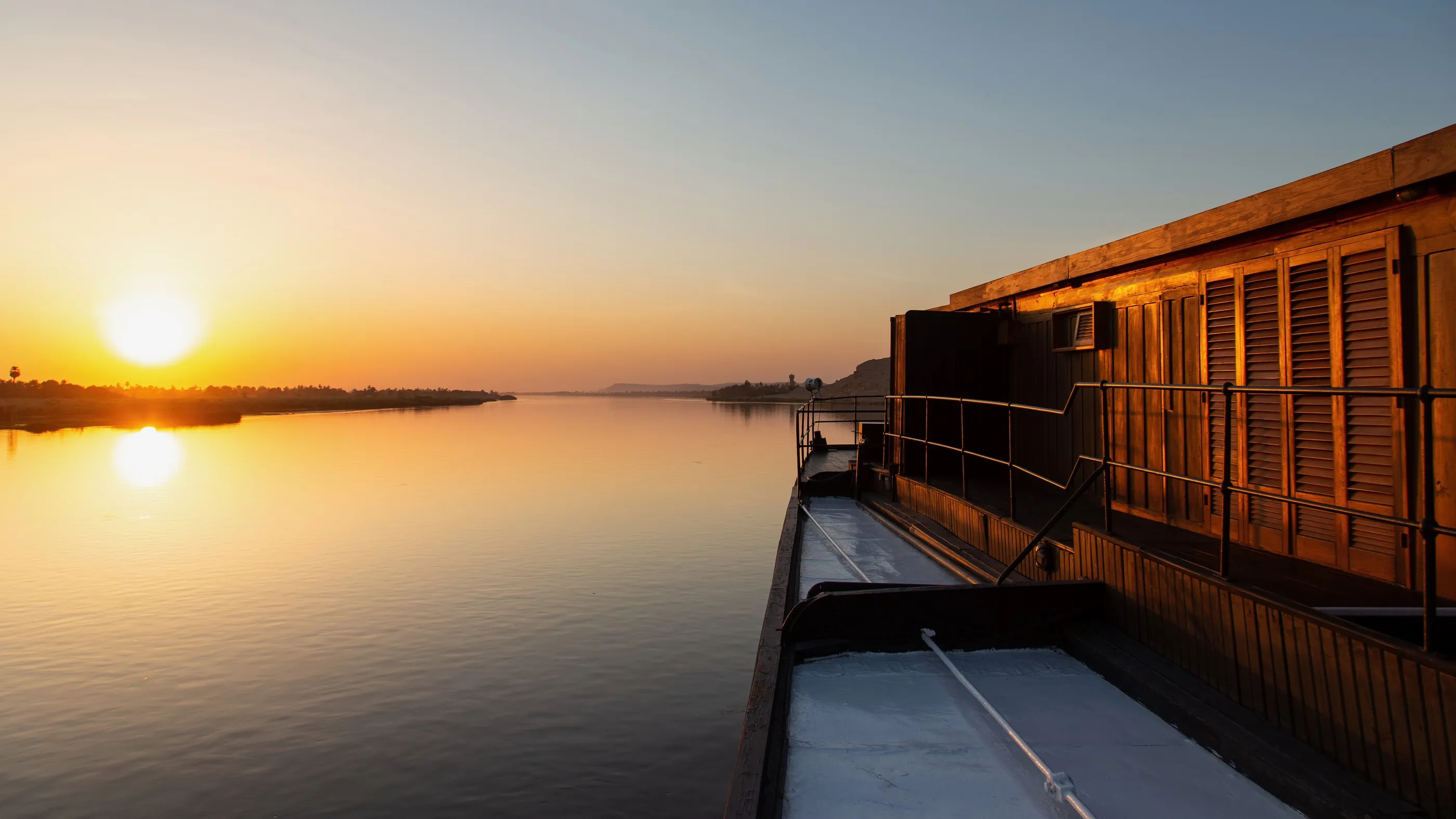
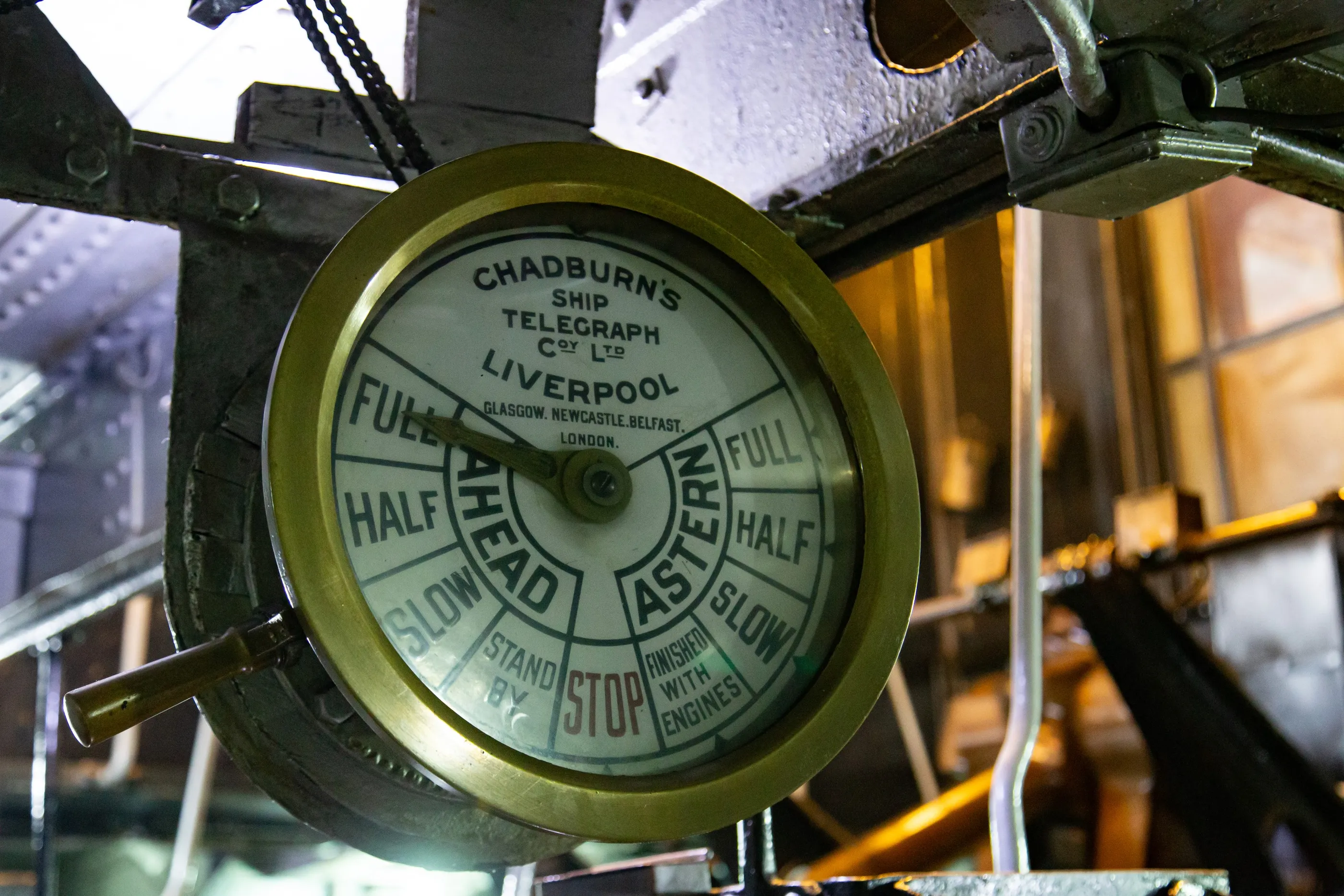
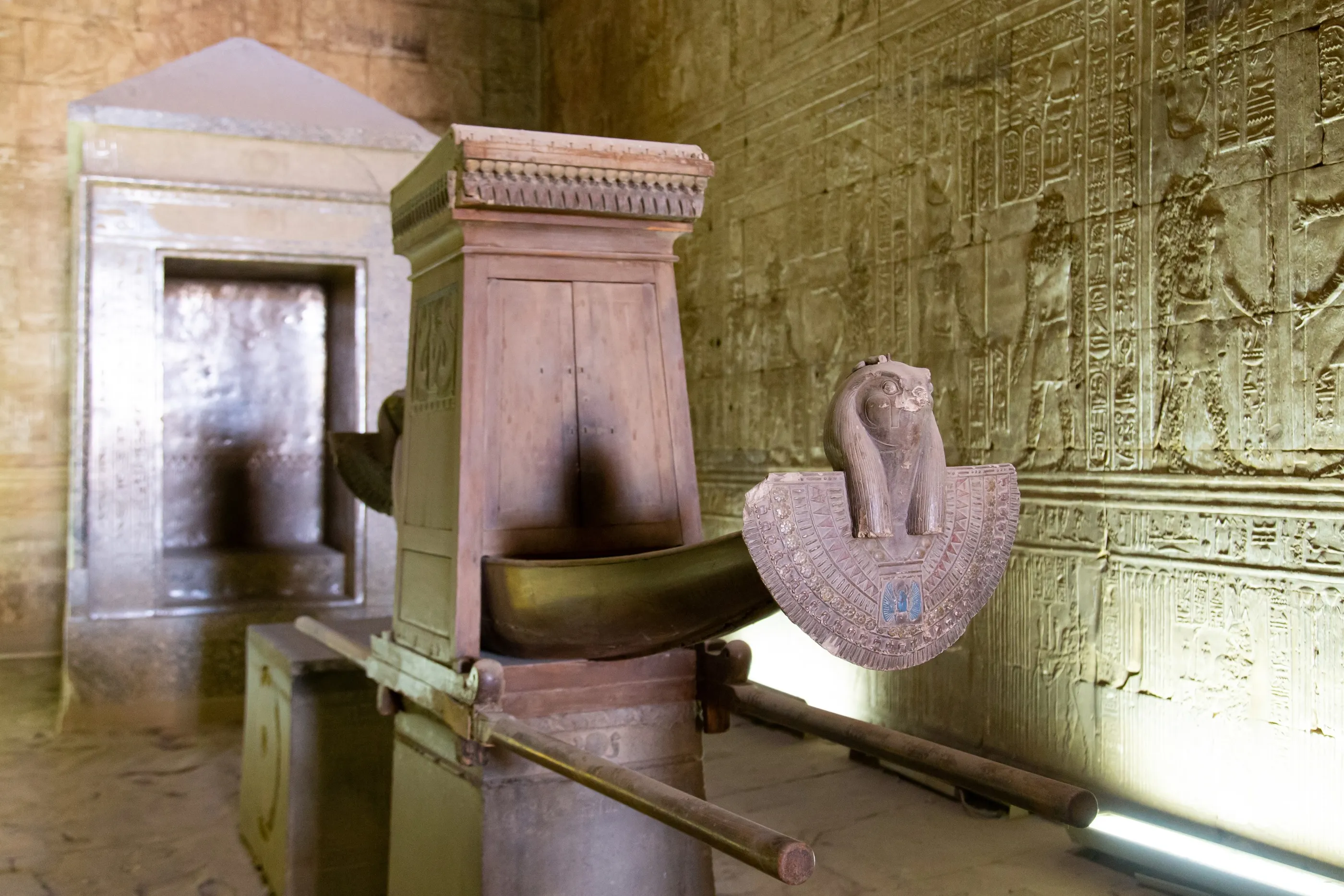
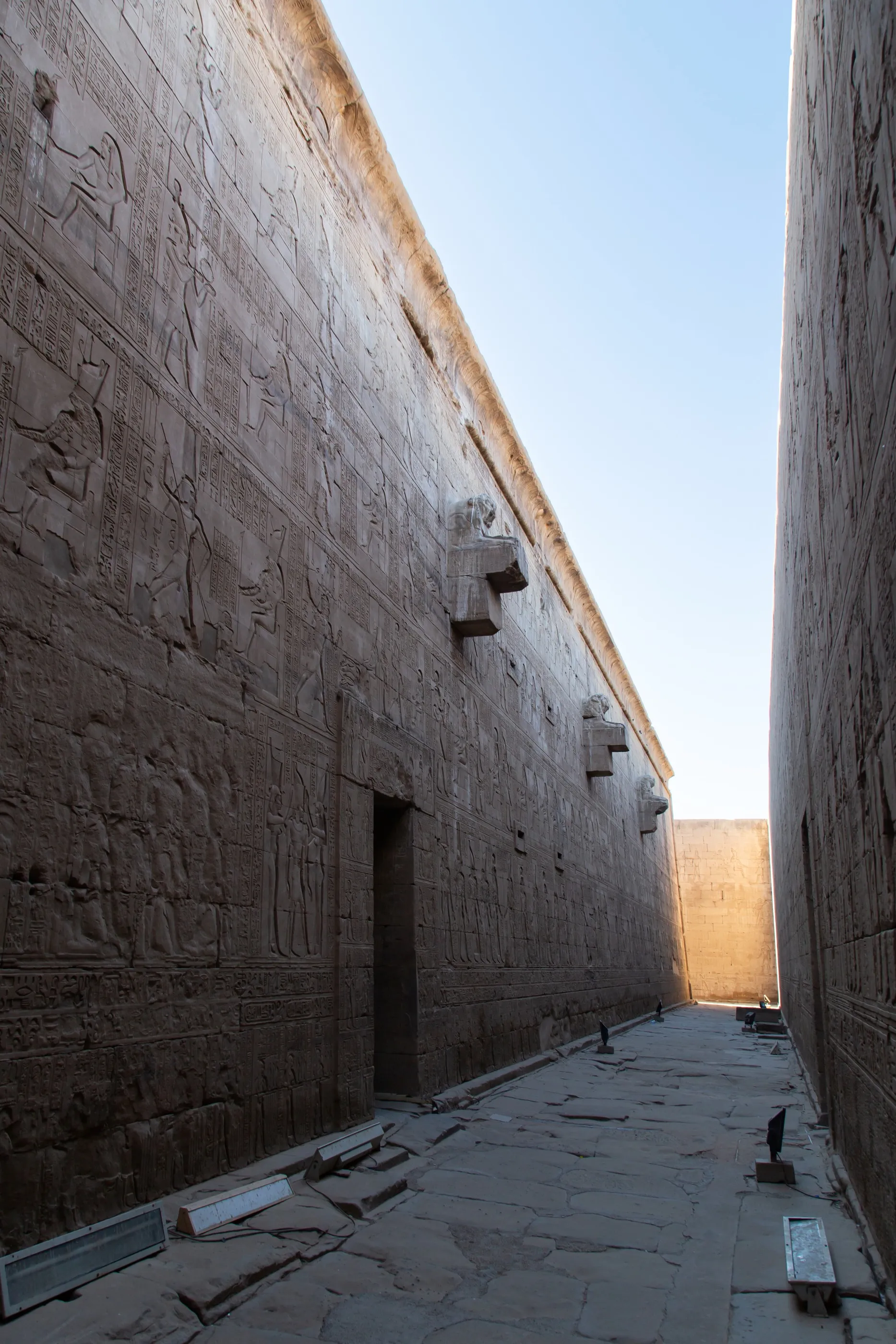
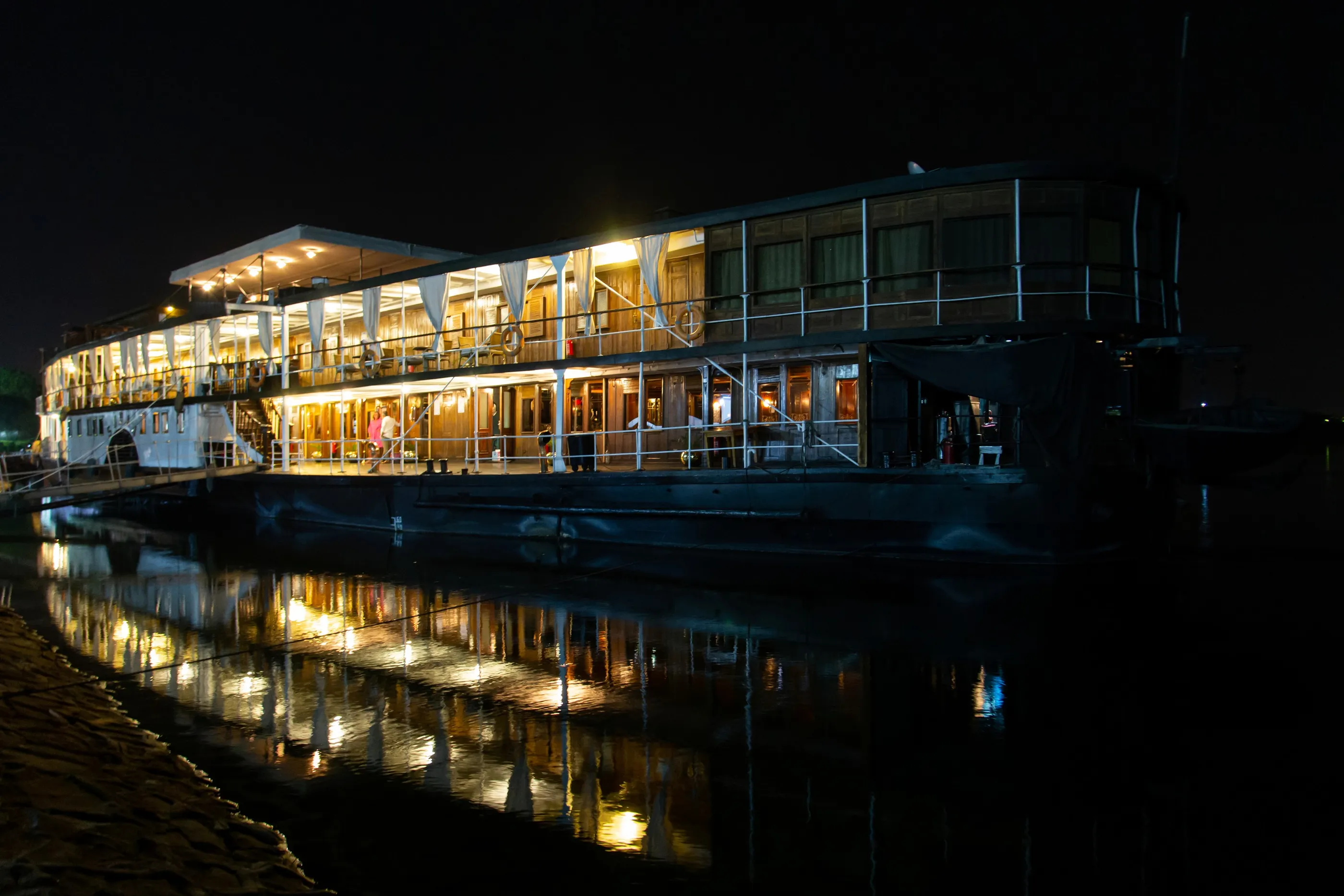
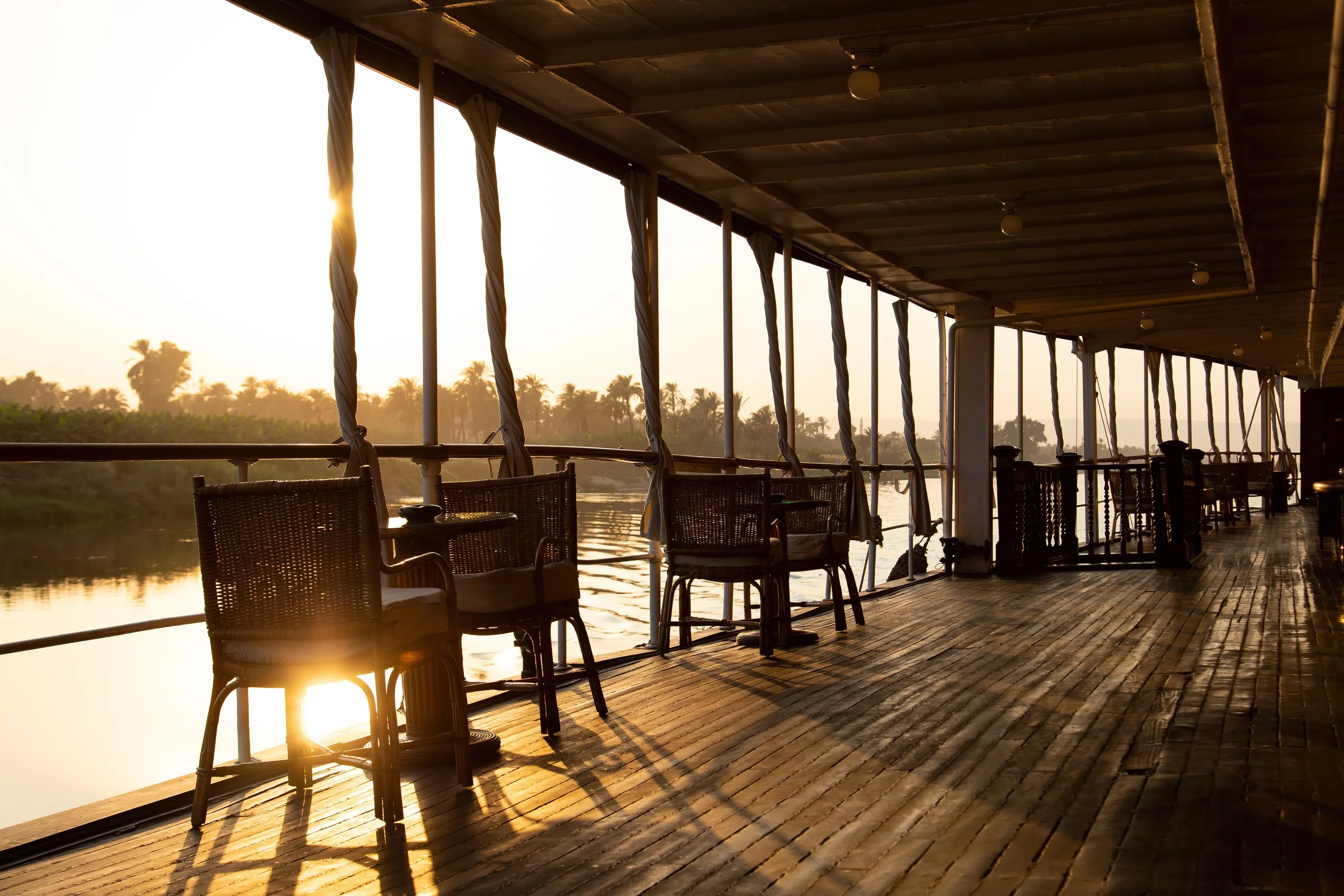
    We board the Sudan, an early twentieth-century paddle steamer with wood panelling, a brass engine telegraph and cabins from another age. A stop at Kom Ombo, then at Edfu, where Horus’s granite falcon guards the entrance to the best-preserved temple in Egypt. In the evening, a red sun sinks behind the palms.
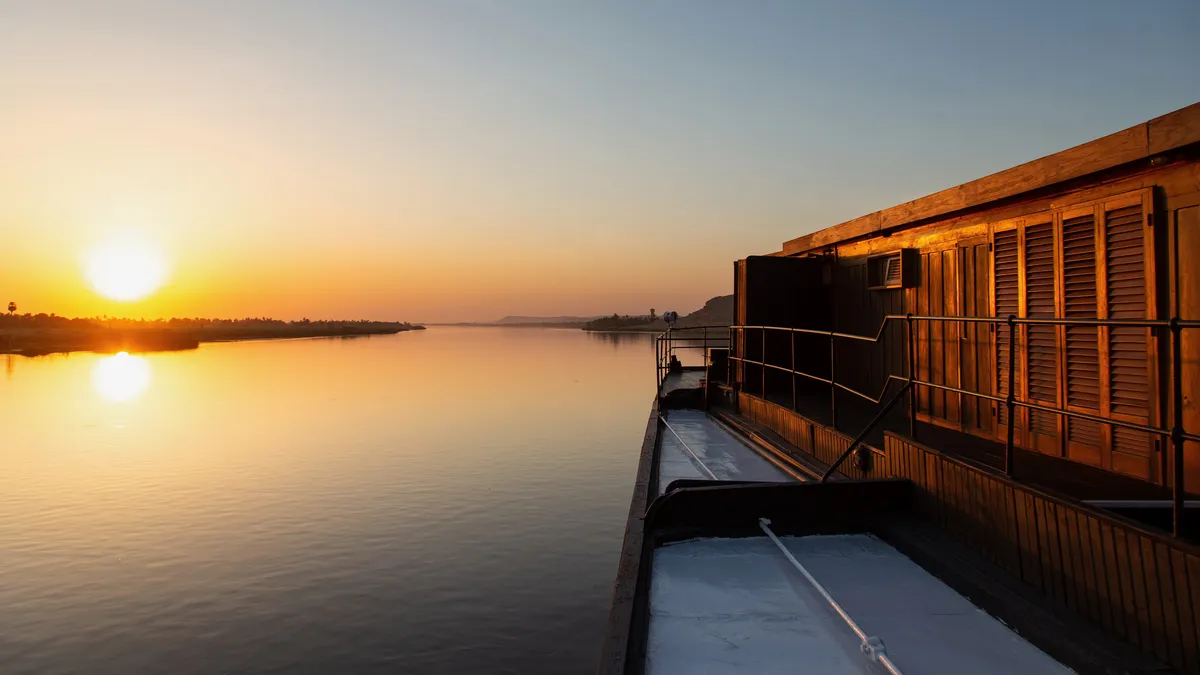
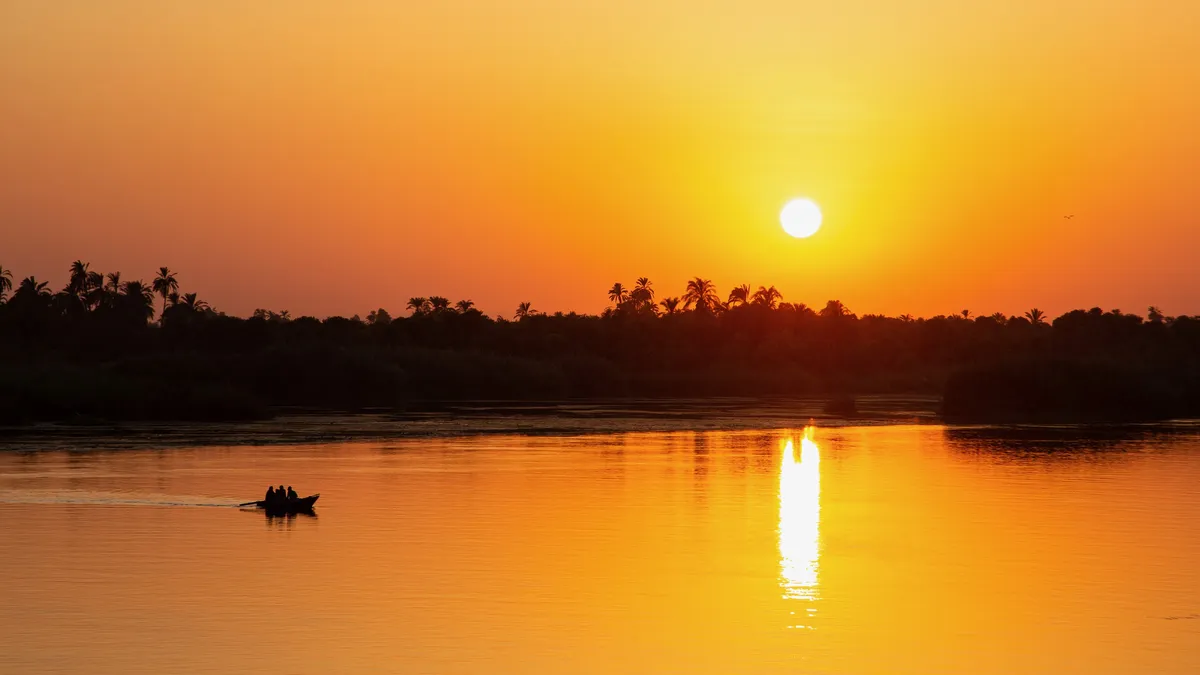
    Sunset over the Nile from the deck, Egypt — Nicolas MarincicBoat on the Nile at sunset, Egypt — Nicolas MarincicGranite Horus falcon, Edfu, Egypt — Nicolas MarincicEngine telegraph aboard the steamship Sudan, Egypt — Nicolas MarincicSanctuary with sacred barque, Edfu, Egypt — Nicolas MarincicAmbulatory between the walls of Edfu temple, Egypt — Nicolas Marincic
  13. By boat↗ 85 km

    Day 22

    Esna, Karnak and Luxor Temple

    Egypt

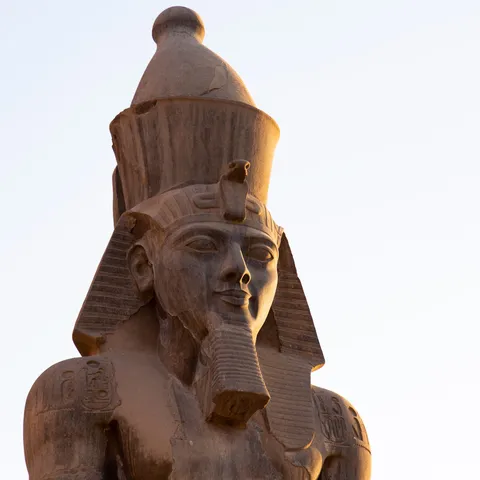
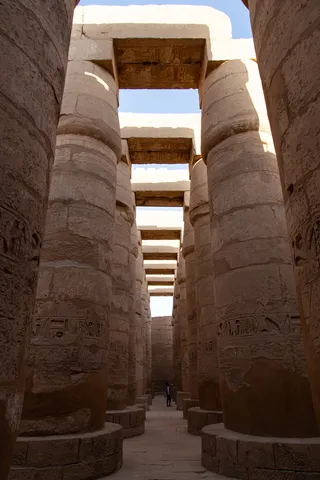
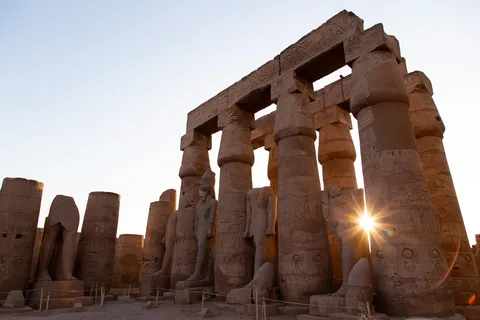
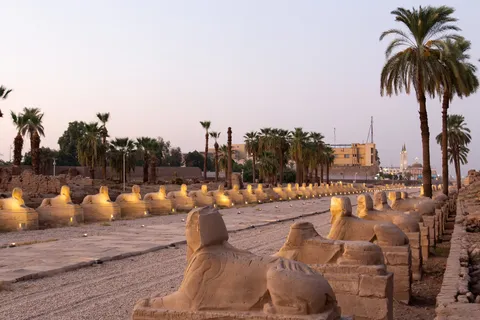
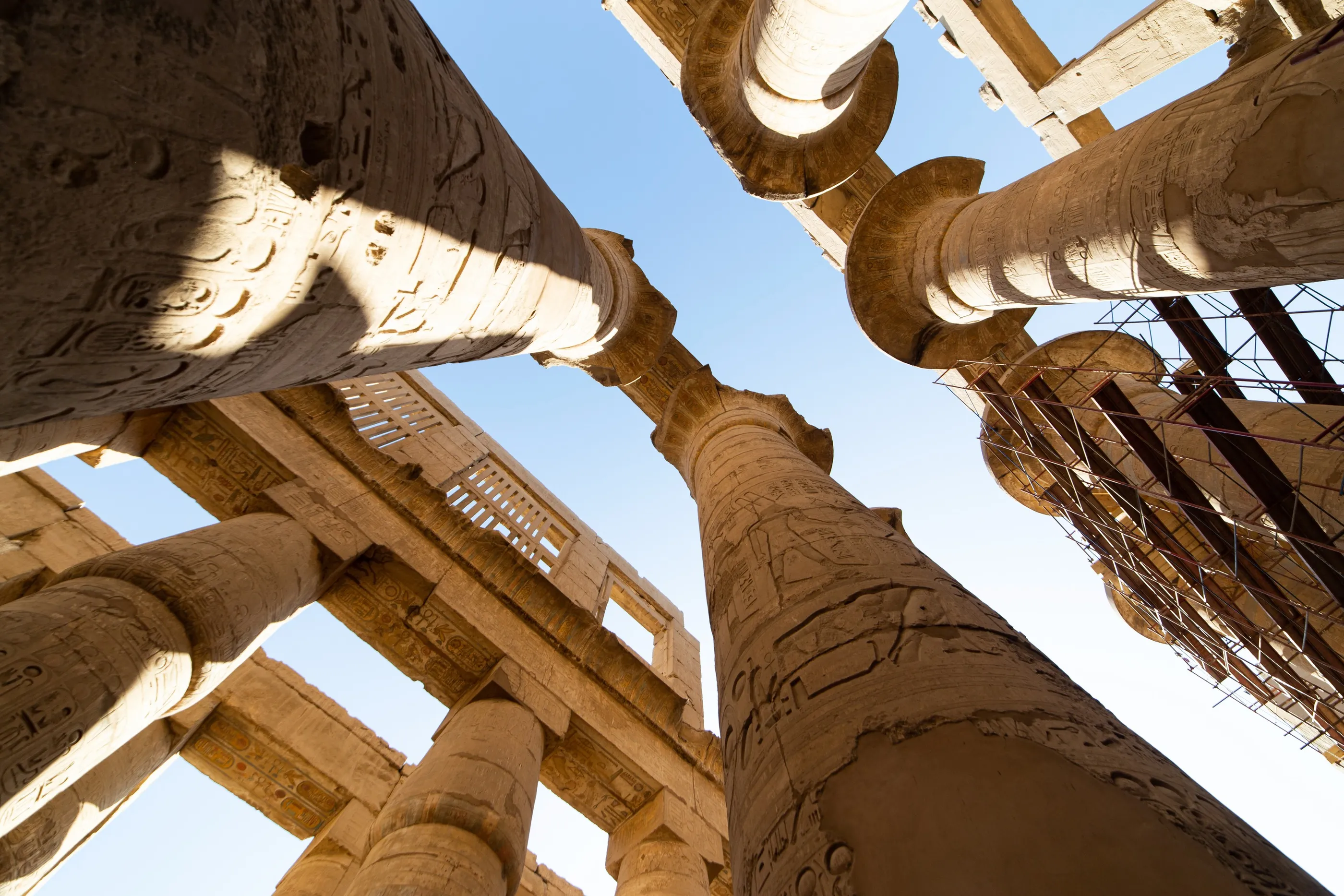
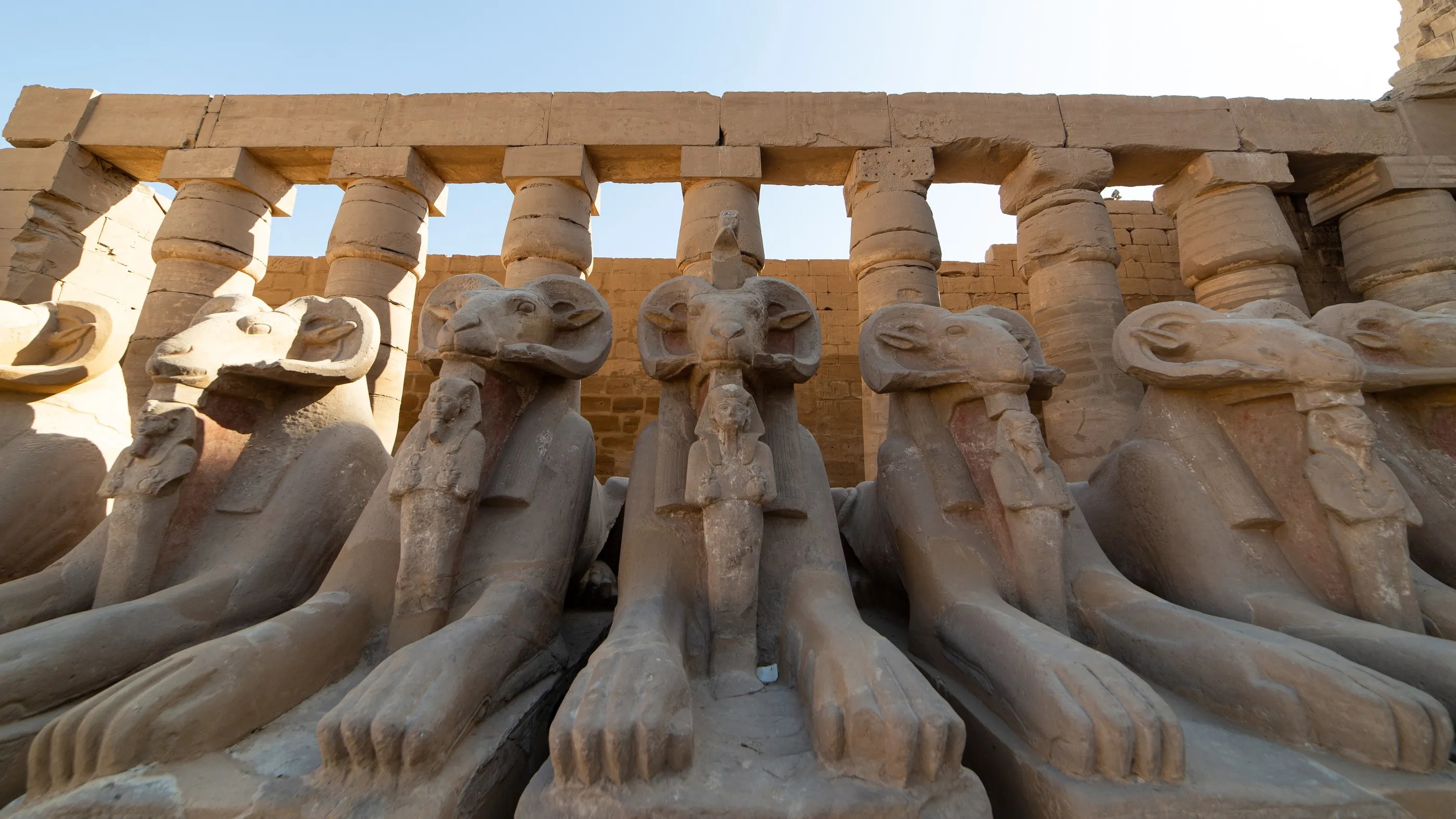
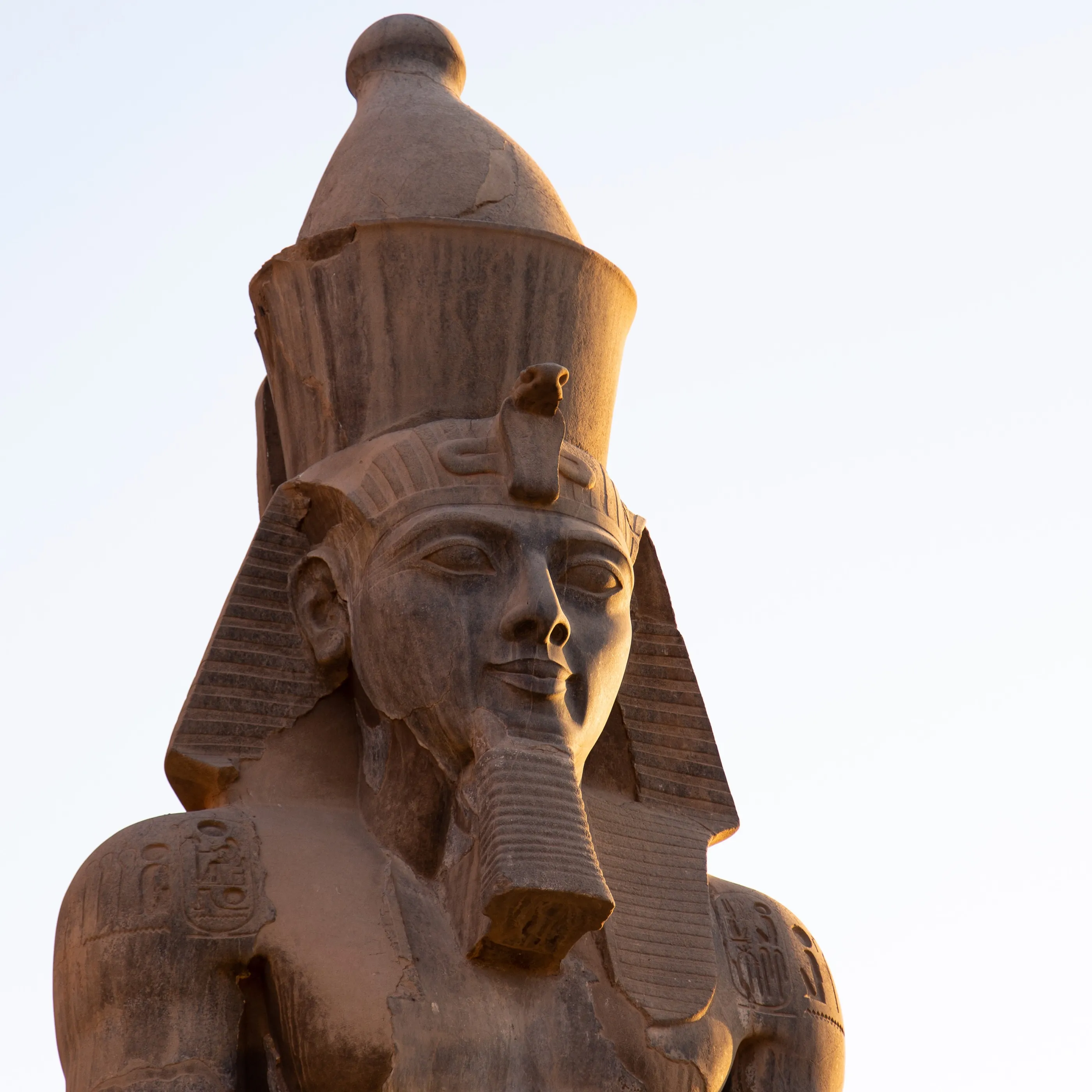
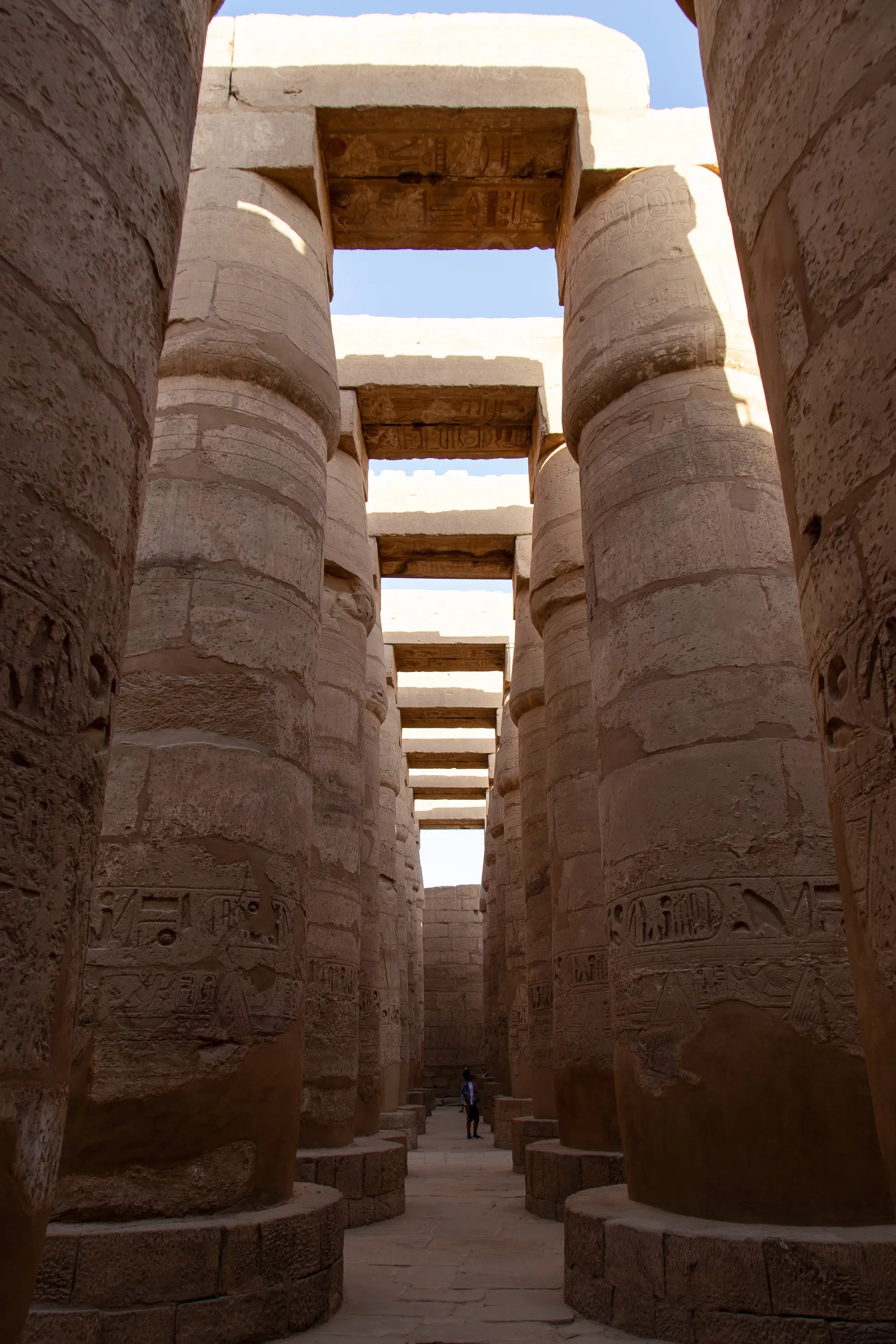
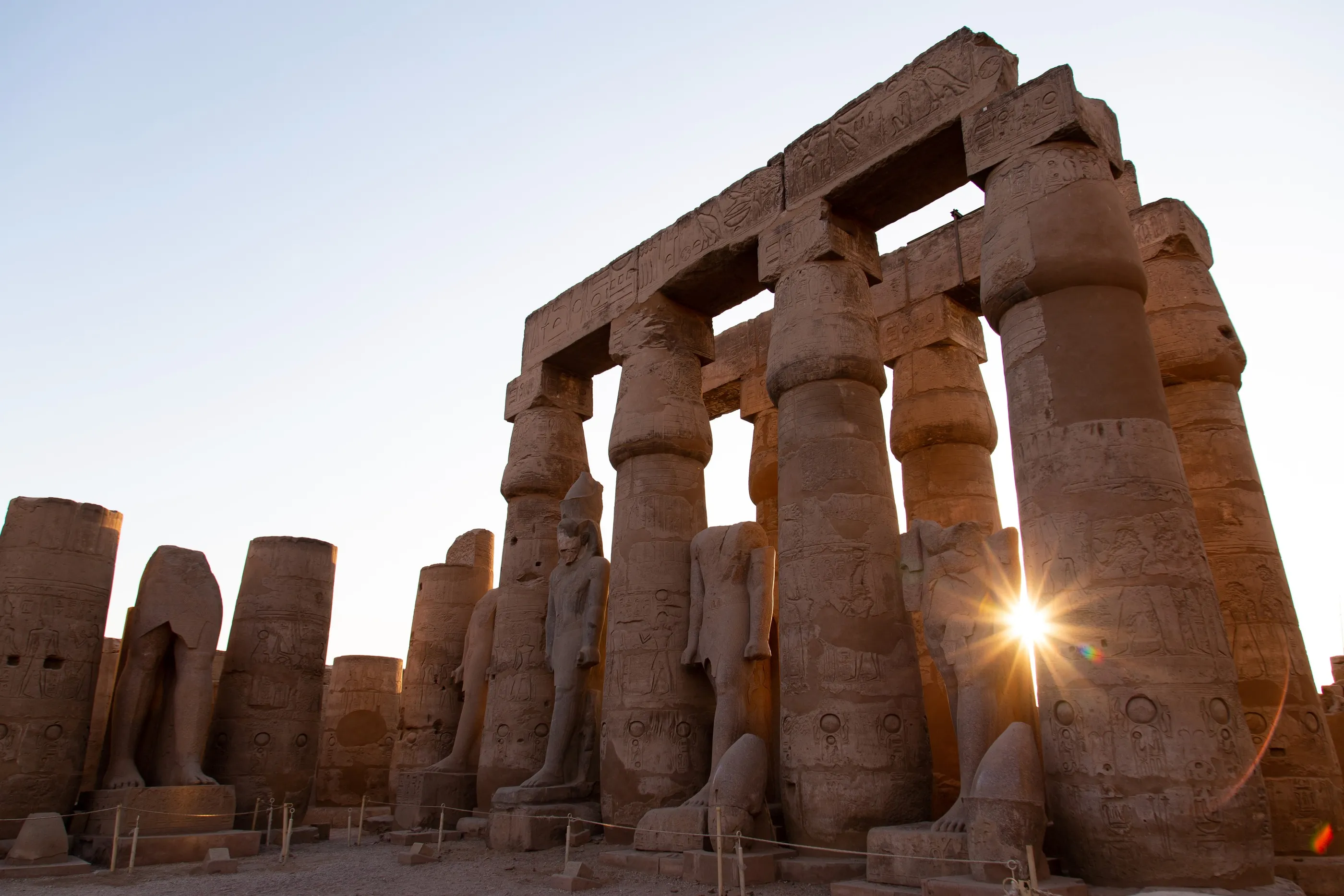
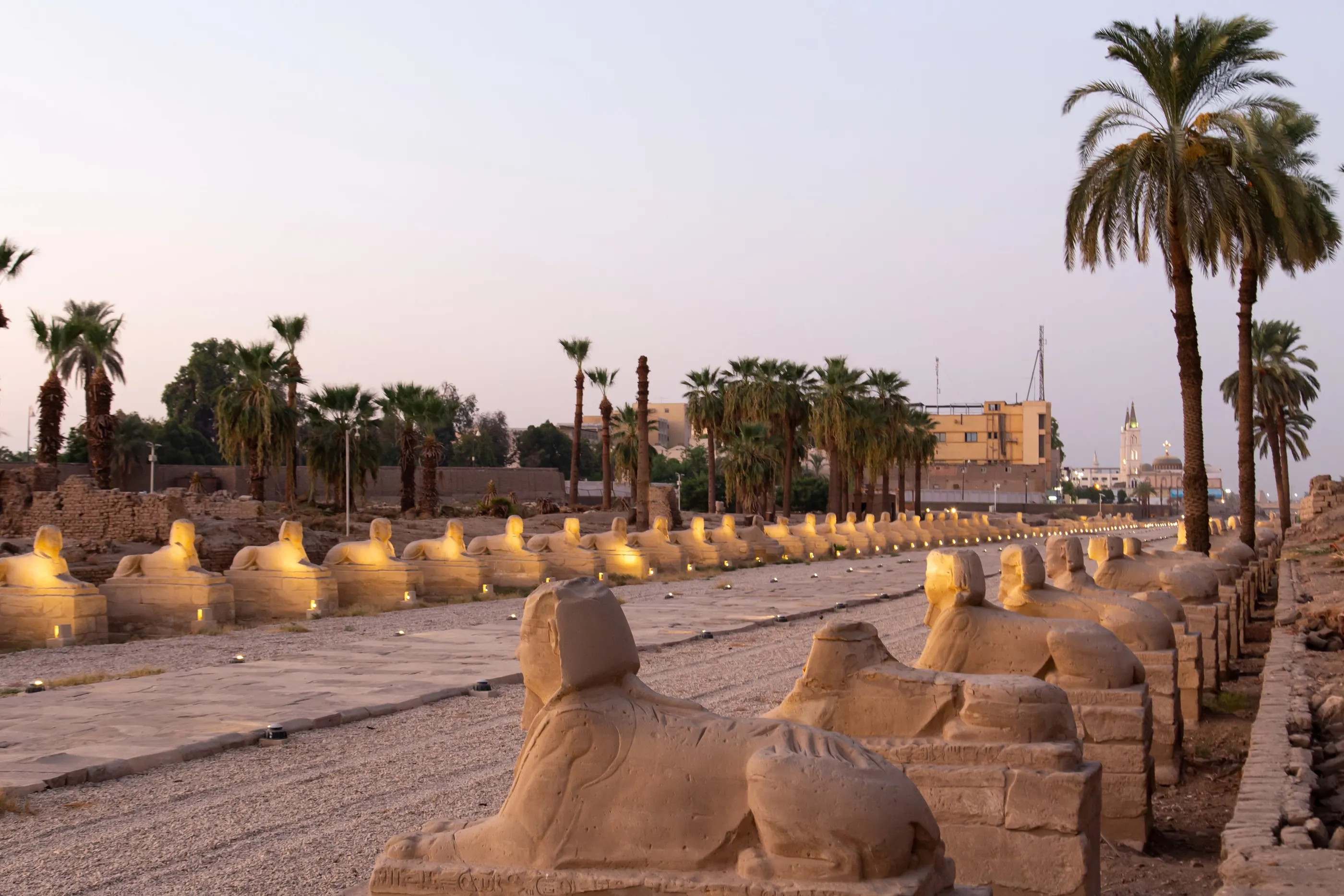
    At dawn, the Esna lock, then the river between cliffs and palm groves. At Karnak, the avenue of rams and the forest of columns in the hypostyle hall, where one feels tiny. Late in the afternoon Luxor Temple catches fire: the head of Ramesses II, the colonnades and the avenue of sphinxes turn the colour of honey, before the Sudan’s paddle wheel resumes its slow beat.
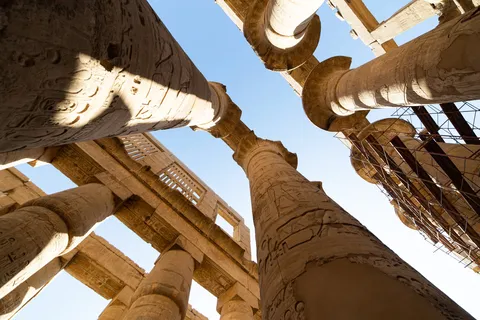
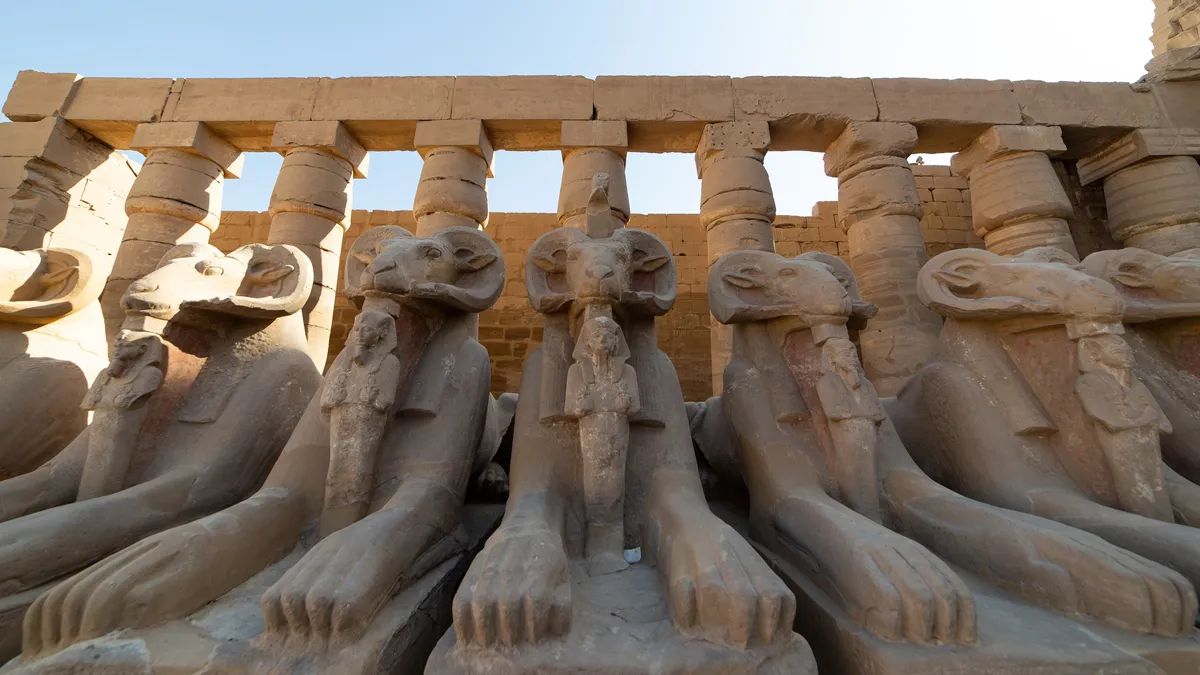
    Columns of the Karnak hypostyle hall, Egypt — Nicolas MarincicRam-headed sphinxes at Karnak, Egypt — Nicolas MarincicBoat on the Nile below the cliffs, Egypt — Nicolas MarincicHead of Ramesses II in golden light, Luxor temple, Egypt — Nicolas MarincicHypostyle hall, Karnak, Egypt — Nicolas MarincicLuxor temple colonnade with sunburst, Egypt — Nicolas MarincicAvenue of sphinxes at dusk, Luxor, Egypt — Nicolas MarincicPaddle wheel and name of the steamship Sudan, Egypt — Nicolas Marincic
  14. By boat↗ 47 km

    Day 23

    Dendera

    Egypt

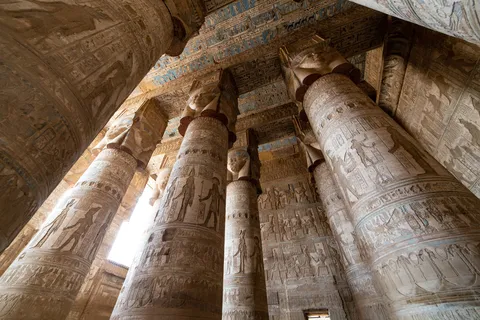
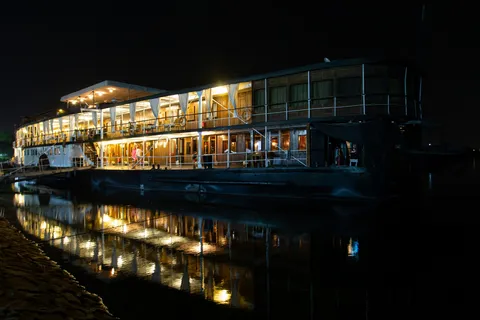
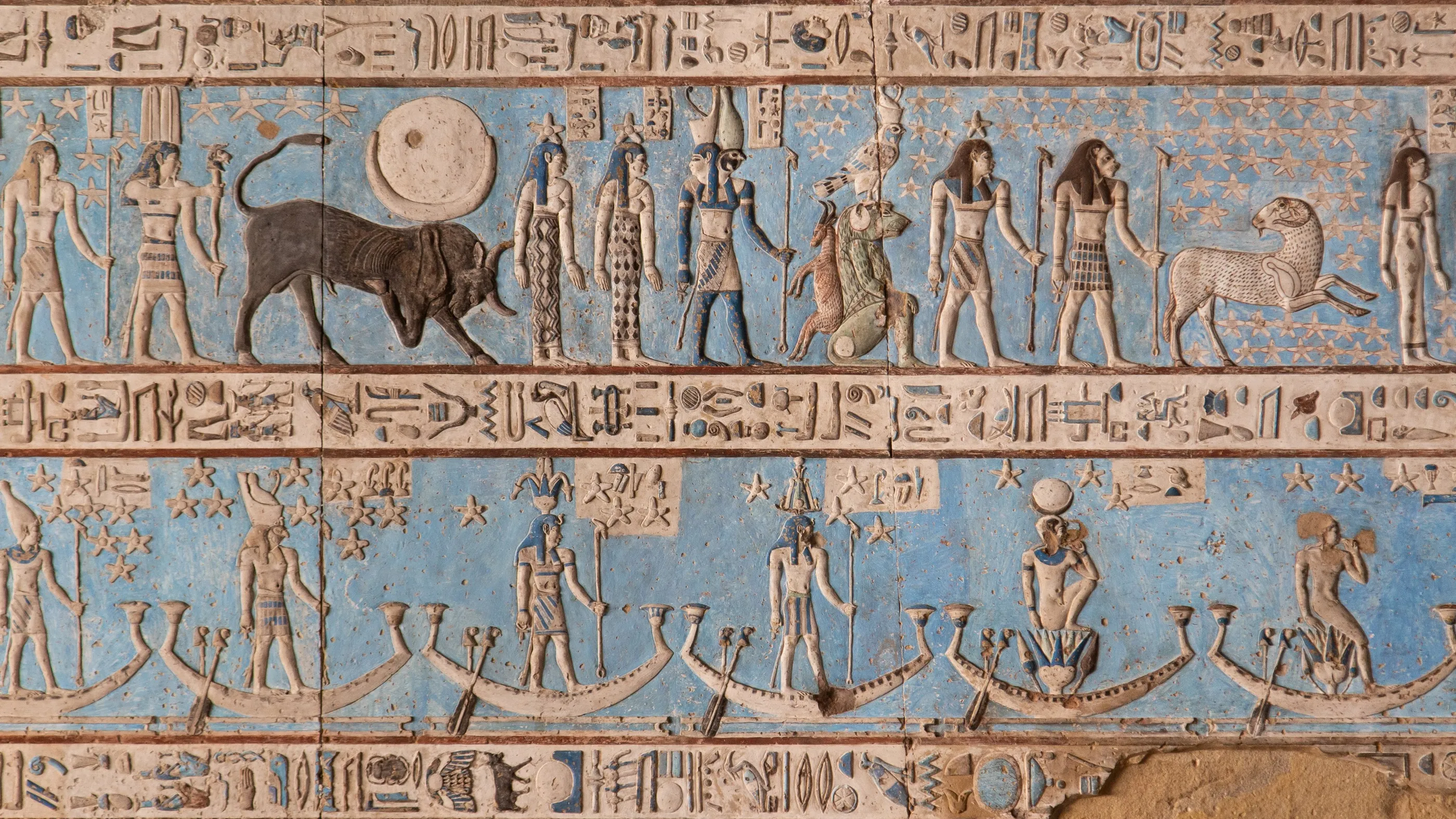
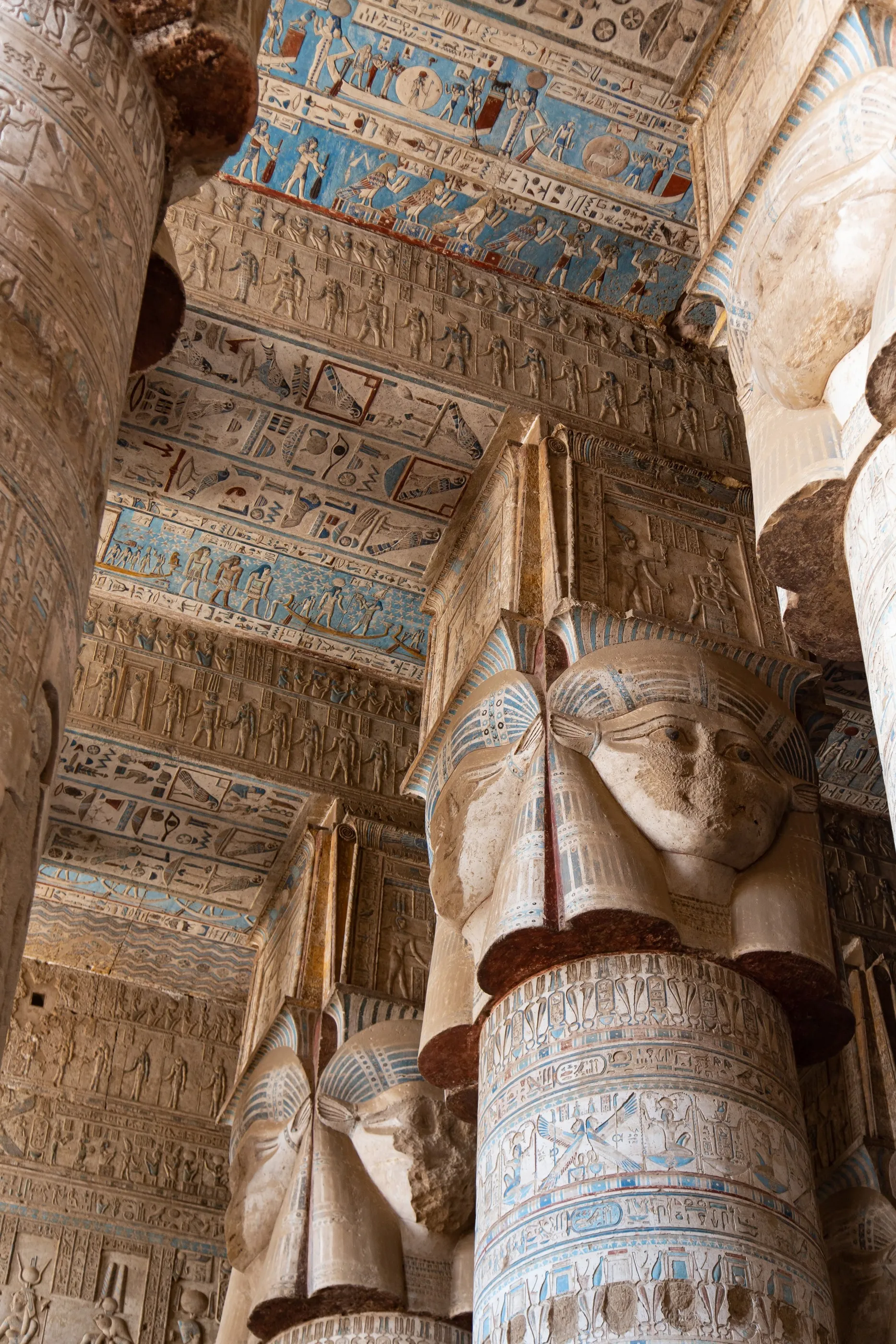
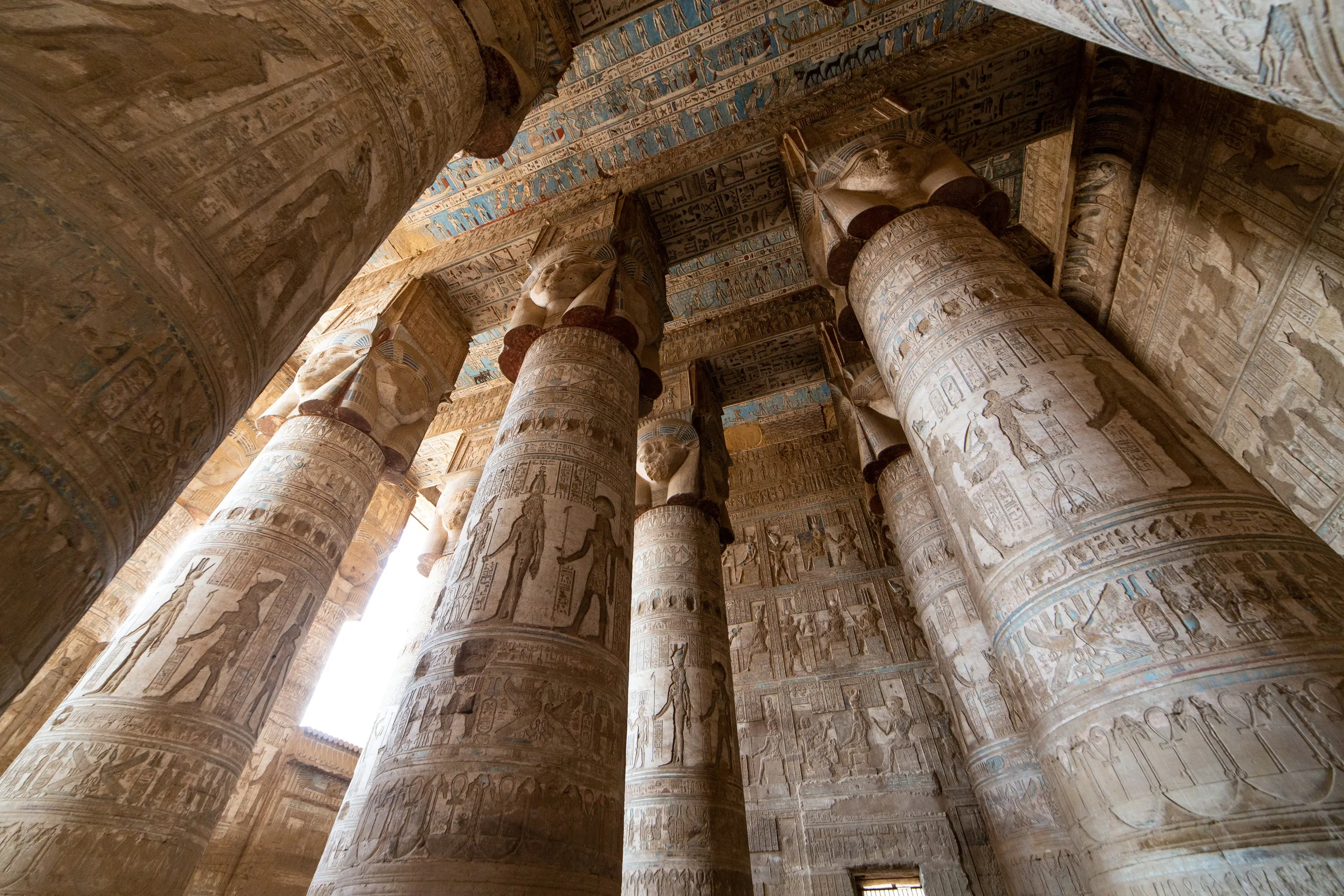
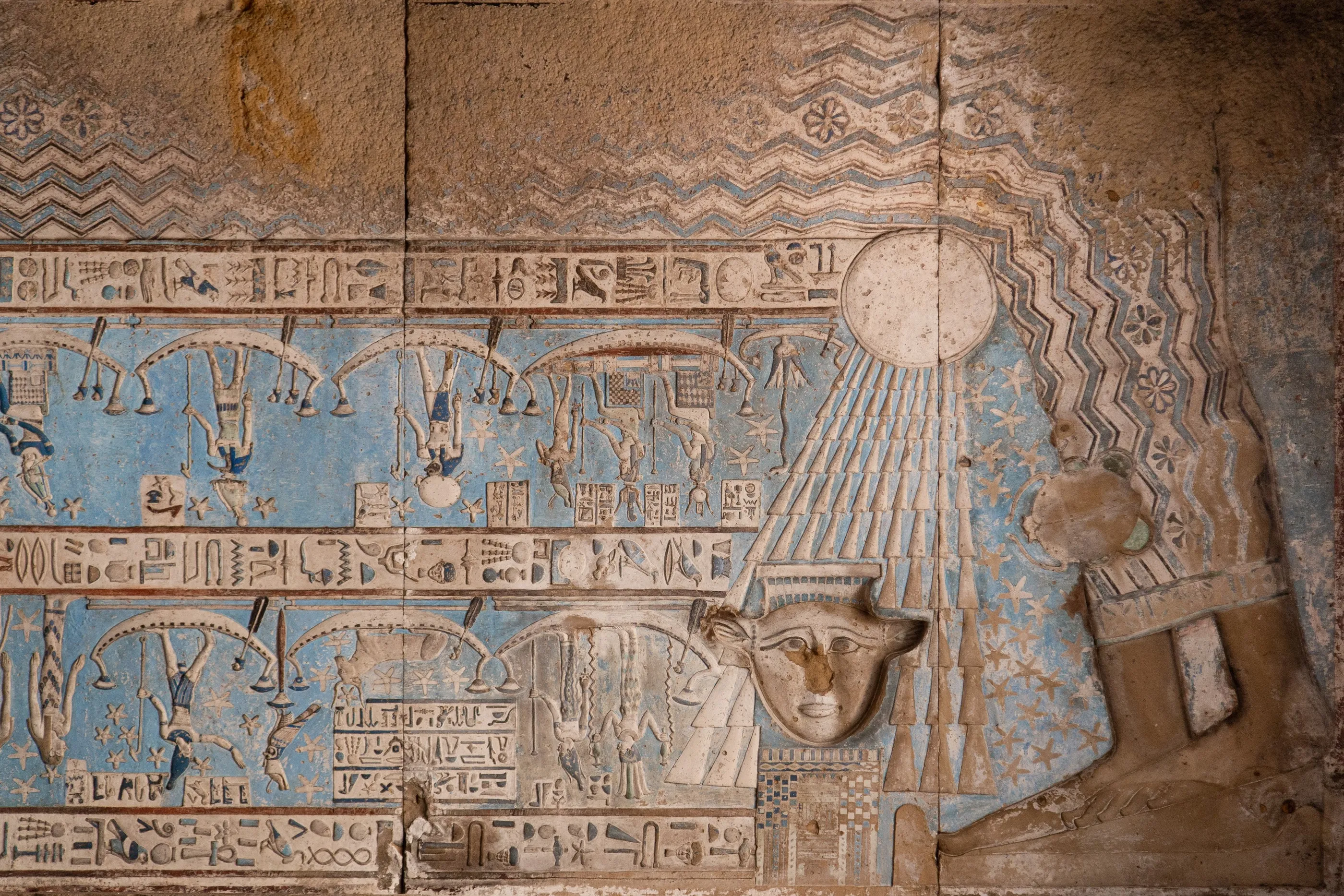
    The temple of Hathor at Dendera holds the most beautiful sky in Egypt. Cleaned of their soot, the ceilings of the hypostyle hall have regained their deep blue: there the goddess Nut swallows the sun each evening and gives birth to it again each morning, among the signs of the zodiac. At nightfall the illuminated Sudan is mirrored in the river.
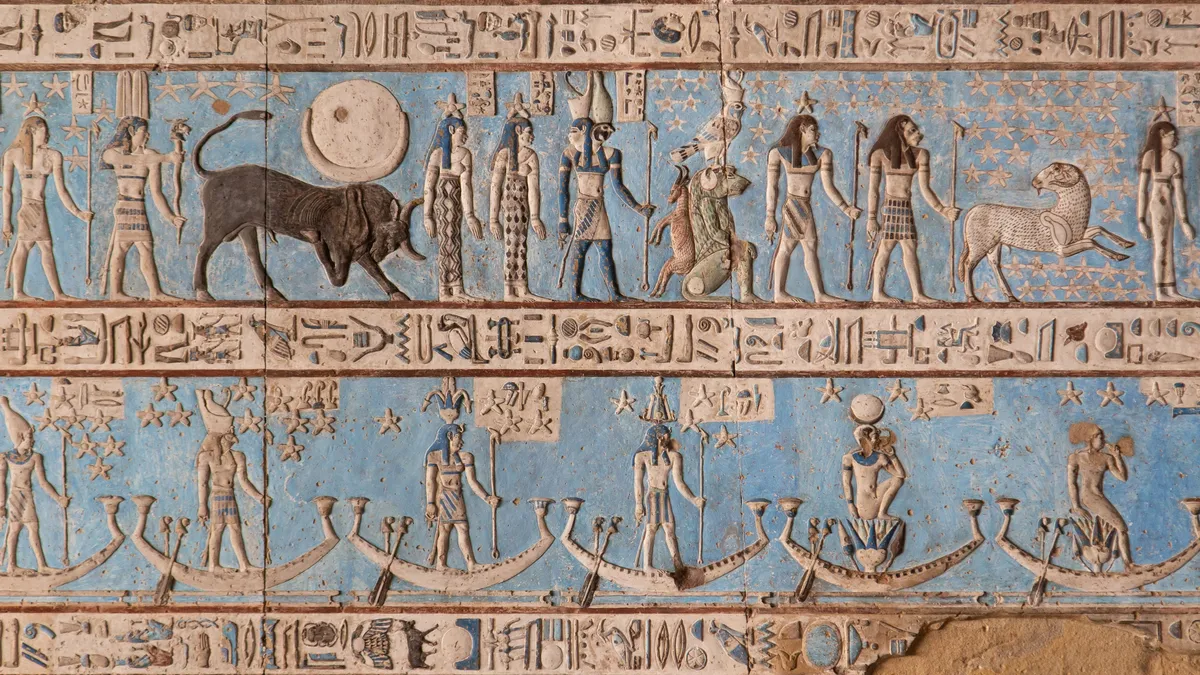
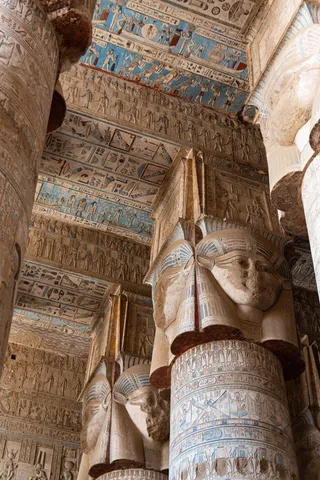
    Astronomical ceiling with restored colours, Dendera, Egypt — Nicolas MarincicHathor columns and blue ceiling, Dendera, Egypt — Nicolas MarincicLooking up in the hypostyle hall, Dendera, Egypt — Nicolas MarincicCeiling of the goddess Nut, Dendera, Egypt — Nicolas MarincicThe steamship Sudan lit up at night, with reflection, Egypt — Nicolas Marincic
  15. By boat↗ 75 km

    Day 24

    Abydos and the flow of the Nile

    Egypt

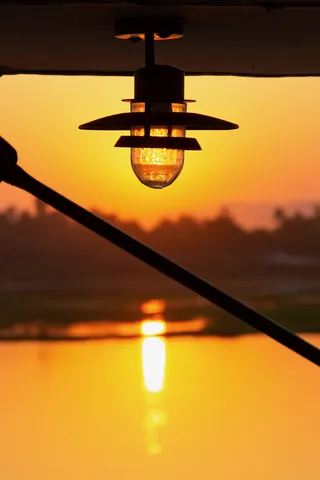
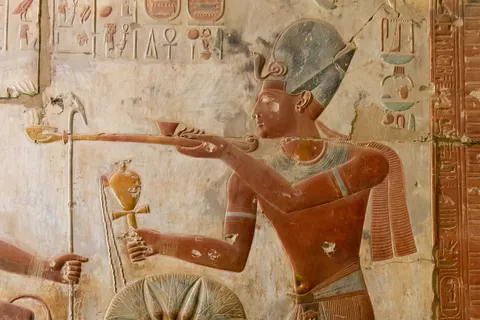
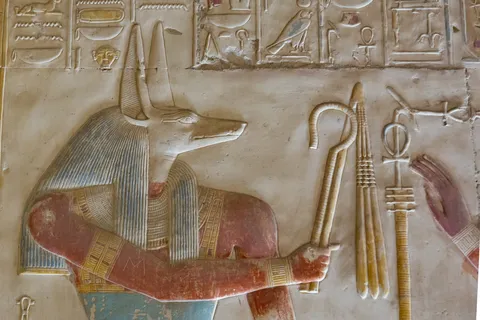
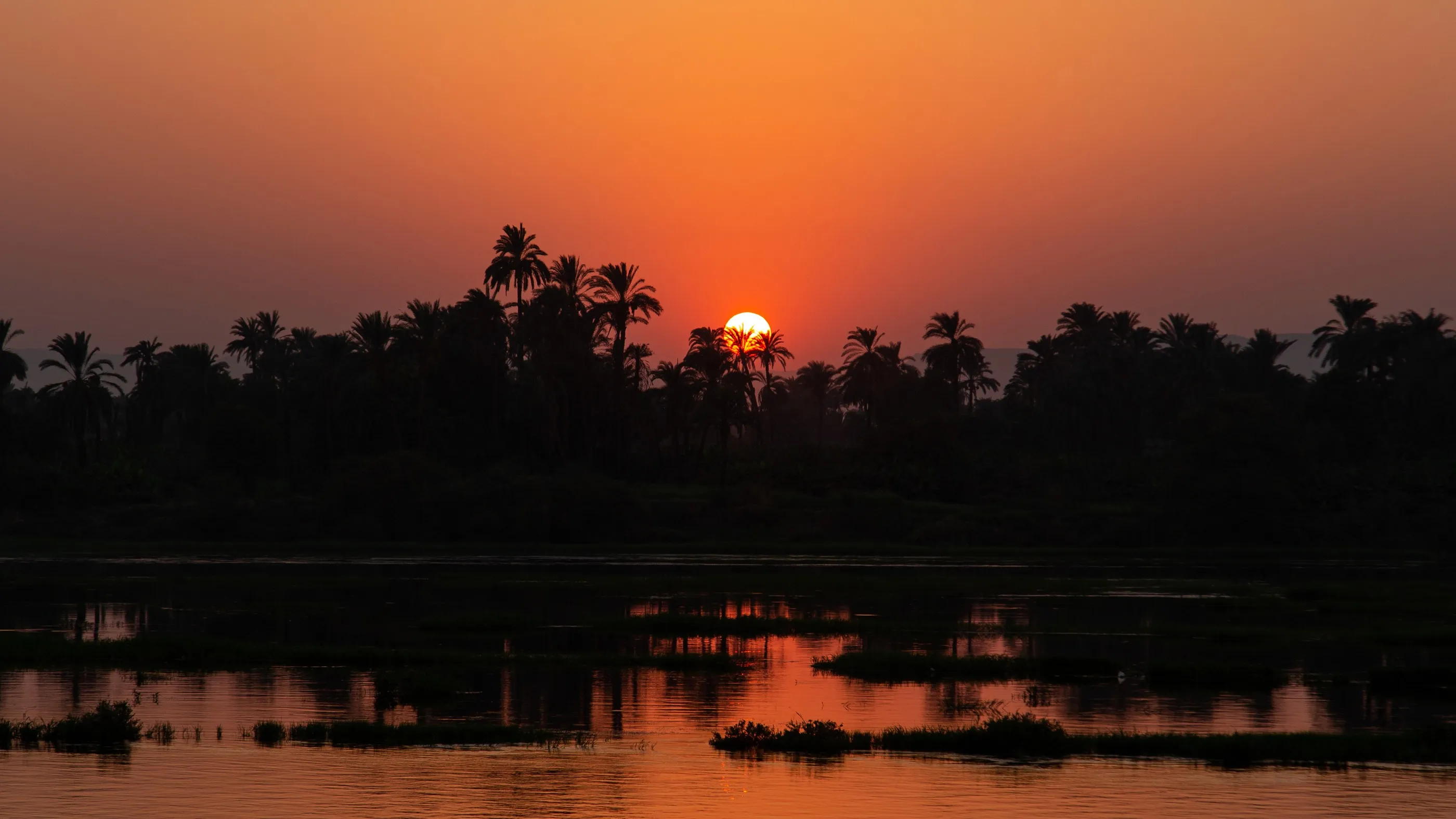
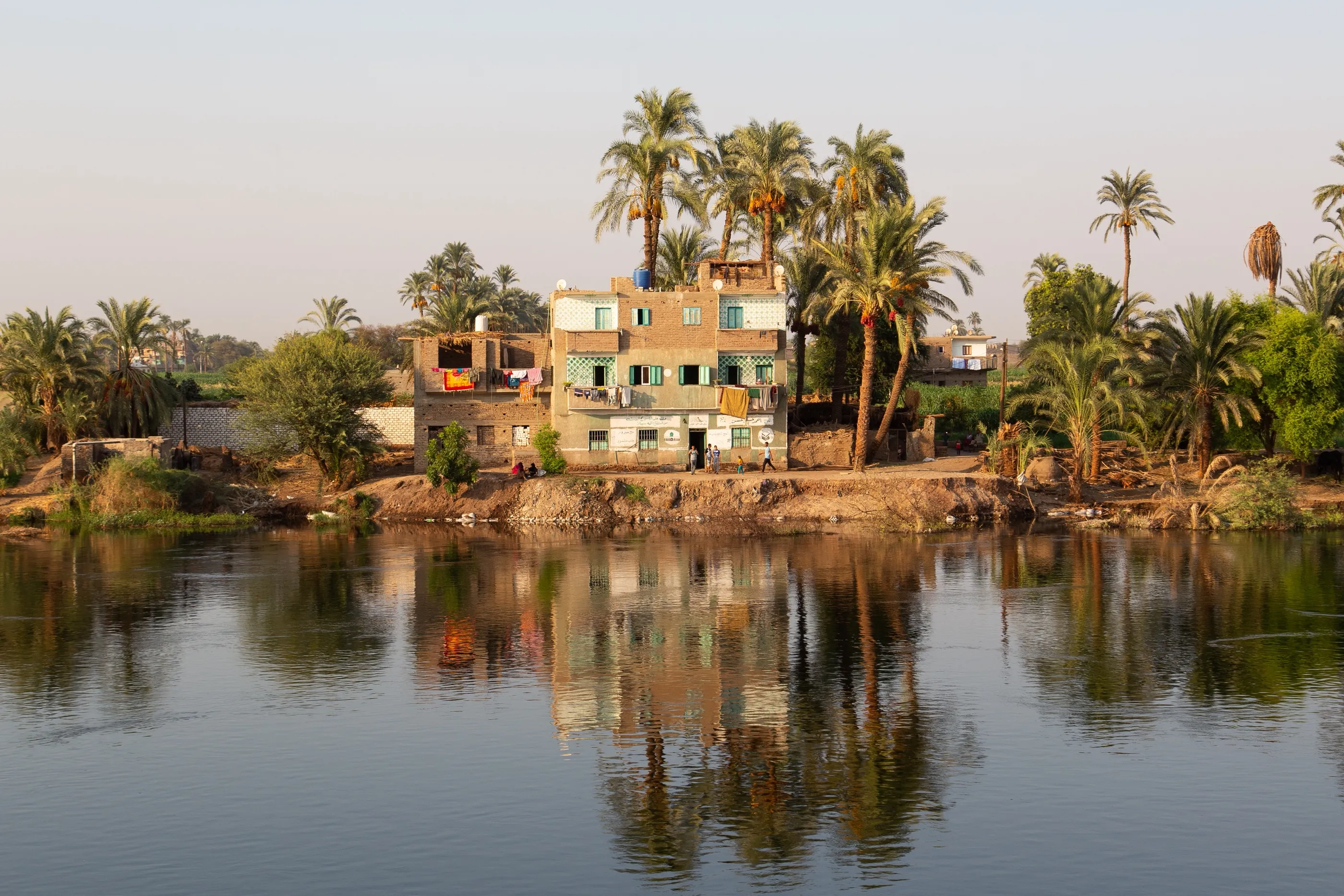
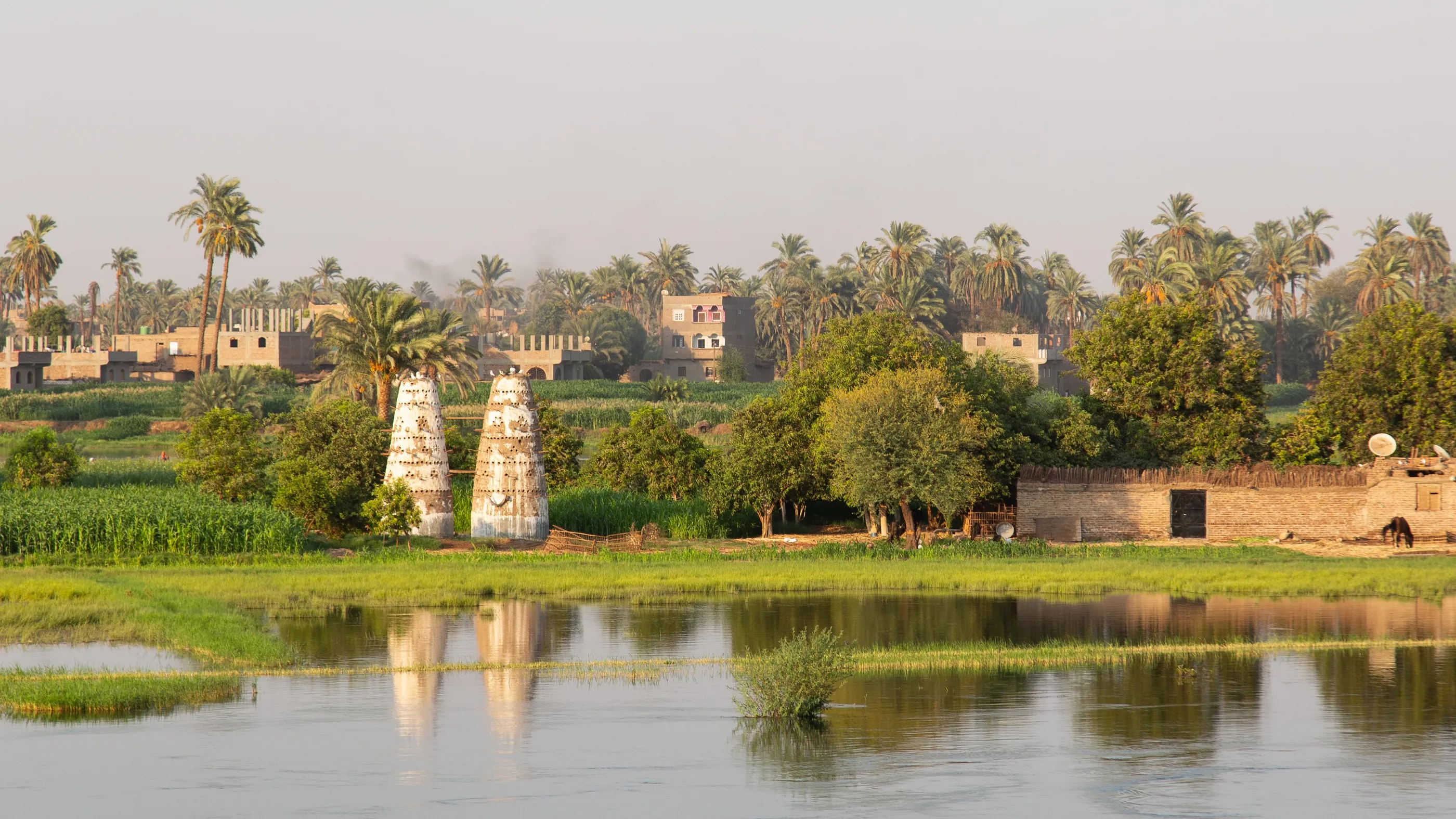
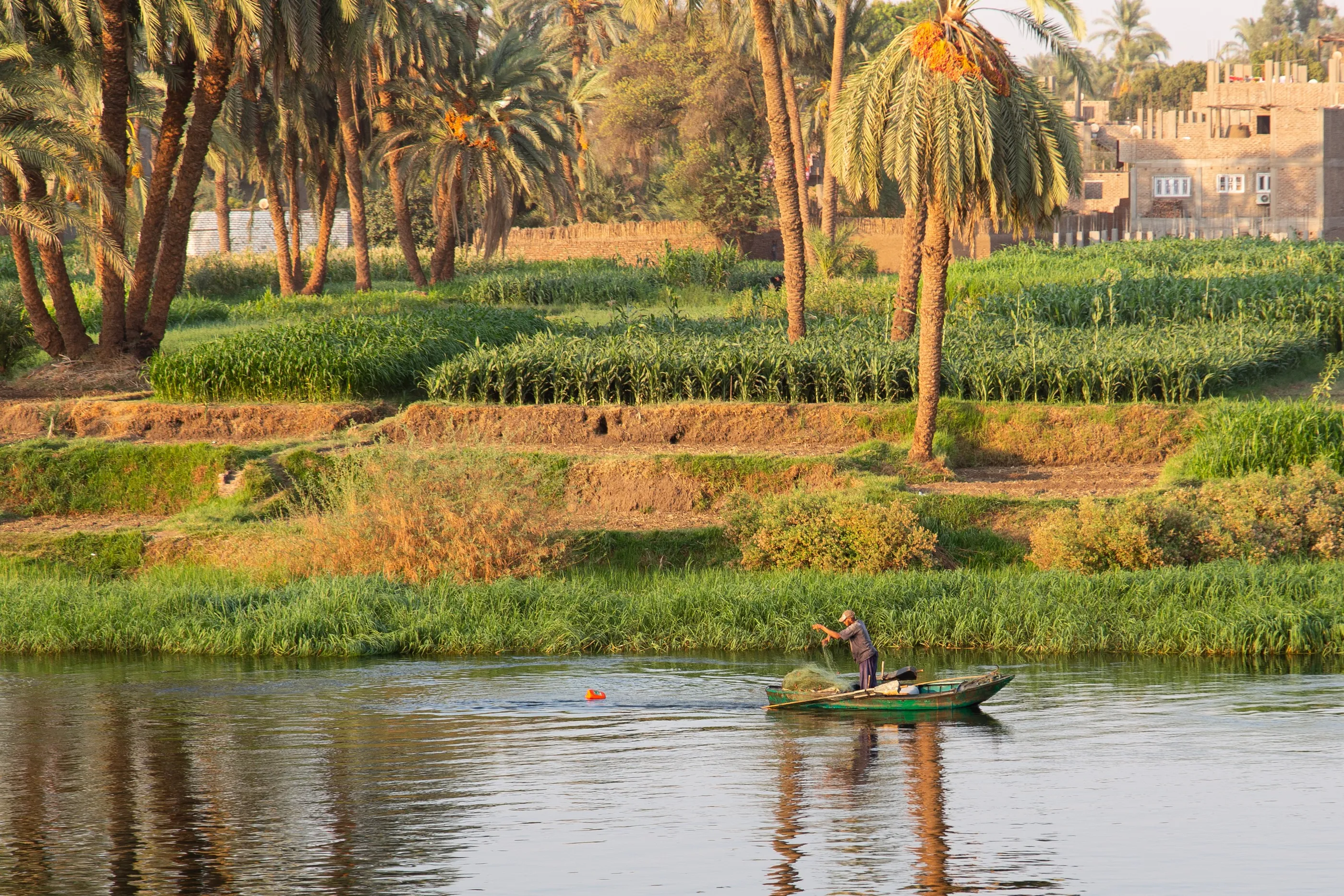
    At dawn, the temple of Seti I at Abydos, its reliefs of extraordinary finesse still touched with colour. Then a last day drifting downstream, watching villages, dovecotes and fishermen slip by from the deck. Every evening the sun sinks into the palms.
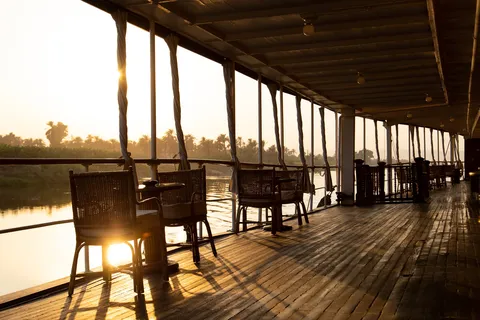
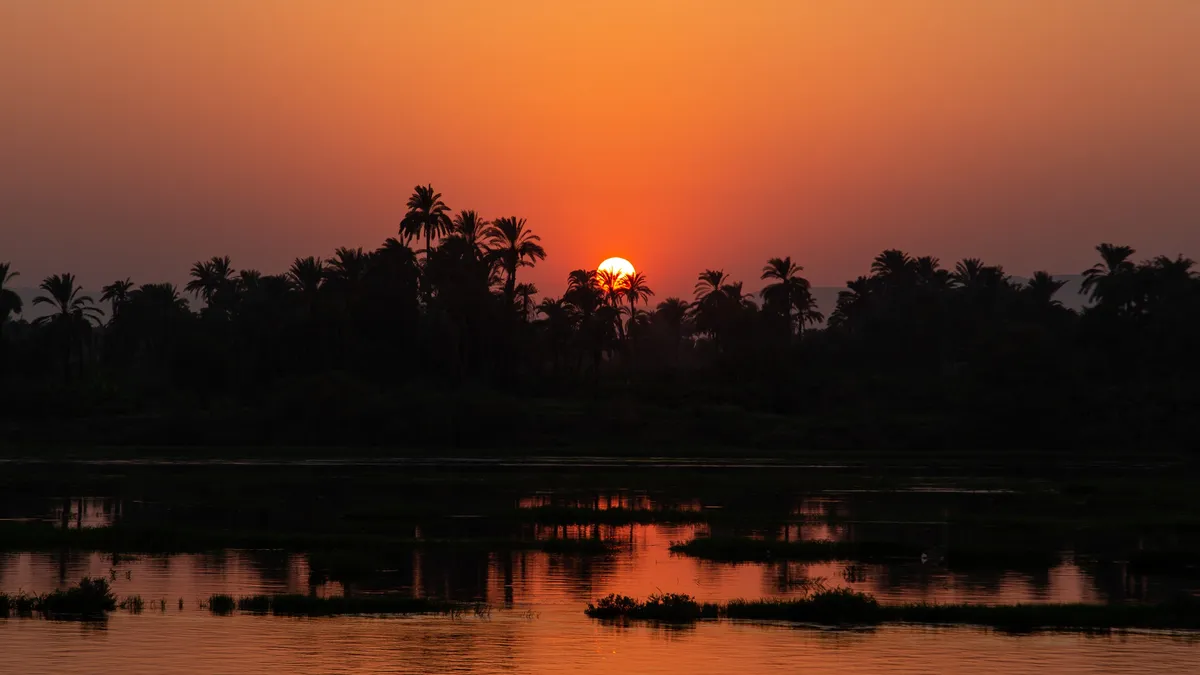
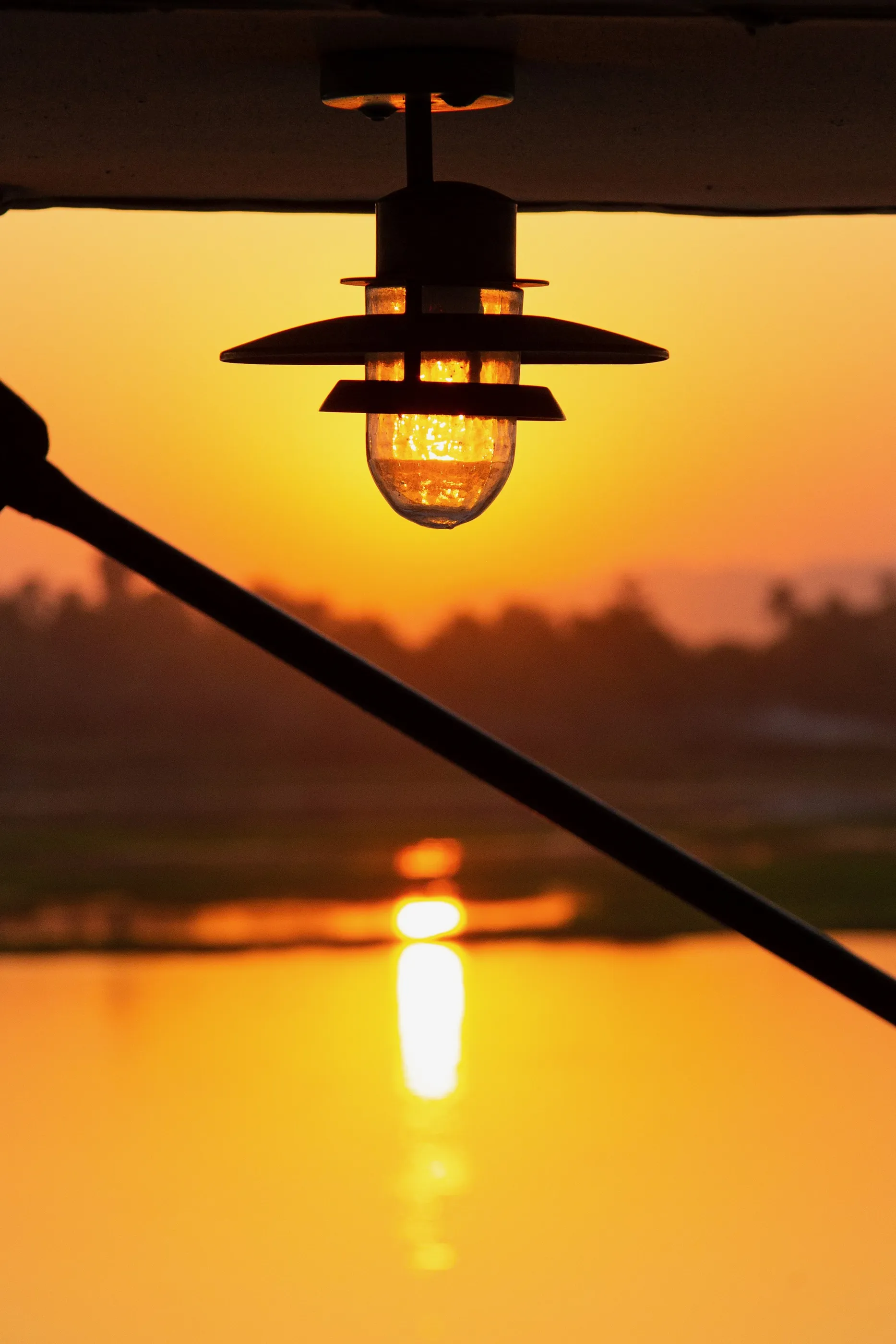
    Nile cruise boat deck at sunset, Egypt — Nicolas MarincicRed sun behind the Nile palms, Egypt — Nicolas MarincicHouse and palms reflected in the Nile, Egypt — Nicolas MarincicBoat lantern at sunset, Egypt — Nicolas MarincicDovecotes on the banks of the Nile, Egypt — Nicolas MarincicPainted relief, temple of Seti I, Abydos, Egypt — Nicolas MarincicAnubis relief, Abydos, Egypt — Nicolas MarincicFisherman among palms on the Nile bank, Egypt — Nicolas Marincic
  16. By road↗ 84 km

    Day 25

    Valleys of the Kings and Queens

    Egypt

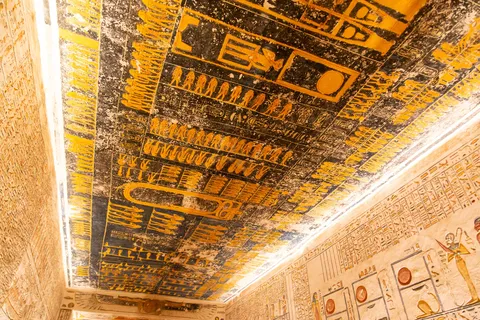
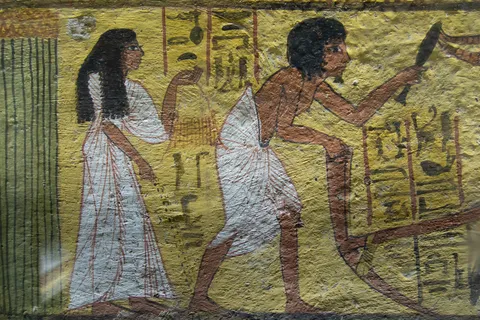
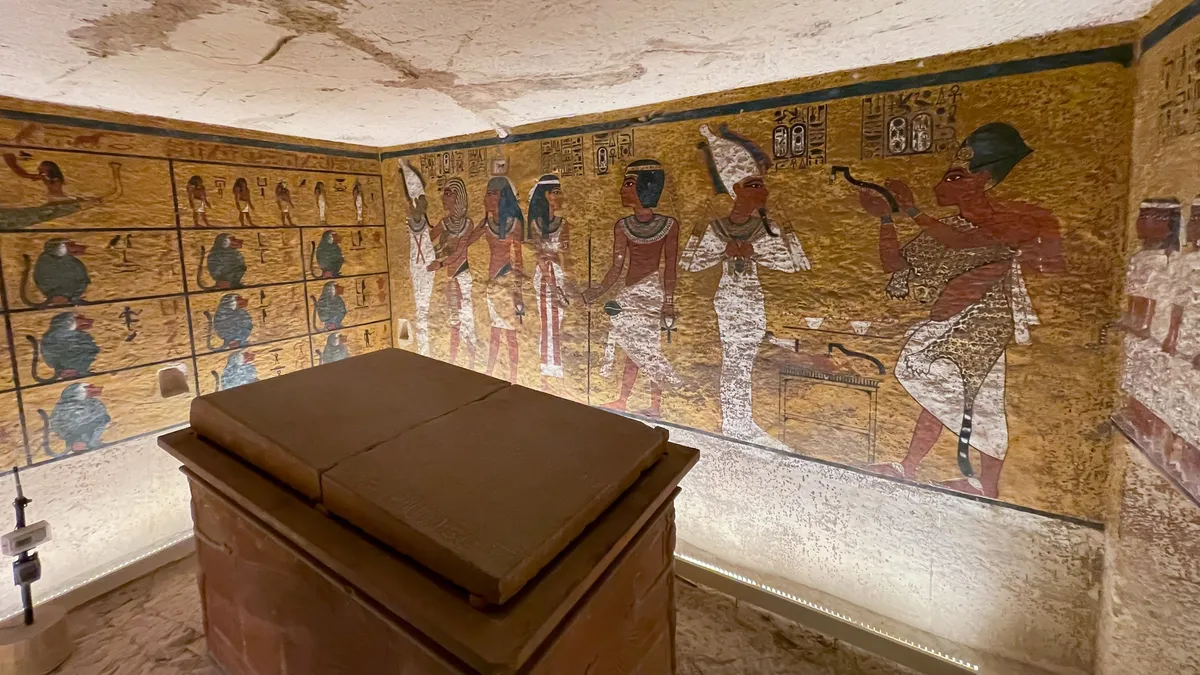
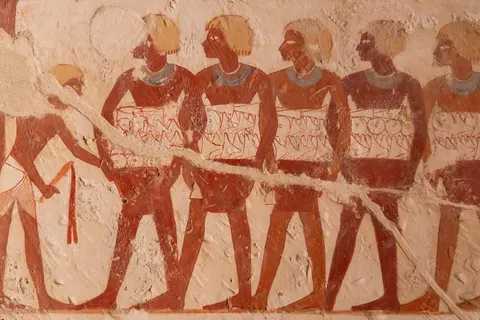
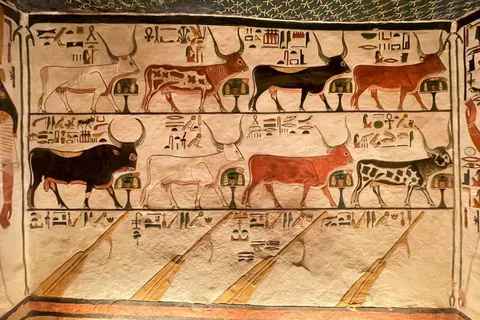
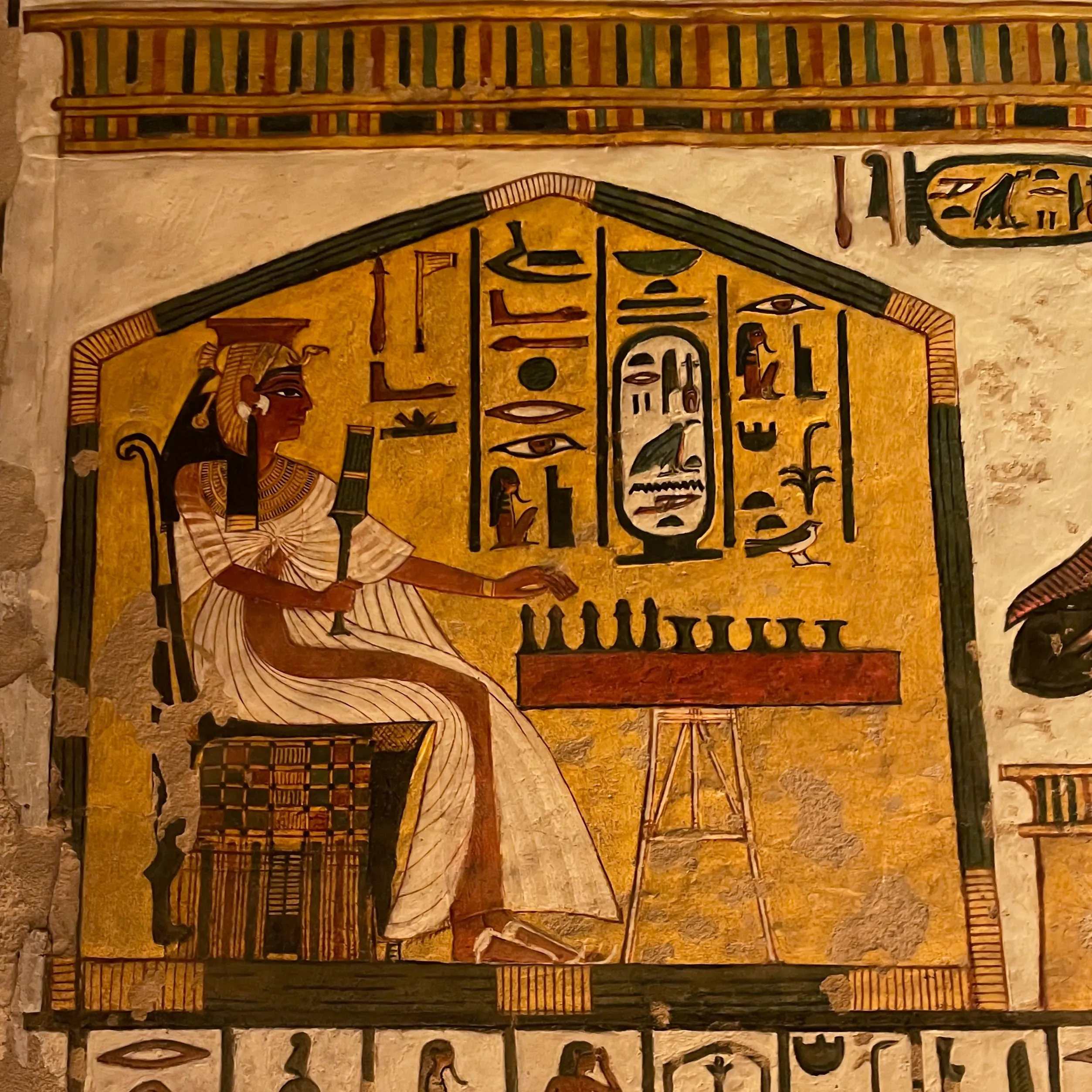
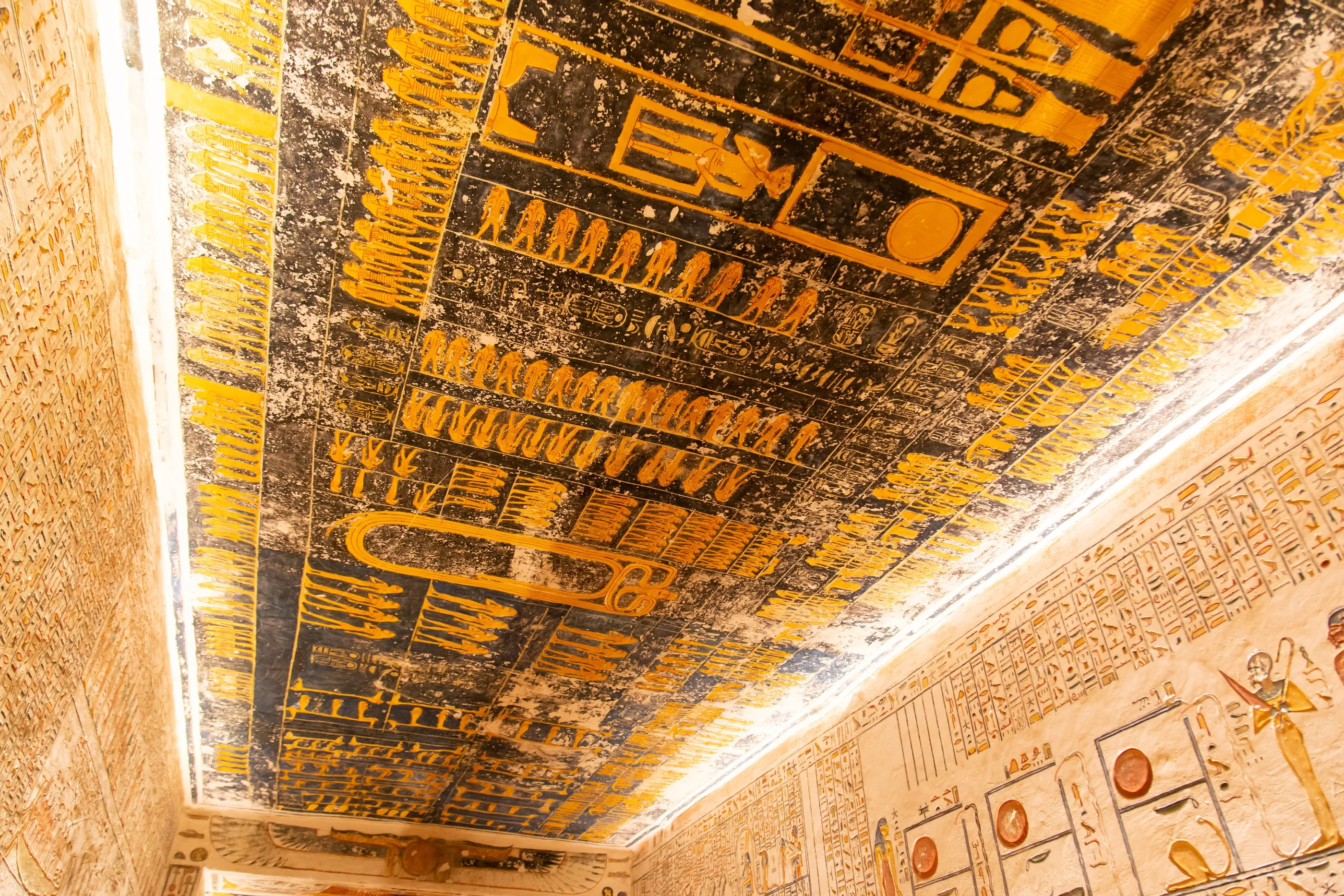
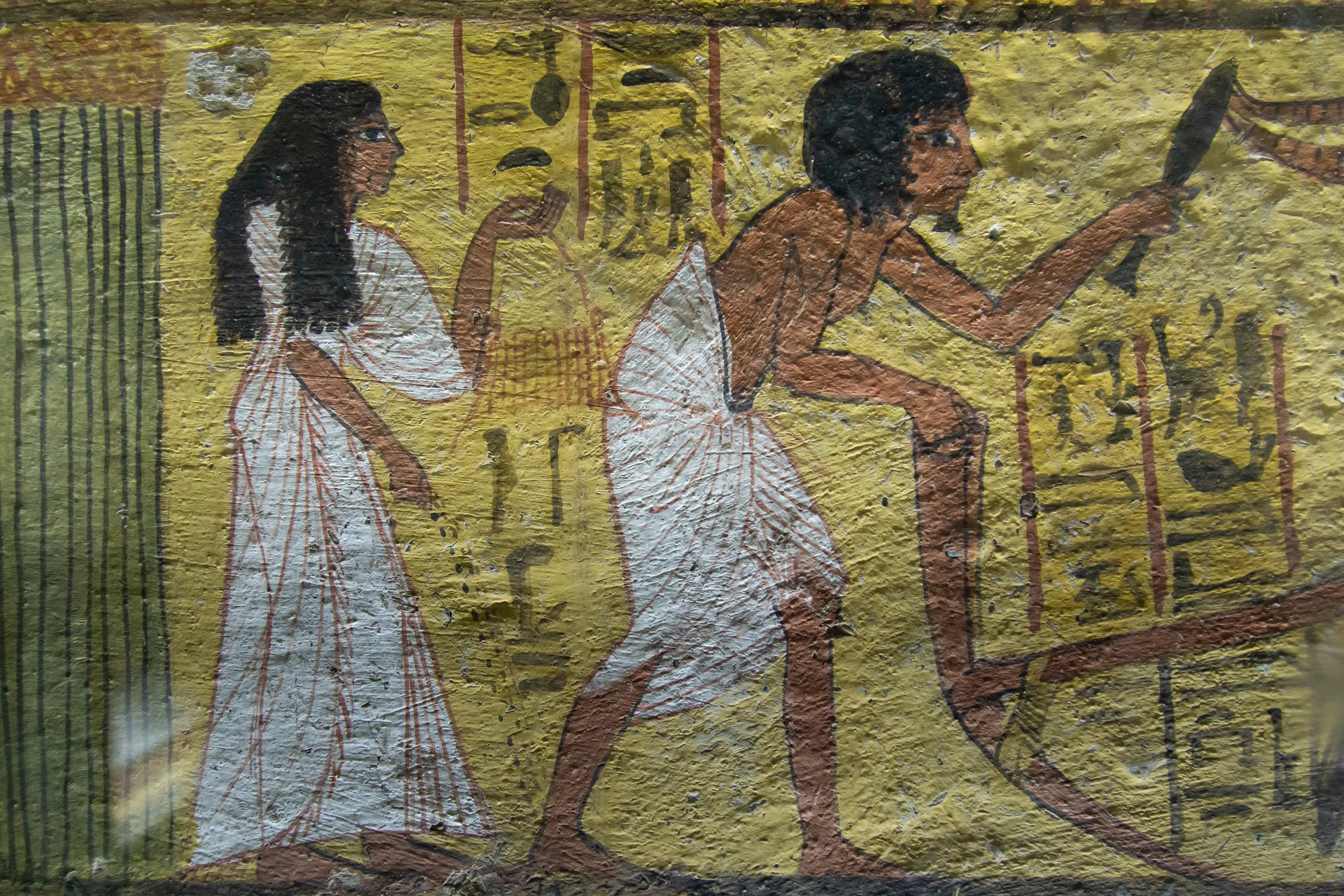
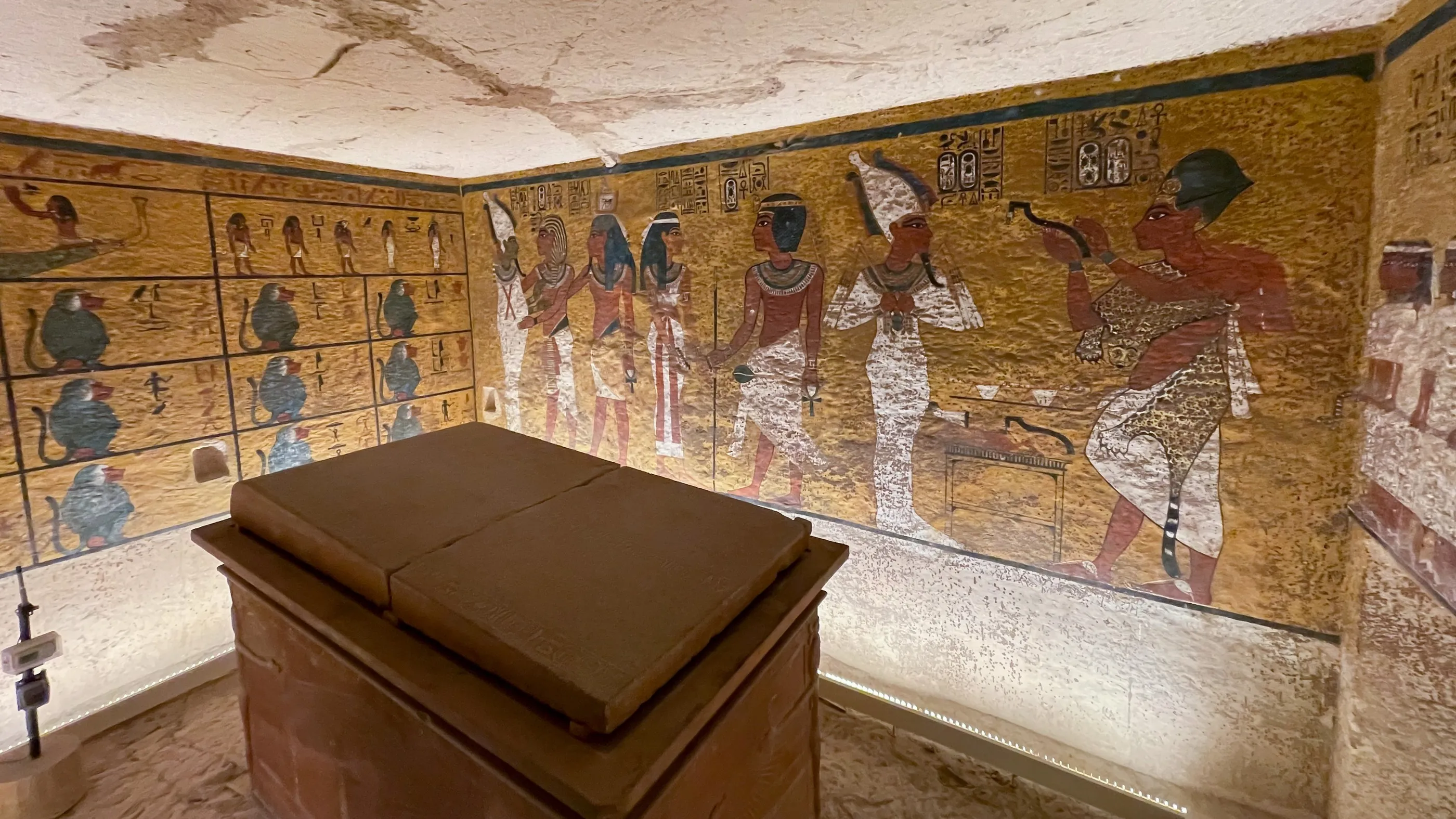
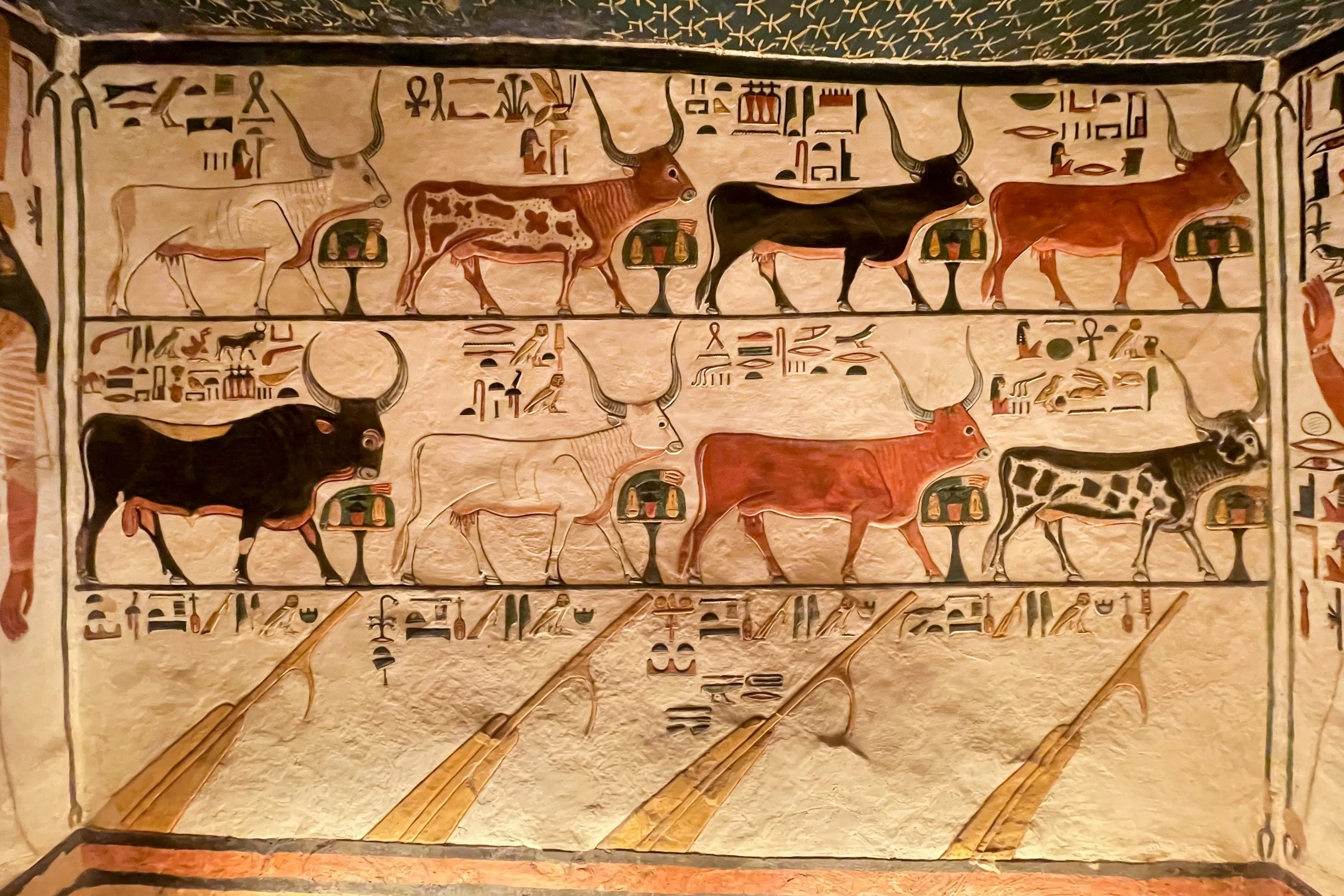
    Back on the west bank of Thebes, underground this time. In the tomb of Nefertari the queen plays senet, her colours looking as if they were laid down yesterday; in that of Ramesses VI the sky goddess stretches across the whole vault. More modest, the tombs of the Deir el-Medina craftsmen paint a paradise of fields and palms. Then Tutankhamun’s tomb, a tiny casket for the most famous of the pharaohs.

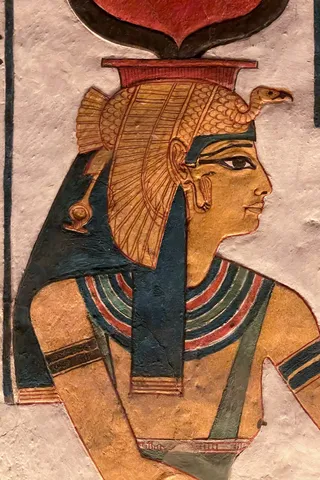
    Senet game scene, tomb of Nefertari, Egypt — Nicolas MarincicPortrait of the queen, tomb of Nefertari, Egypt — Nicolas MarincicAstronomical ceiling of KV9, Valley of the Kings, Egypt — Nicolas MarincicColossi of Memnon in the morning, Egypt — Nicolas MarincicFields of Iaru, tomb of Sennedjem, Deir el-Medina, Egypt — Nicolas MarincicTomb of Tutankhamun (KV62), Valley of the Kings, Egypt — Nicolas MarincicNubians painted in a Theban tomb, Egypt — Nicolas MarincicSacred cows, tomb of Nefertari, Egypt — Nicolas Marincic
  17. By road↗ 391 km

    Day 27

    Abu Simbel

    Egypt

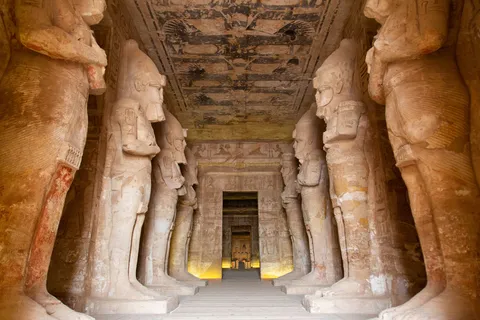
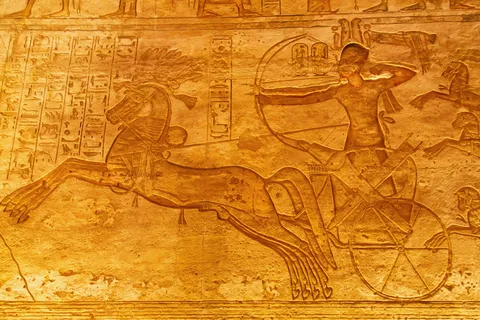
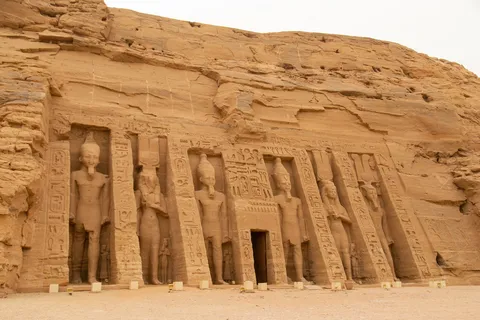
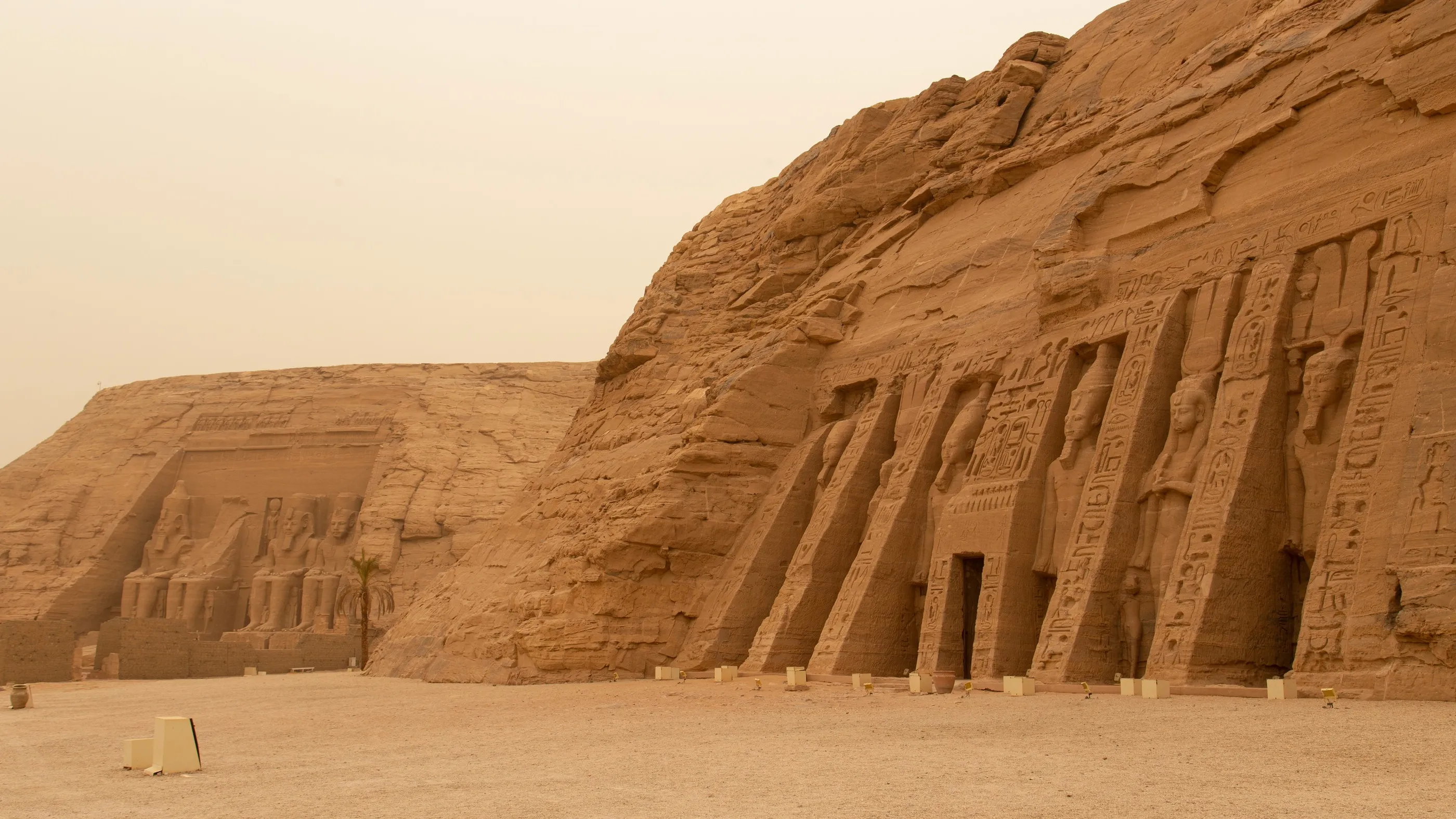
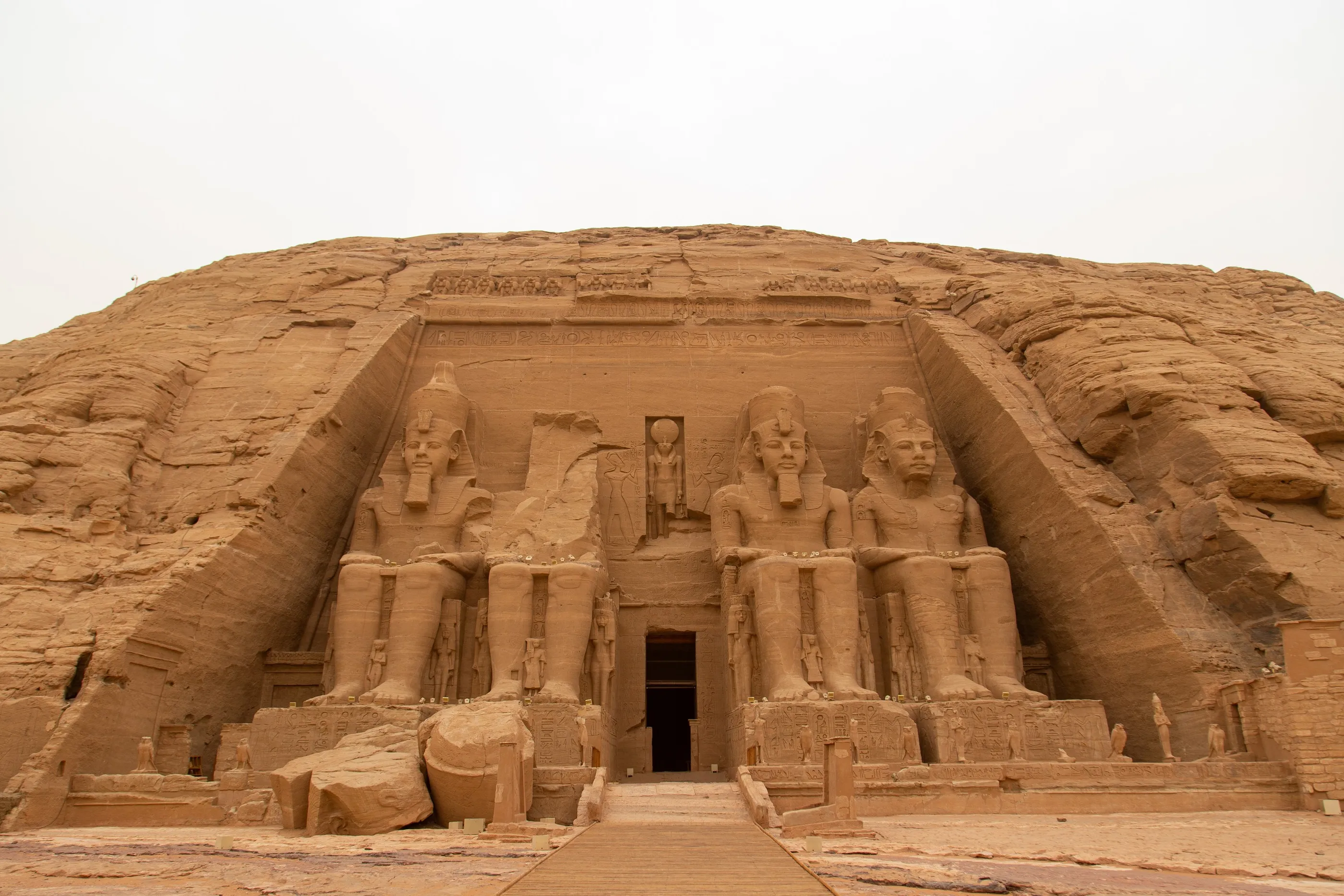
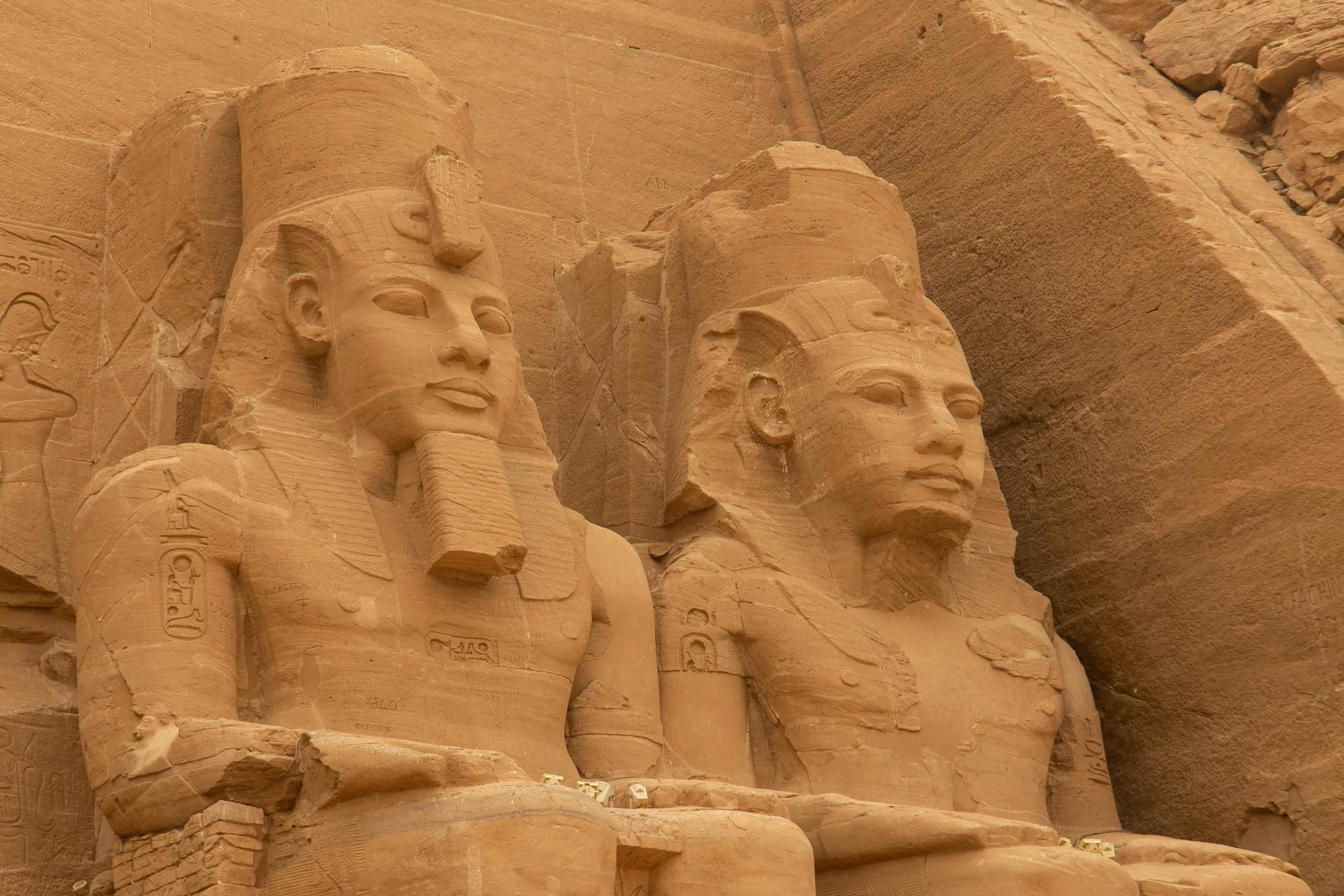
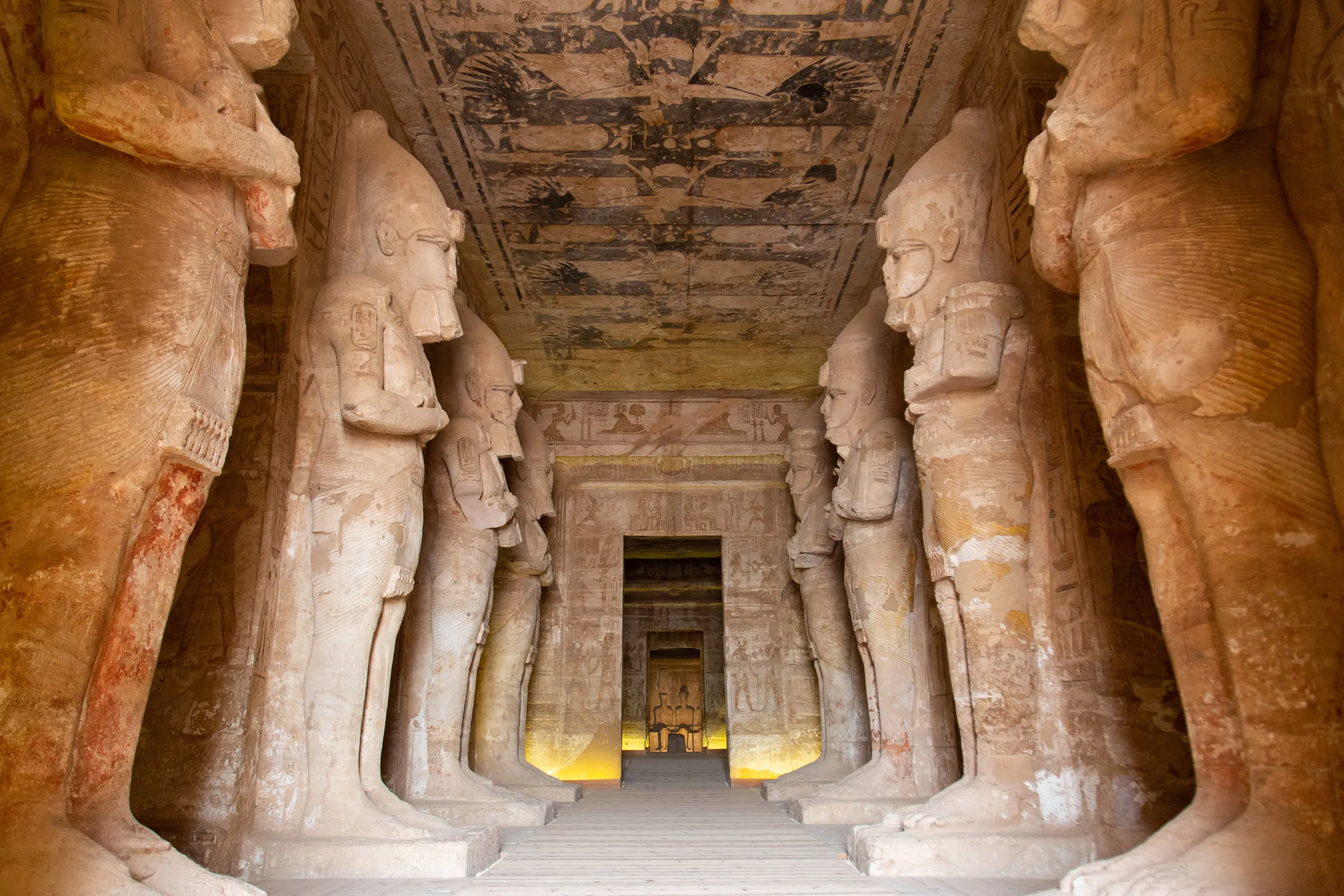
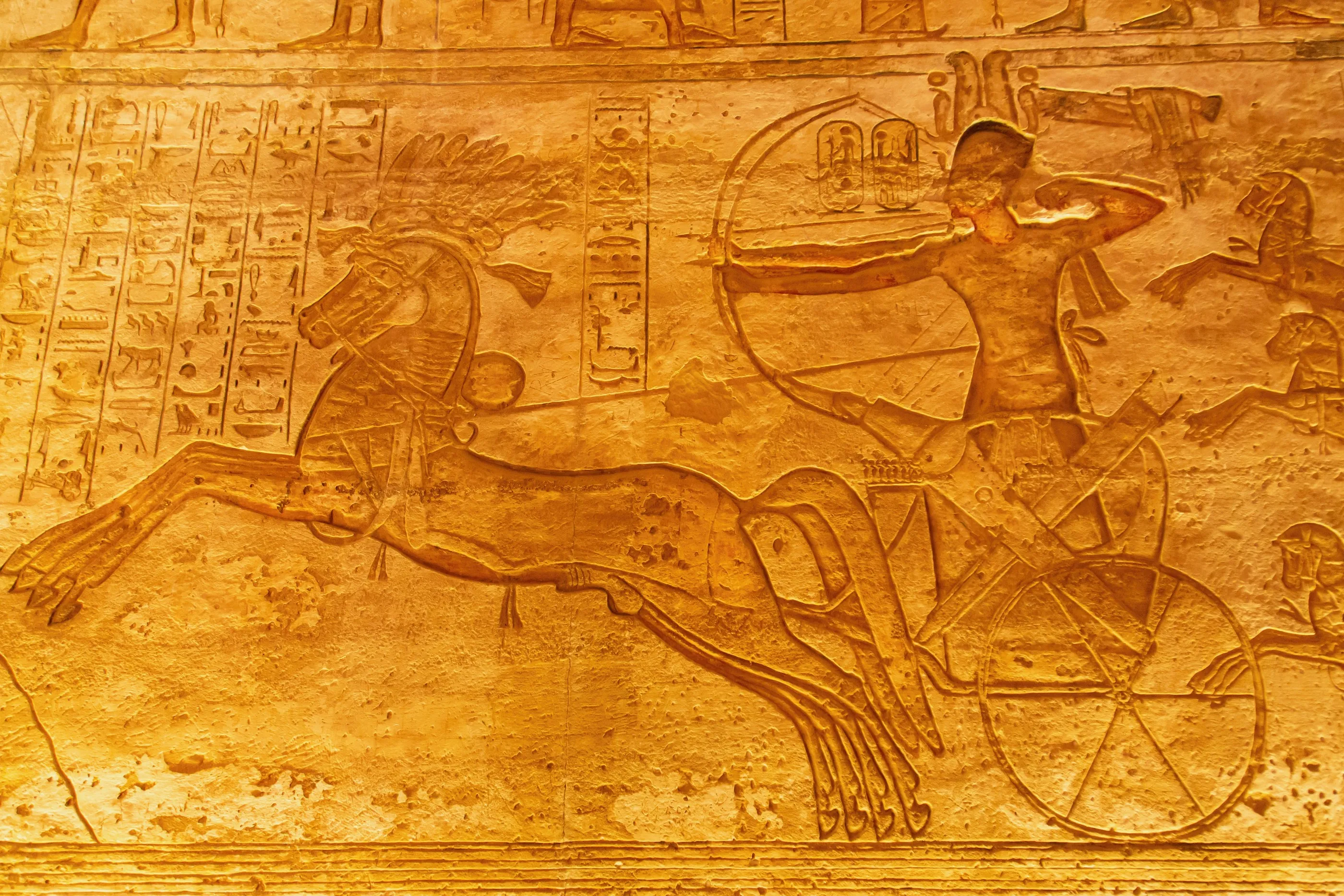
    At the gates of Nubia, on the shore of Lake Nasser, the temples of Ramesses II and Nefertari emerge from the cliff, ochre in the desert dust. The last Egyptian stop before the Sudanese border. Inside, between the Osiride pillars, Ramesses endlessly refights the battle of Kadesh.
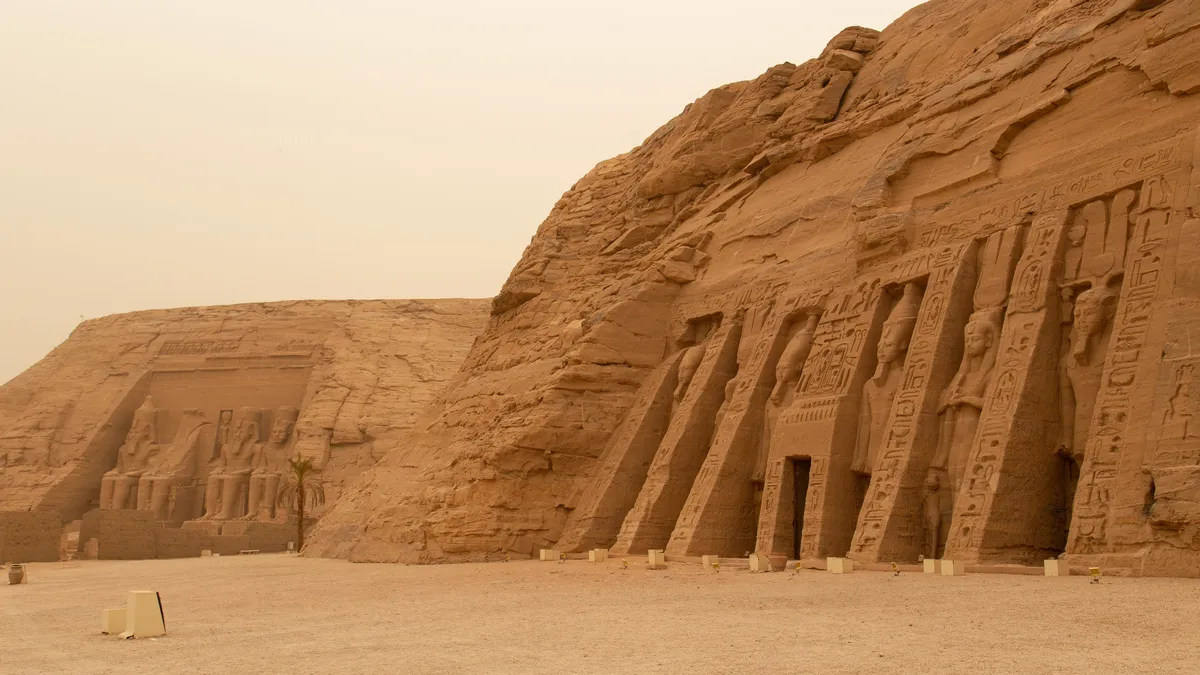
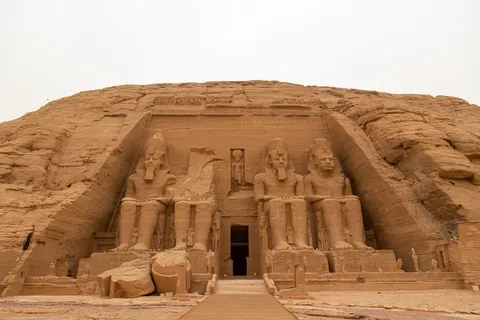
    Temple of Nefertari at Abu Simbel, Egypt — Nicolas MarincicGreat Temple of Abu Simbel in sandstorm haze, Egypt — Nicolas MarincicFaces of the colossi at Abu Simbel, Egypt — Nicolas MarincicOsiride pillars inside Abu Simbel, Egypt — Nicolas MarincicChariot in the Battle of Kadesh relief, Abu Simbel, Egypt — Nicolas MarincicTemple of Nefertari, Abu Simbel, Egypt — Nicolas Marincic
  18. By boat↗ 250 km

    Days 28–29

    Lake Nasser, Wadi Halfa and Soleb

    Sudan

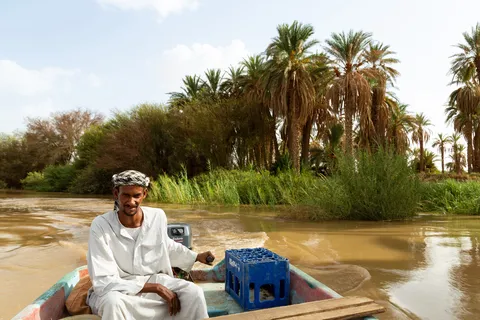
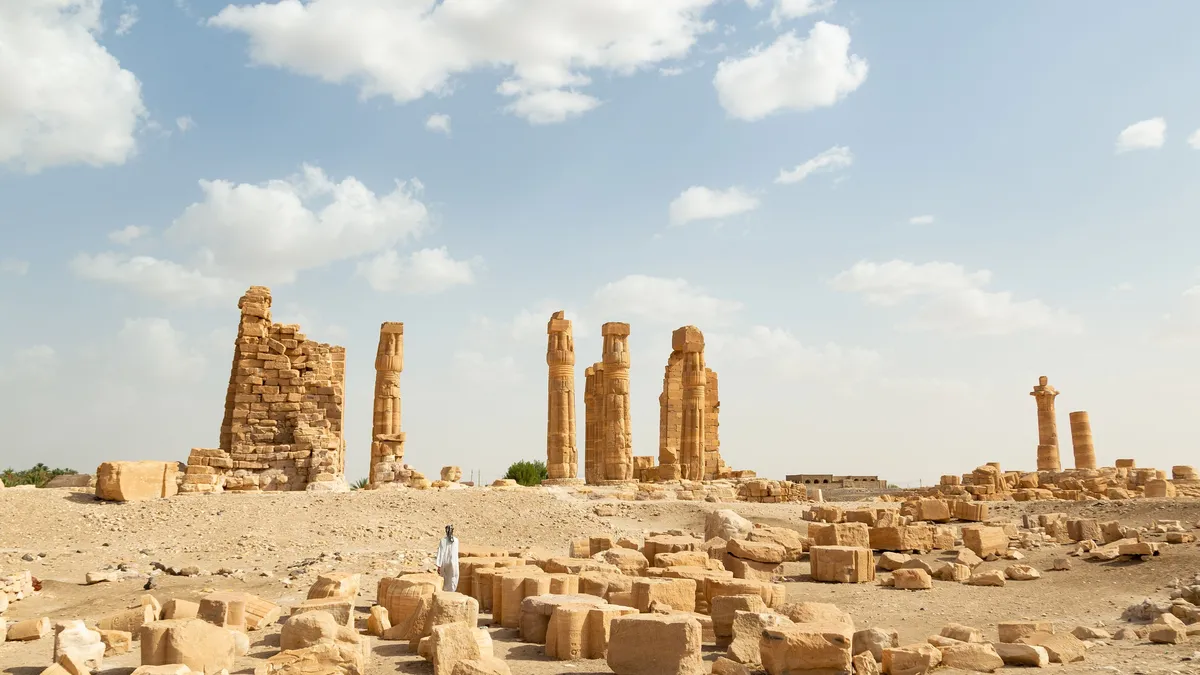
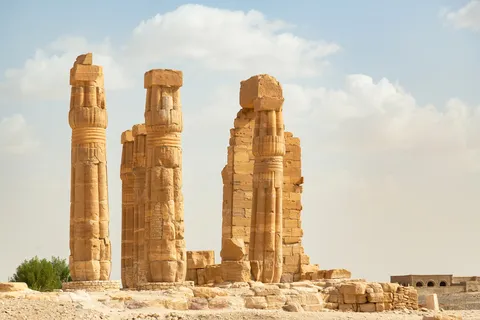
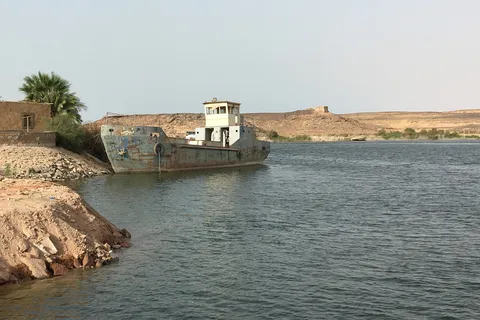
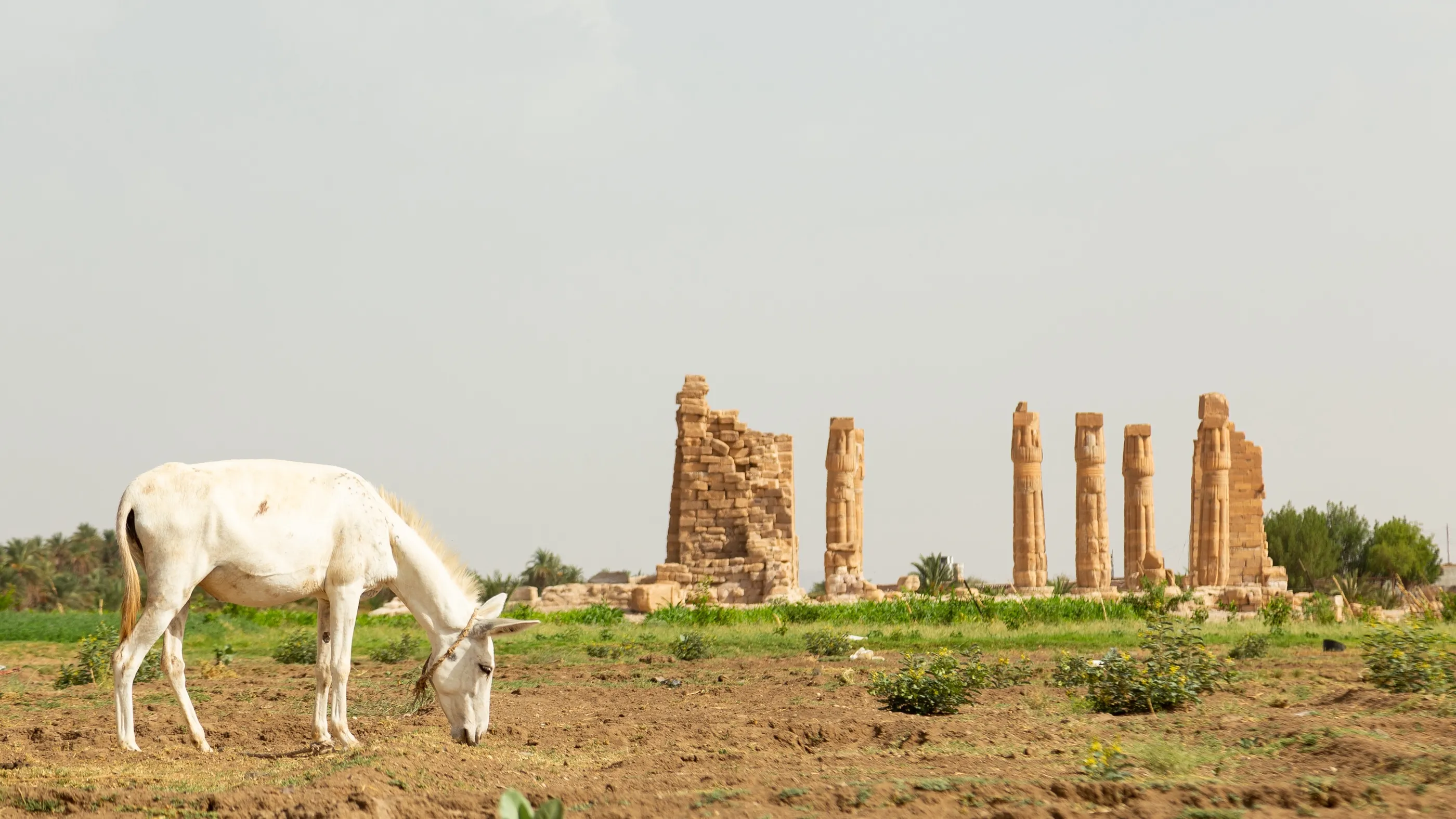
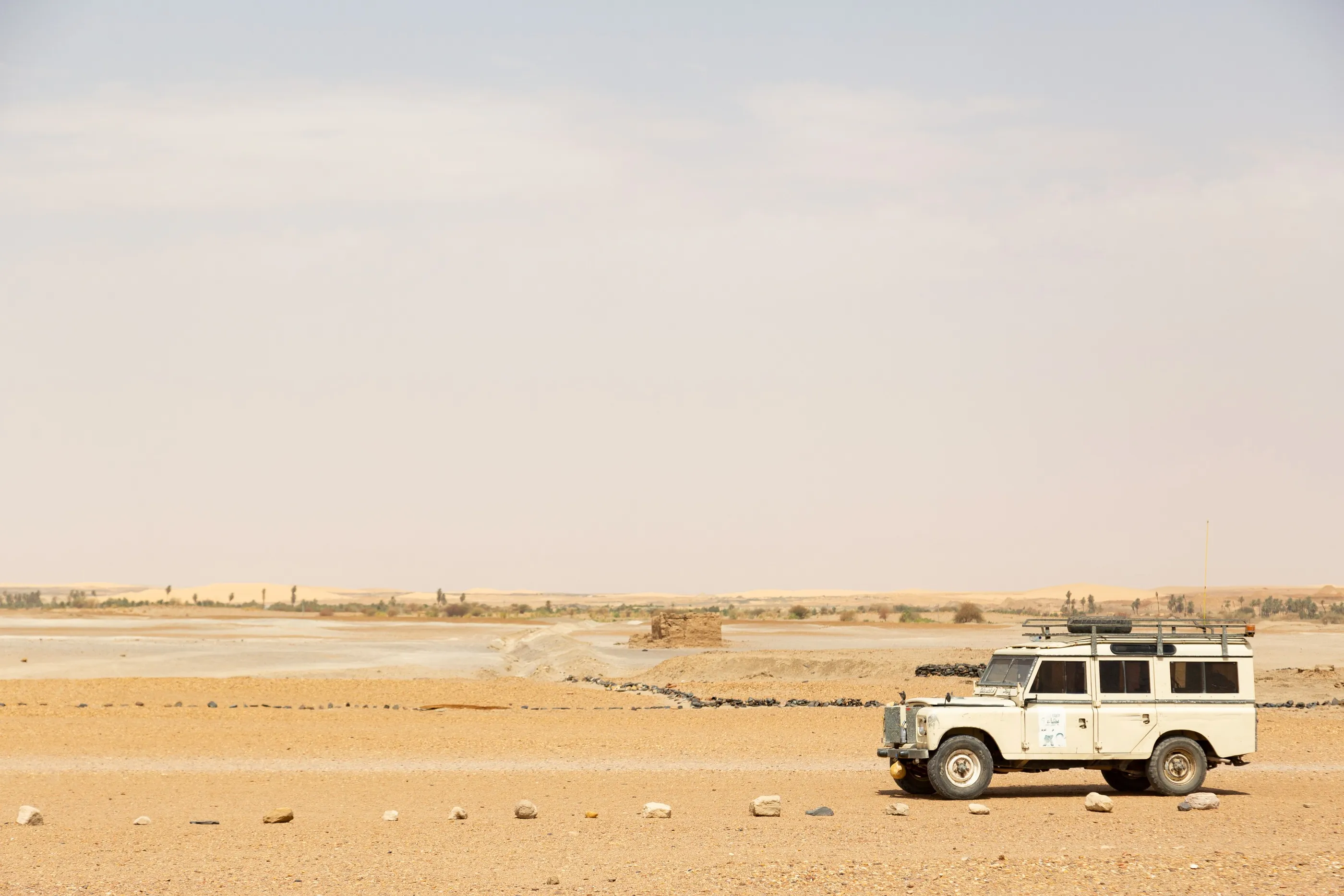
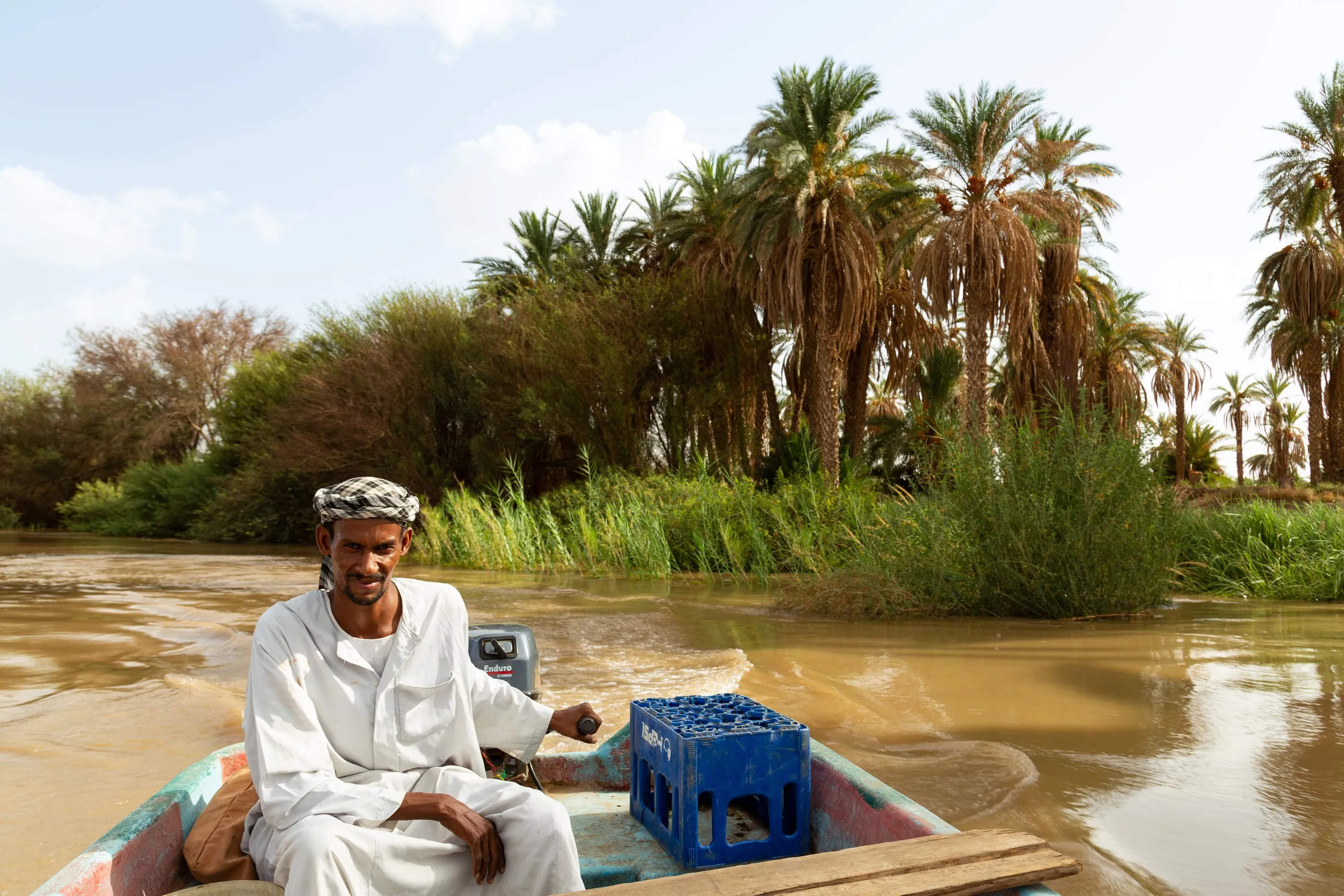
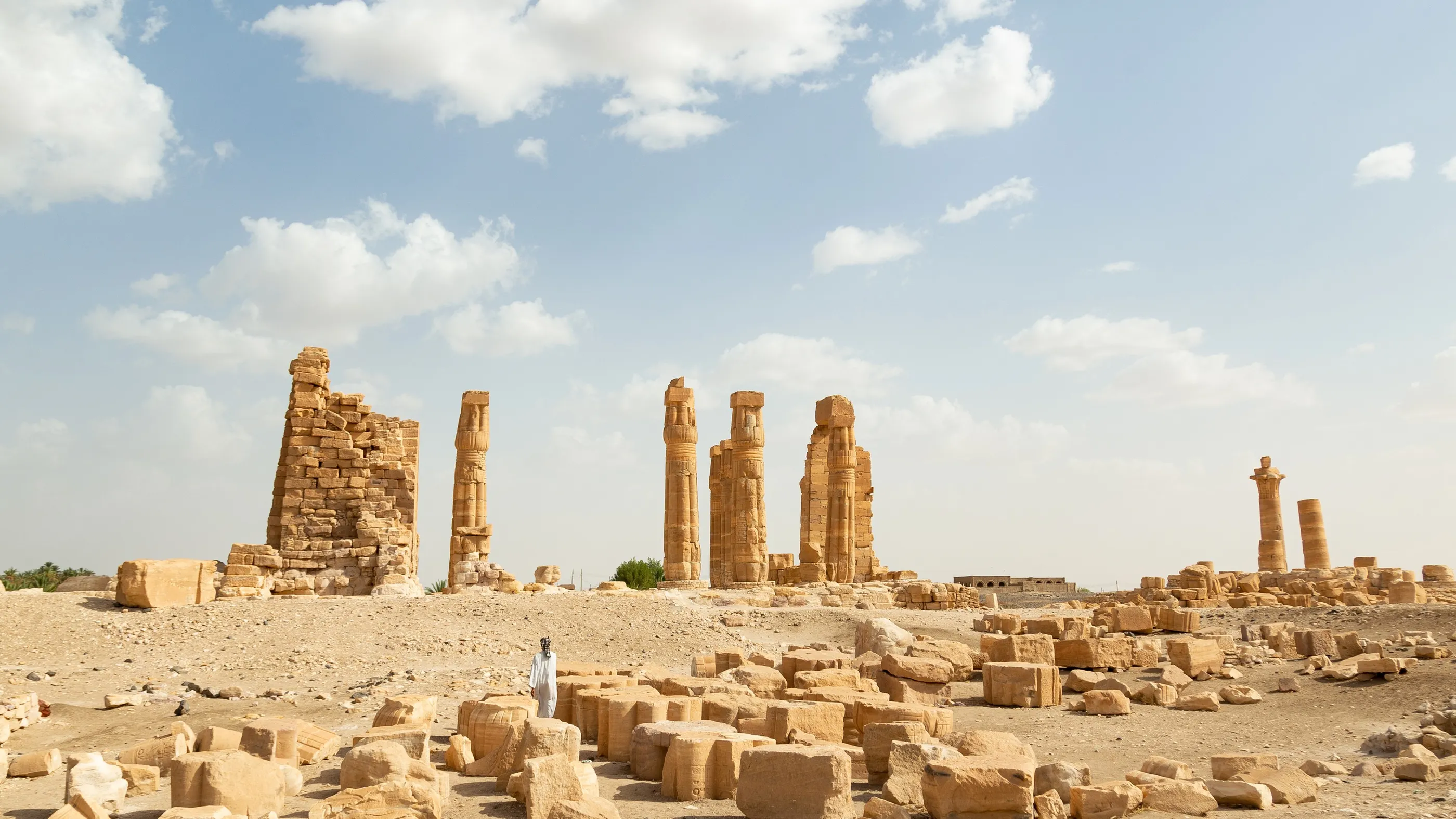
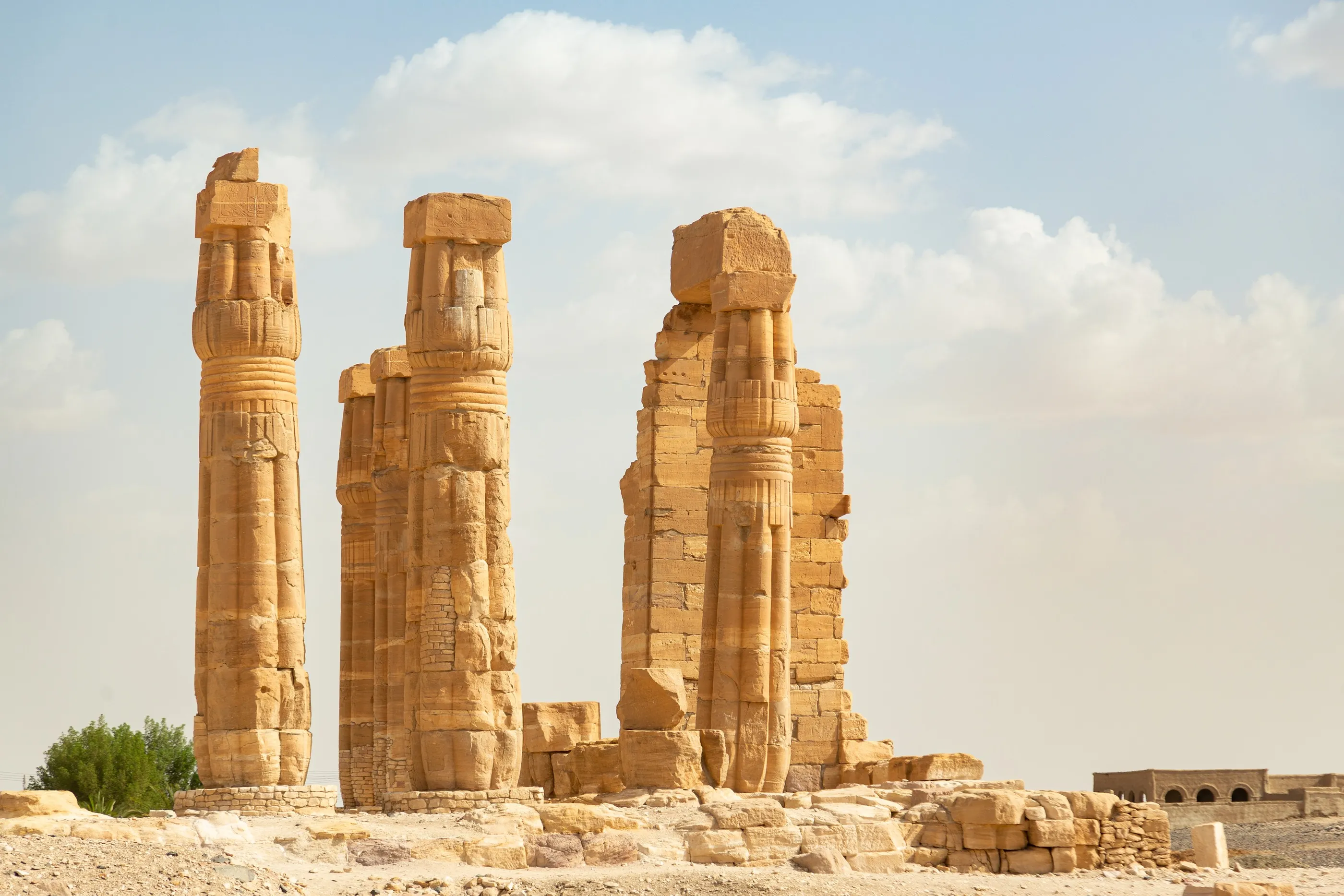
    From the port of Abu Simbel, the Lake Nasser ferry carries us to Wadi Halfa, at the far end of the lake. Across the border, Sudan opens up, vast and almost empty. We follow the Nile through Nubian villages, between the white domes of saints’ tombs and the small boats that still link the two banks. At Soleb the columns of Amenhotep III’s temple rise among the fields.
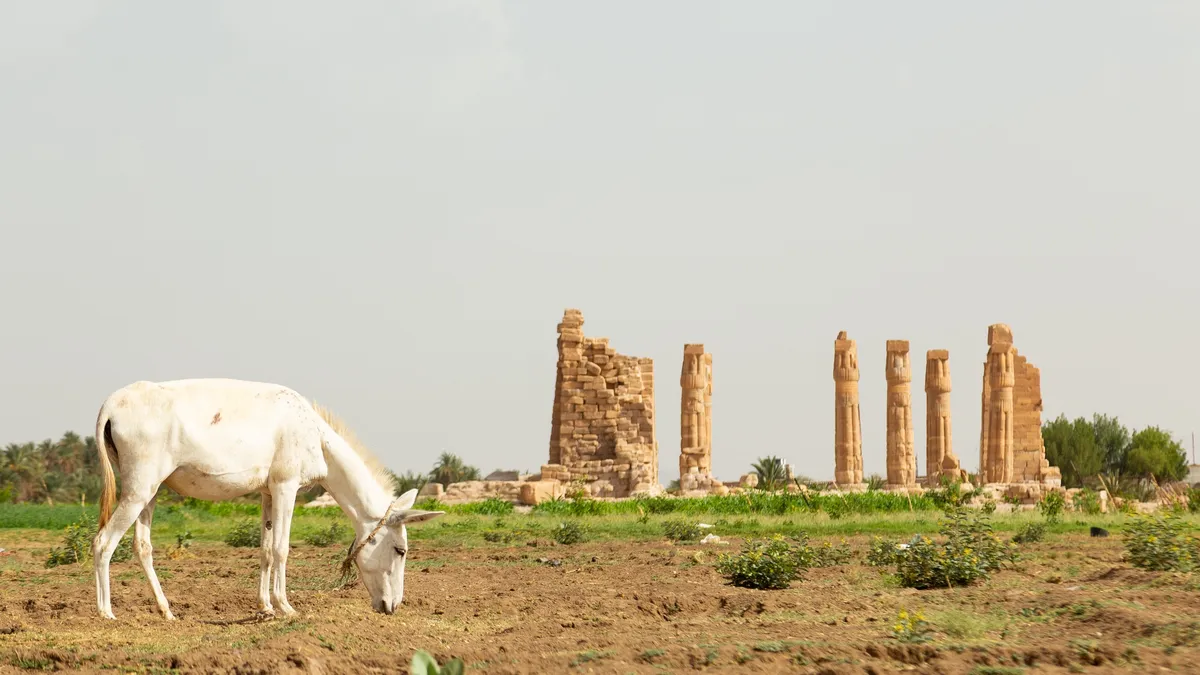
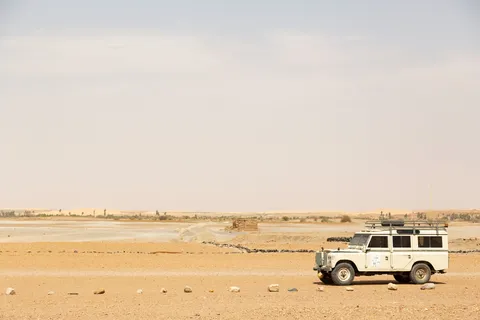
    Donkey before the columns of the Soleb temple, Sudan — Nicolas MarincicFour-by-four in the desert, Sudan — Nicolas MarincicBoatman on the Nile, Sudan — Nicolas MarincicColumns of the Temple of Soleb rising from the desert, Sudan — Nicolas MarincicPapyriform columns, Temple of Soleb, Sudan — Nicolas MarincicWrecked boat on the lakeshore, Sudan — Nicolas Marincic
  19. By road↗ 94 km

    Day 30

    Tombos and Kerma

    Sudan

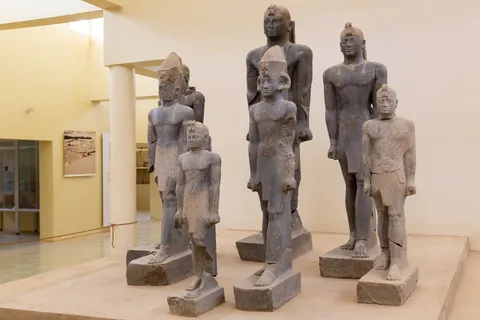
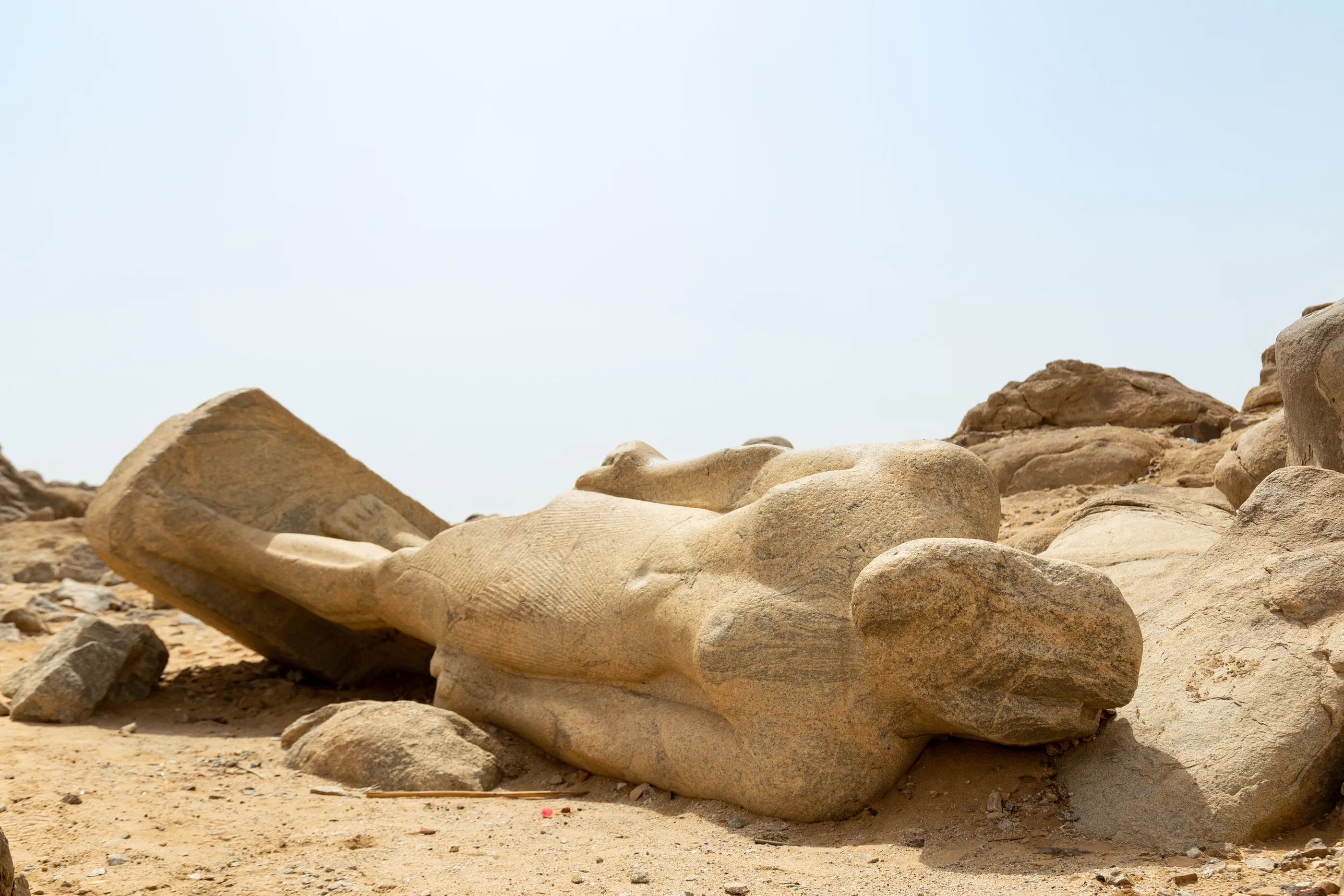
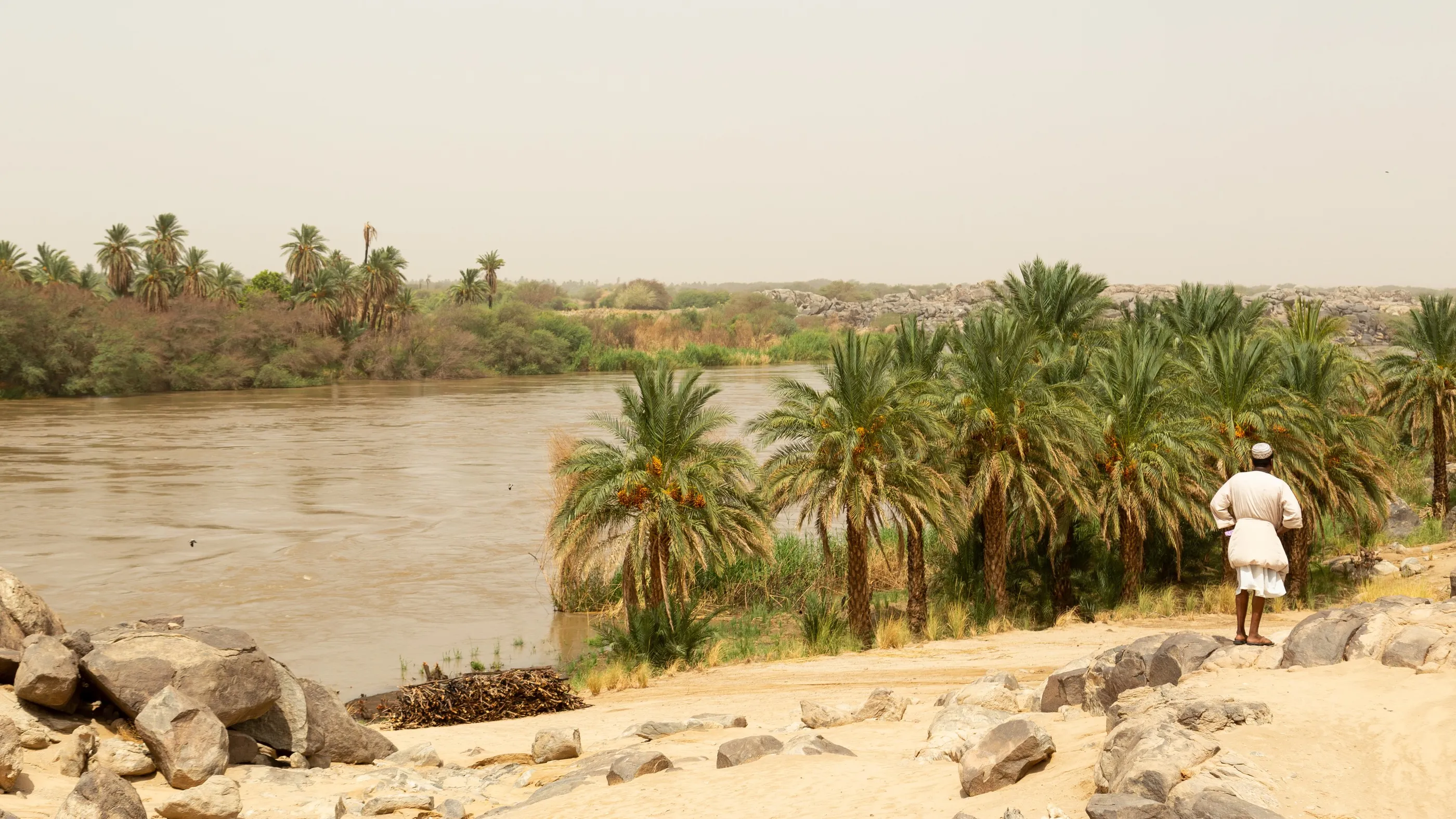
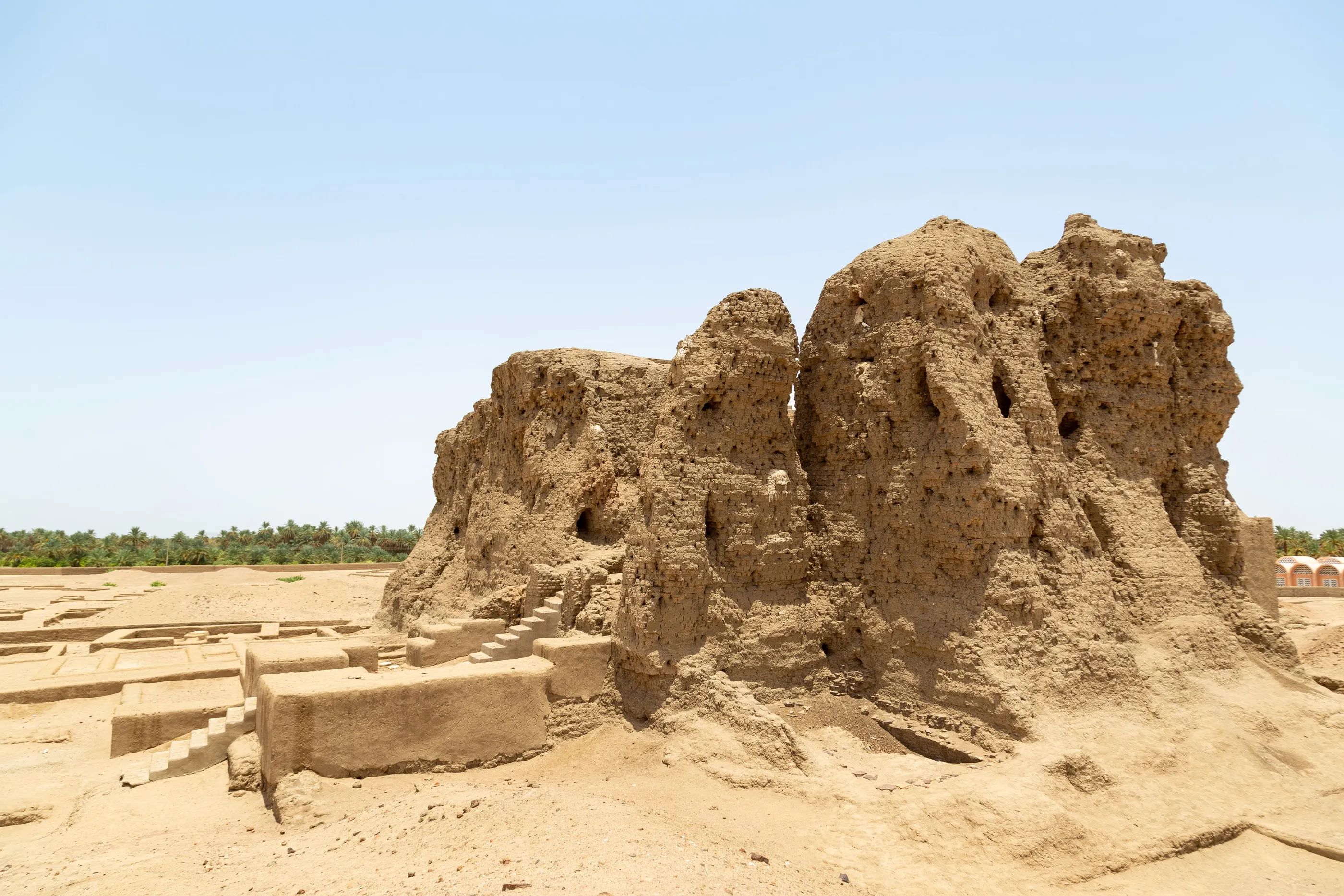
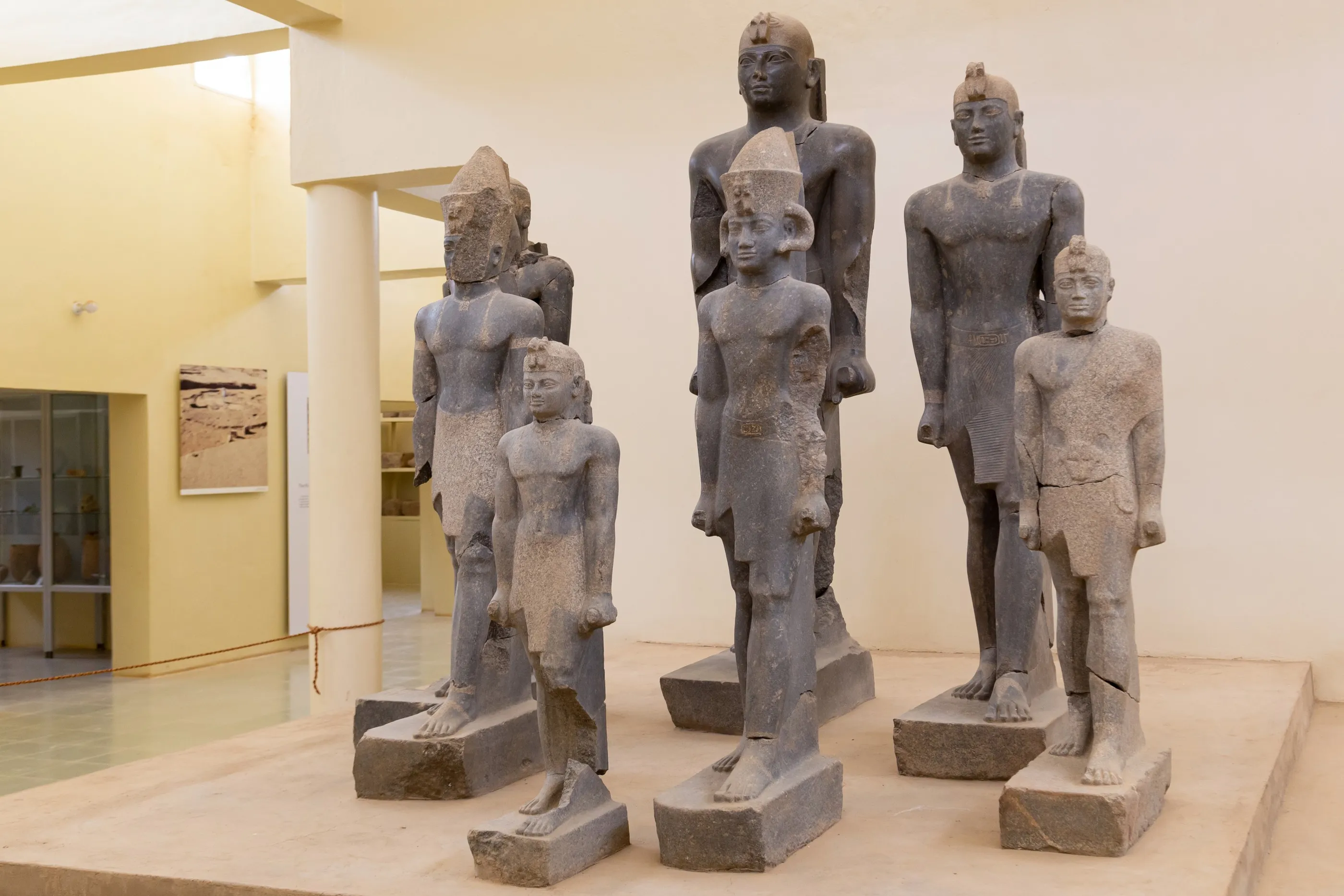
    Near the Third Cataract, at Tombos, an unfinished statue has lain among the rocks for millennia, right where it was carved. At Kerma the Western Deffufa, a massive mud-brick temple, recalls one of Africa’s oldest kingdoms. In the museum, the statues of the Black Pharaohs, Taharqa and Tanutamun, gaze at us with sovereign serenity.
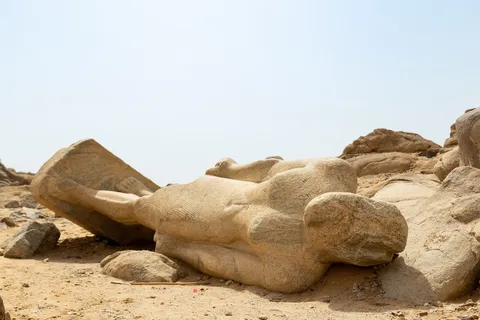
    Unfinished colossal statue lying in the granite, Sudan — Nicolas MarincicPalms on the banks of the Nile, Sudan — Nicolas MarincicWestern Deffufa of Kerma, mud-brick temple, Sudan — Nicolas MarincicBlack Pharaohs Taharqa and Tanutamun, Kerma Museum, Sudan — Nicolas Marincic
  20. By road↗ 190 km

    Day 31

    Karima, Jebel Barkal and El Kurru

    Sudan

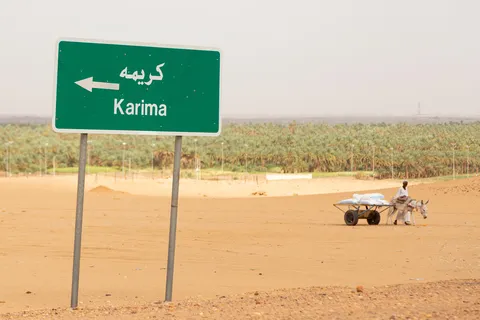
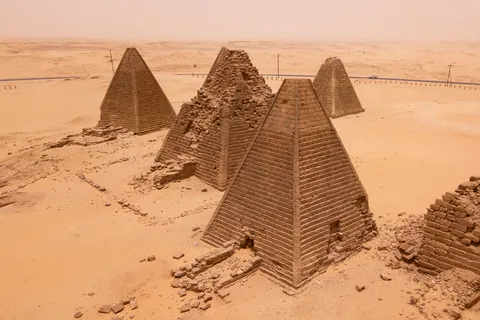
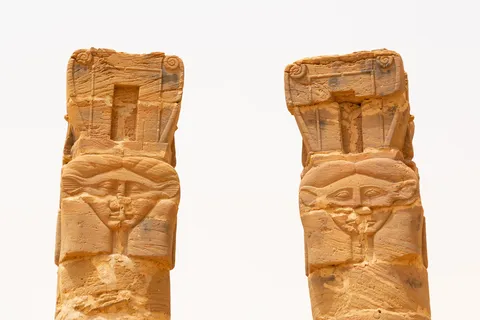
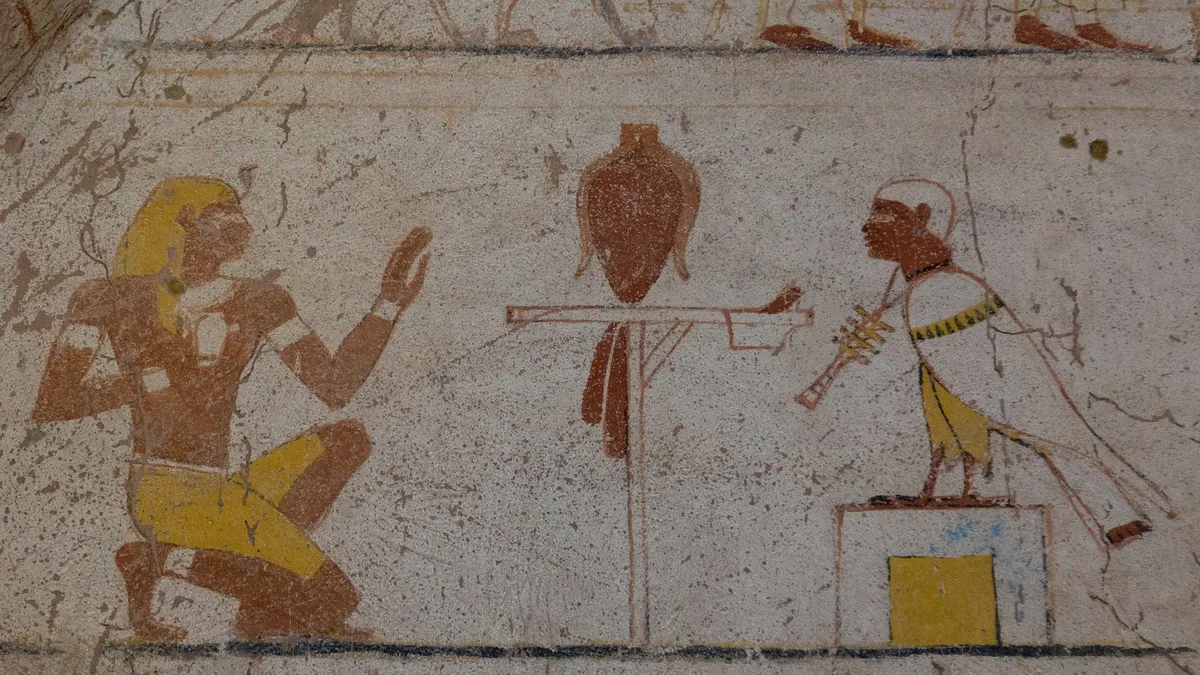
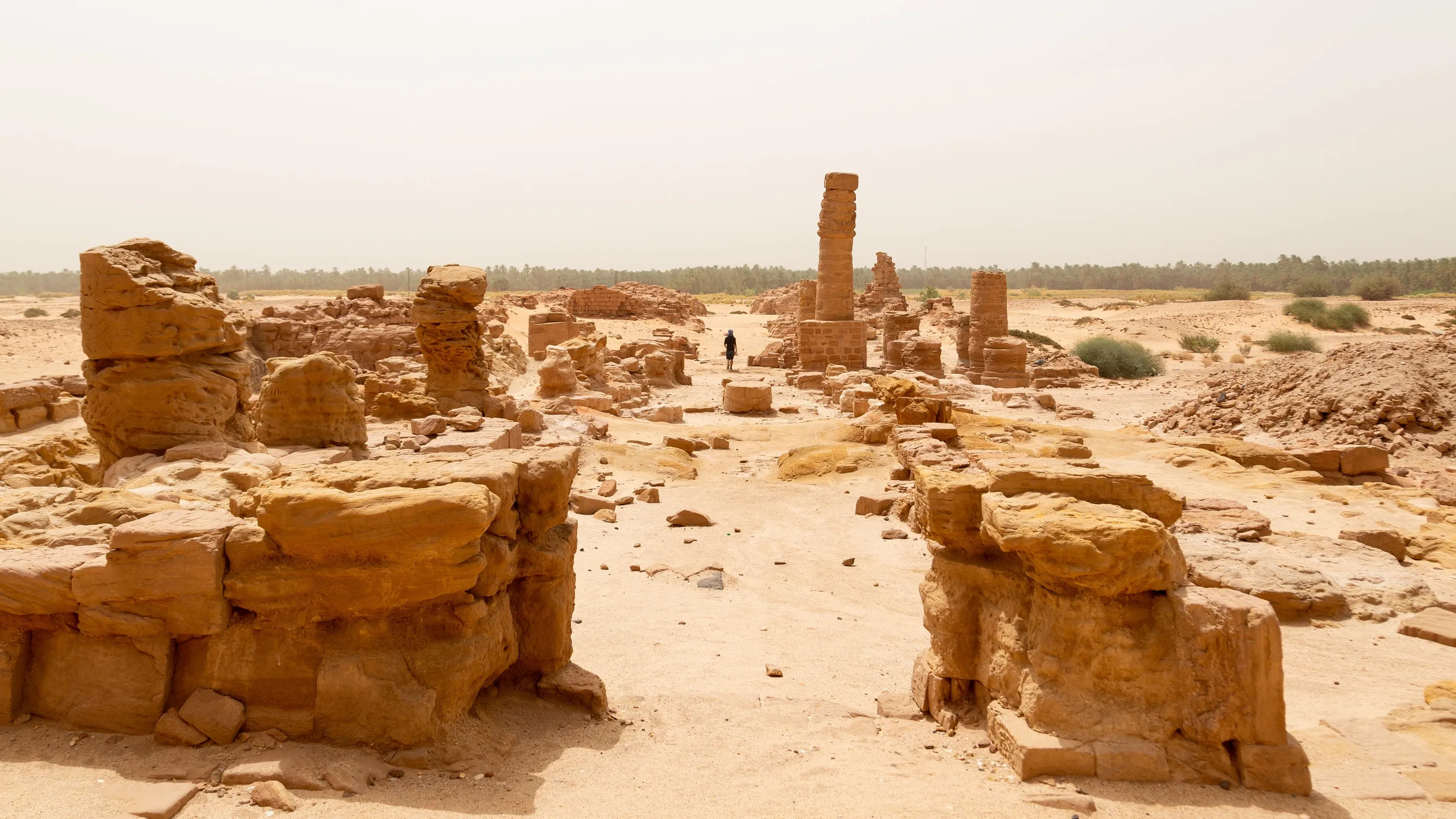
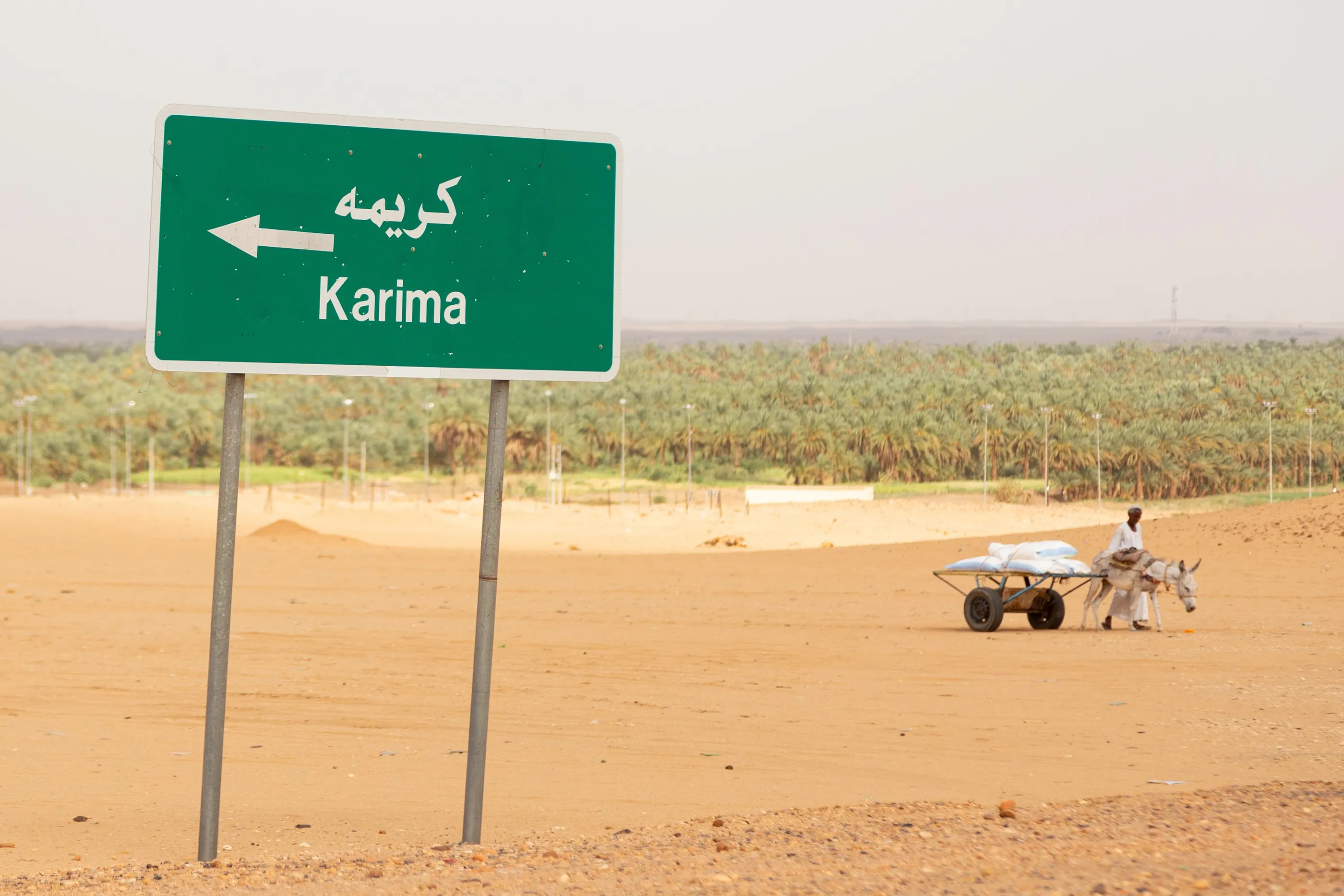
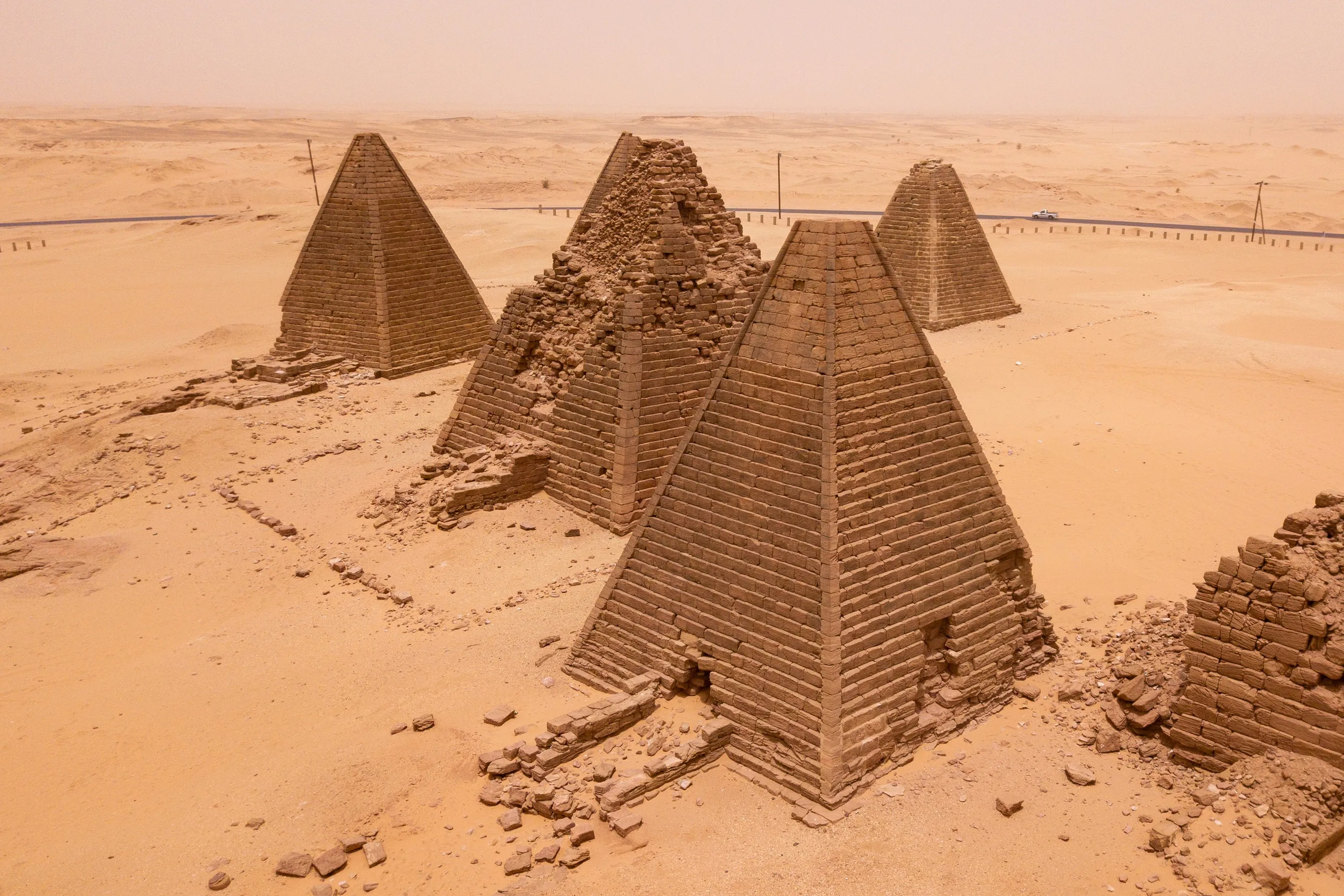
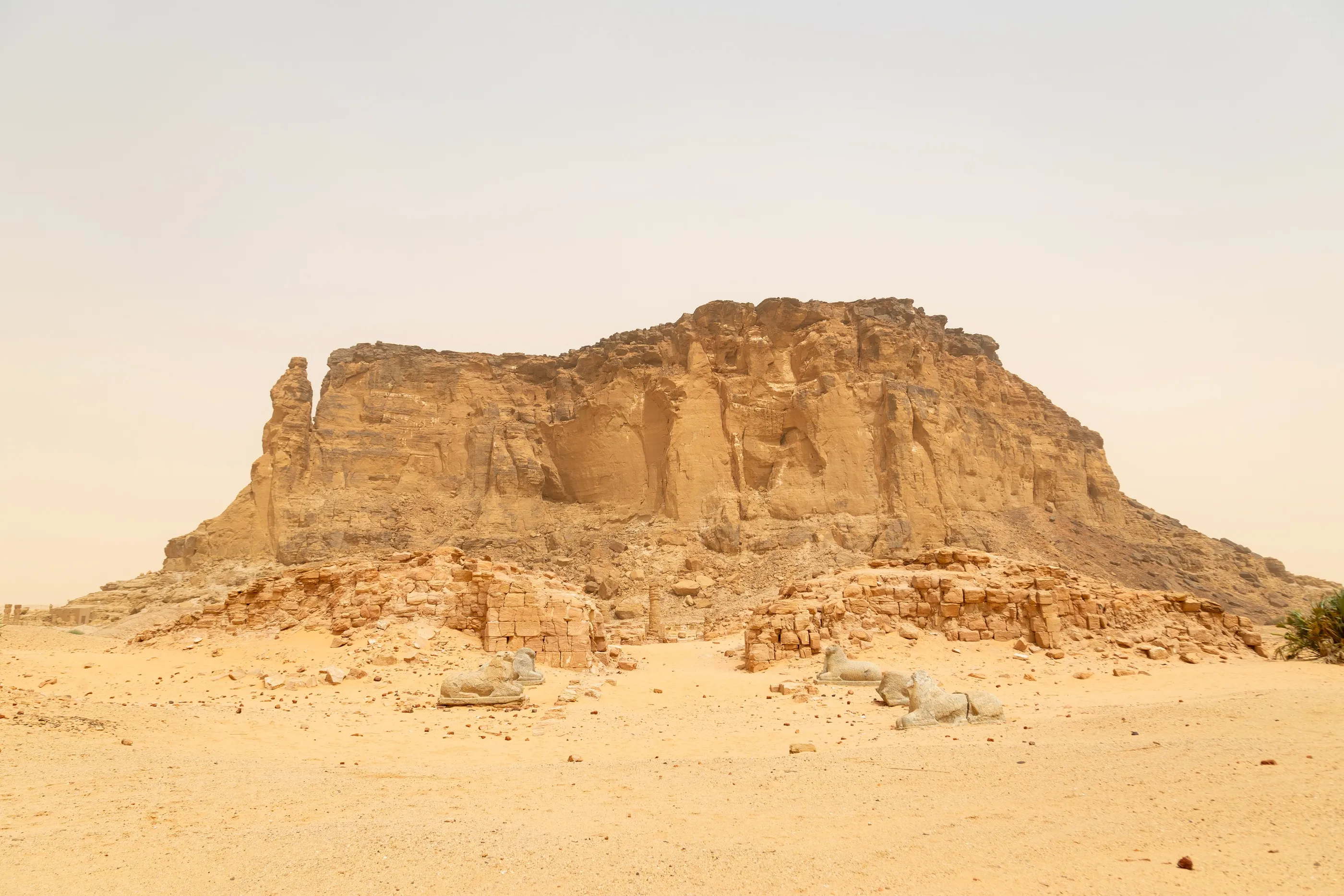
    At the foot of the sacred mountain of Jebel Barkal, the ruins of the temple of Amun and the pyramids of Napata recall that Kushite kings once ruled Egypt. Seen from the air, the pyramids line up between the cliff and the railway. At El Kurru, a staircase cut into the rock leads down to the tomb of Tanutamun, whose starry ceiling and paintings have kept their colours.
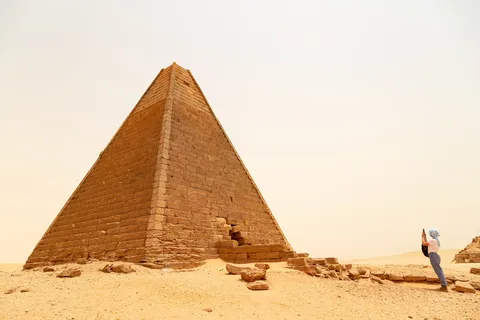
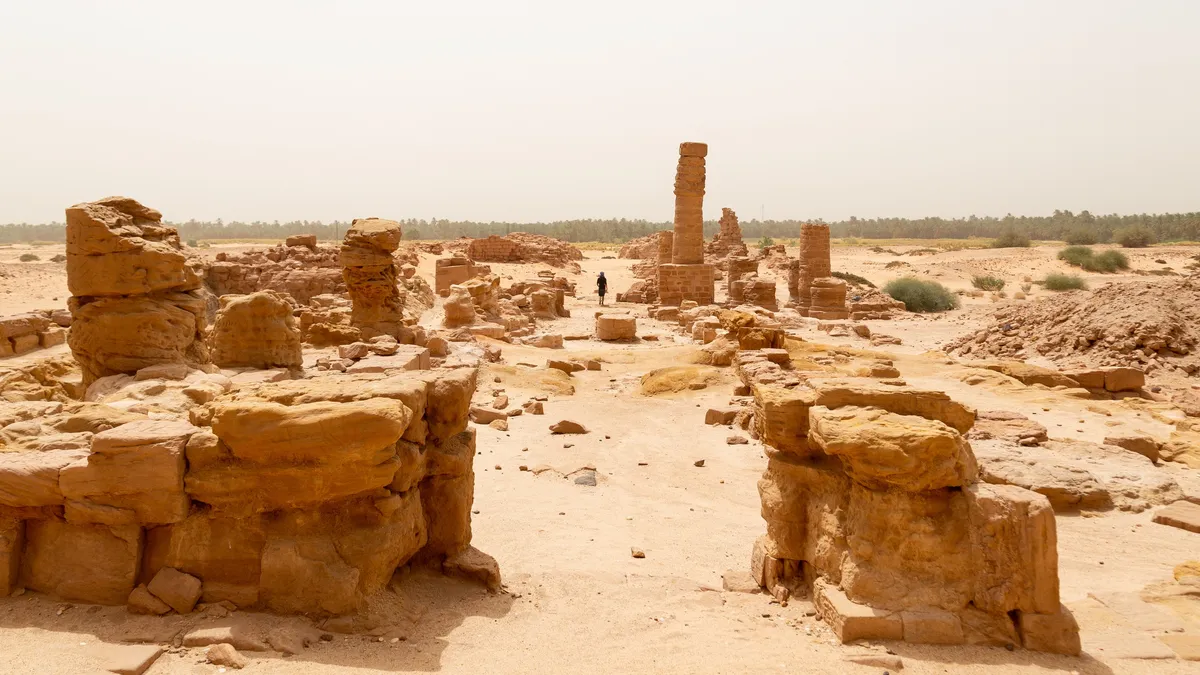
    Nubian pyramid in the sand, Sudan — Nicolas MarincicBrick ruins in the Nubian desert, Sudan — Nicolas MarincicRoad sign to Karima and donkey cart, Sudan — Nicolas MarincicJebel Barkal pyramids and Nile railway, aerial view, Sudan — Nicolas MarincicJebel Barkal in sandstorm haze, Sudan — Nicolas MarincicHathor capitals, Temple of Mut, Jebel Barkal, Sudan — Nicolas MarincicStar ceiling and wall paintings, tomb of Tanutamun, El-Kurru, Sudan — Nicolas MarincicKushite king and deities, tomb paintings at El-Kurru, Sudan — Nicolas Marincic
  21. By road↗ 10 km

    Day 32

    Nuri

    Sudan

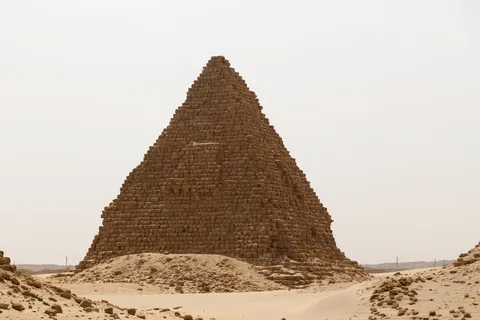
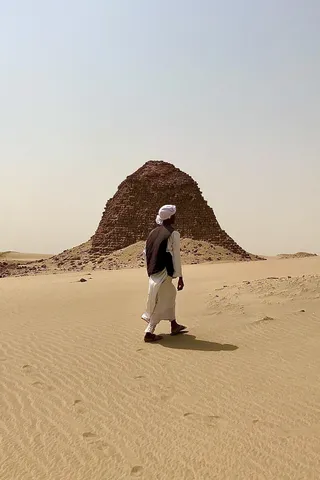
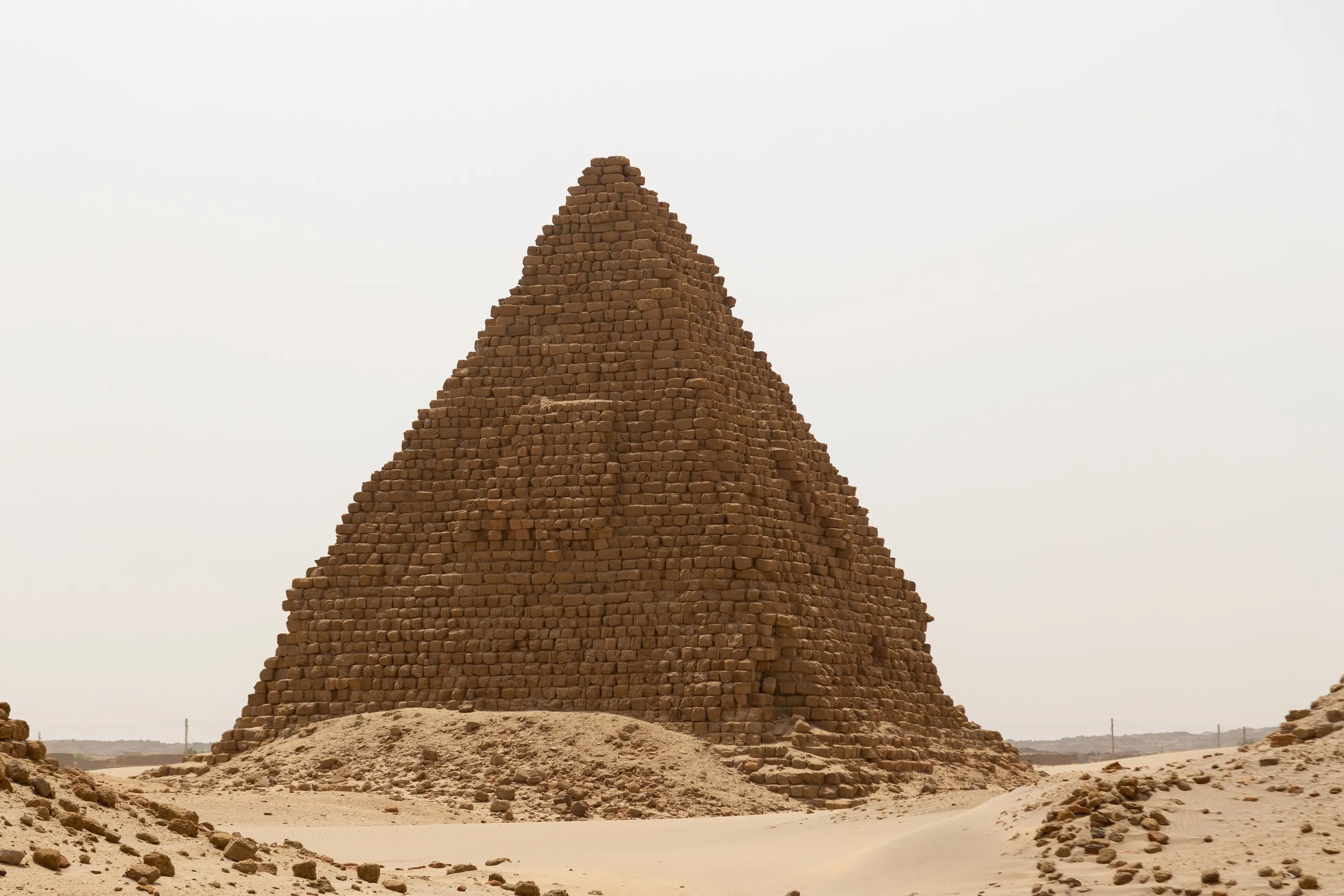
    On the other bank lies the necropolis of Nuri, where Taharqa rests beneath the largest of the Kushite pyramids. Seen from above, it looks like a handful of teeth planted in the sand. A man in a jalabiya walks between the tombs, as indifferent to time as the stones.

    Sand-covered Nubian pyramids from above, Sudan — Nicolas MarincicDonkey cart near a village, Sudan — Nicolas MarincicPyramid of Taharqa, Nuri, Sudan — Nicolas MarincicMan in a jalabiya walking towards a pyramid at Nuri, Sudan — Nicolas Marincic
  22. By road↗ 265 km

    Days 33–34

    Meroë, Naqa and Musawwarat

    Sudan

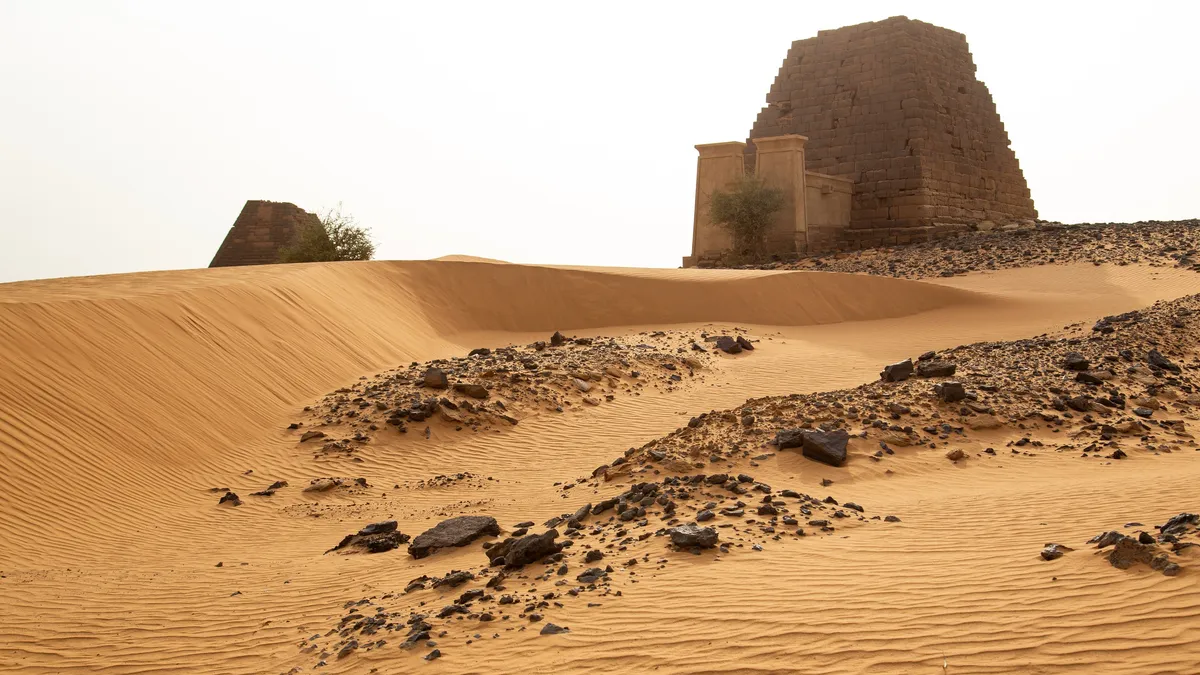
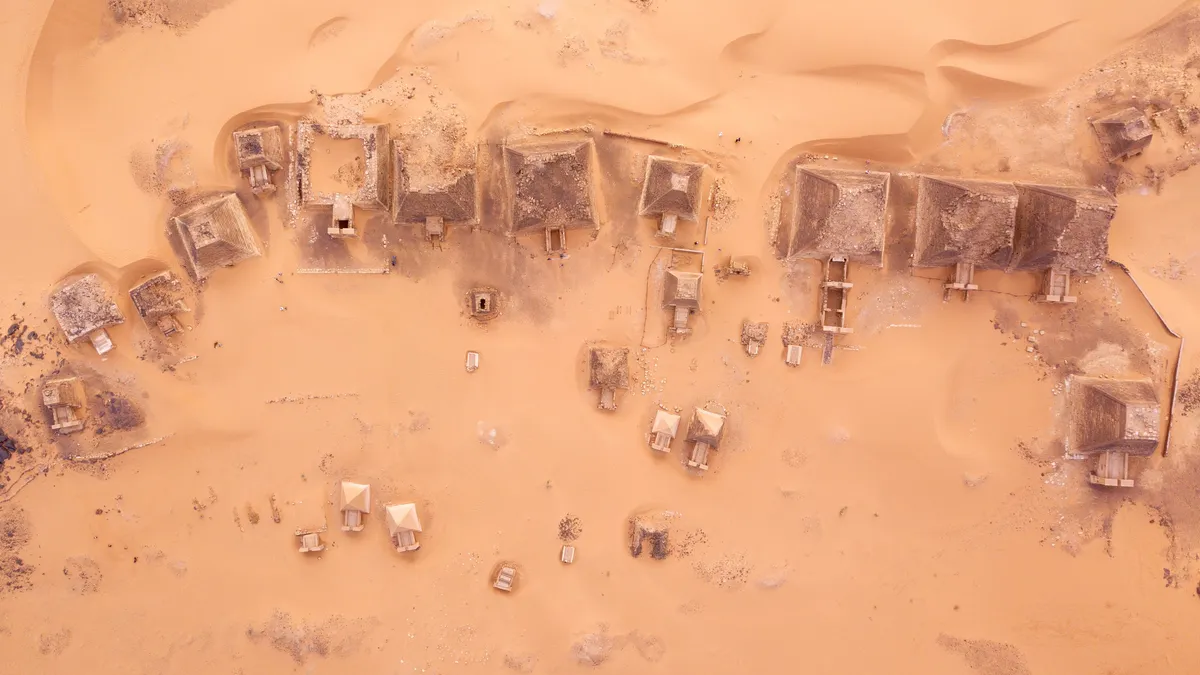
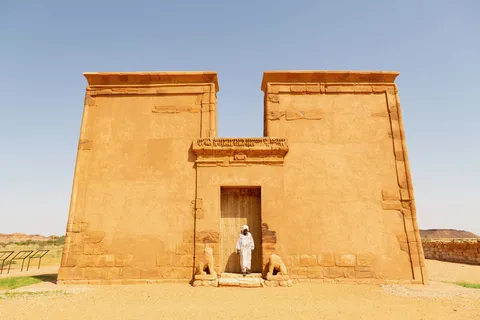
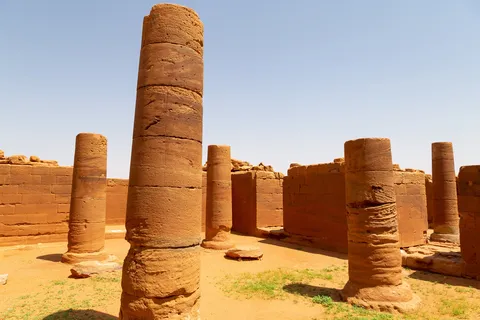
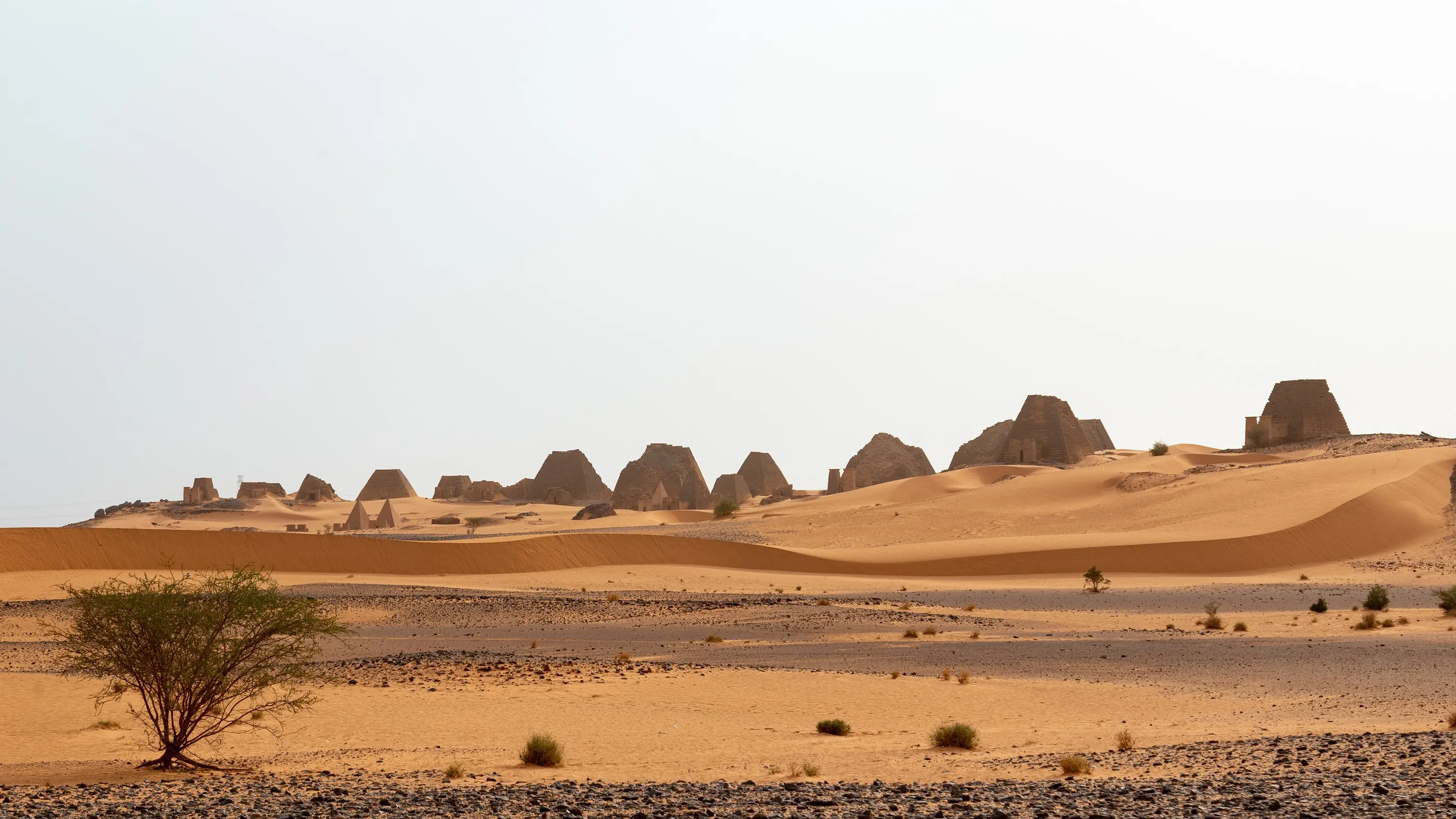
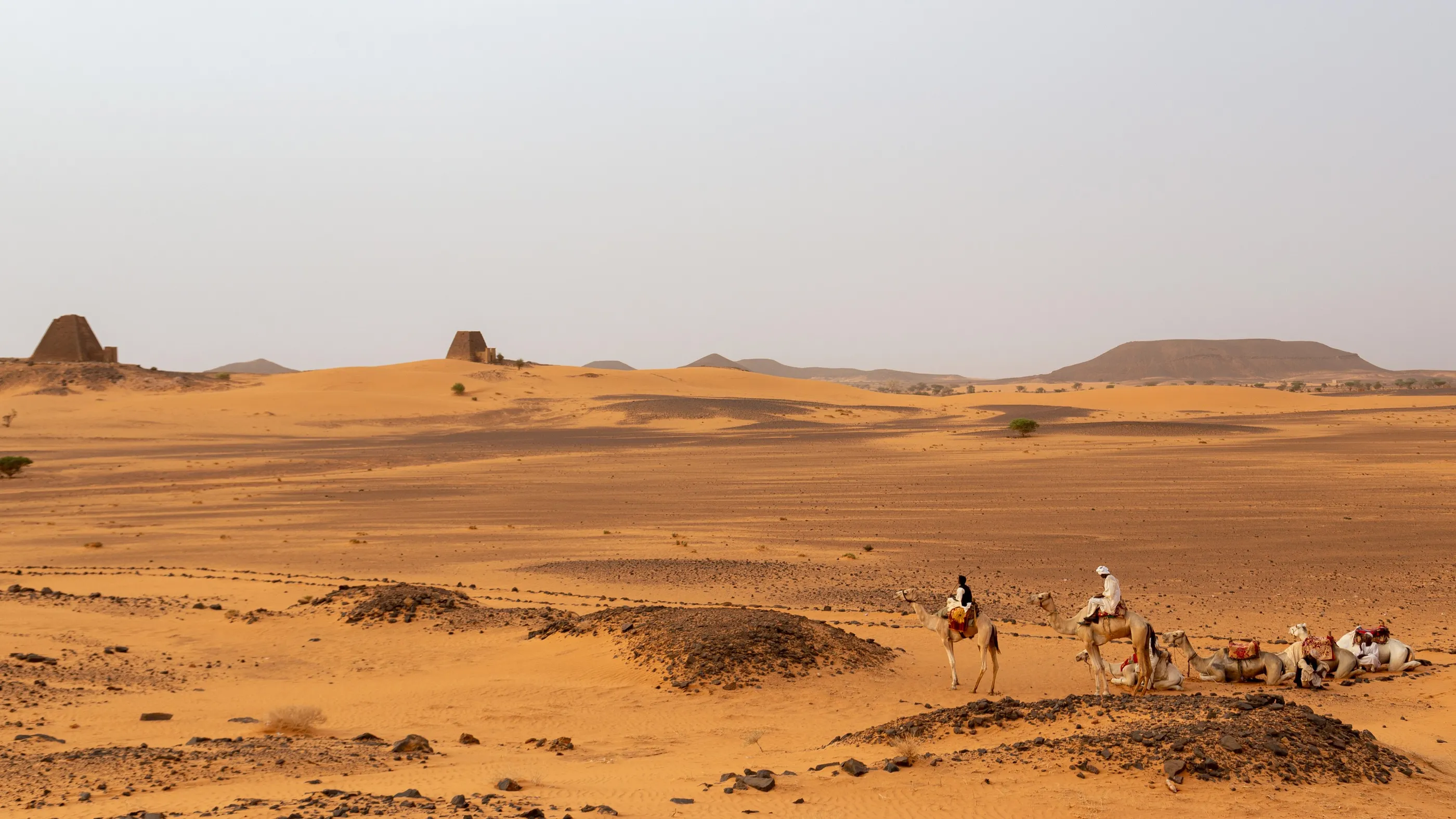
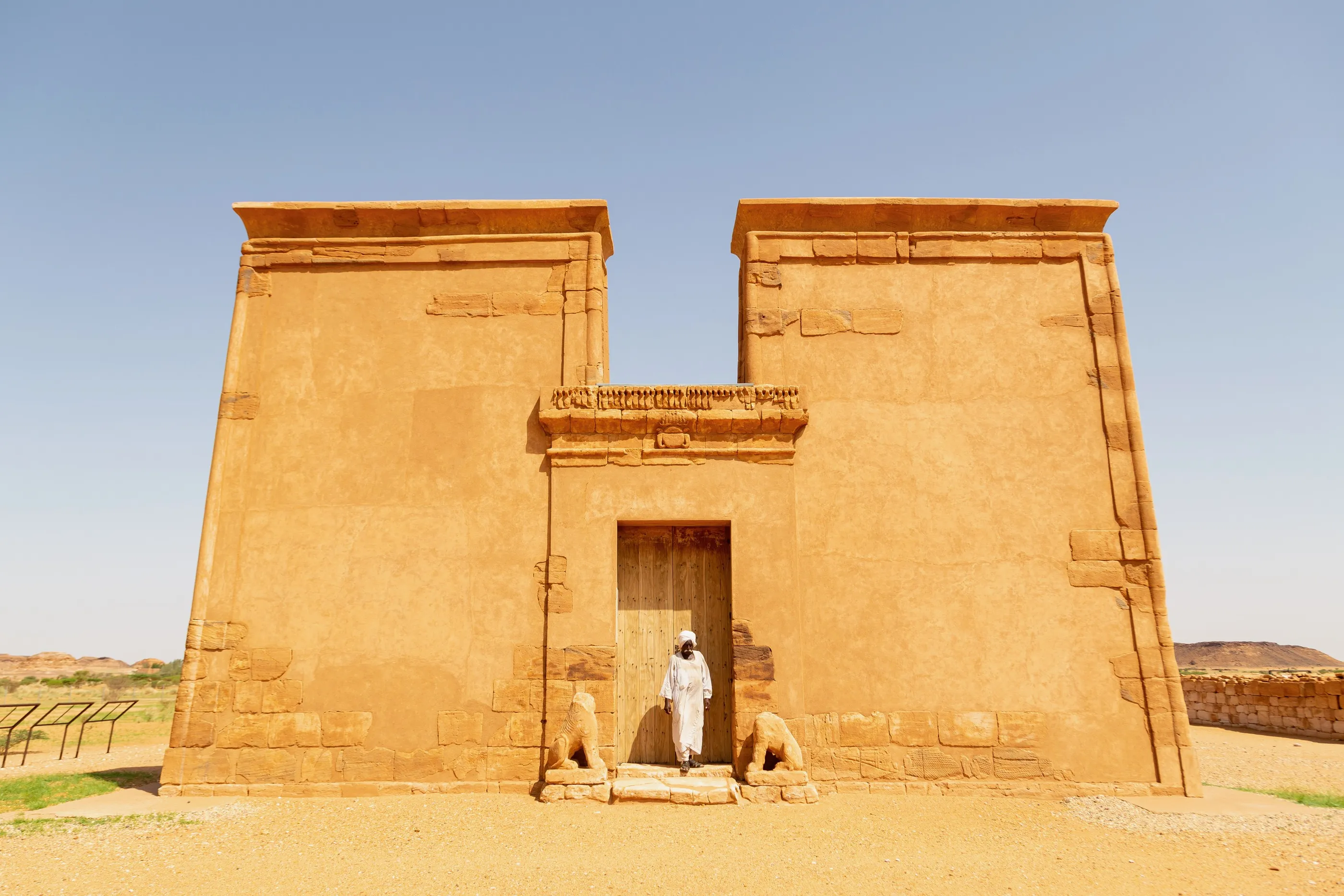
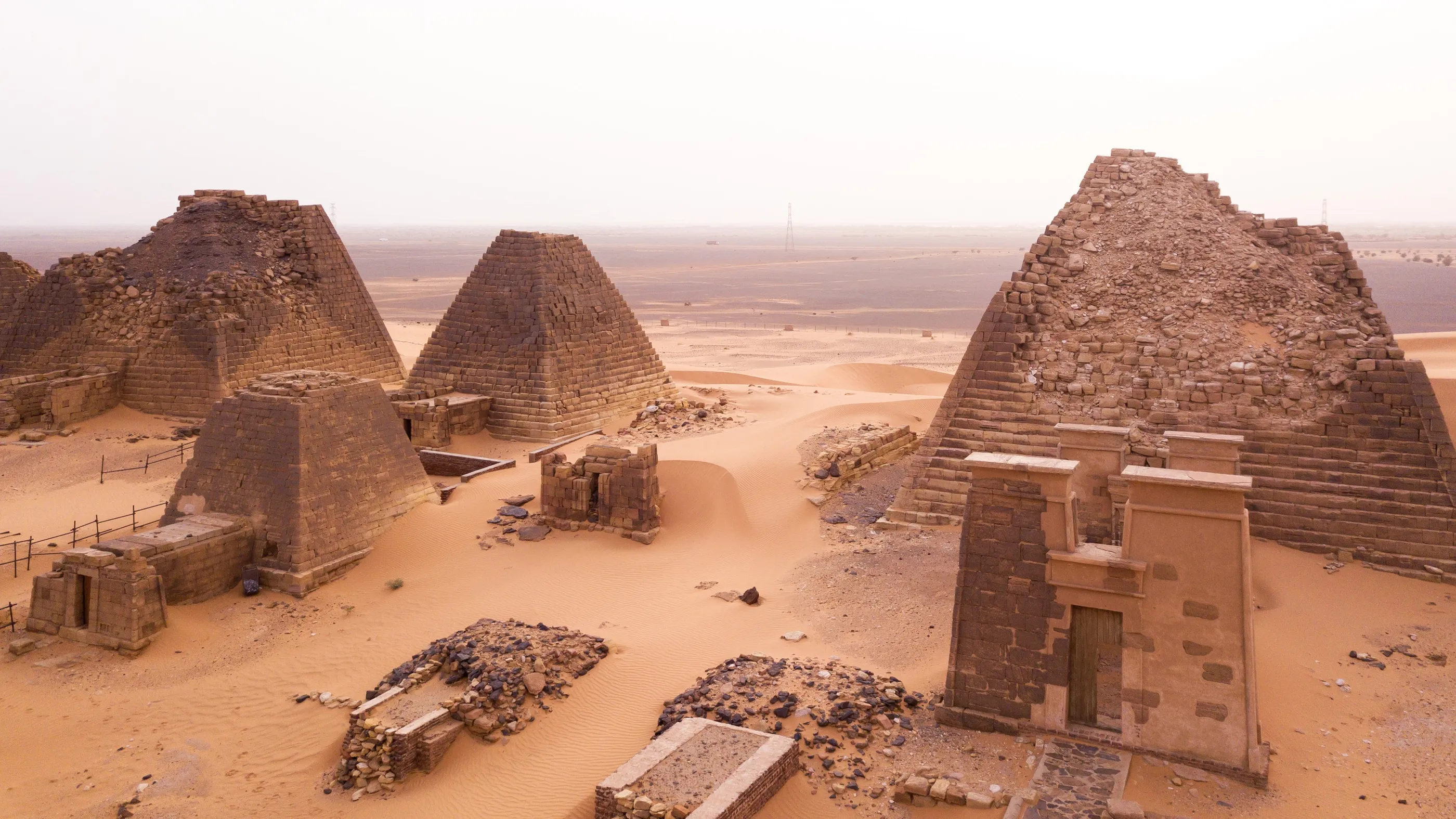
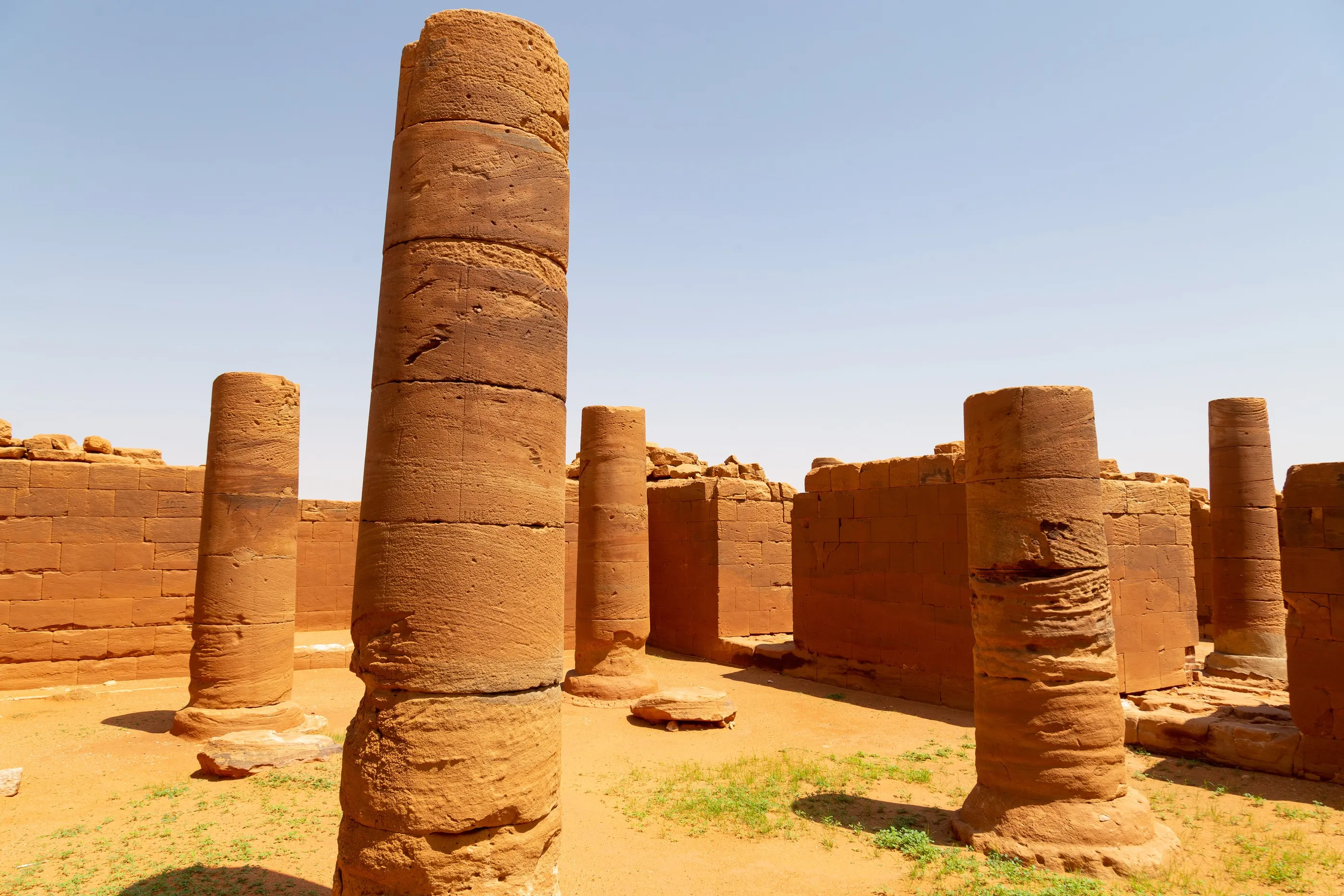
    The pyramids of Meroë, slender and crowded along their ridge, rise from orange dunes. There is almost no one: only the wind, a few camel drivers and the silence of forgotten kings. Further south, the temple of Amun at Naqa stands alone in the dry savannah. Nearby, at Musawwarat es-Sufra, more columns wait in the same silence.

    Pyramid field in the desert from above, Sudan — Nicolas MarincicPyramids of Meroë amid the dunes, Sudan — Nicolas MarincicNubian pyramid above the dunes, Sudan — Nicolas MarincicAerial view of a sand-swept village, Sudan — Nicolas MarincicCamel caravan crossing the desert, Sudan — Nicolas MarincicPylon of a Meroitic temple, Sudan — Nicolas MarincicPyramids and chapels of Meroë, aerial view, Sudan — Nicolas MarincicTemple columns, Musawwarat es-Sufra, Sudan — Nicolas Marincic
  23. By road↗ 198 km

    Days 34–35

    Khartoum and Omdurman

    Sudan

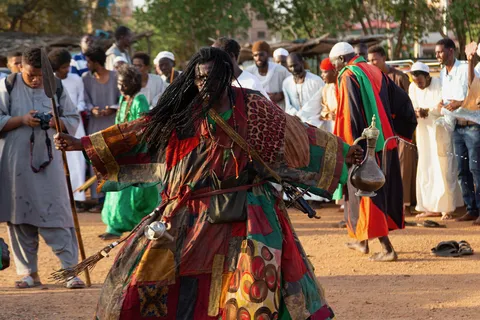
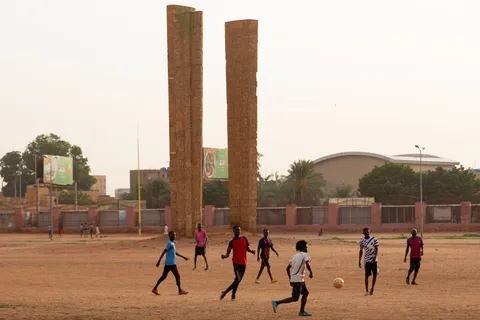
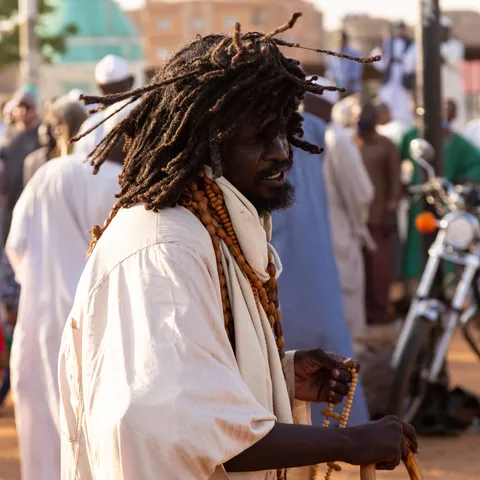
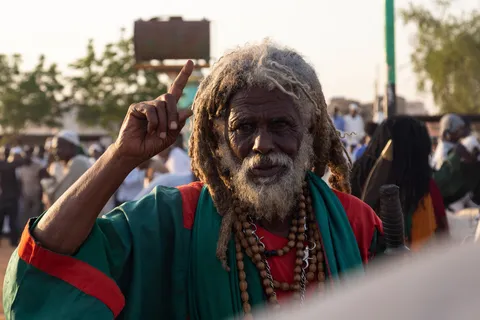
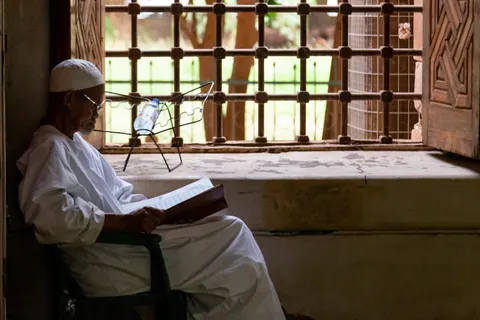
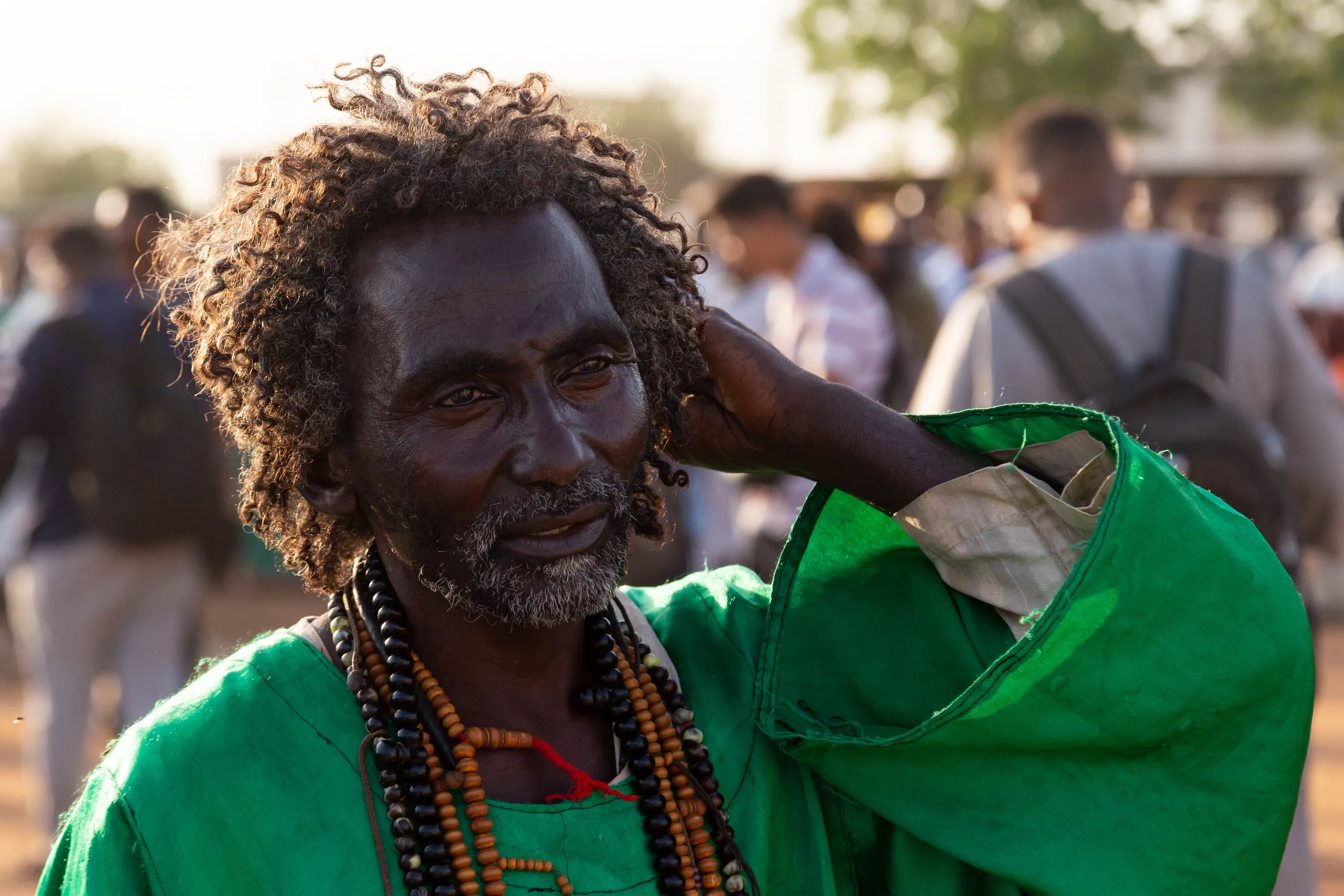
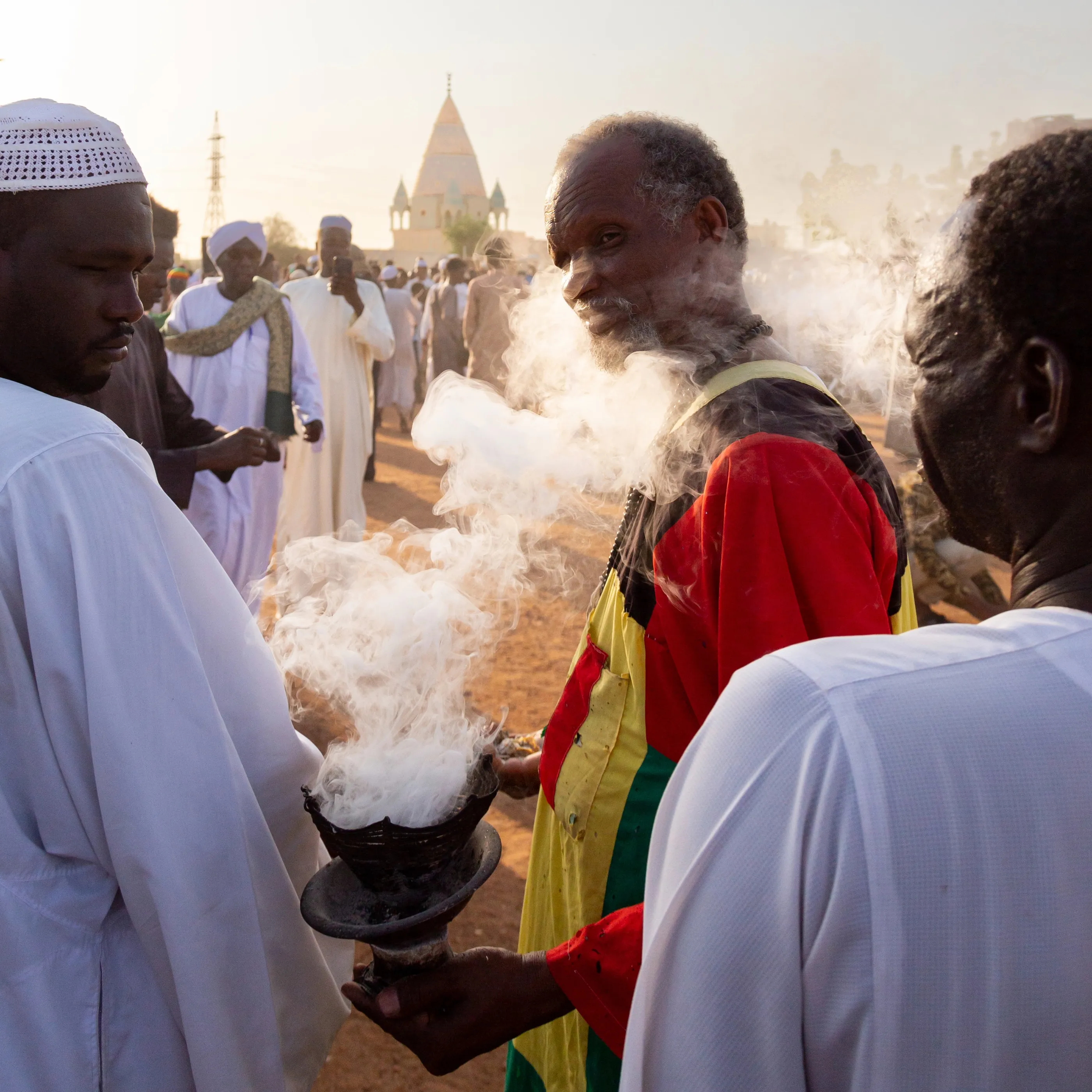
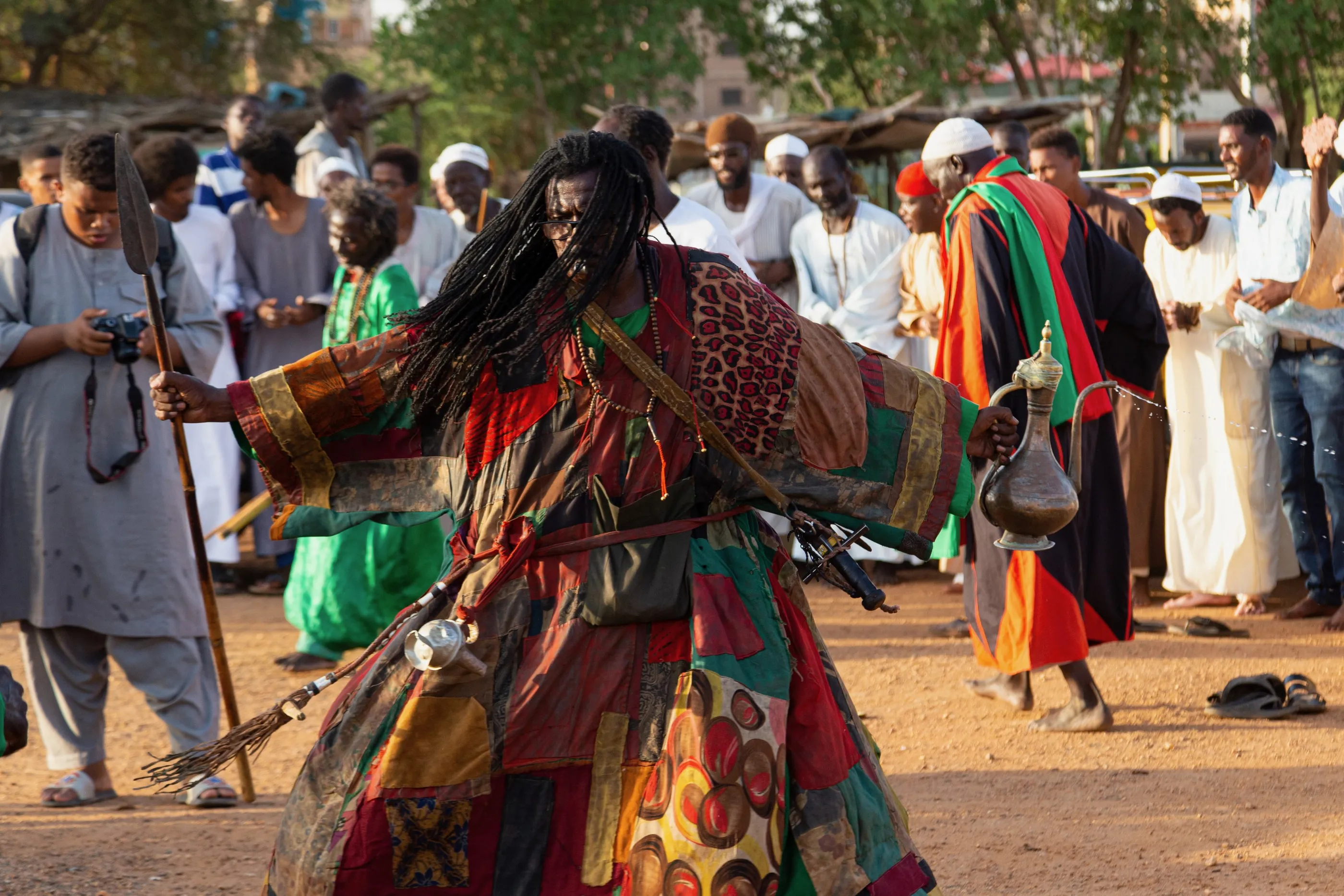
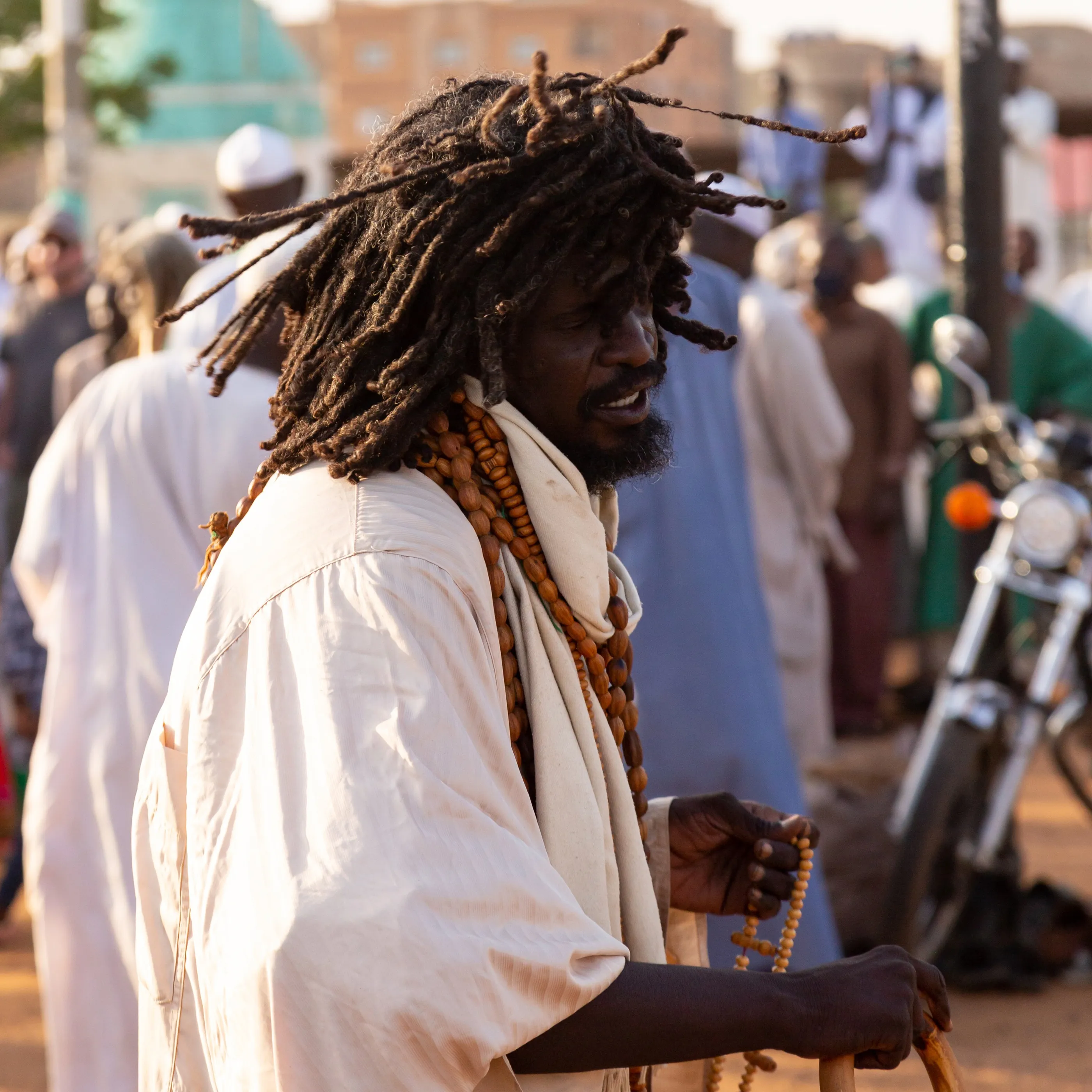
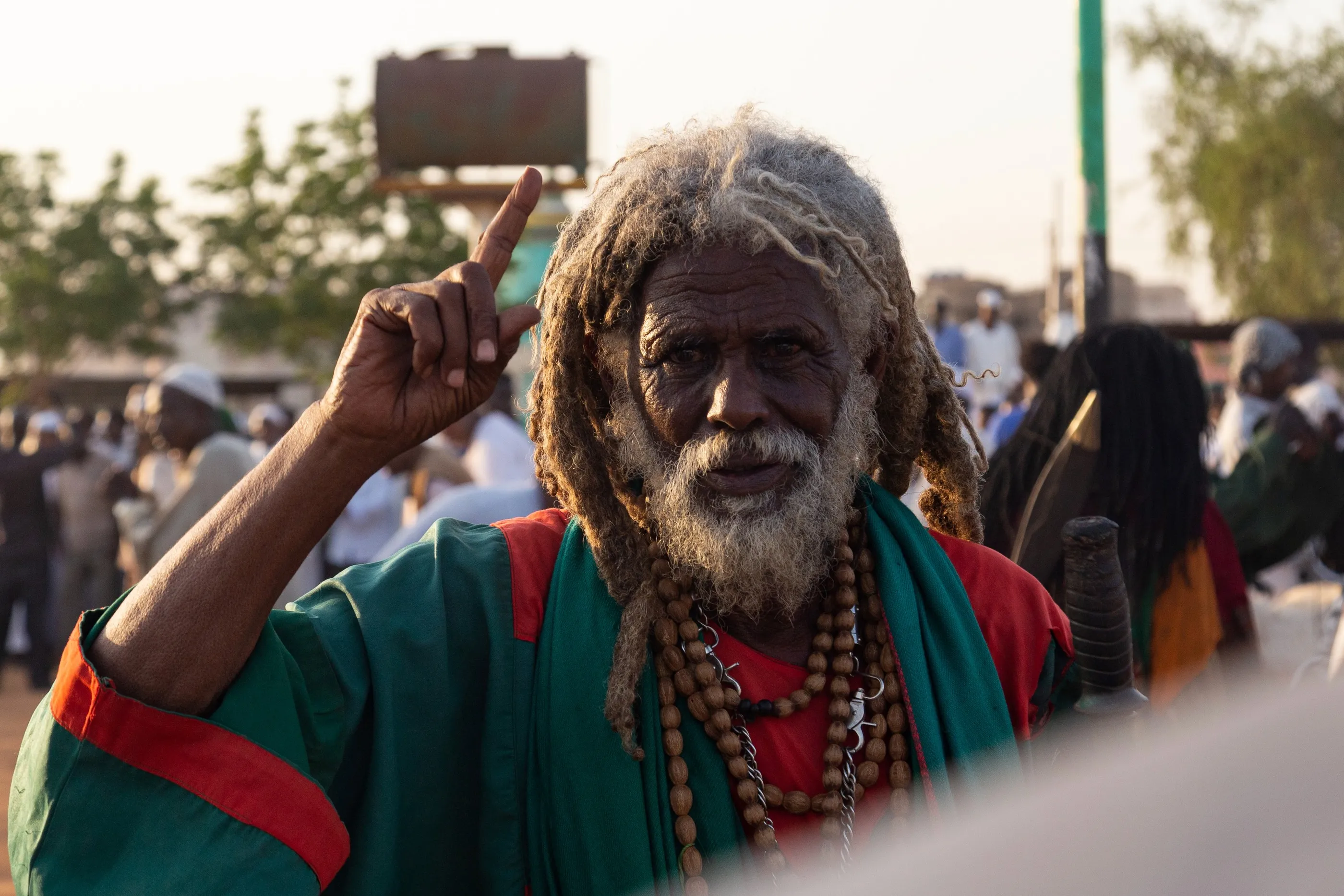
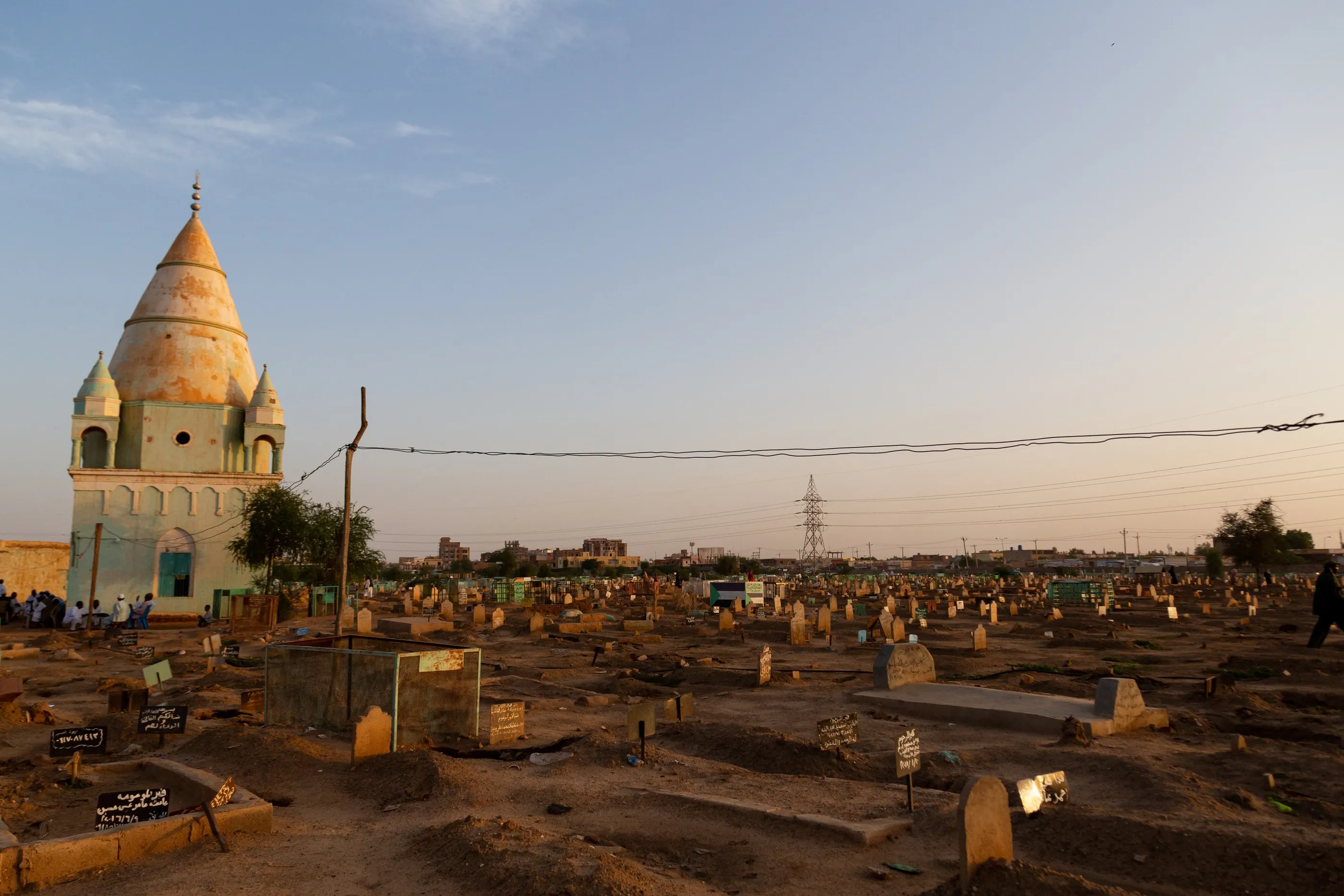
    On Friday, at the tomb of Hamed al-Nil in Omdurman, Sufi dervishes whirl in dust and incense to the beat of drums. A few kilometres away, the White Nile and the Blue Nile finally meet. This is where our journey up the river came to a halt.
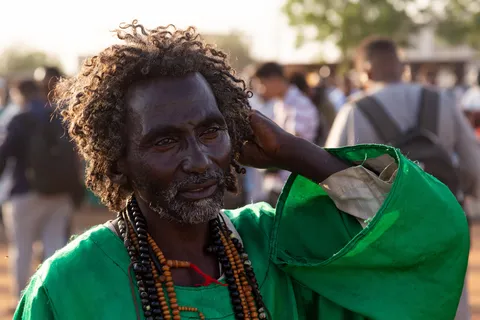
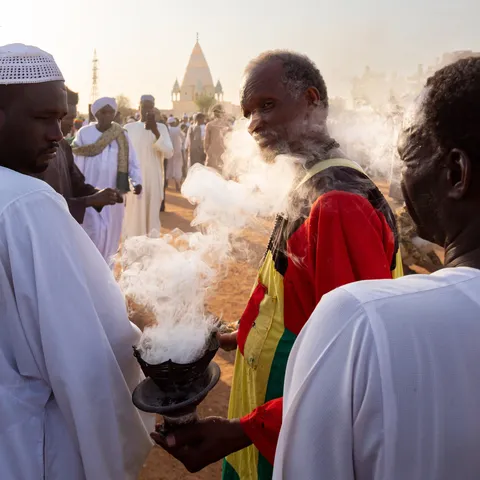
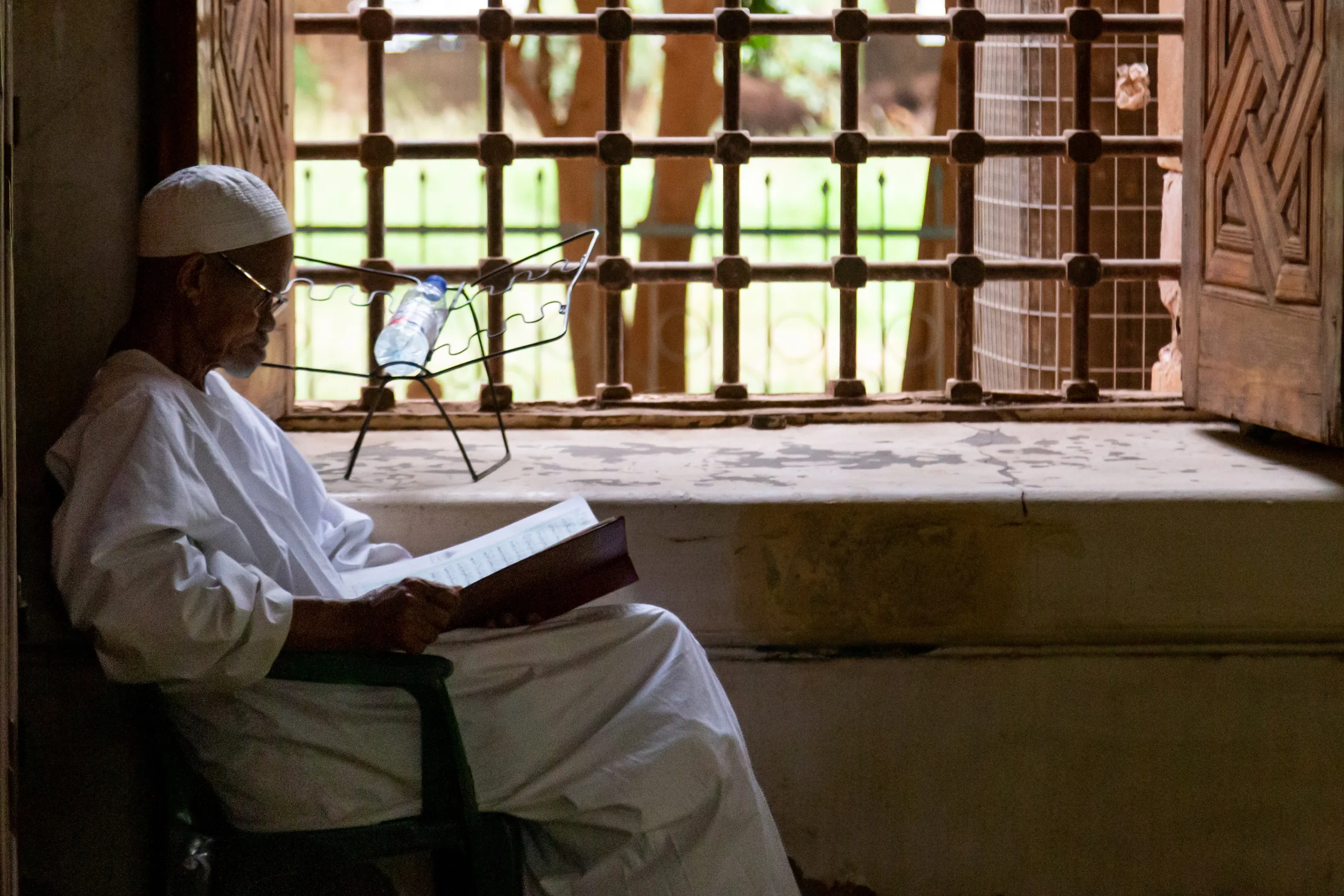
    Sufi dervish in Omdurman, Sudan — Nicolas MarincicIncense at the Sufi ceremony in Omdurman, Sudan — Nicolas MarincicDervish dancing in Omdurman, Sudan — Nicolas MarincicFootball match beneath two pillars, Sudan — Nicolas MarincicDervish with dreadlocks and prayer beads, Omdurman, Sudan — Nicolas MarincicWhite-bearded dervish raising a finger, Omdurman, Sudan — Nicolas MarincicHamed el-Nil tomb and cemetery at sunset, Omdurman, Sudan — Nicolas MarincicMan reading the Quran by a carved window, Omdurman, Sudan — Nicolas Marincic
  24. By plane↗ 669 km

    Days 40–42

    Port Sudan and the Red Sea

    Sudan

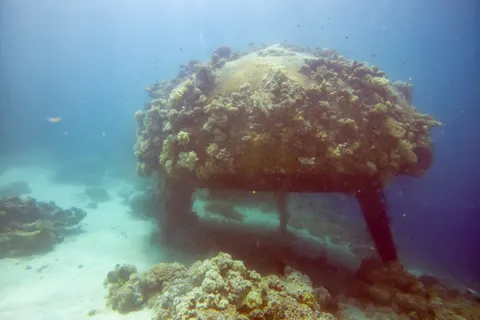
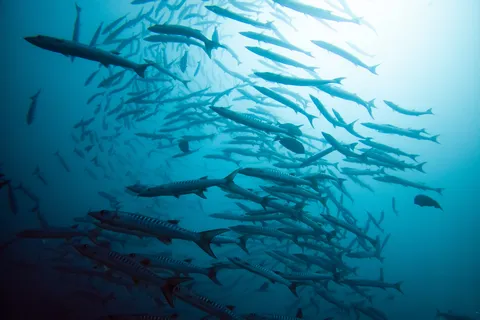
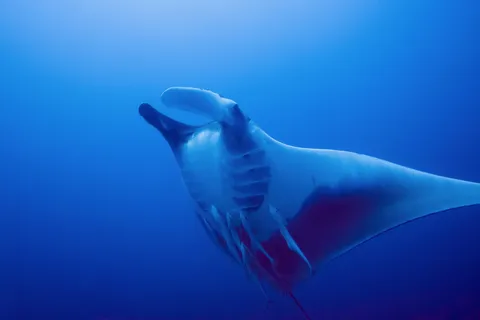
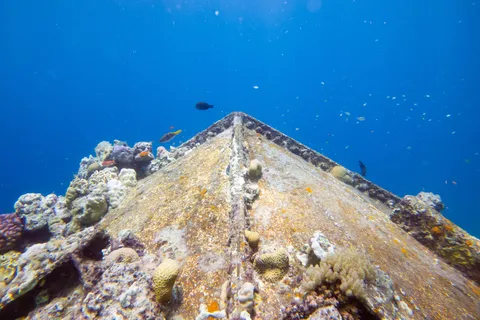
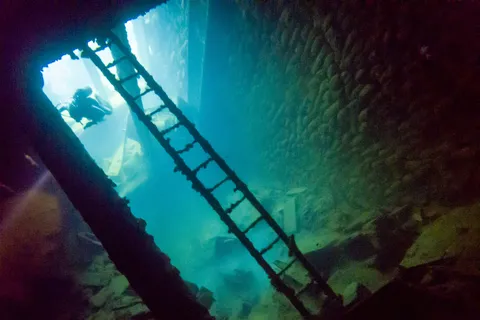
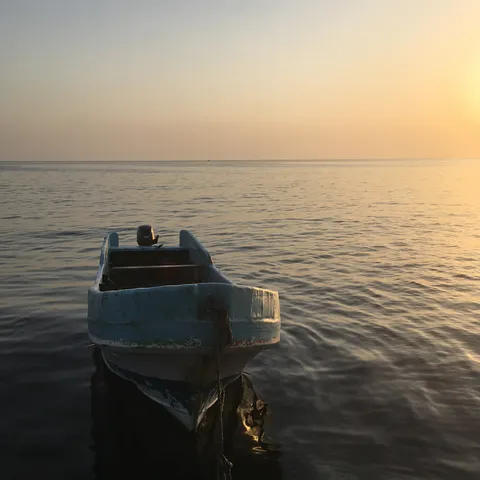
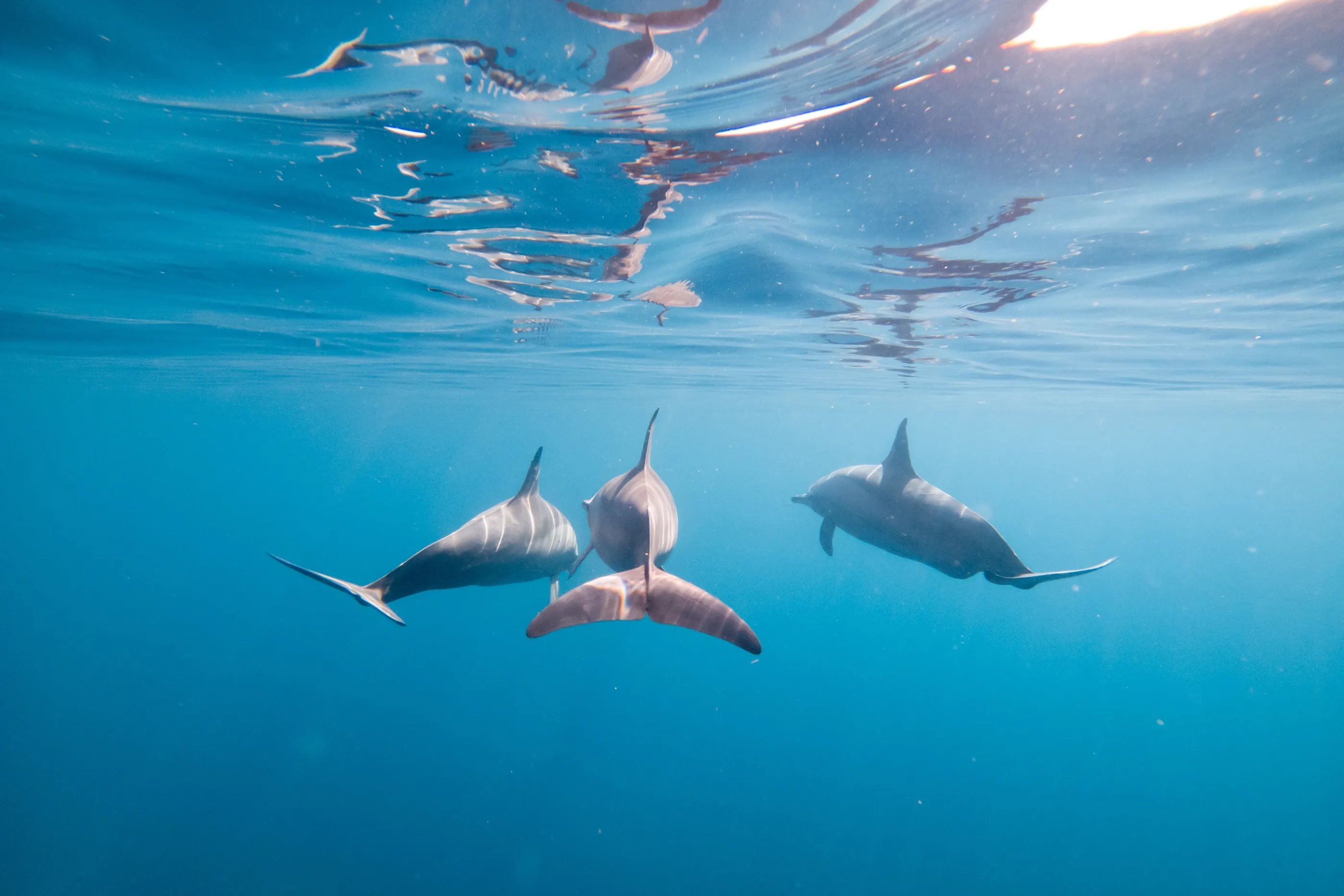
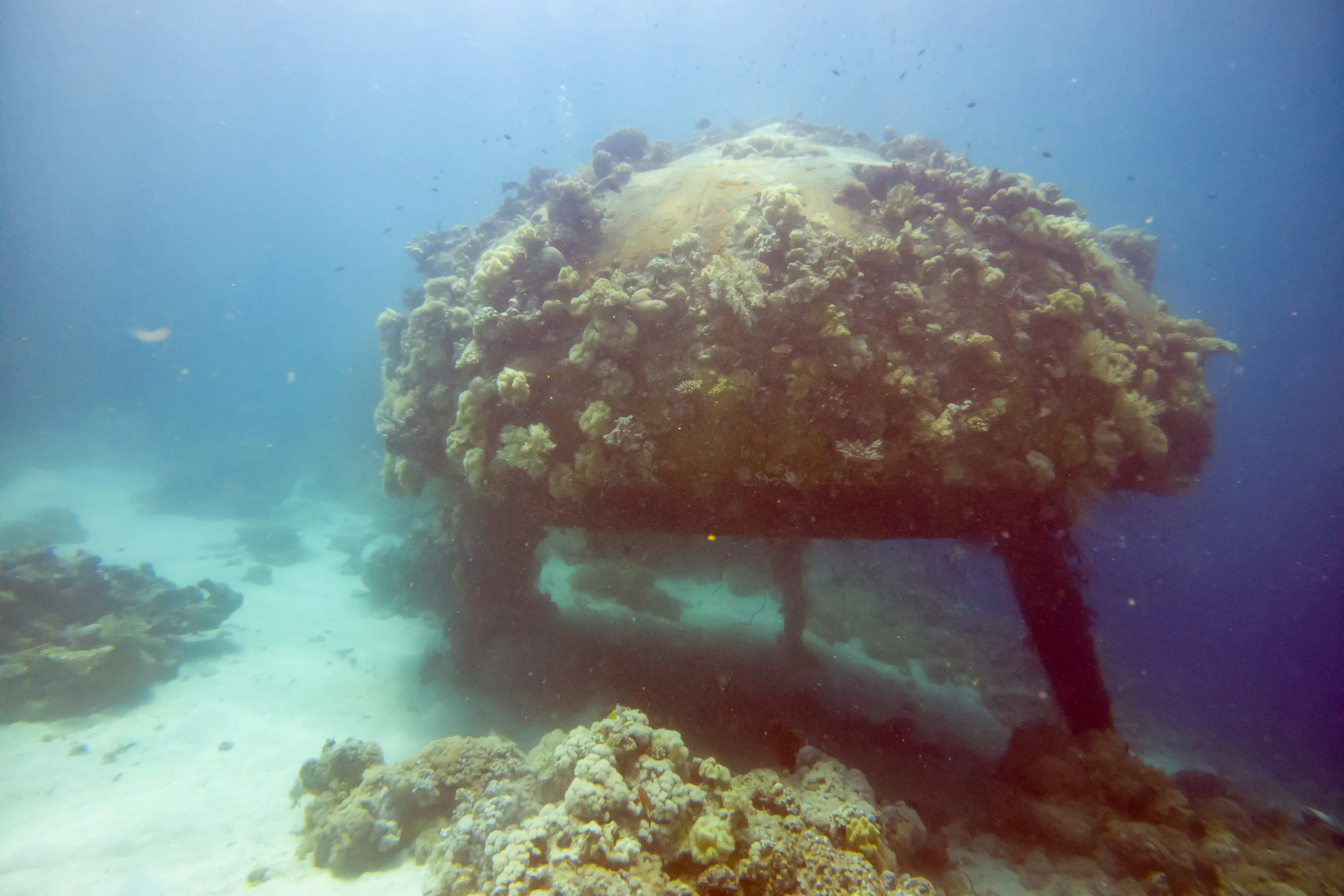
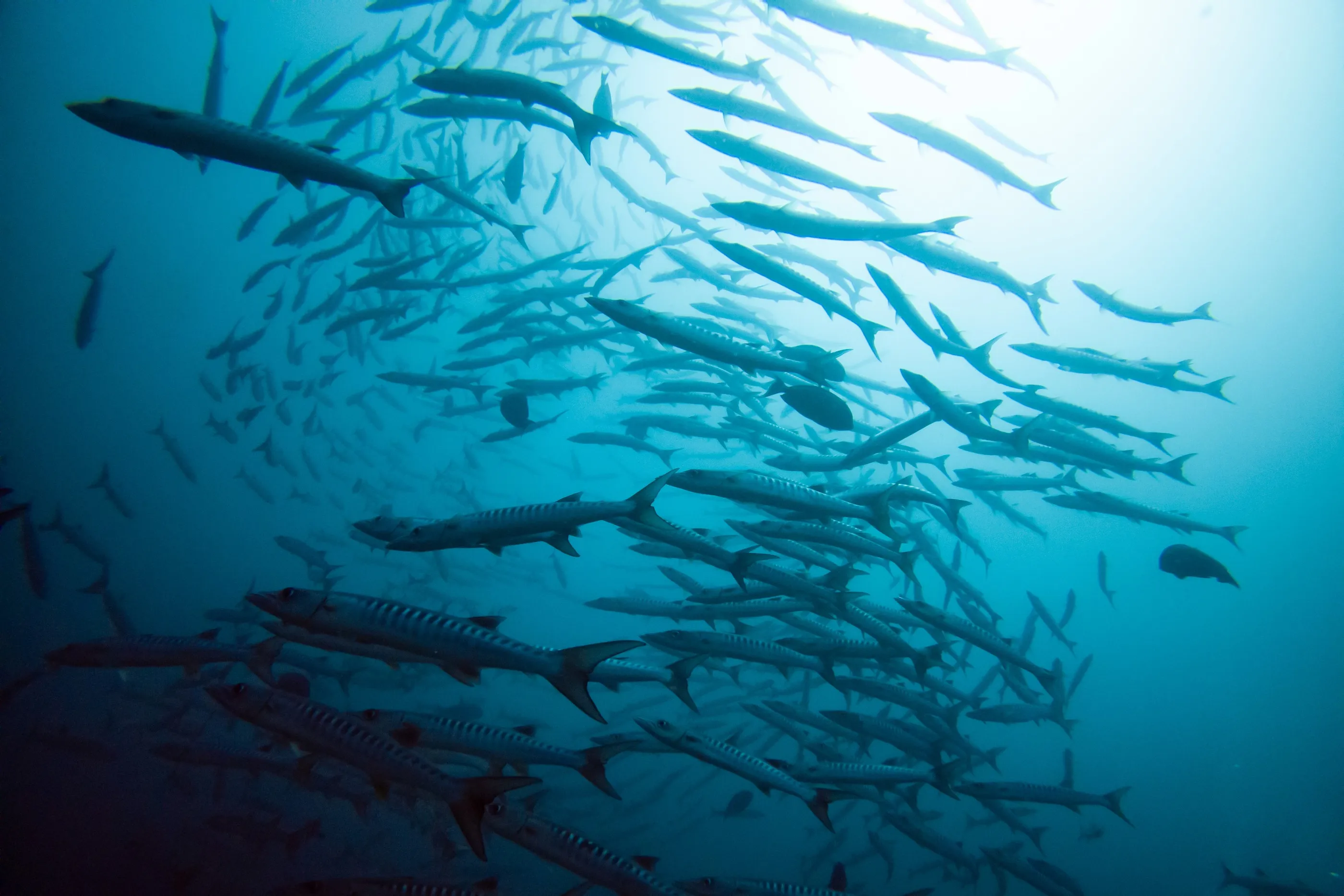
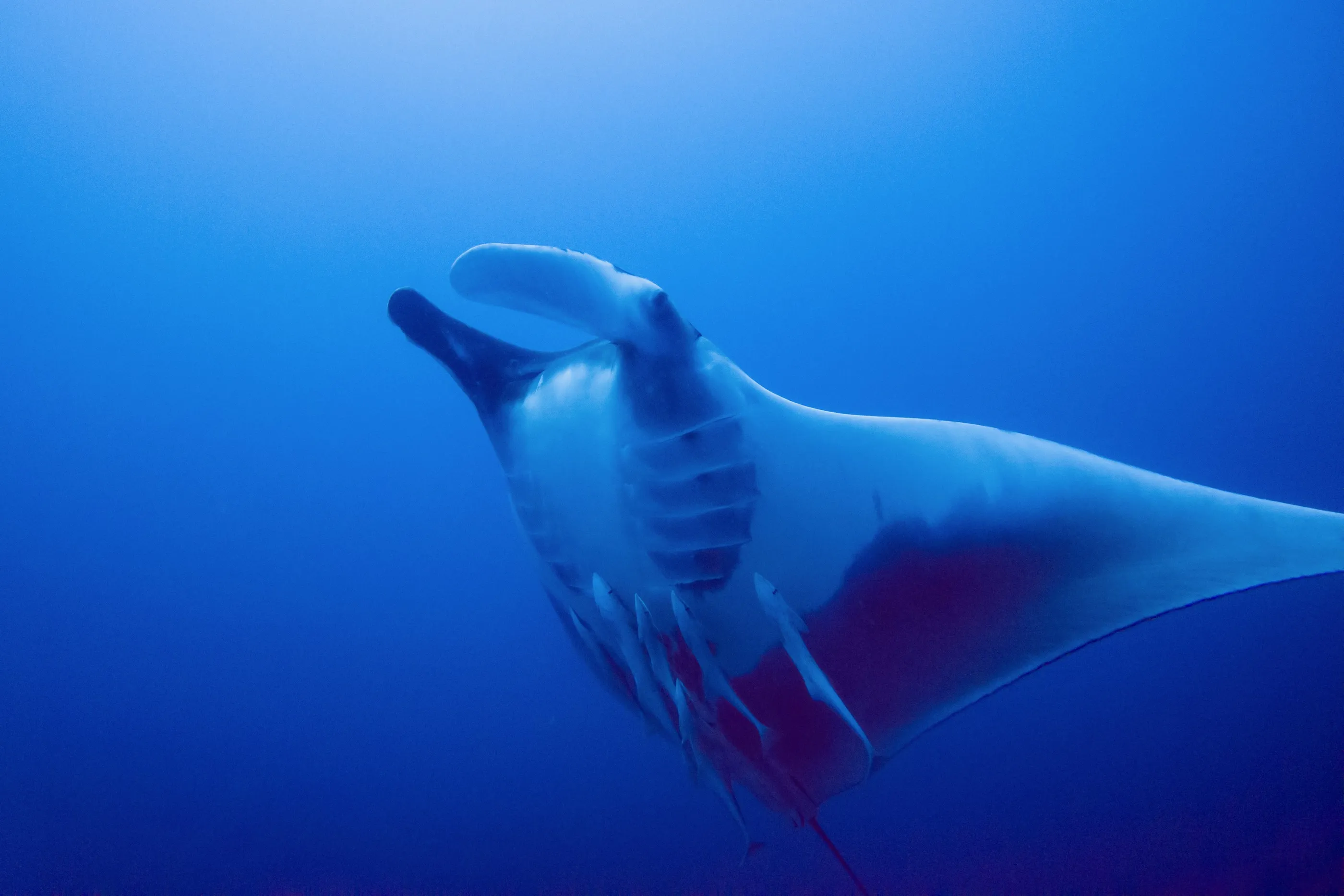
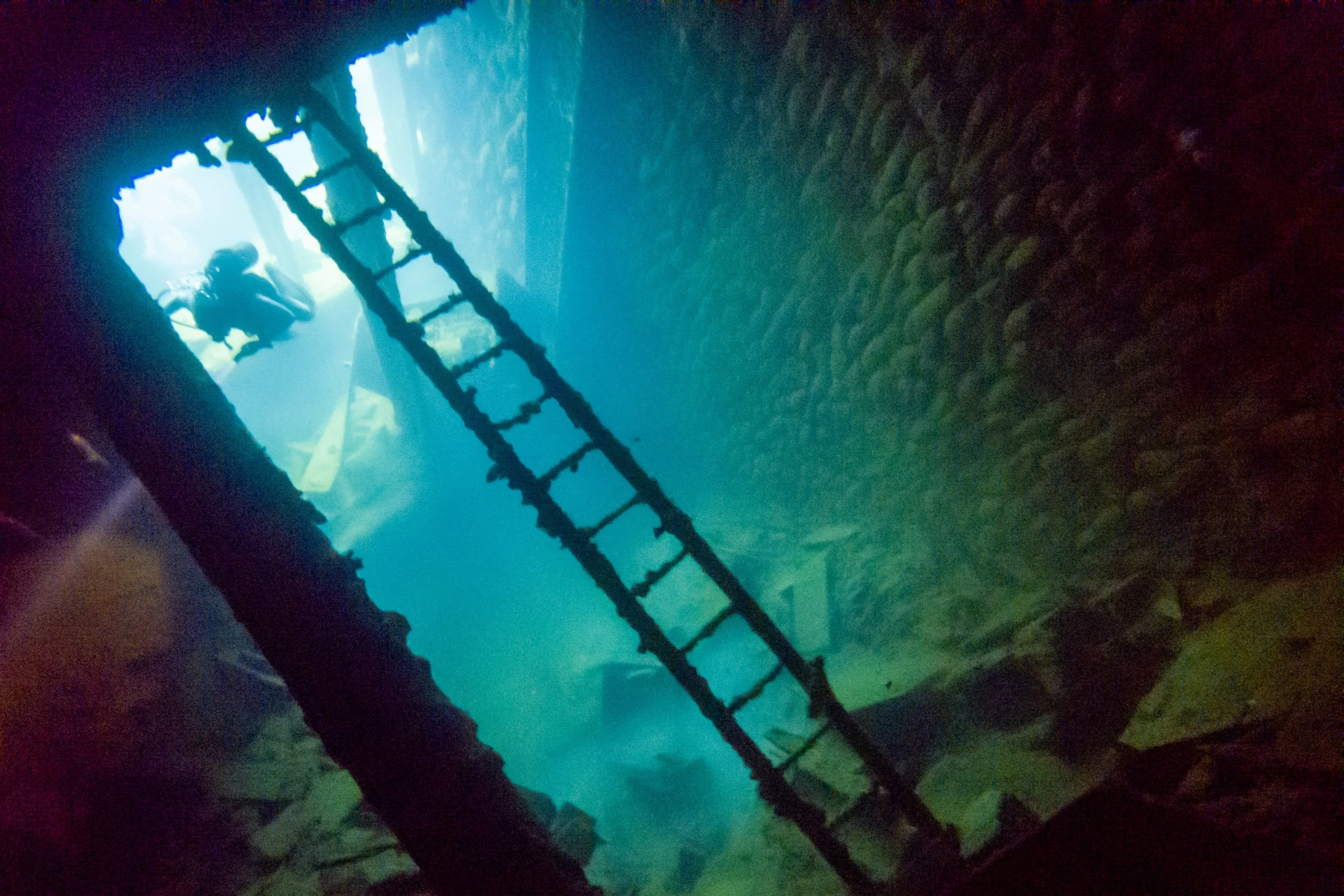
    Unable to continue south, we headed to the Red Sea for a few days of diving off Port Sudan. Manta rays, spinner dolphins, schools of barracuda, the coral-covered wreck of the Umbria, and at Sha’ab Rumi the remains of Precontinent II, Cousteau’s underwater house. Another desert, a blue one this time.
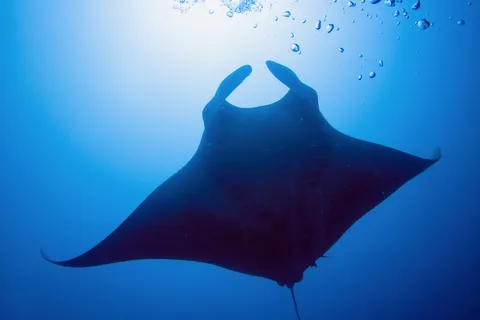
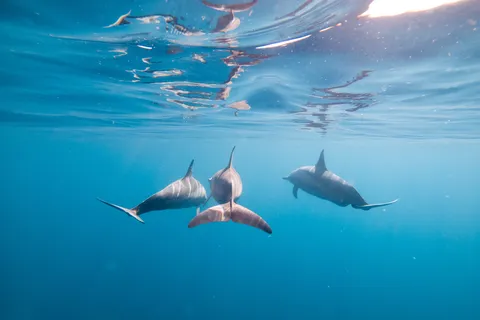
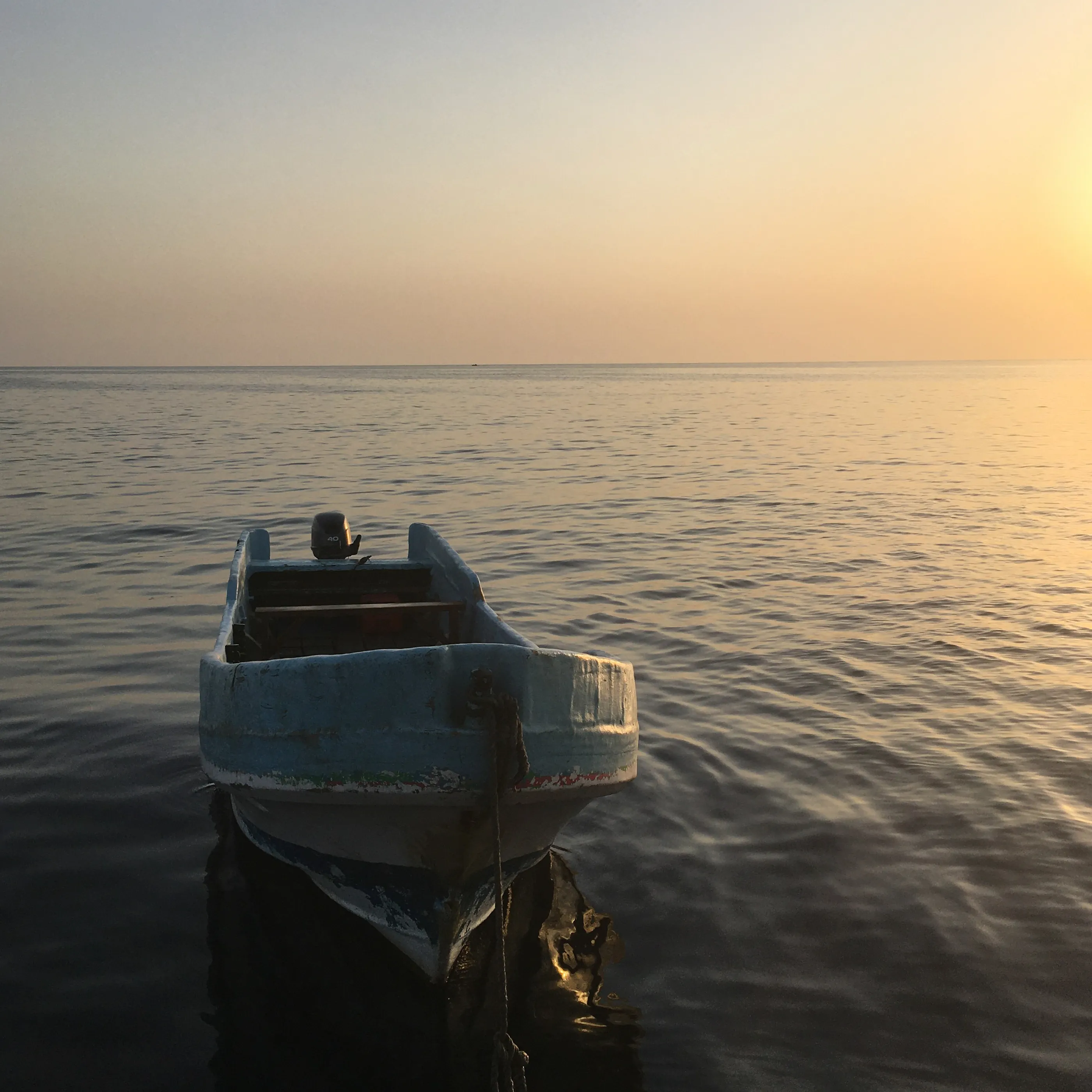
    Manta ray silhouetted against the light, Sudan — Nicolas MarincicDolphins beneath the surface, Sudan — Nicolas MarincicRemains of Cousteau’s Precontinent II, Sha’ab Rumi, Sudan — Nicolas MarincicSchool of barracuda, Sudan — Nicolas MarincicManta ray passing overhead, Red Sea, Sudan — Nicolas MarincicTool shed of Cousteau’s Precontinent II, Sha’ab Rumi, Sudan — Nicolas MarincicDiver above an interior ladder in a shaft of light, Umbria wreck, Sudan — Nicolas MarincicBoat on a calm Red Sea at sunrise, Port Sudan, Sudan — Nicolas Marincic
  25. Arrival

    End of the journey

    42 days · 3,568 km · 24 stops

    Galleries of the countries crossed