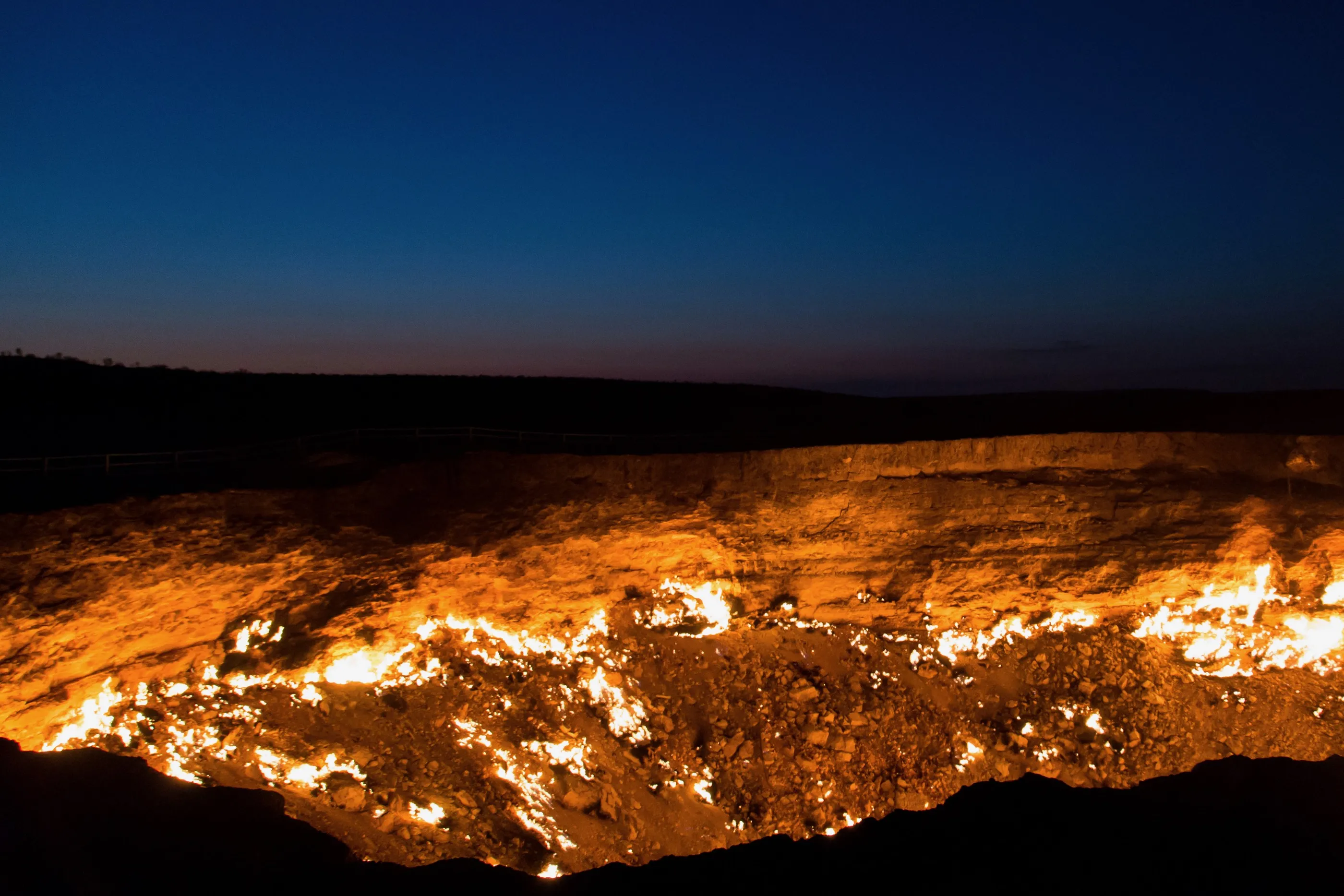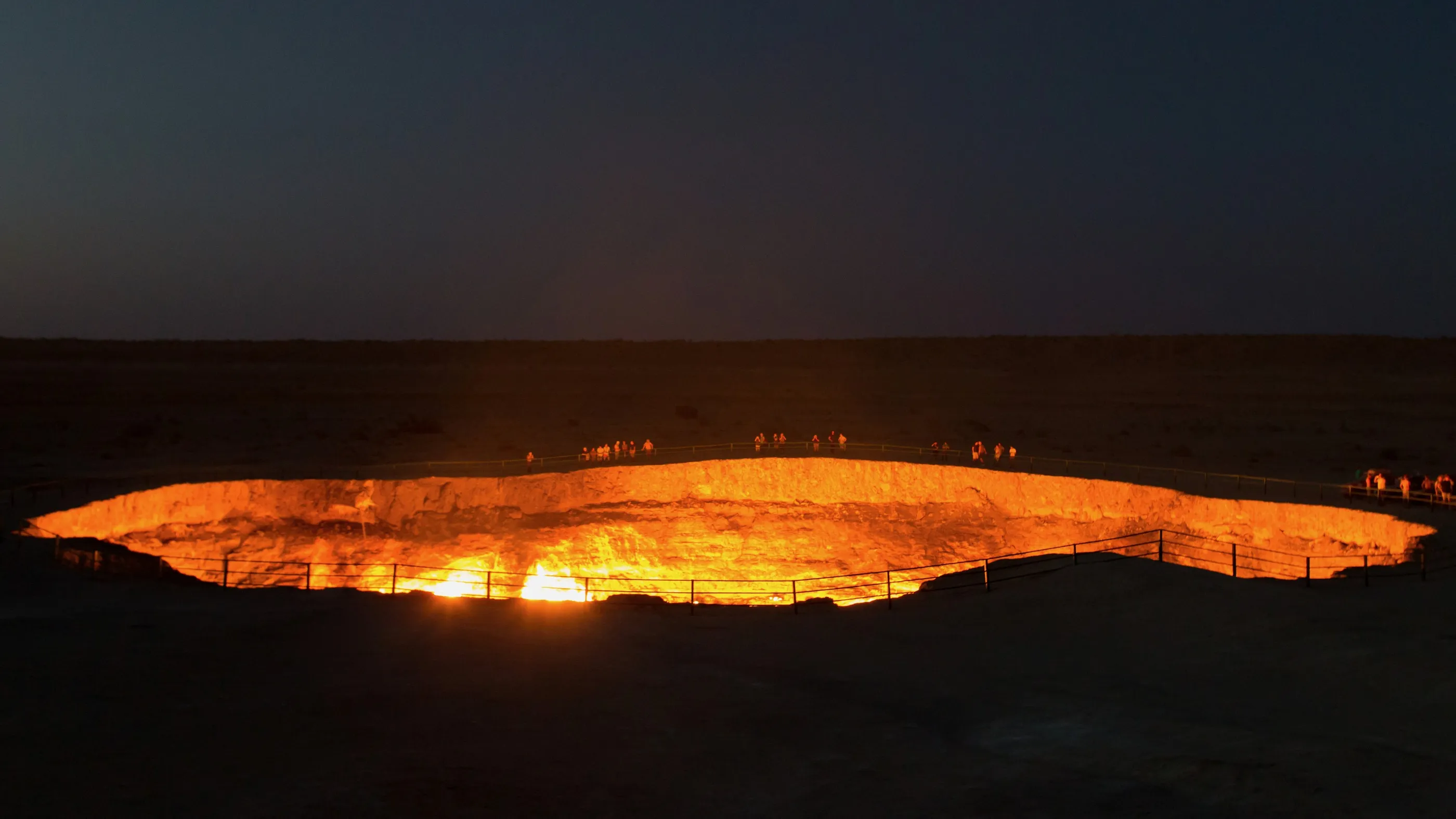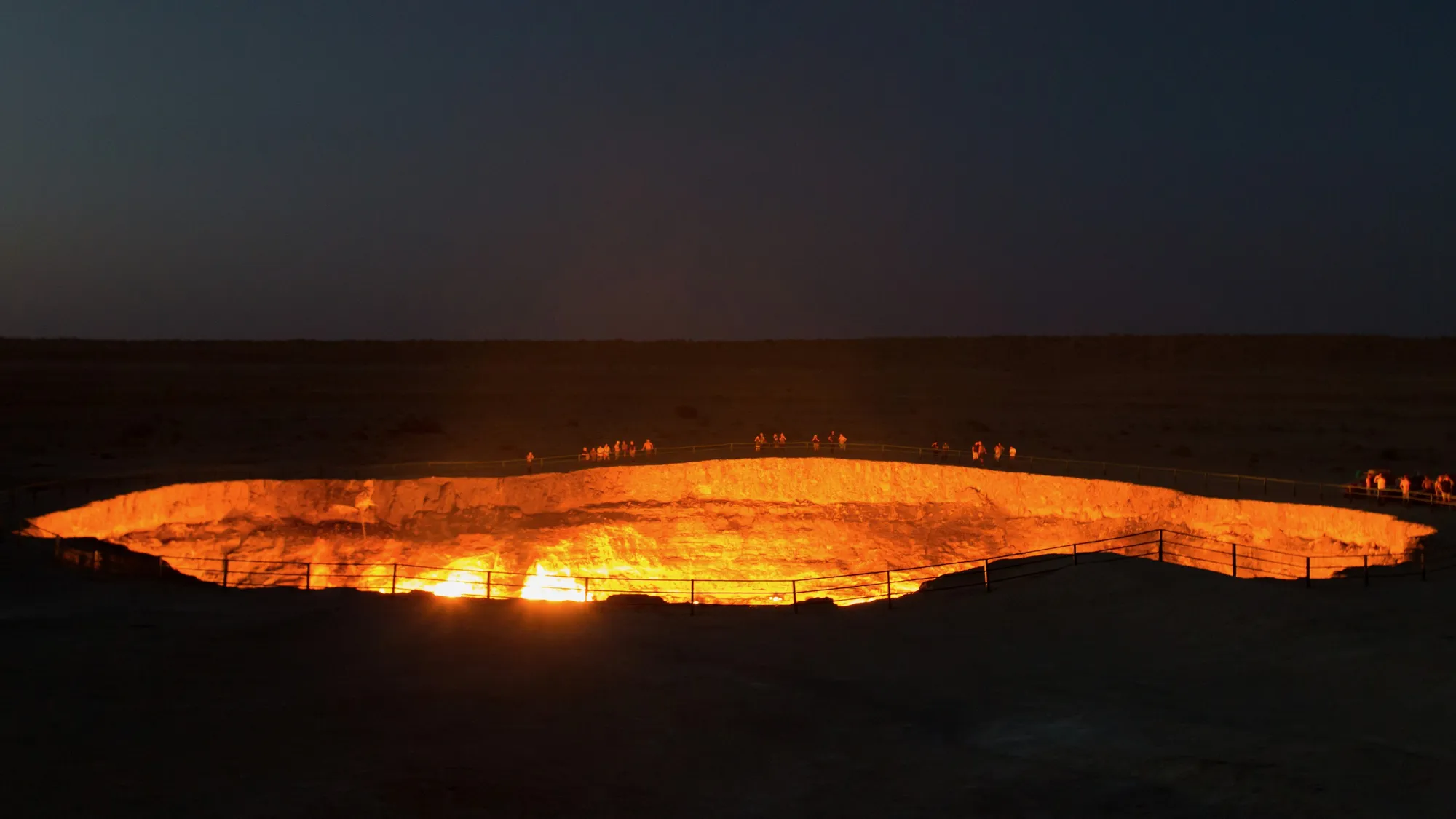
Darvaza crater at night, Turkmenistan — Nicolas Marincic

Expeditions

The Silk Roads

From Armenia to Kazakhstan

14 July – 16 August 2018

days
34
km
4,005
countries
8Armenia · Georgia · Azerbaijan · Turkmenistan · Uzbekistan · Tajikistan · Kyrgyzstan · Kazakhstan
photos
125

Because Marco Polo did it before us, and because the Romans already travelled parts of it, we had to try the Silk Roads ourselves. The idea was simple: no planes at all during the journey. Everything was done by local transport — trains, buses, boats, cars, and on foot — all the way to Kazakhstan, and without hotels. Follow roads, rivers, lakes and railways; sleep in our tent, or at the home of a friend met along the way.

From the Caucasus to the Caspian, from the Karakum deserts to the tiled cities of Uzbekistan, and across the high pastures of the Tian Shan to Almaty: a modern adventure on one of the oldest routes in the world, full of surprises, encounters and landscapes we had never imagined.

  1. Days 1–4

    Yerevan and the Ararat plain

    Armenia

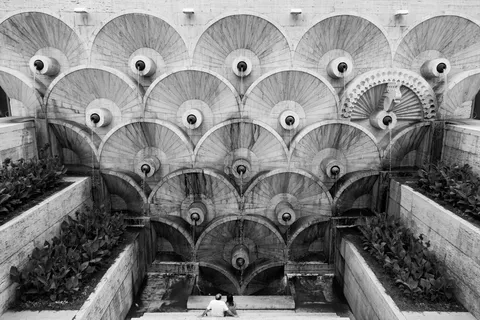
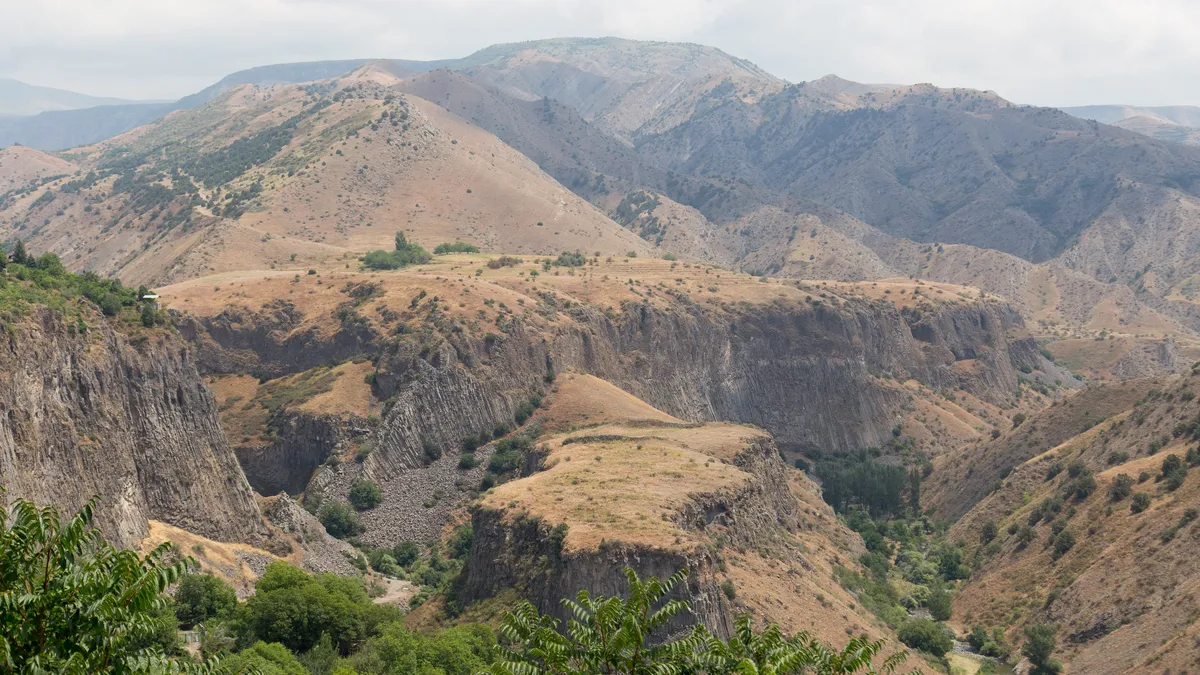
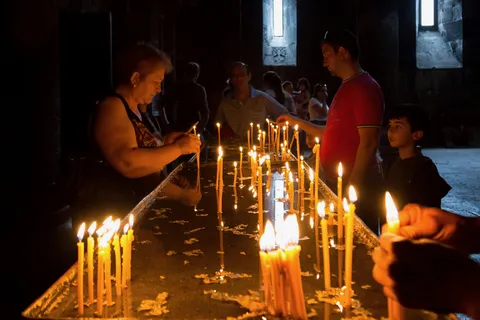
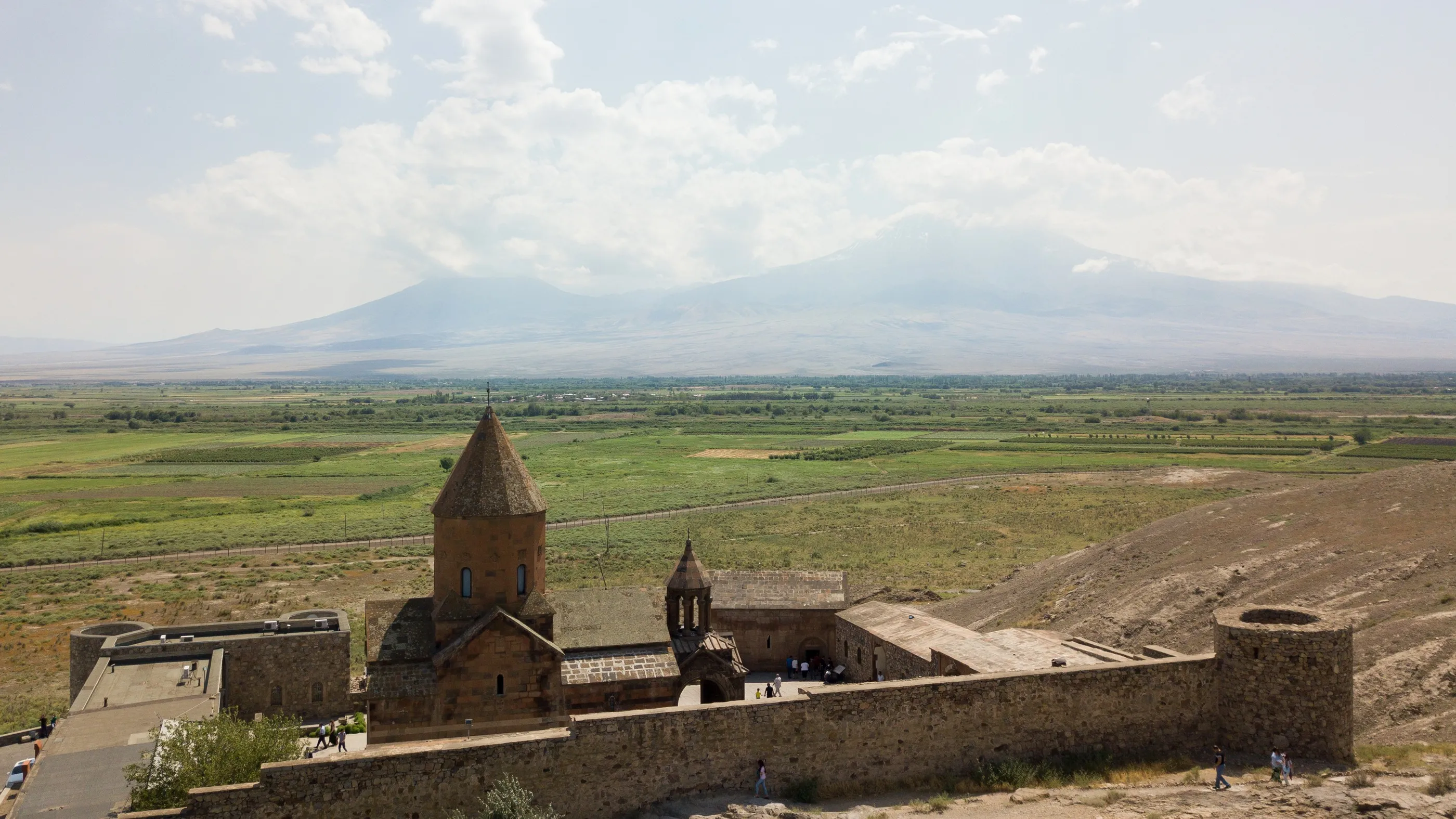
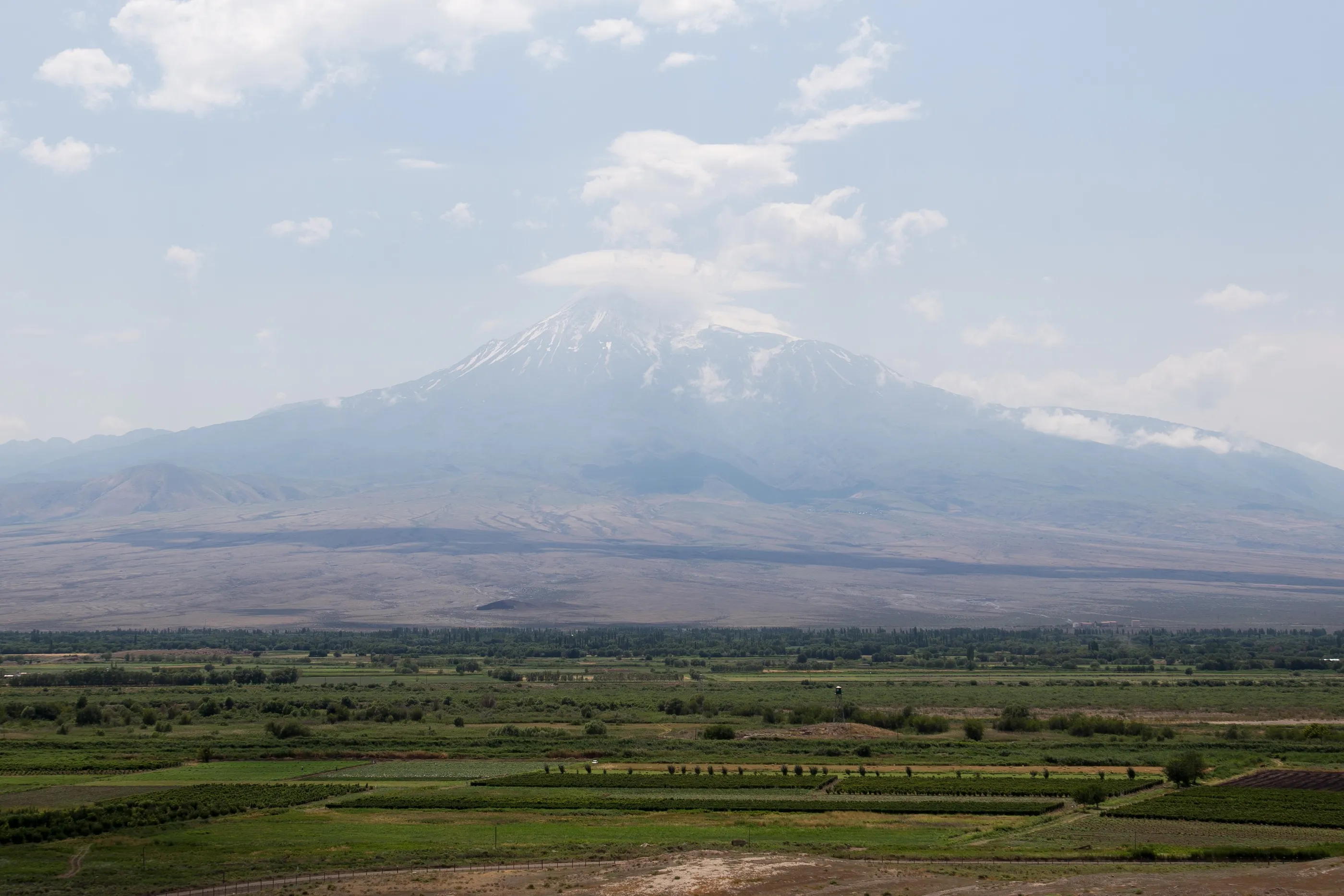
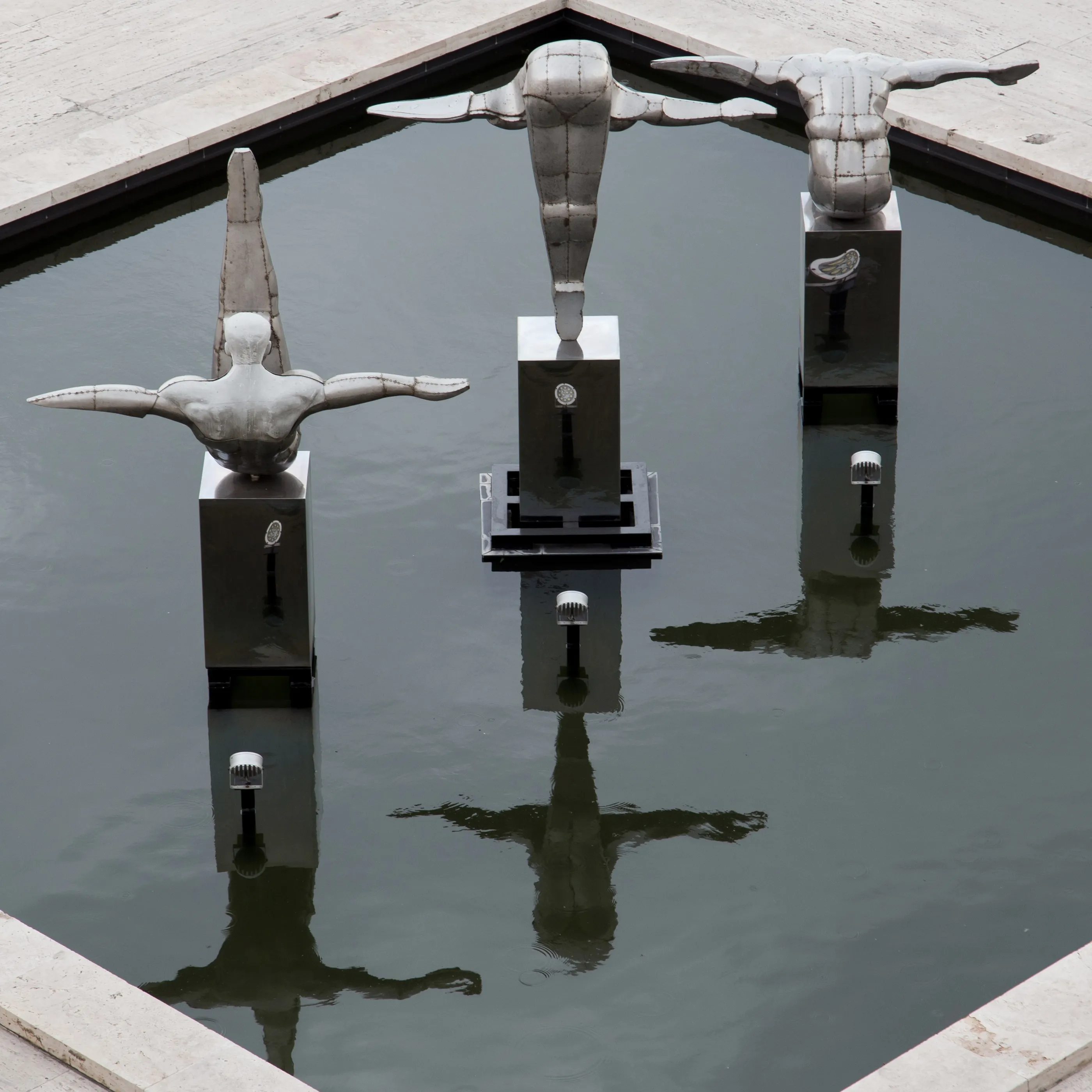
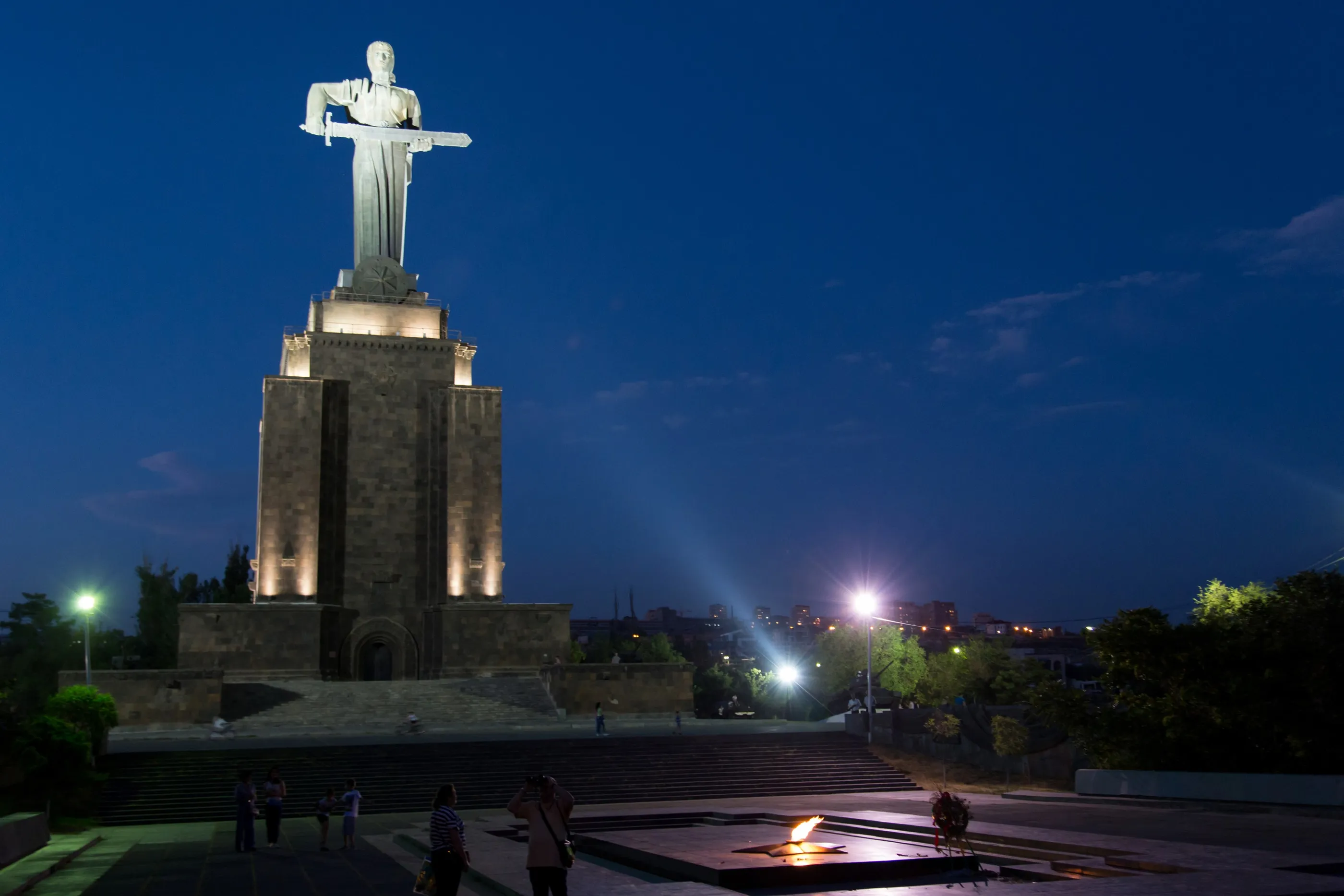
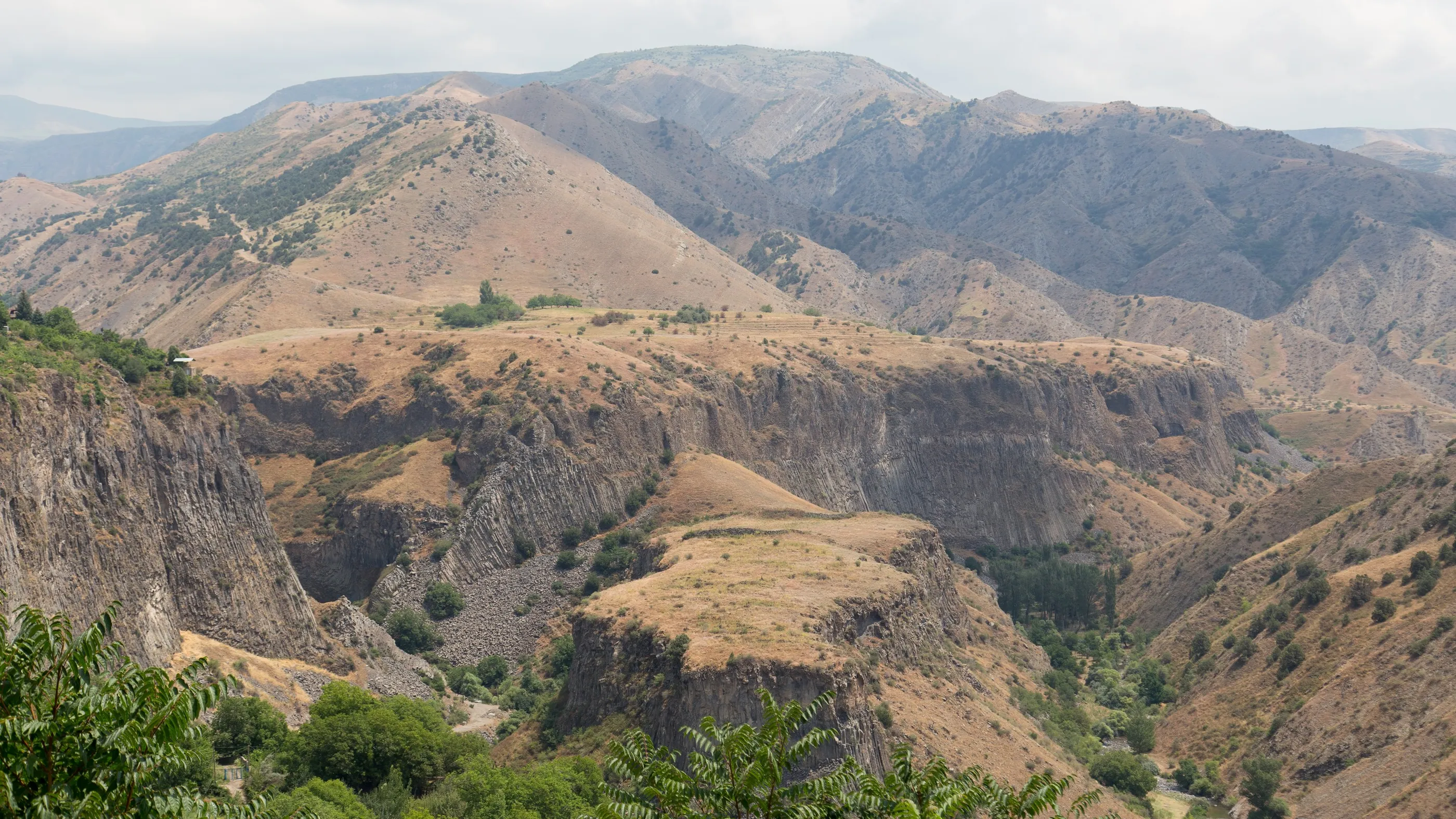
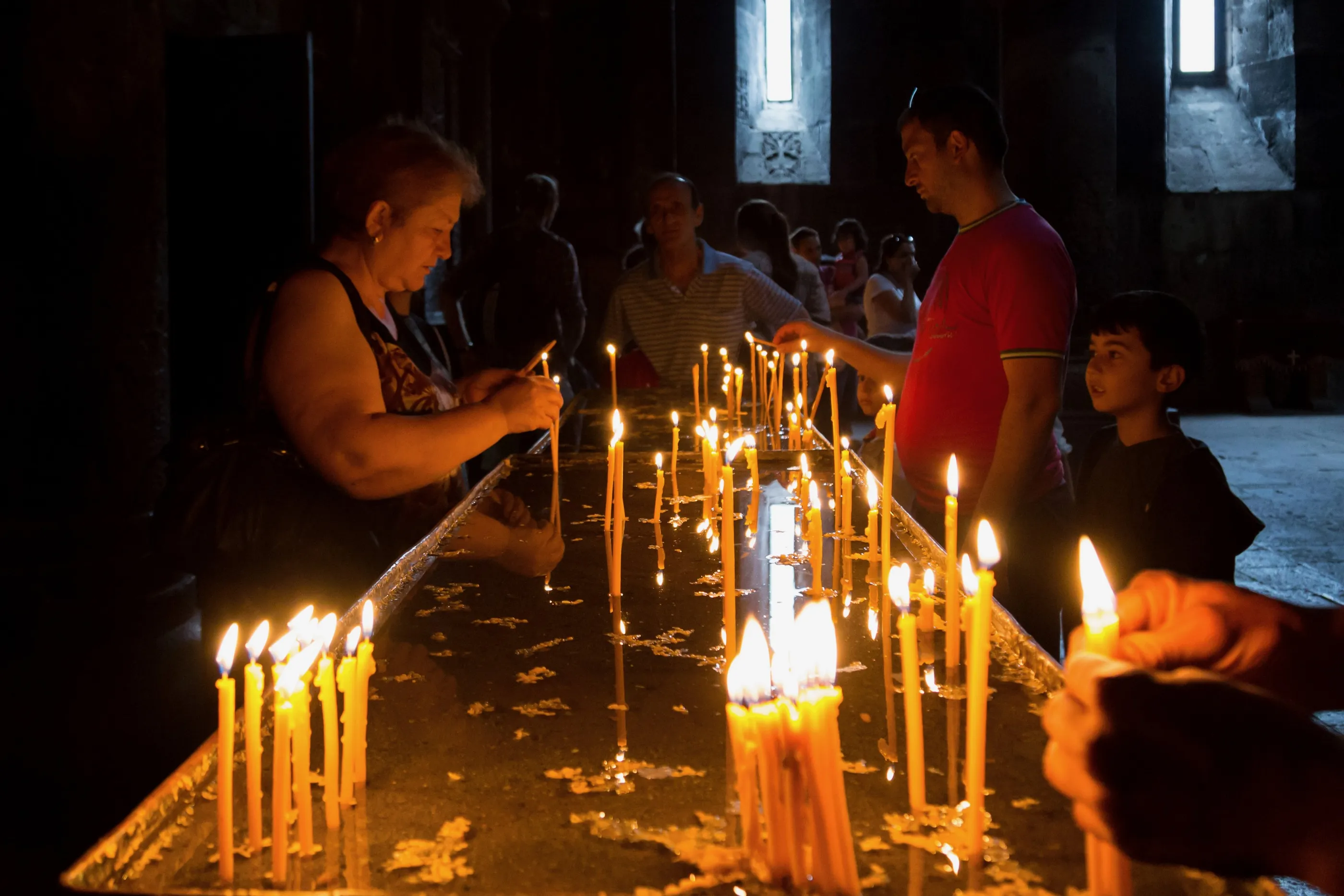
    Yerevan, city of pink tuff, with its Cascade stairway and the statue of Mother Armenia watching over it. A few dozen kilometres away, Khor Virap monastery faces Ararat, the Armenians’ sacred mountain, now on the far side of a closed border. In the churches, the light comes mostly from candles. To the east, the temple of Garni overlooks the Azat gorge, and Geghard monastery burrows into the cliff.
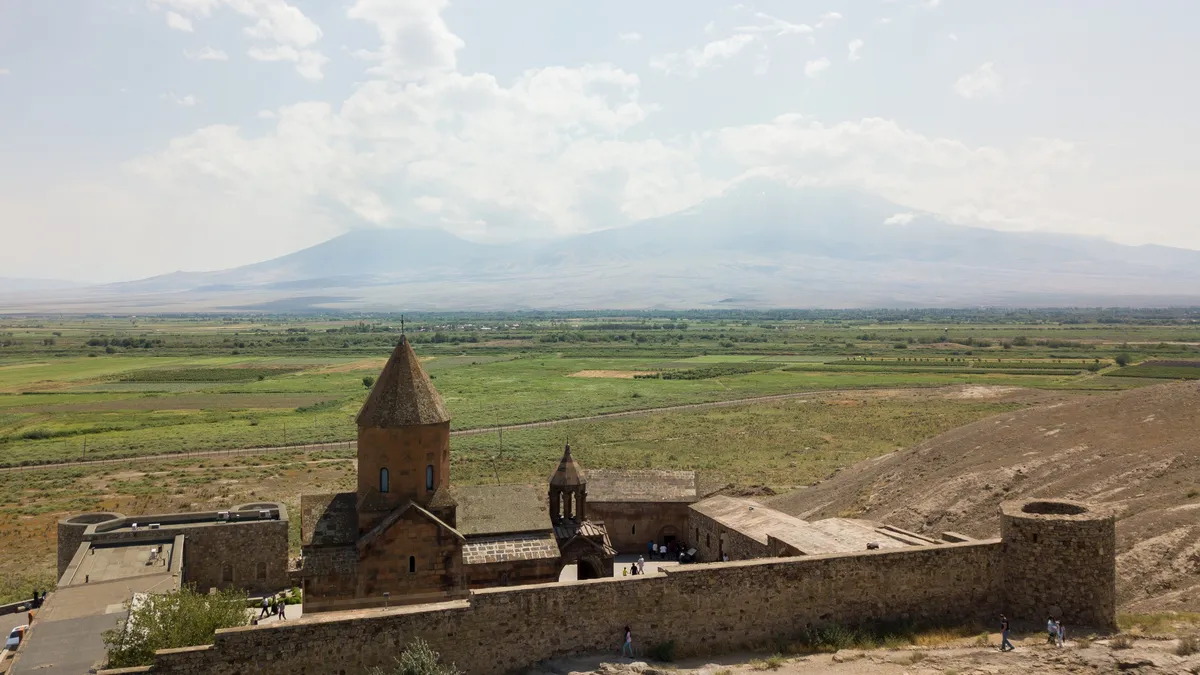
    Khor Virap monastery and Mount Ararat, Armenia — Nicolas MarincicMount Ararat from the Ararat Plain, Armenia — Nicolas MarincicSculptures of the Yerevan Cascade reflected in a pool, Armenia — Nicolas MarincicFountains of the Yerevan Cascade, Armenia — Nicolas MarincicMother Armenia statue at nightfall, Armenia — Nicolas MarincicGorges and arid hills, Armenia — Nicolas MarincicWorshippers lighting candles, Armenia — Nicolas Marincic
  2. By road↗ 61 km

    Days 4–5

    Lake Sevan

    Armenia

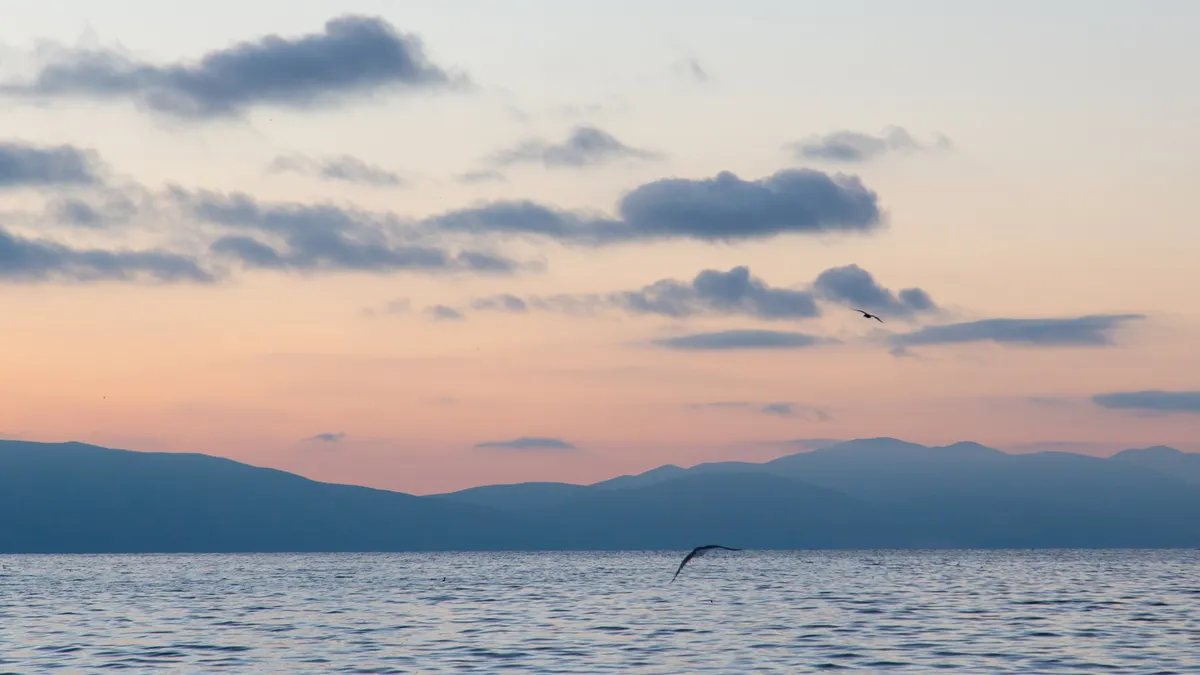
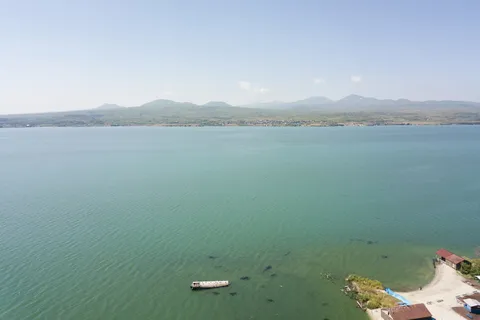
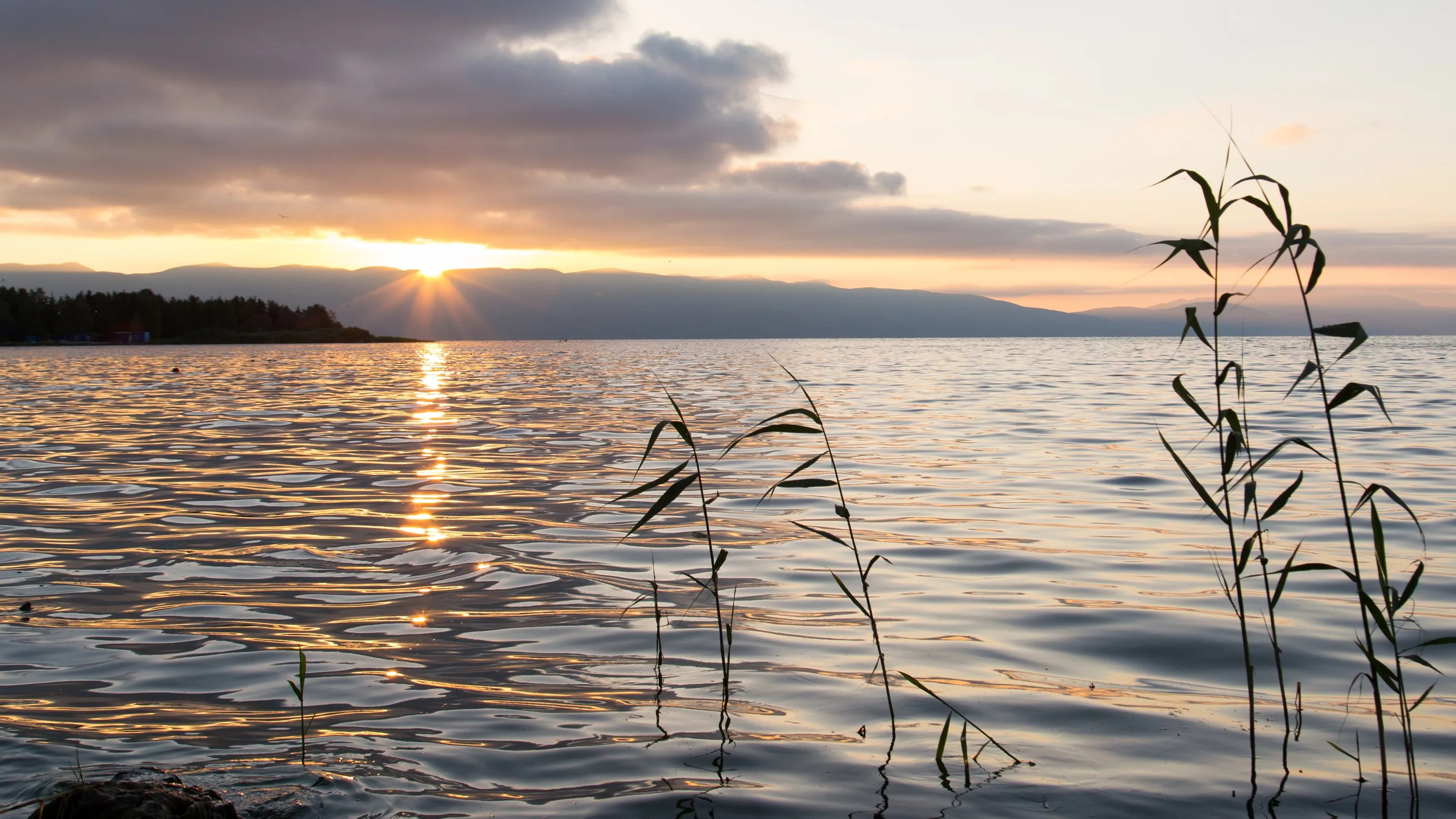
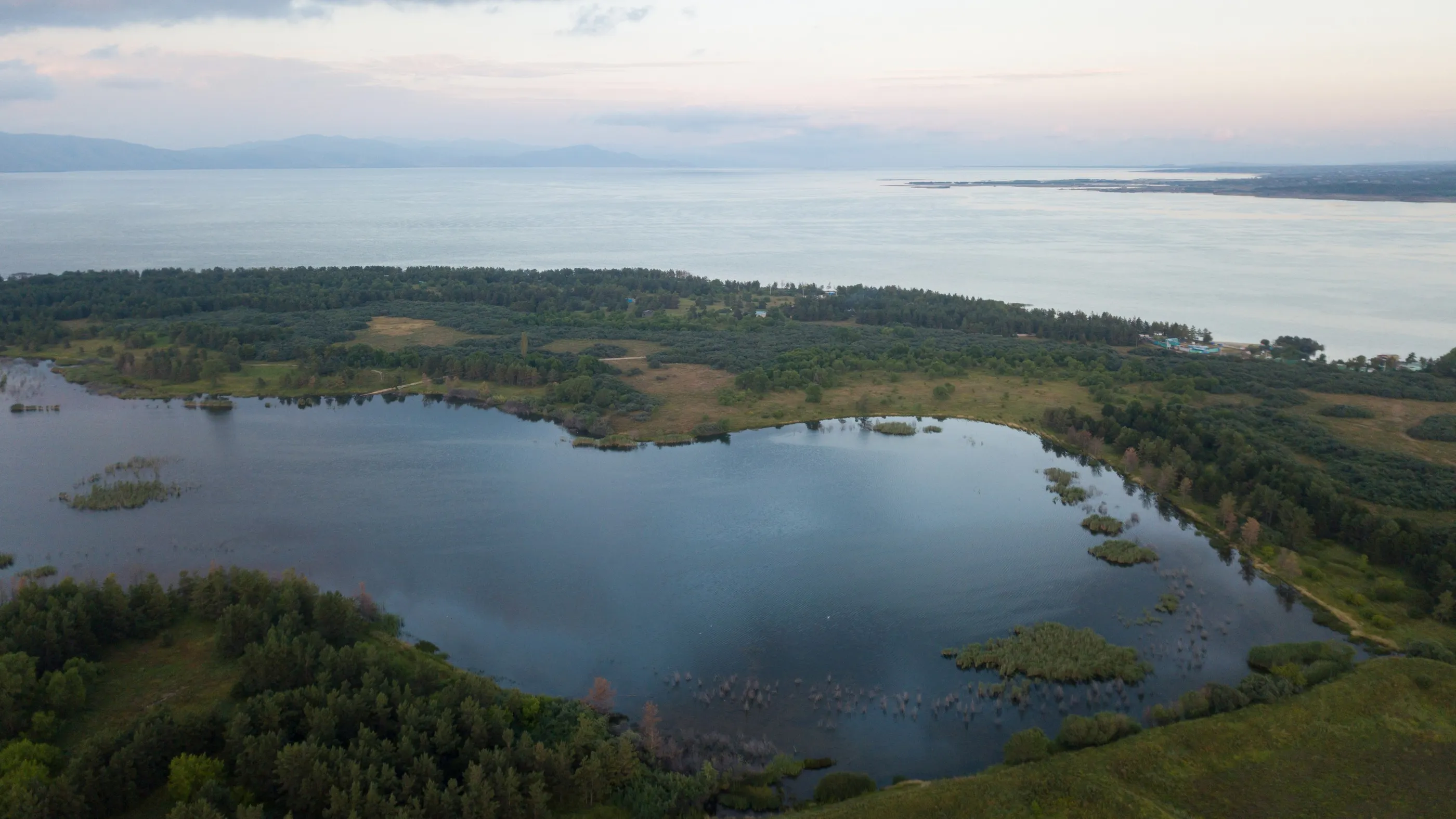
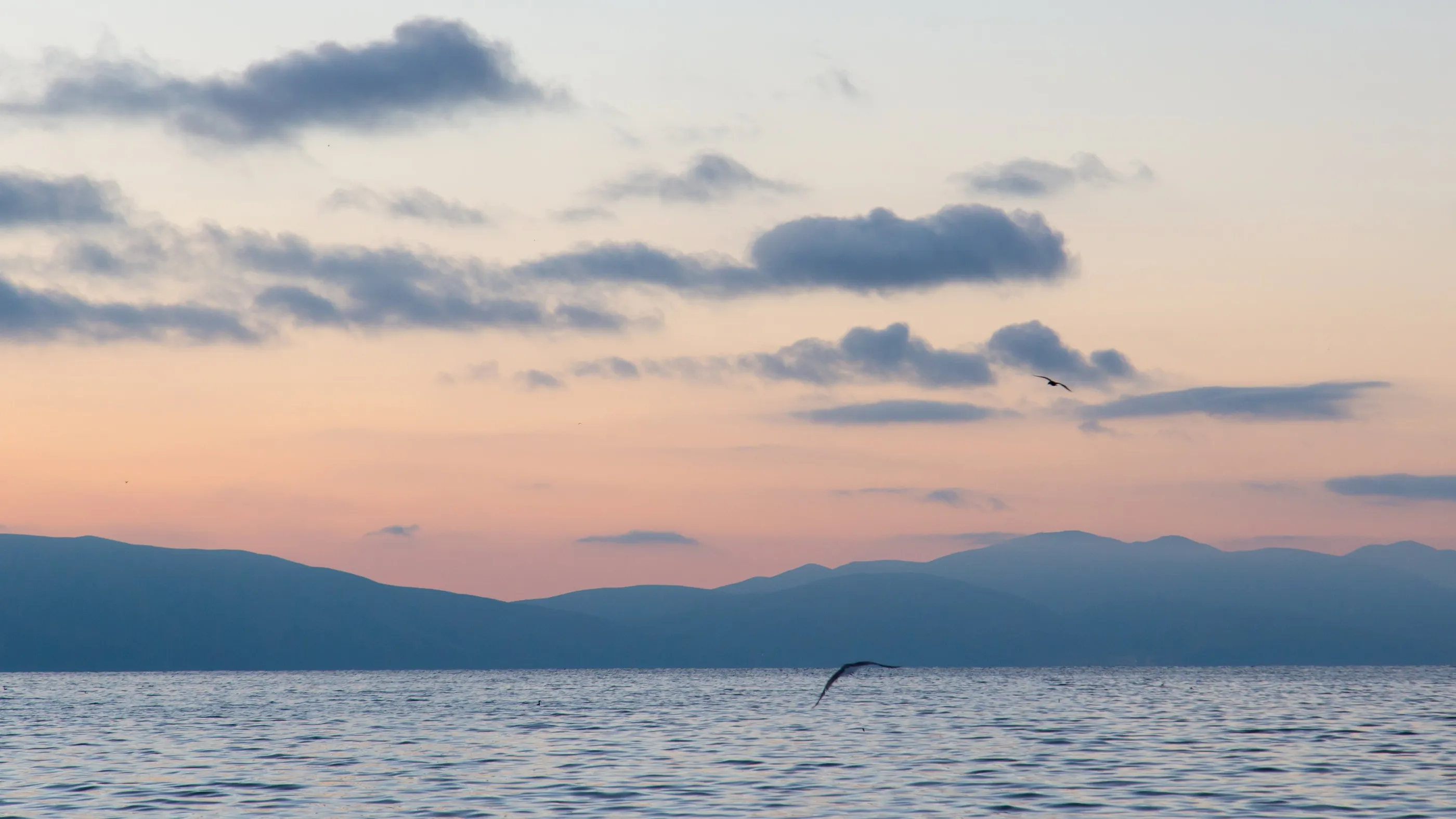
    Nearly two thousand metres up, Armenia’s great lake. In the evening the sun sets through the reeds and the water turns copper: the perfect place to pitch the tent.
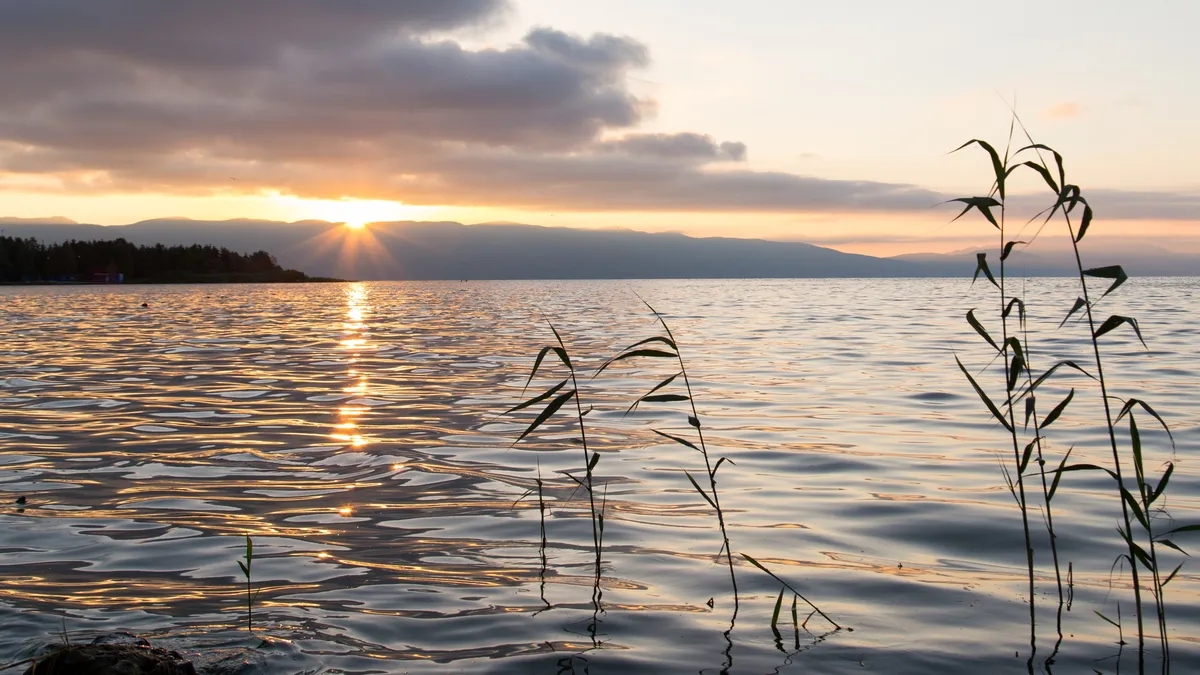
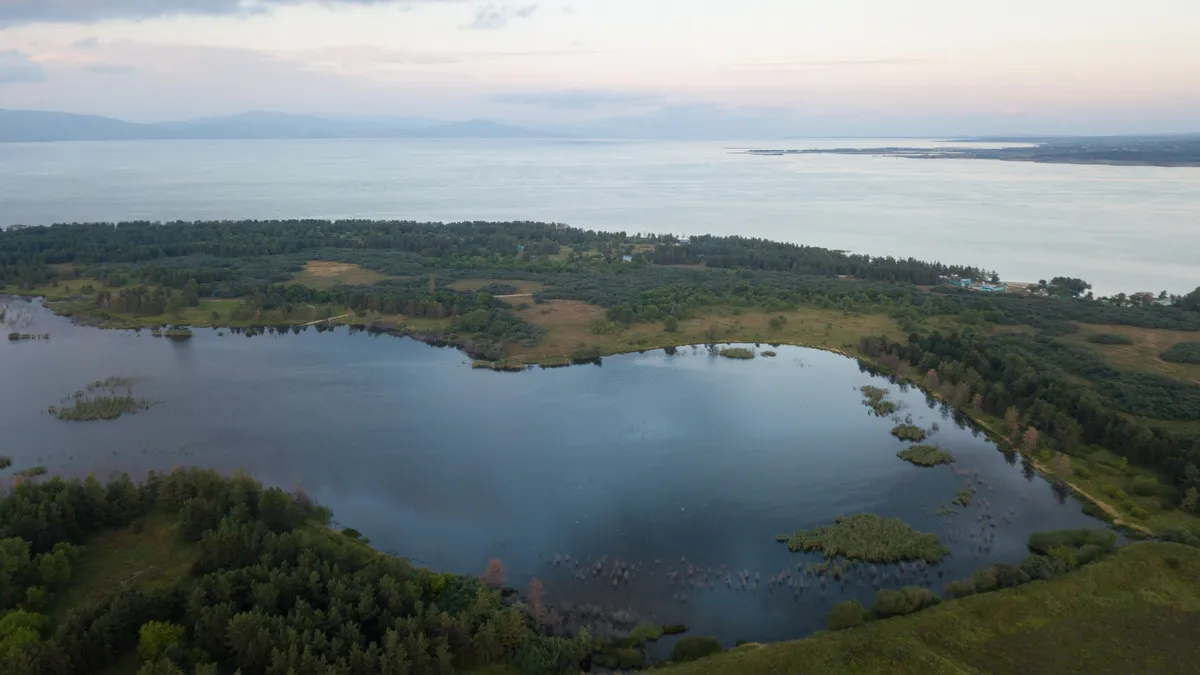
    Sunset over Lake Sevan, Armenia — Nicolas MarincicLagoon on Lake Sevan at dusk, aerial view, Armenia — Nicolas MarincicDusk over Lake Sevan, Armenia — Nicolas MarincicTurquoise waters of Lake Sevan, Armenia — Nicolas Marincic
  3. By road↗ 66 km

    Days 5–6

    Debed Canyon

    Armenia

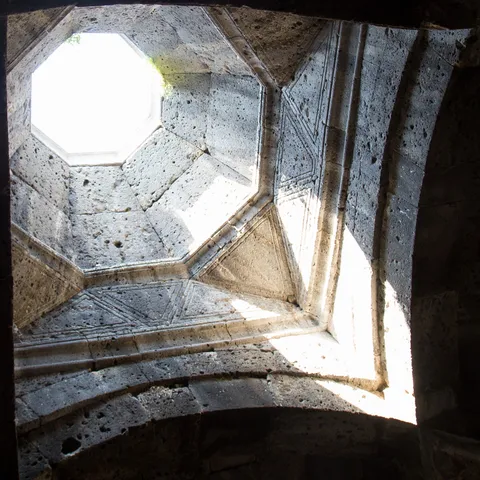
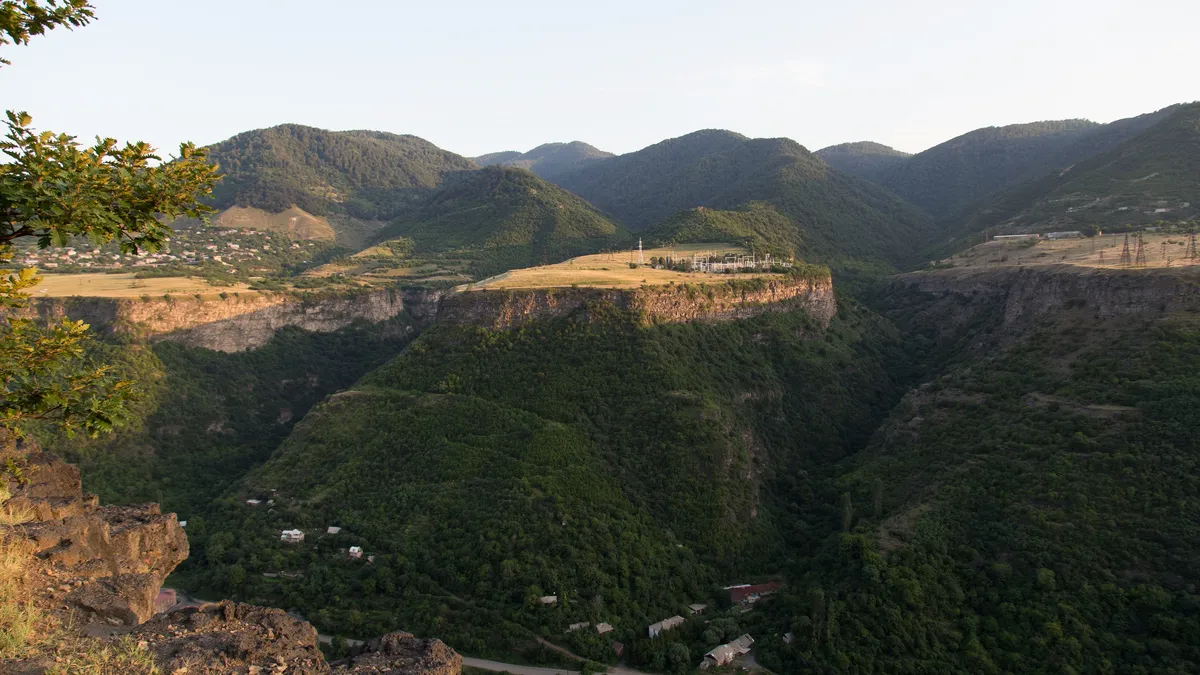
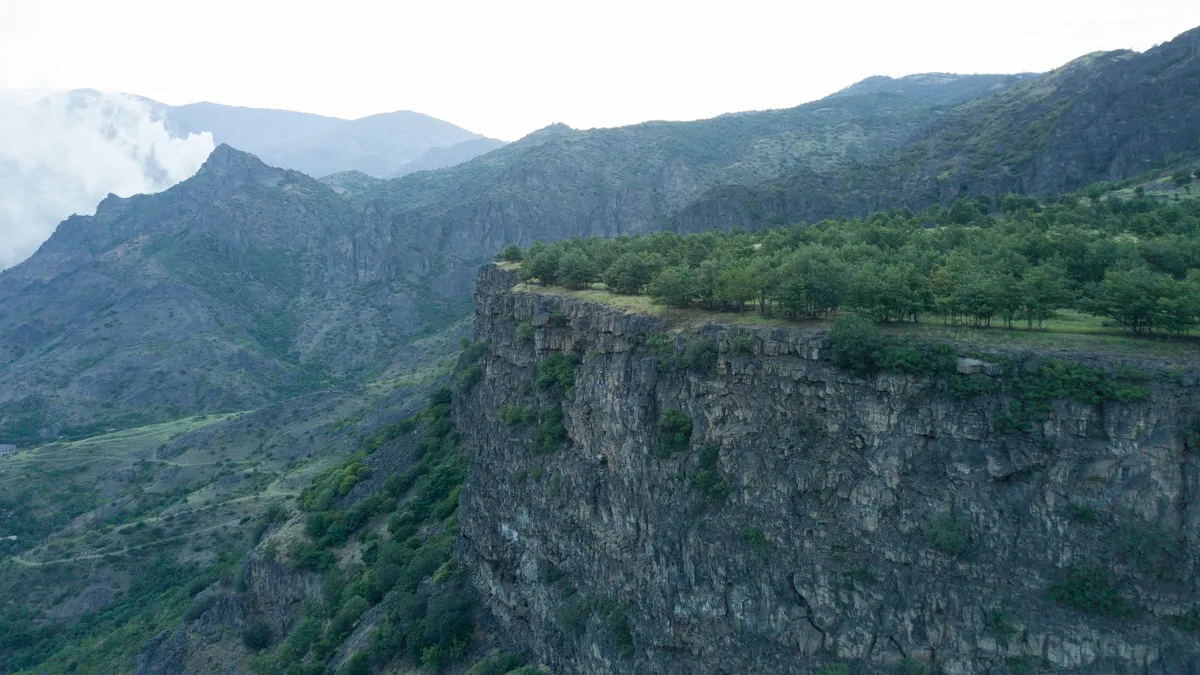
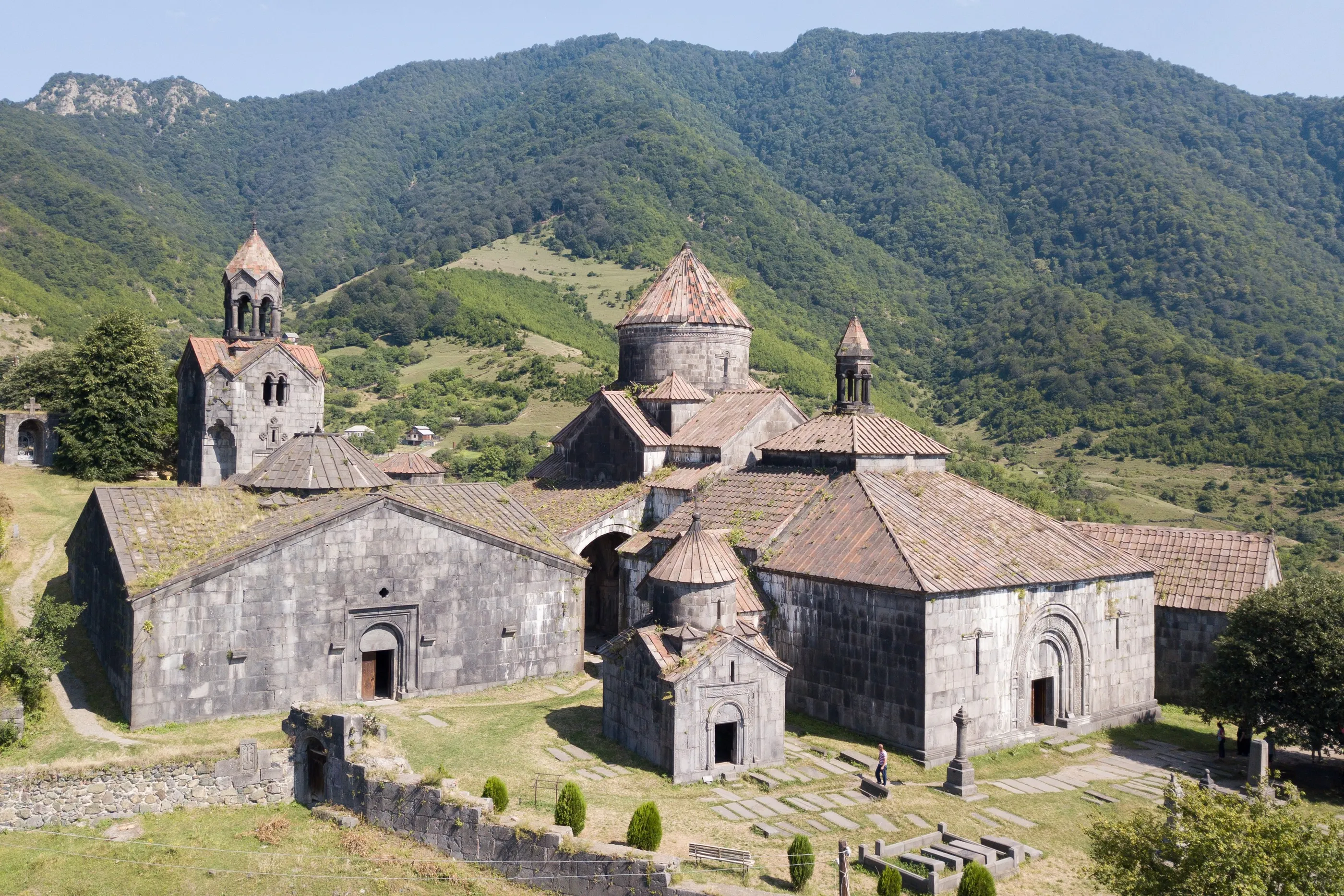
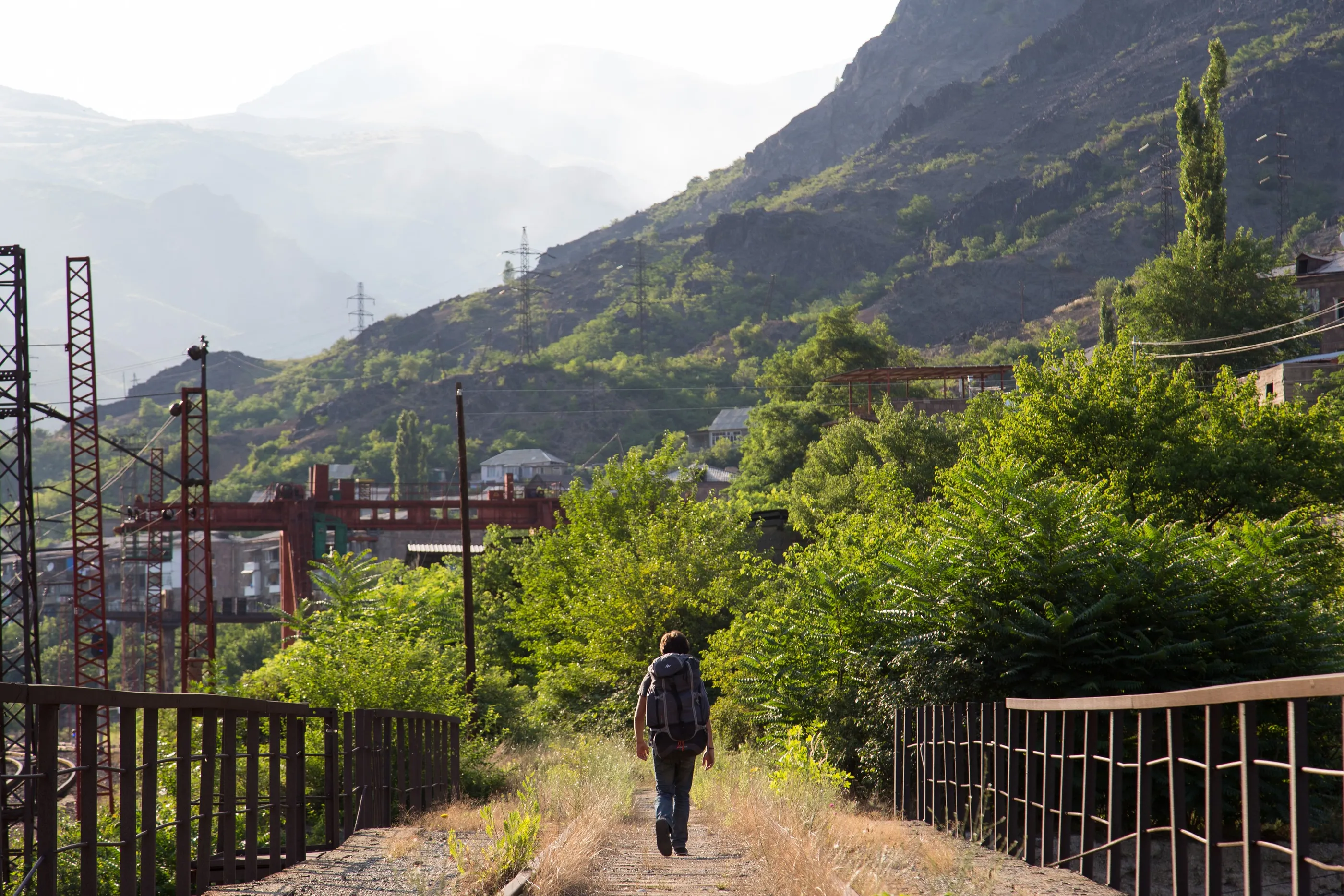
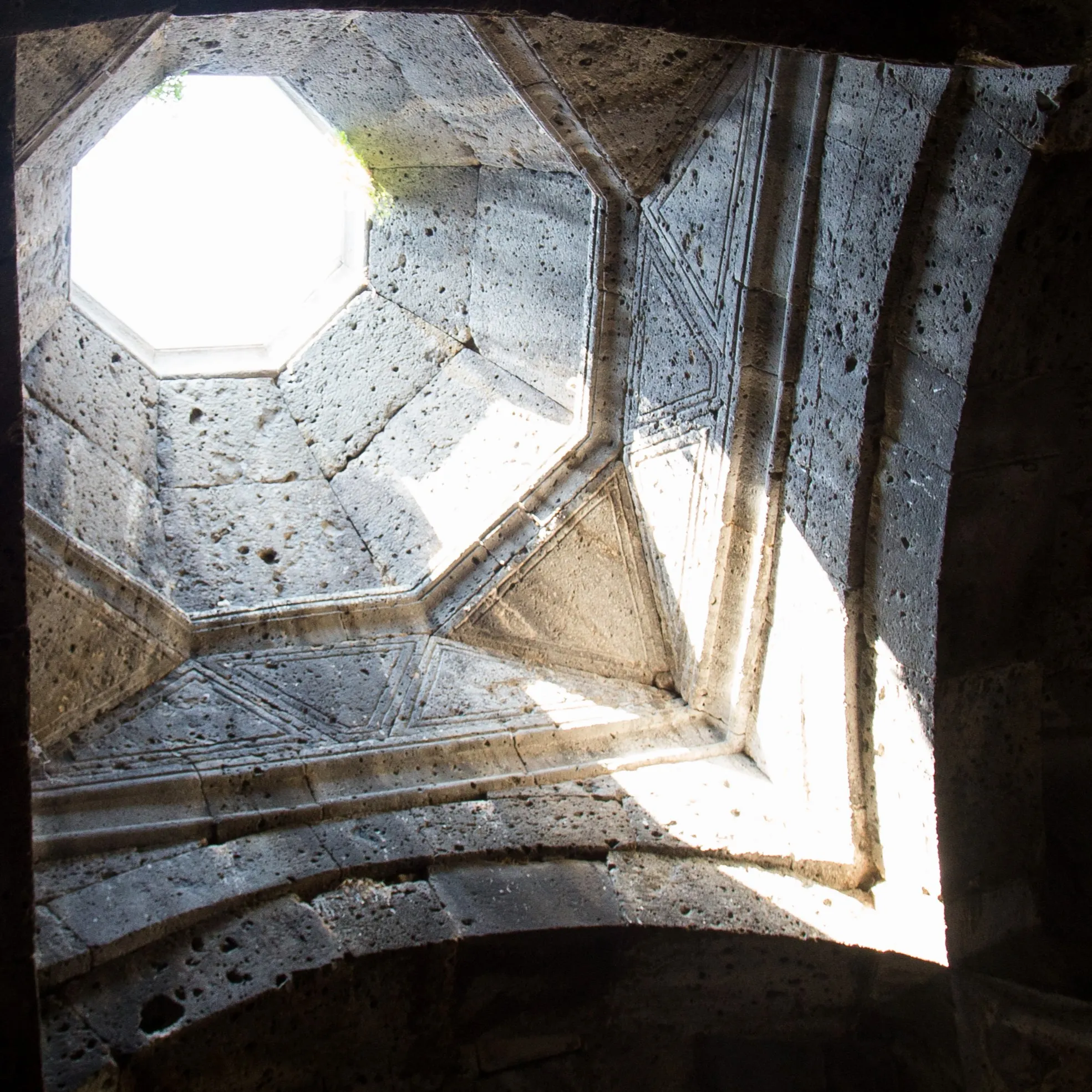
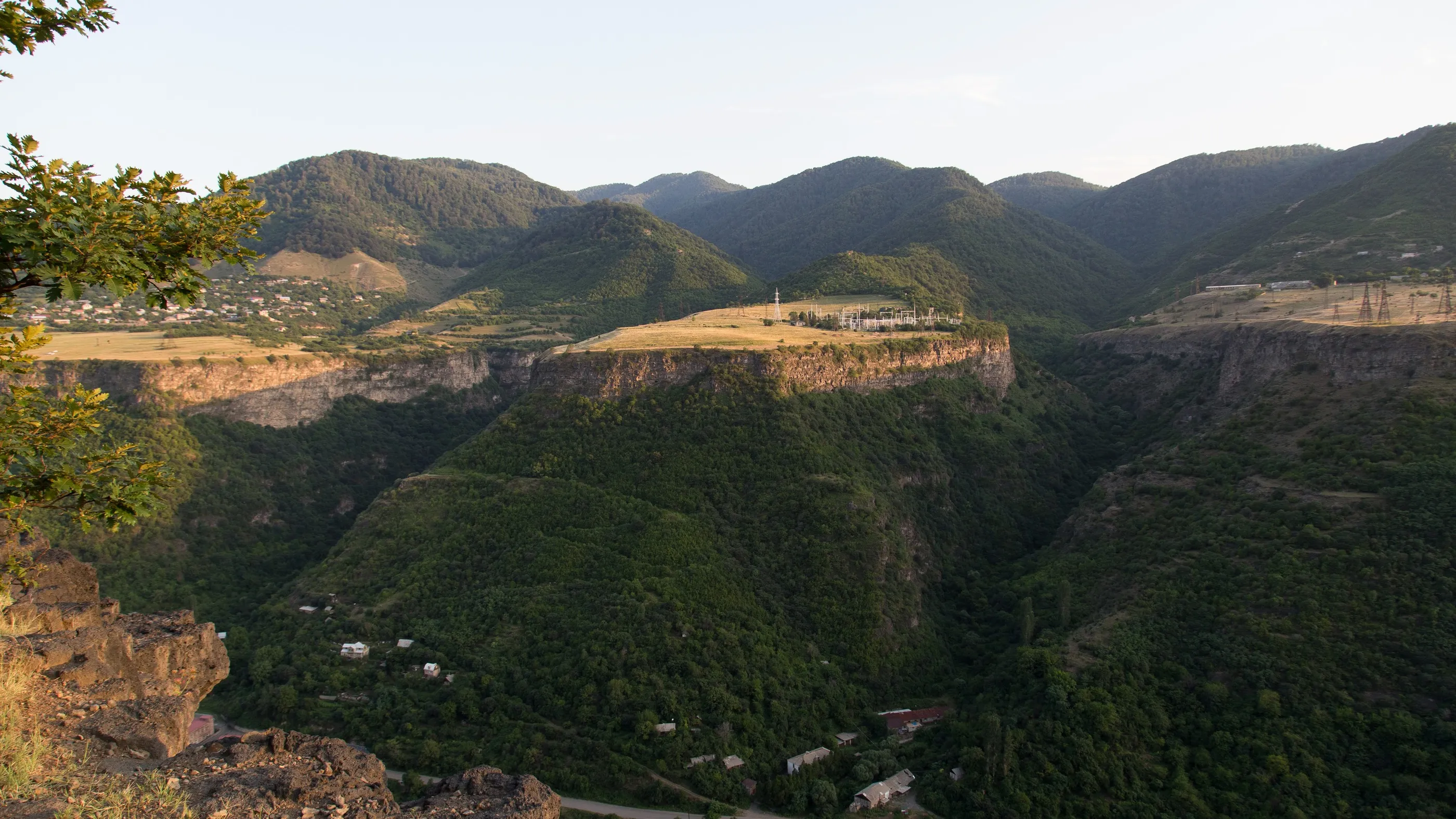
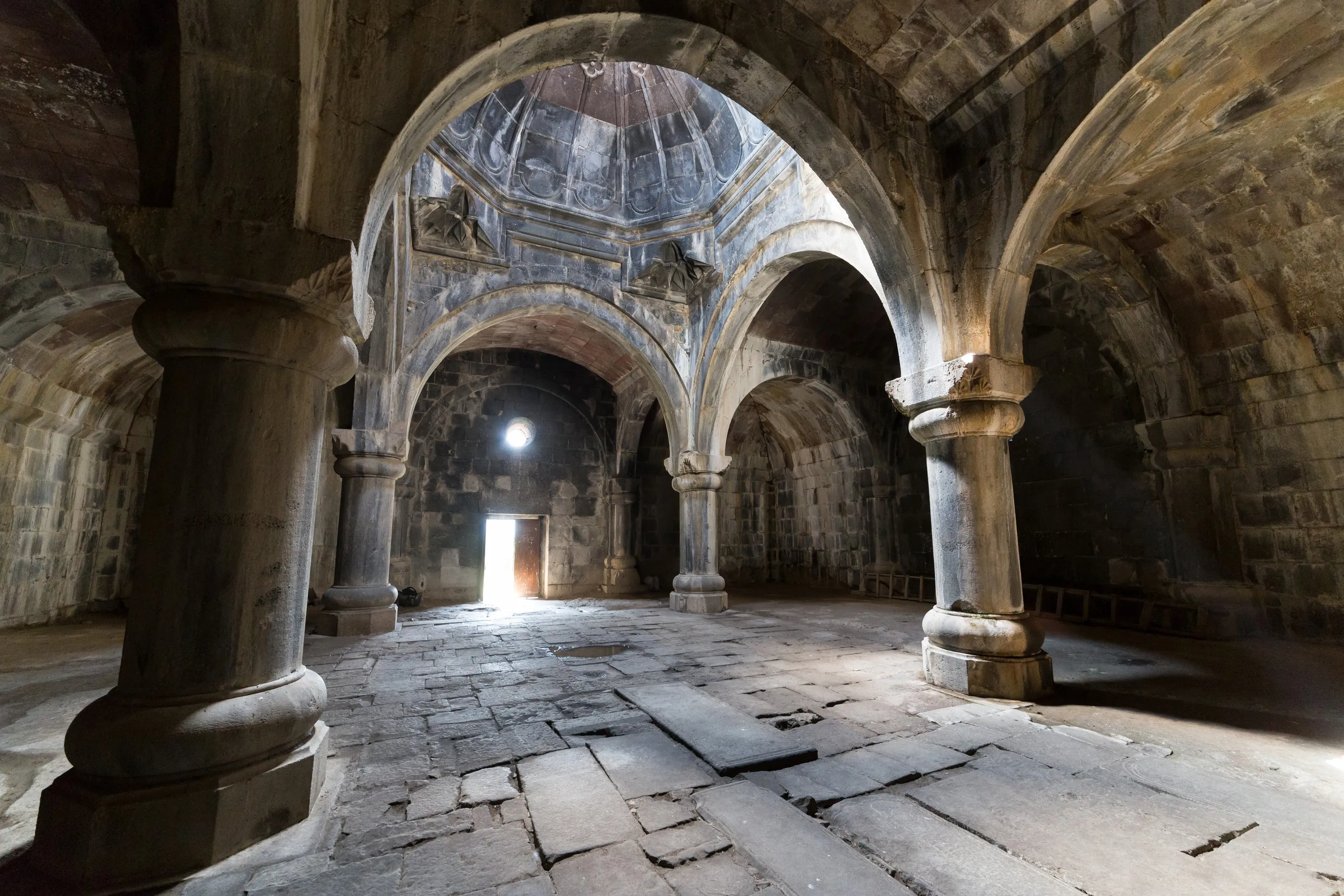
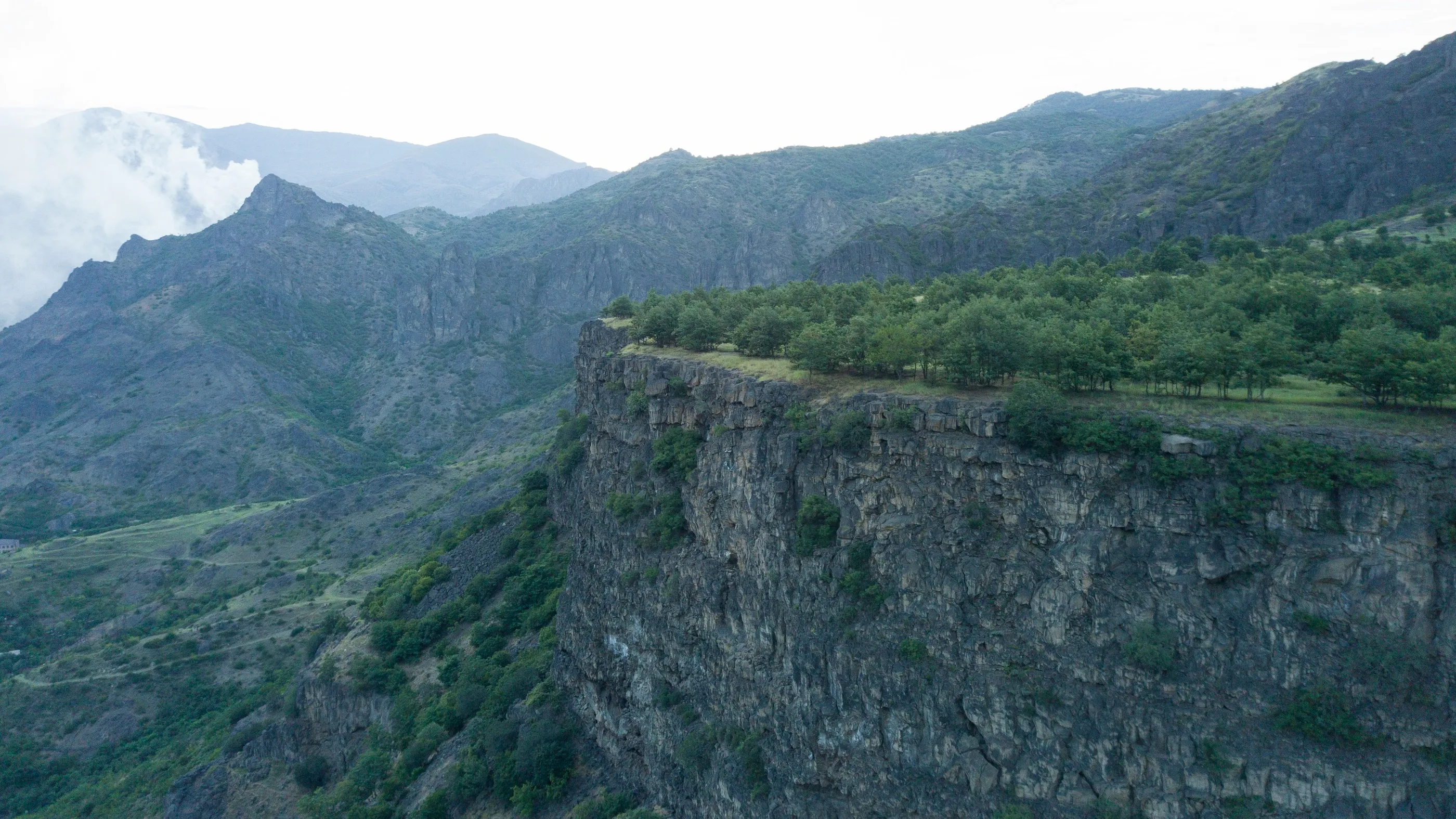
    In the north of the country, the Debed carves a canyon hiding medieval monasteries and old Soviet industrial towns. We follow the railway that runs on towards Georgia. At Haghpat, in the gloom of the gavit, light falls from an oculus as if down a well.

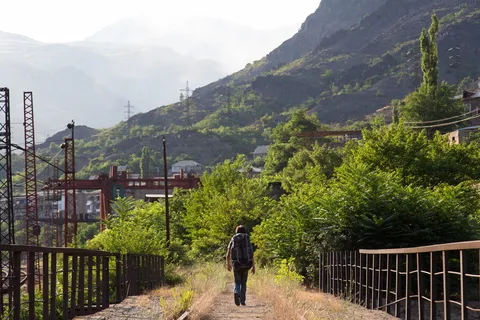
    Haghpat monastery from above, Armenia — Nicolas MarincicWalker along a railway line, Armenia — Nicolas MarincicLight through the octagonal oculus, Haghpat monastery, Armenia — Nicolas MarincicGreen gorge beneath a plateau, Armenia — Nicolas MarincicGavit of Haghpat monastery, Armenia — Nicolas MarincicCliffs of a wooded canyon, Armenia — Nicolas Marincic
  4. By train↗ 67 km

    Days 7–8

    Tbilisi

    Georgia

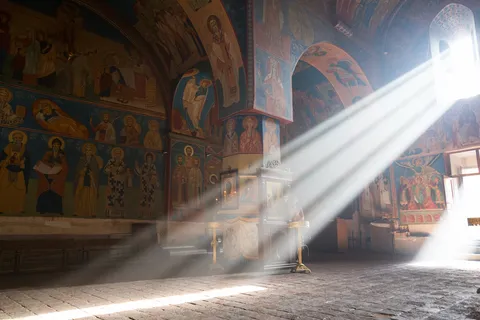
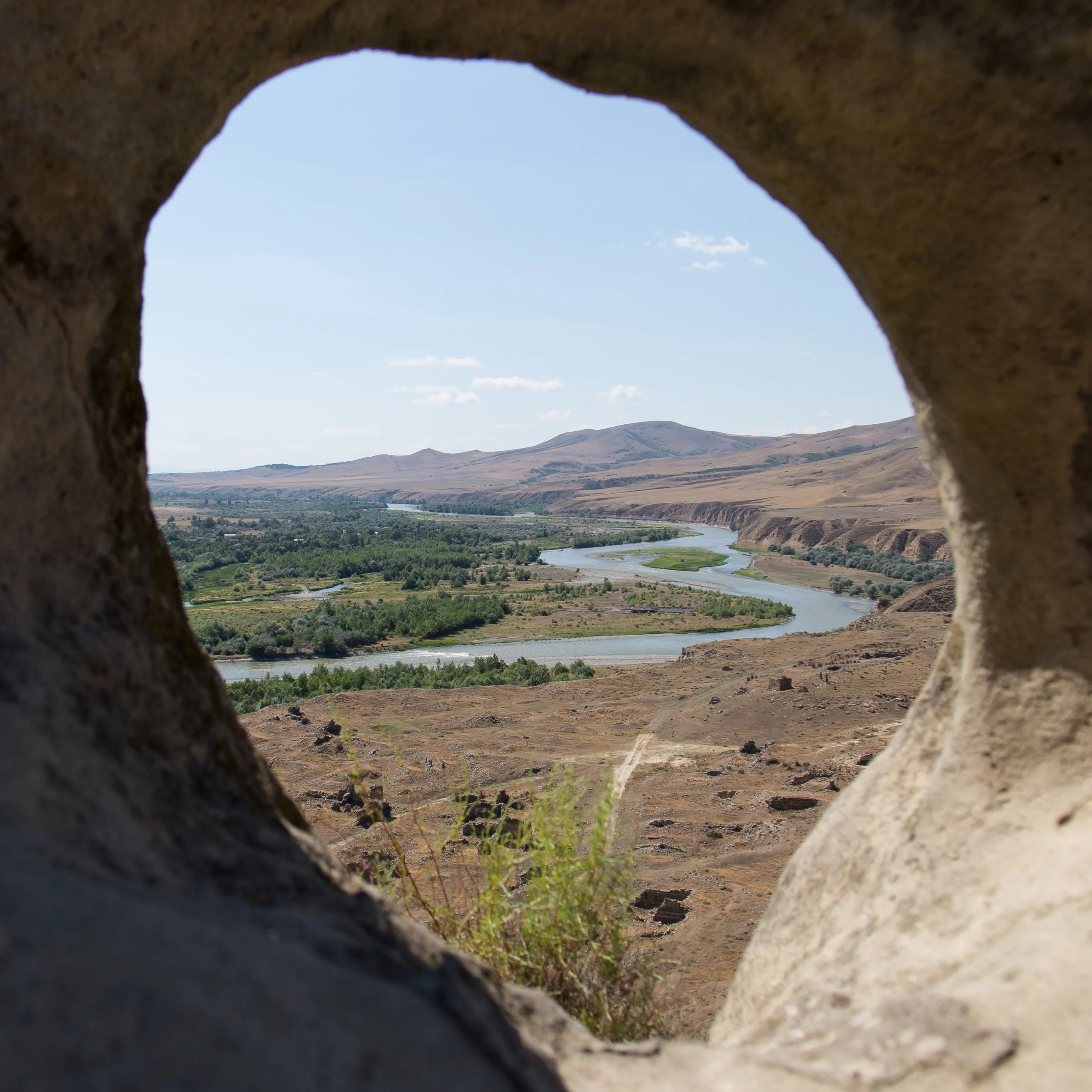
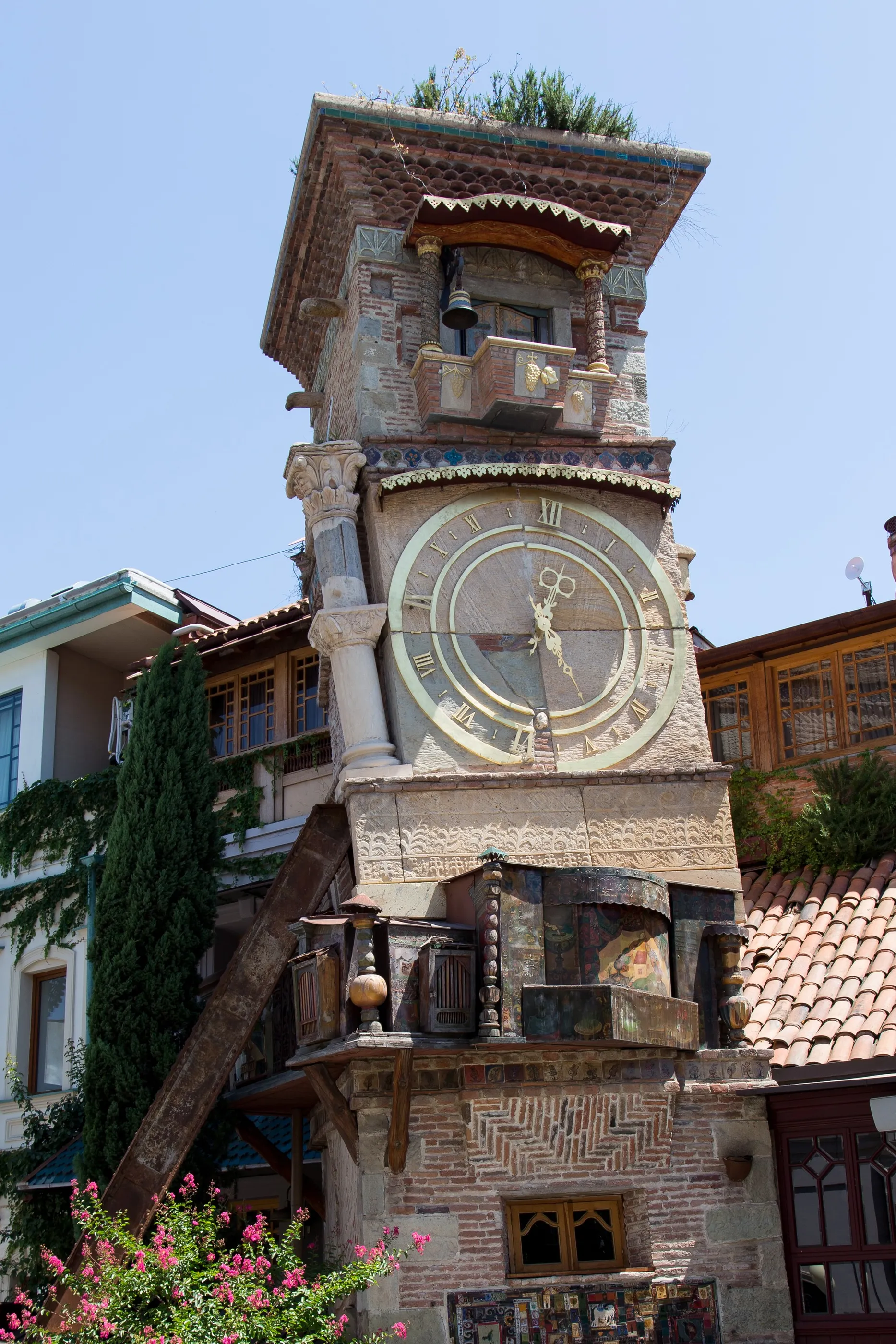
    The wooden balconies of the old town, overlooked by the statue of Mother Georgia. From there, a trip to Uplistsikhe, the cave town carved above the Kura, a caravan stop long before our era. In the gloom of a church, a shaft of sunlight cuts across the frescoes.
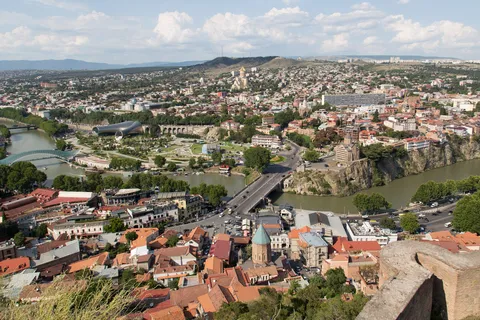
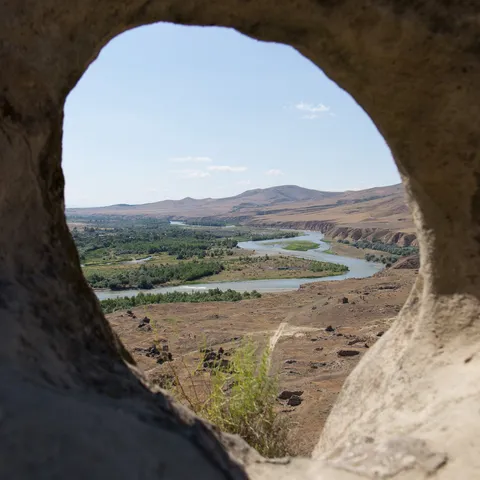
    Tbilisi and the Kura River from Narikala fortress, Georgia — Nicolas MarincicValley seen from a cave dwelling, Georgia — Nicolas MarincicMother of Georgia above Tbilisi’s balconies, Georgia — Nicolas MarincicSameba Cathedral framed by old-town balconies, Tbilisi, Georgia — Nicolas MarincicFrescoed church interior, Armenia — Nicolas MarincicCarved wooden balconies in Tbilisi’s old town, Georgia — Nicolas MarincicClock tower of the Gabriadze puppet theatre, Tbilisi, Georgia — Nicolas Marincic
  5. By train↗ 448 km

    Days 9–14

    Baku

    Azerbaijan

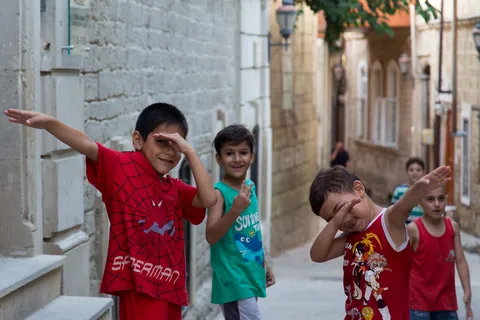
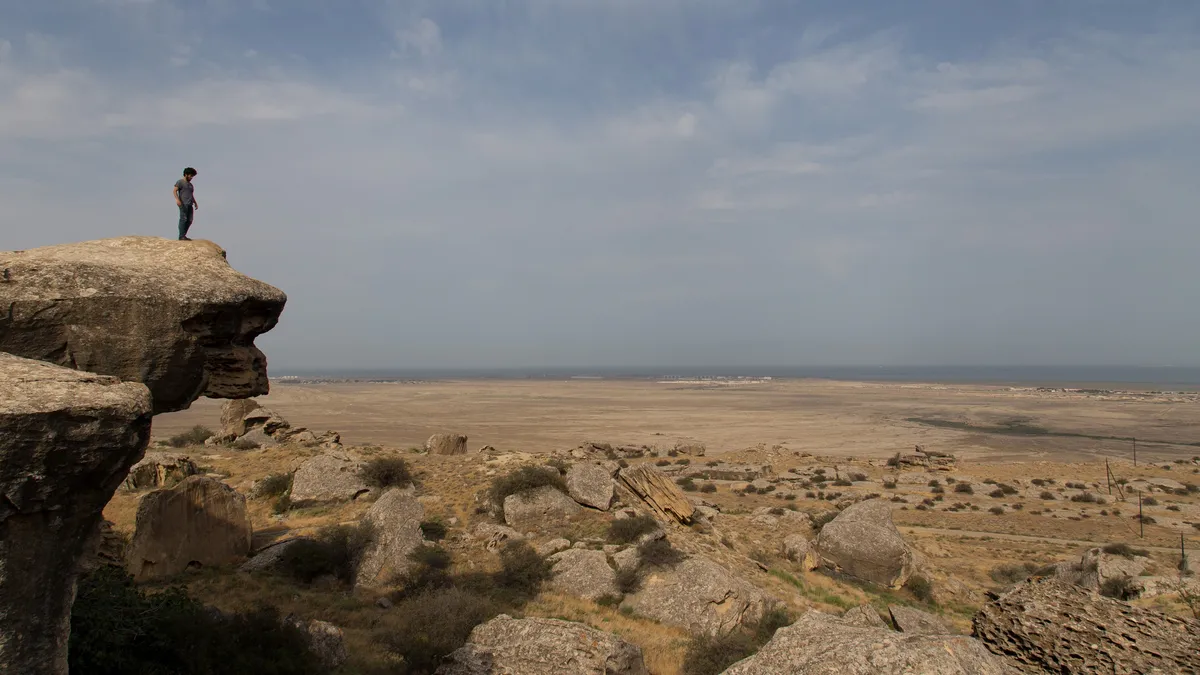
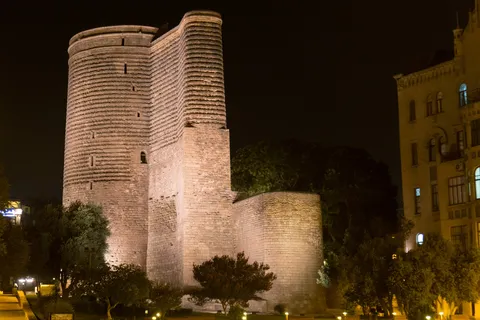
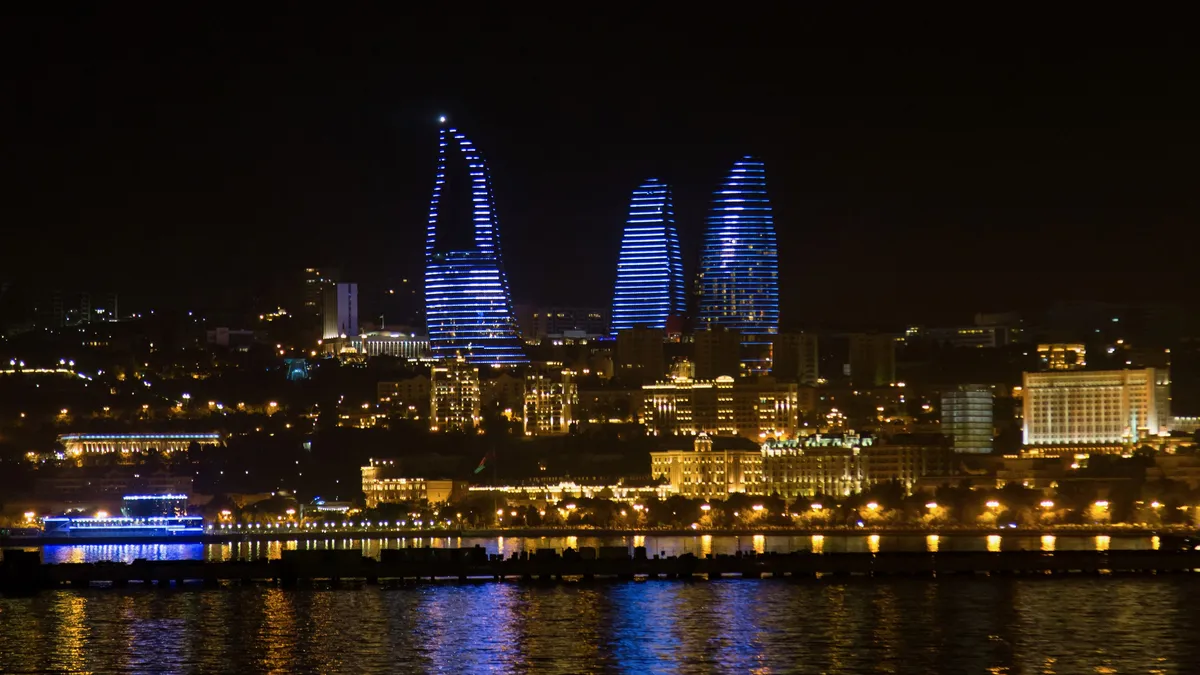
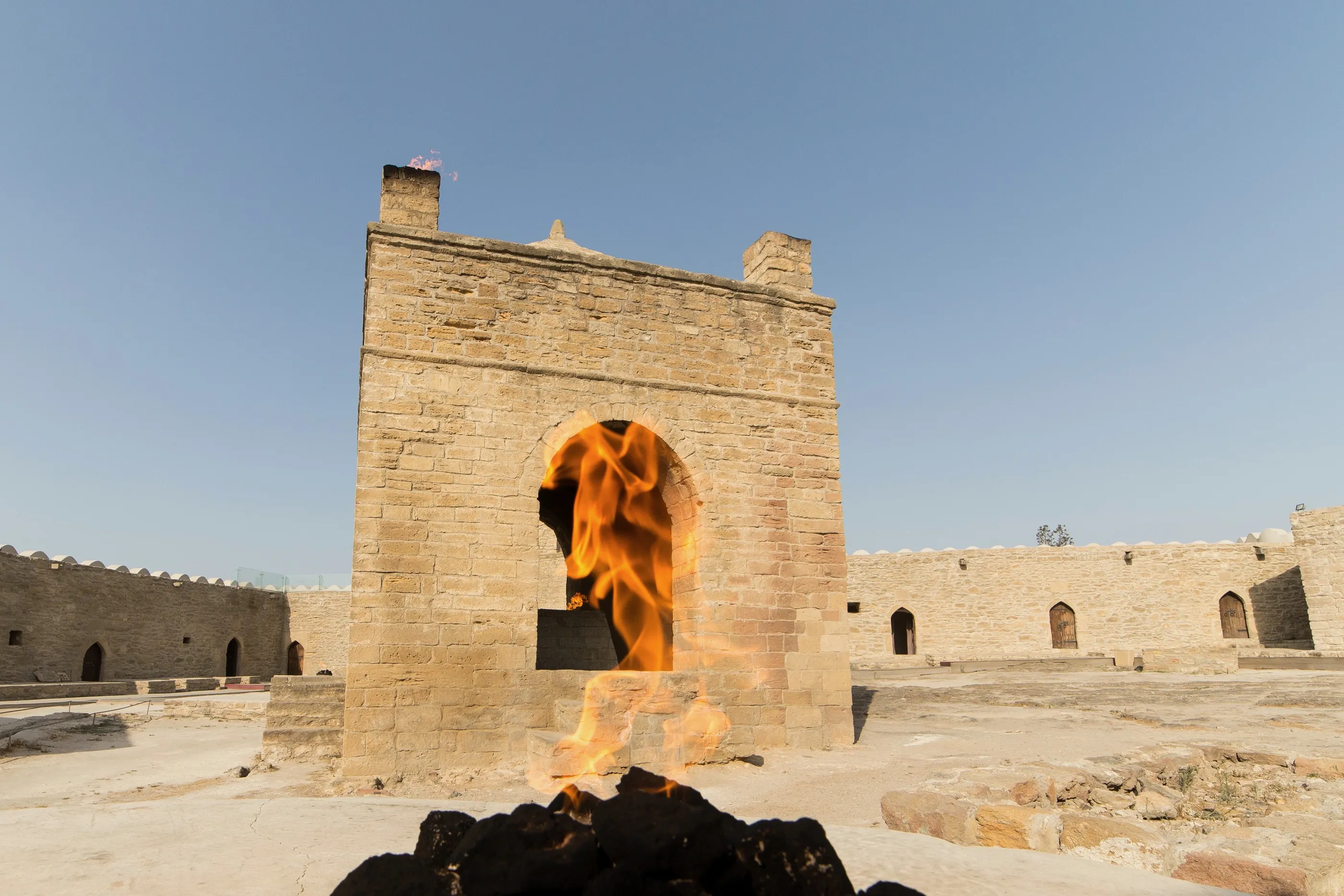
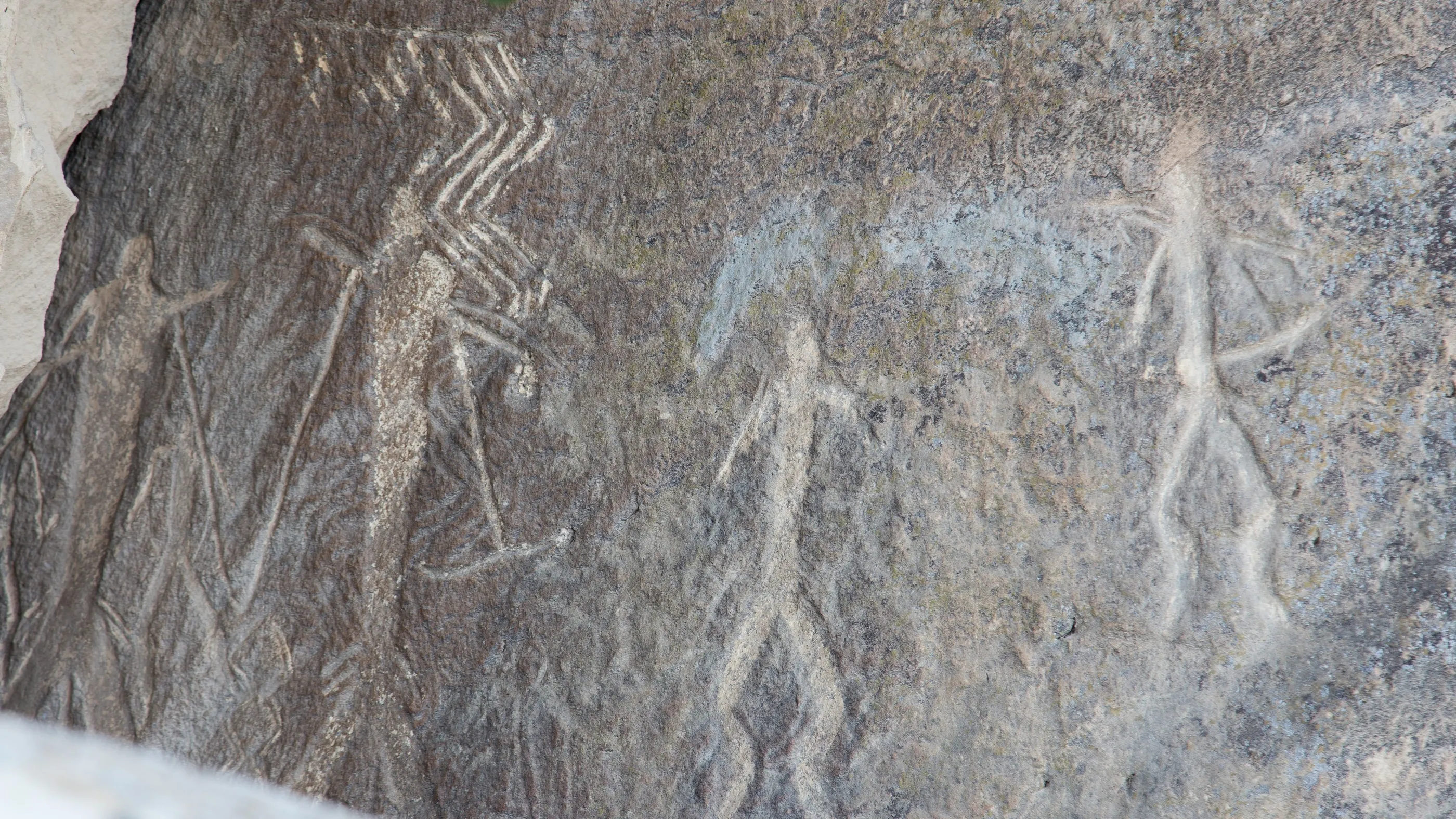
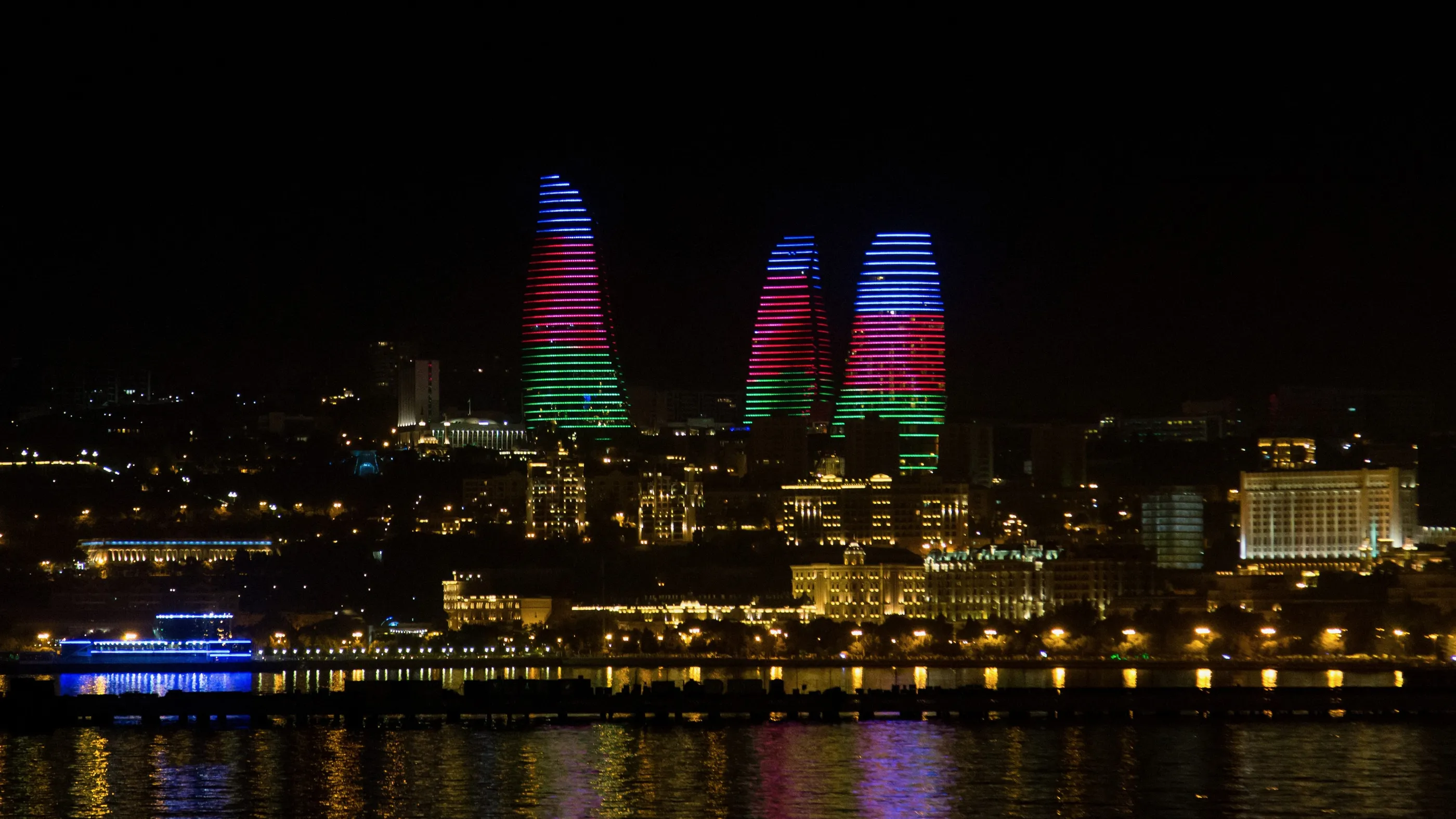
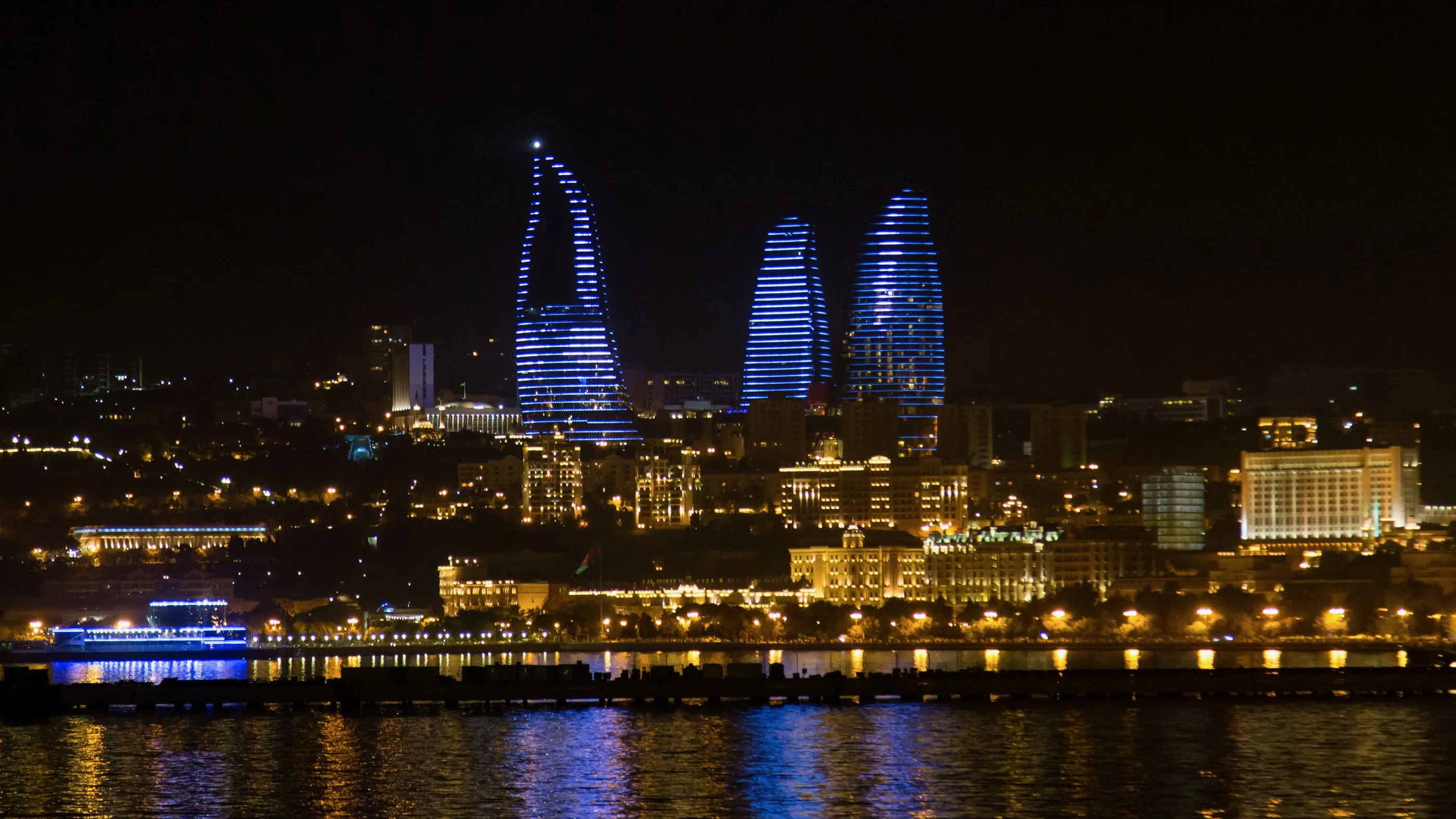
    Baku, land of fire: at the Ateshgah temple, flames once burst from the ground, tended by worshippers from India. The old town’s alleys are full of children, glass towers glitter at night above the Caspian. To the south, in the Gobustan desert, human figures were carved into the rock thousands of years ago. Here begins the wait for the cargo ship that will carry us across the sea.
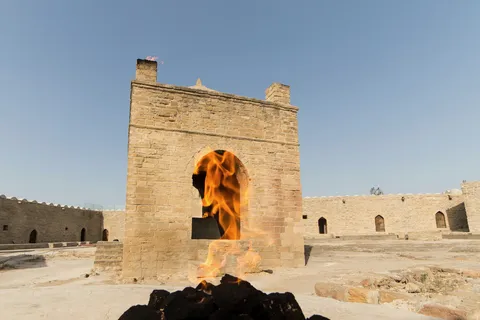
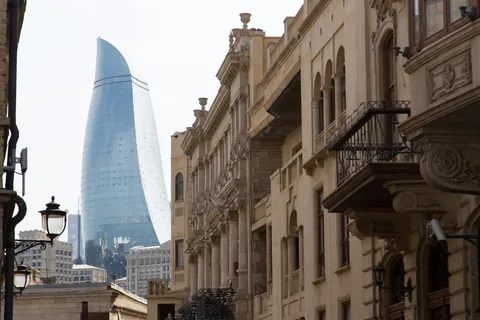
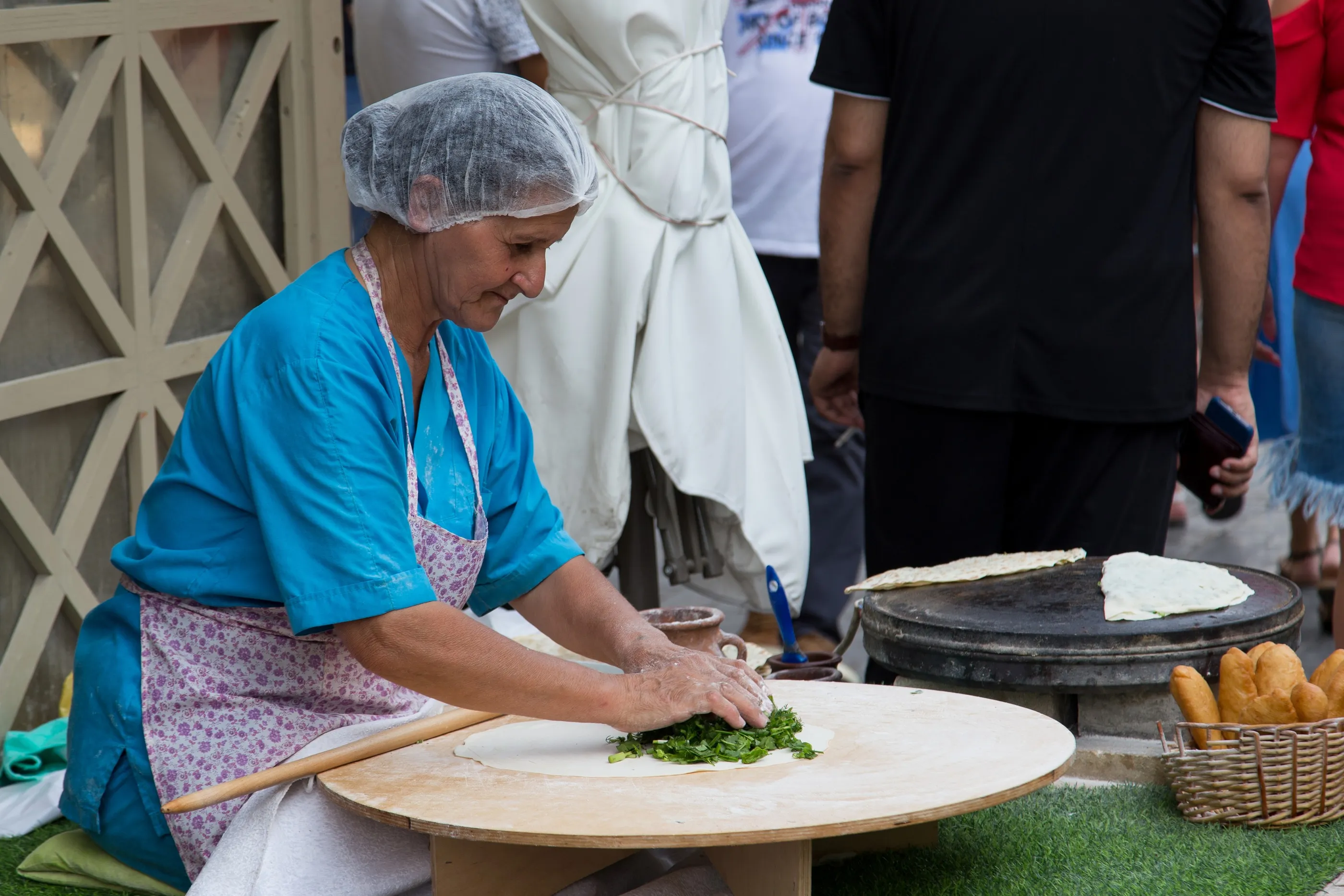
    Sacred fire at the Ateshgah fire temple, Azerbaijan — Nicolas MarincicBaku old-town street and the Flame Towers, Azerbaijan — Nicolas MarincicChildren playing in an old-town lane, Azerbaijan — Nicolas MarincicWoman preparing a herb flatbread, Georgia — Nicolas MarincicArid, eroded hills, Azerbaijan — Nicolas MarincicGobustan petroglyphs, human figures, Azerbaijan — Nicolas MarincicMusicians playing tar and kamancha, Azerbaijan — Nicolas MarincicMaiden Tower at night, Baku, Azerbaijan — Nicolas Marincic
  6. By boat↗ 132 km

    Days 14–15

    Crossing the Caspian

    Azerbaijan

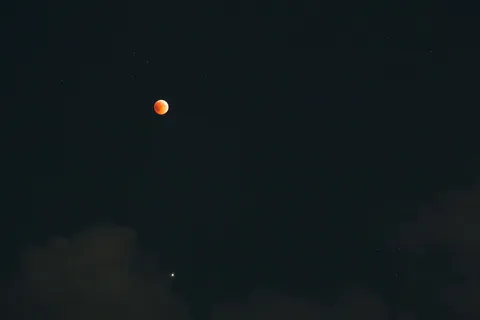
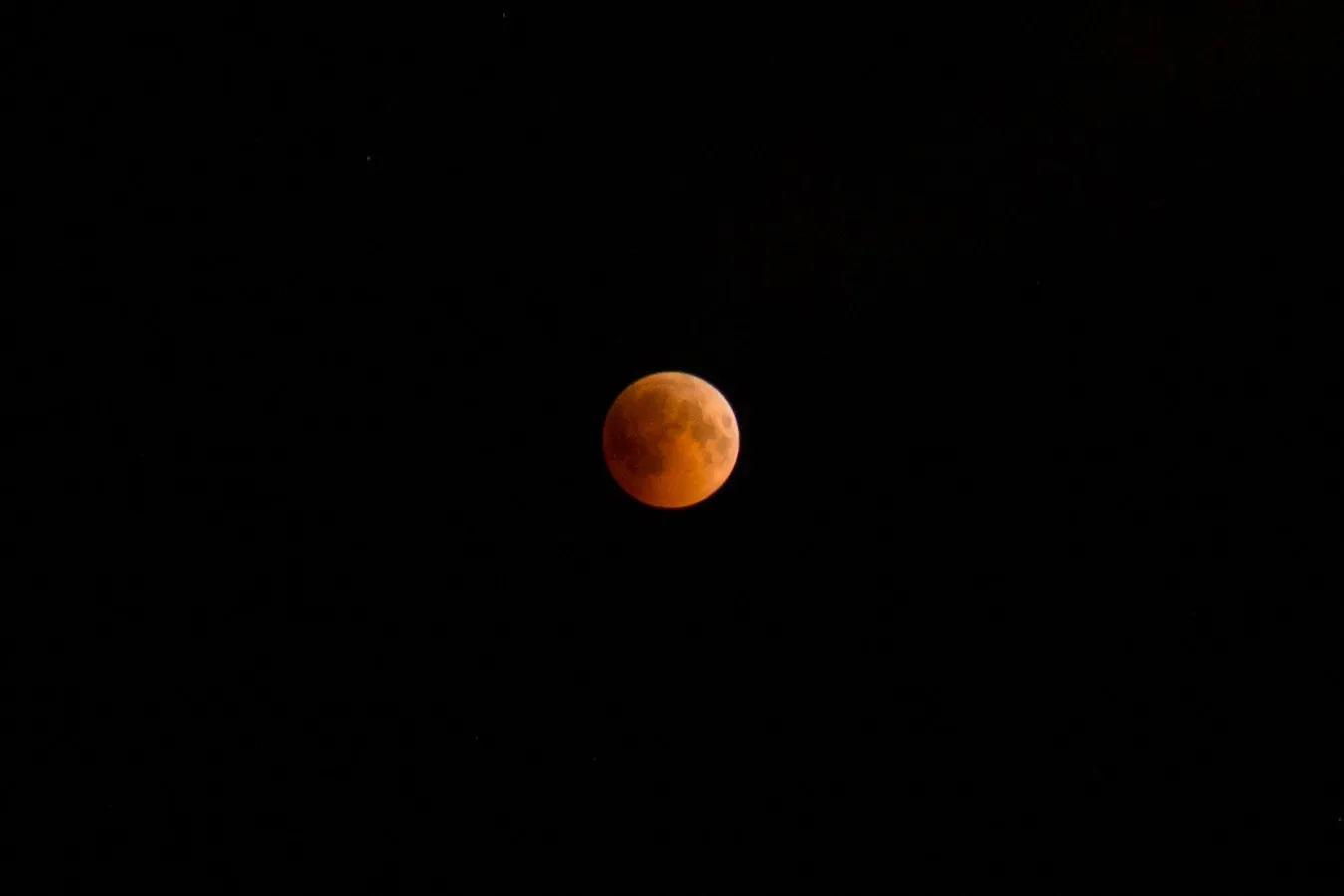
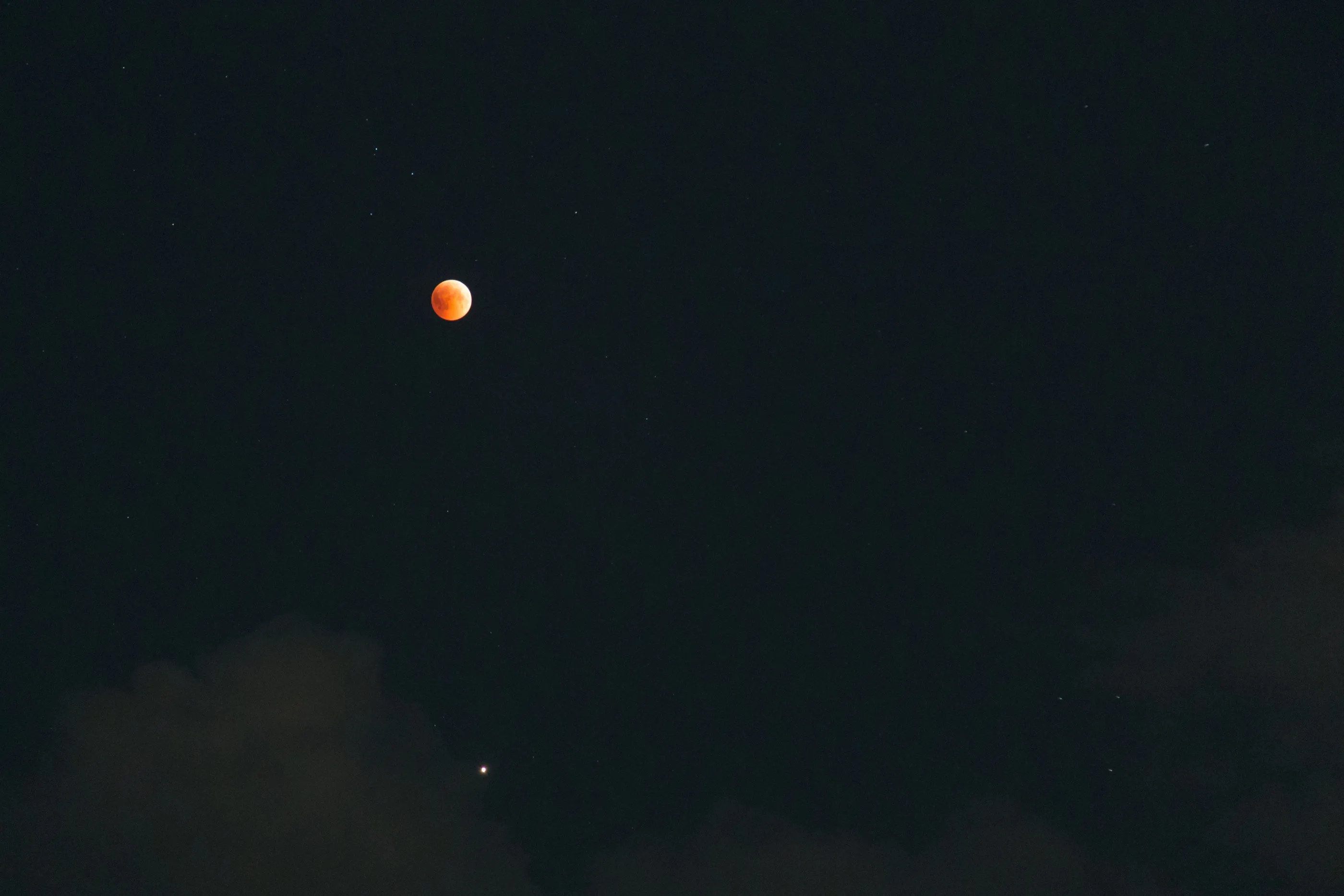
    At last the cargo ship leaves Baku by night, and the Flame Towers recede, changing colour. That night, 27 July 2018, the Moon slides into the Earth’s shadow: the longest total eclipse of the century, blood-red above the Caspian. Then a whole day of glassy sea, until the lights of Turkmenbashi.
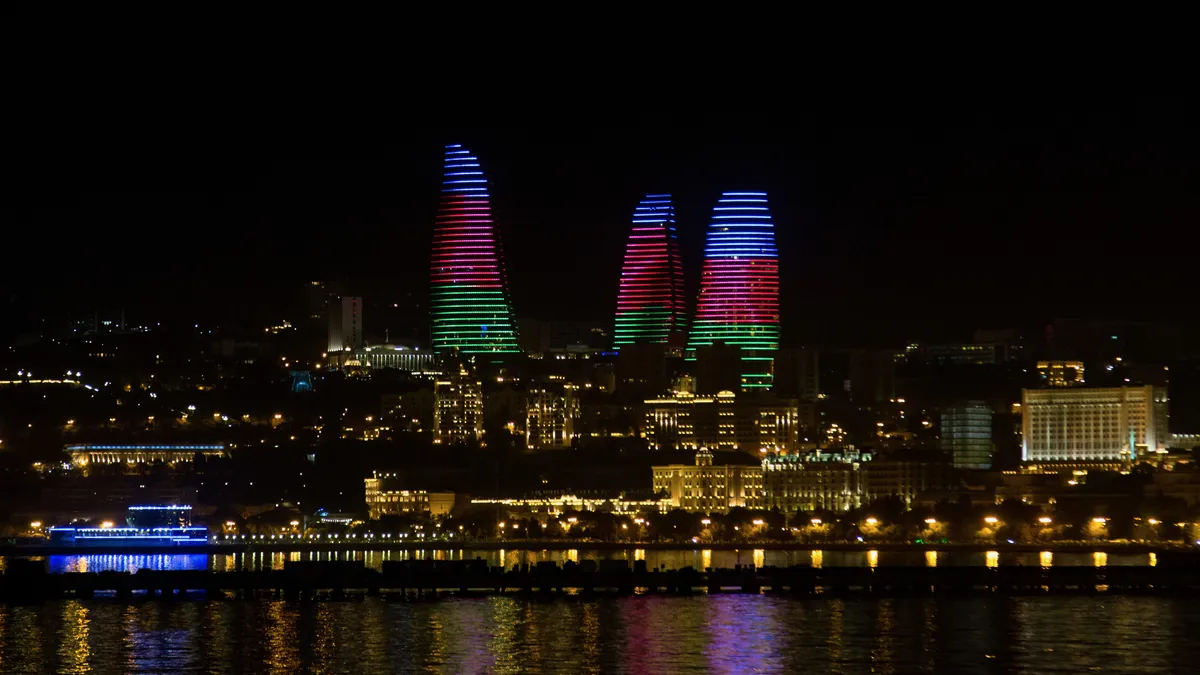
    Flame Towers lit up above Baku, Azerbaijan — Nicolas MarincicTotal lunar eclipse of 27 July 2018 over the Caspian, Azerbaijan — Nicolas MarincicRed moon during a lunar eclipse, Azerbaijan — Nicolas MarincicFerry on the Caspian at sunset, Azerbaijan — Nicolas MarincicBaku’s Flame Towers at night, Azerbaijan — Nicolas Marincic
  7. By boat↗ 134 km

    Days 15–16

    Turkmenbashi

    Turkmenistan

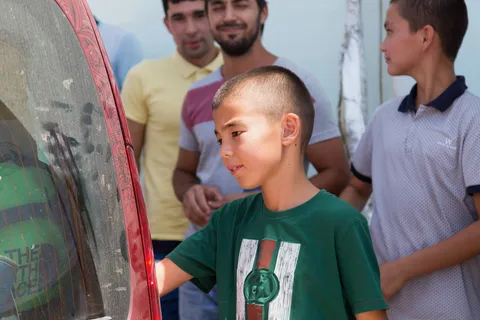
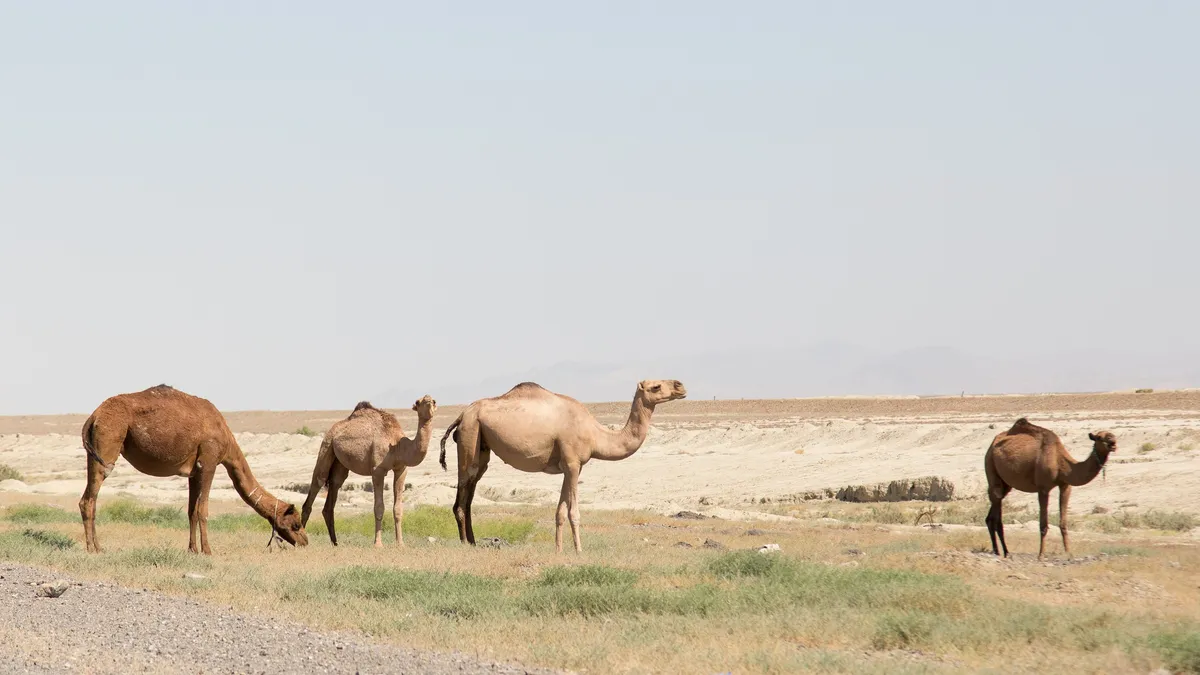
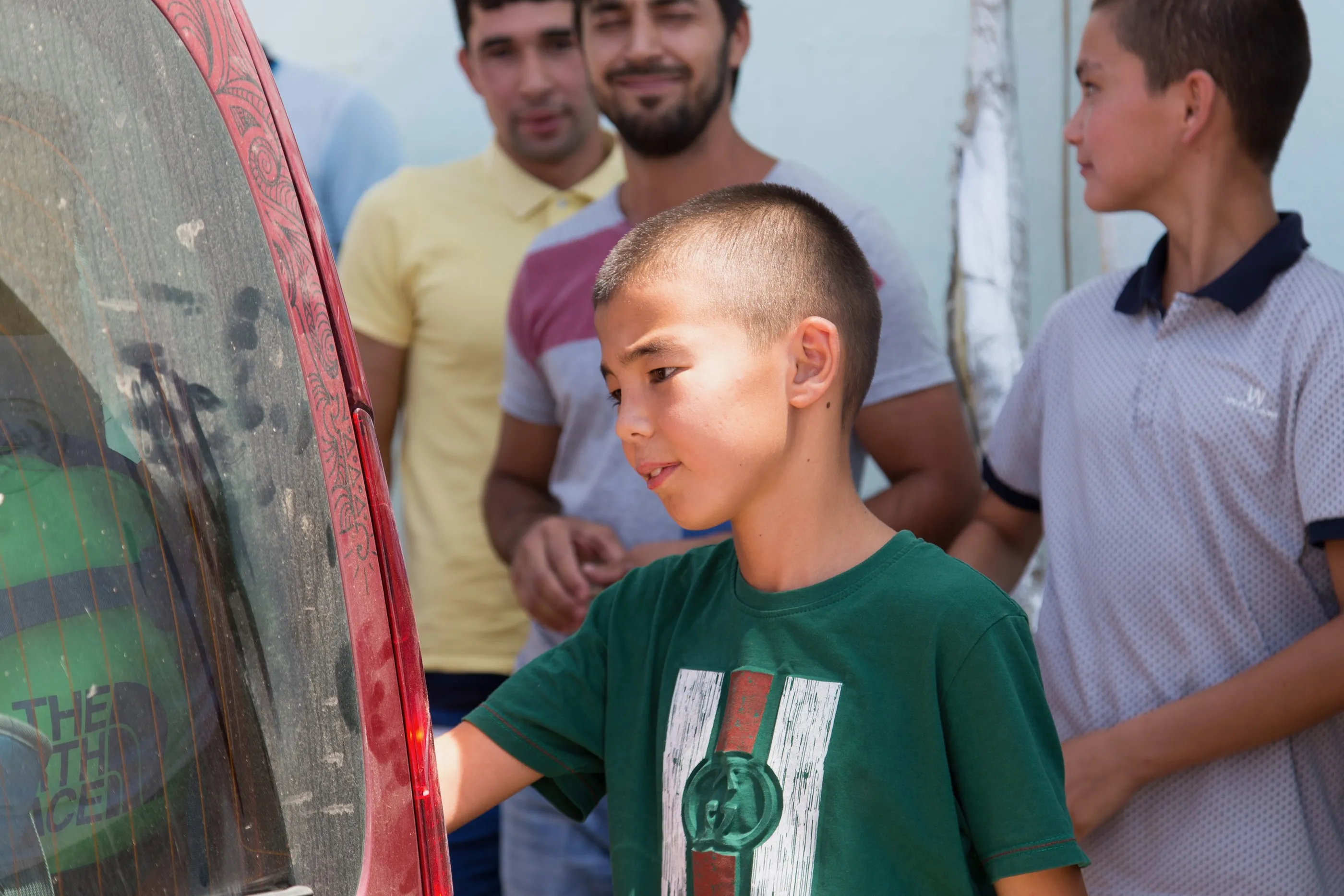
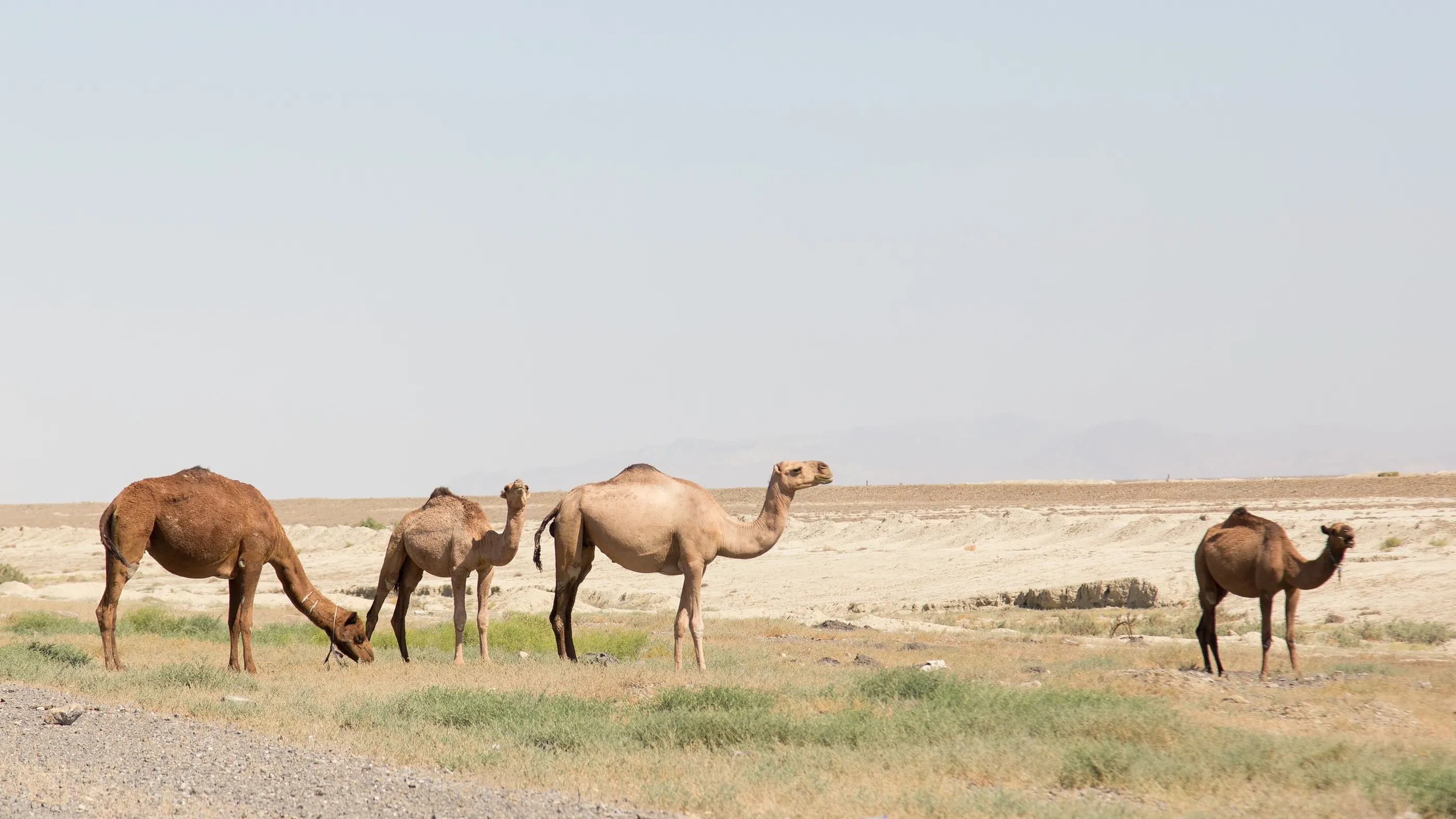
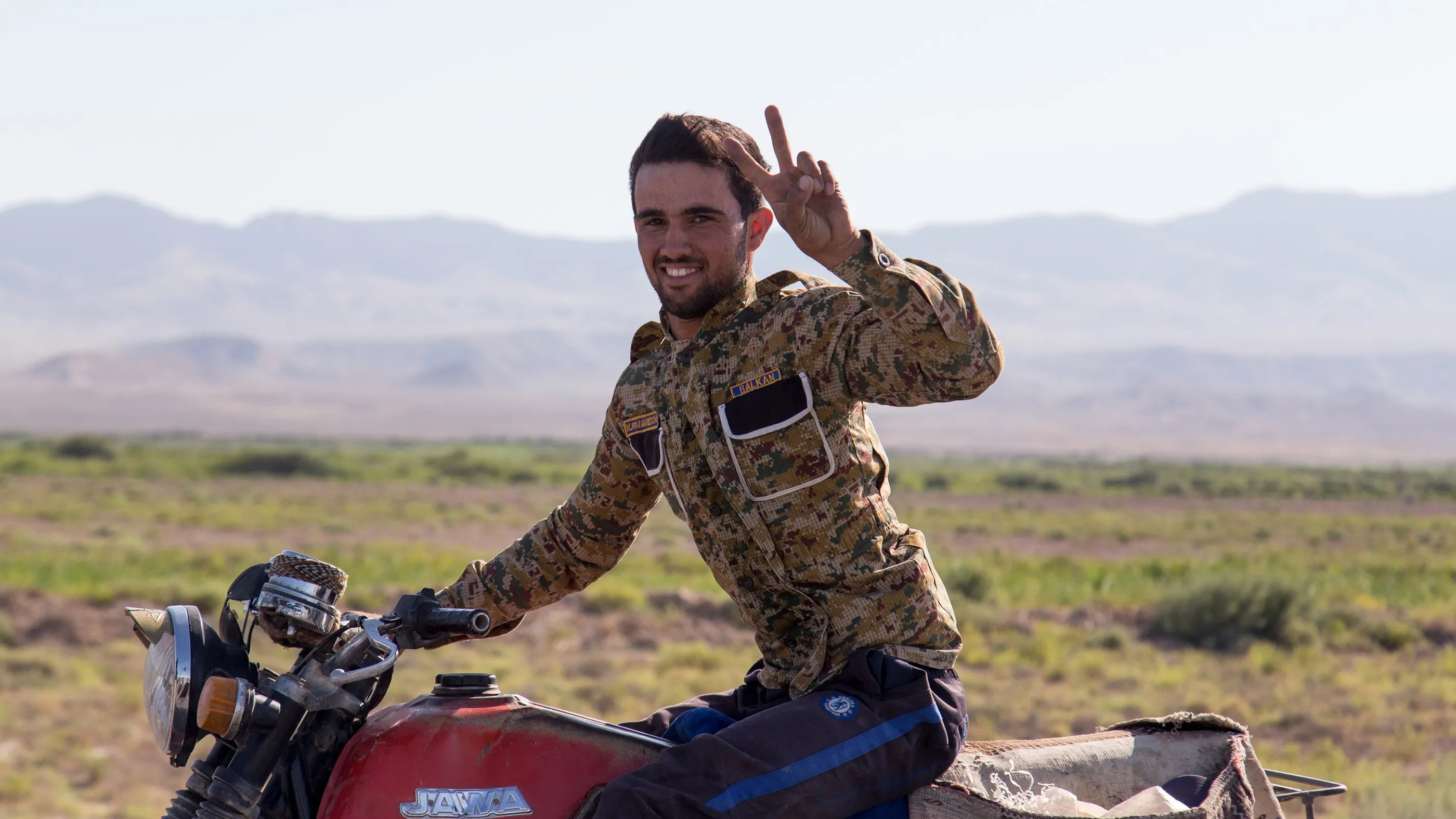
    Once ashore at Turkmenbashi, we find ourselves in Turkmenistan, one of the most closed countries in the world. From the very first kilometres, the desert: camels by the roadside, bikers in fatigues who stop for a chat.
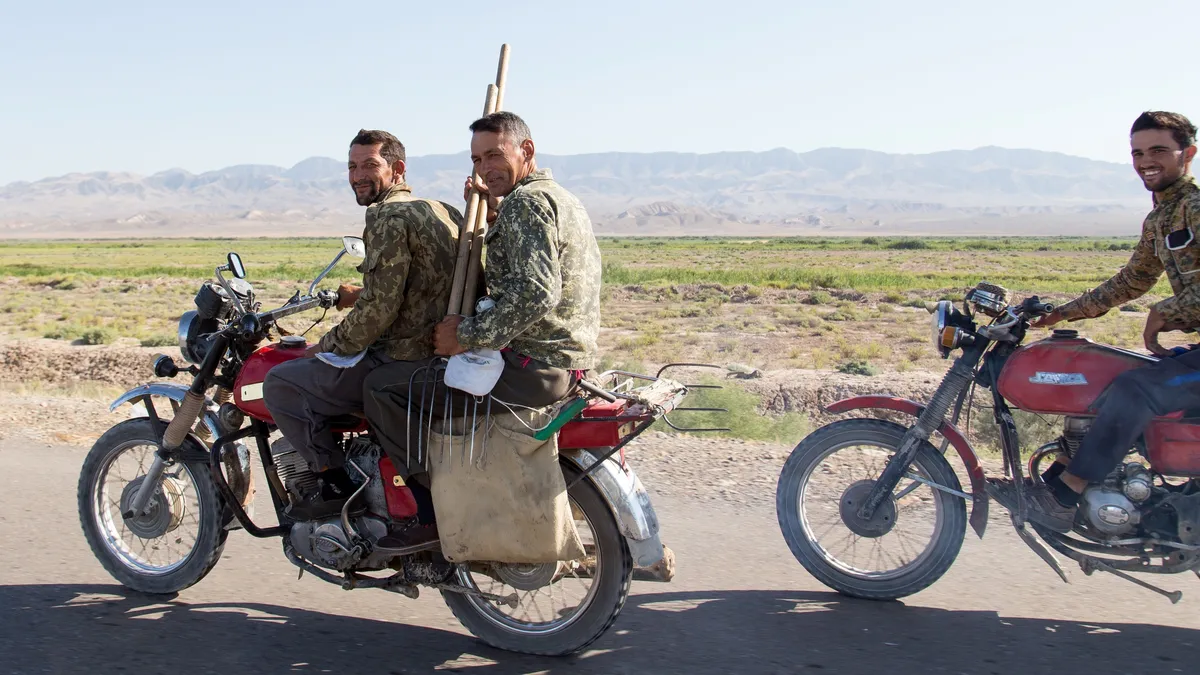
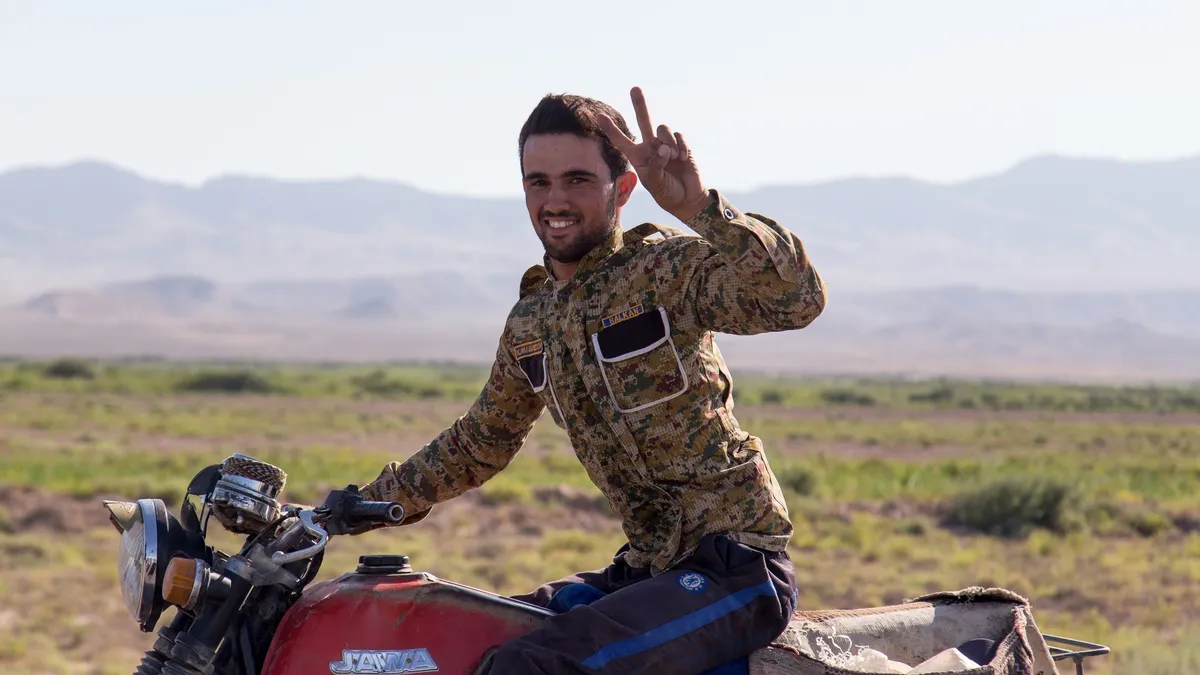
    Motorcyclists on the steppe, Turkmenistan — Nicolas MarincicMotorcyclist waving on the steppe, Turkmenistan — Nicolas MarincicBoy drawing on a dusty car window, Turkmenistan — Nicolas MarincicCamels grazing on the Turkmen steppe, Turkmenistan — Nicolas Marincic
  8. By road↗ 518 km

    Days 16–17

    Ashgabat

    Turkmenistan

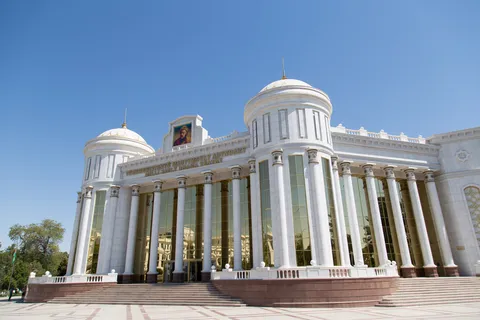
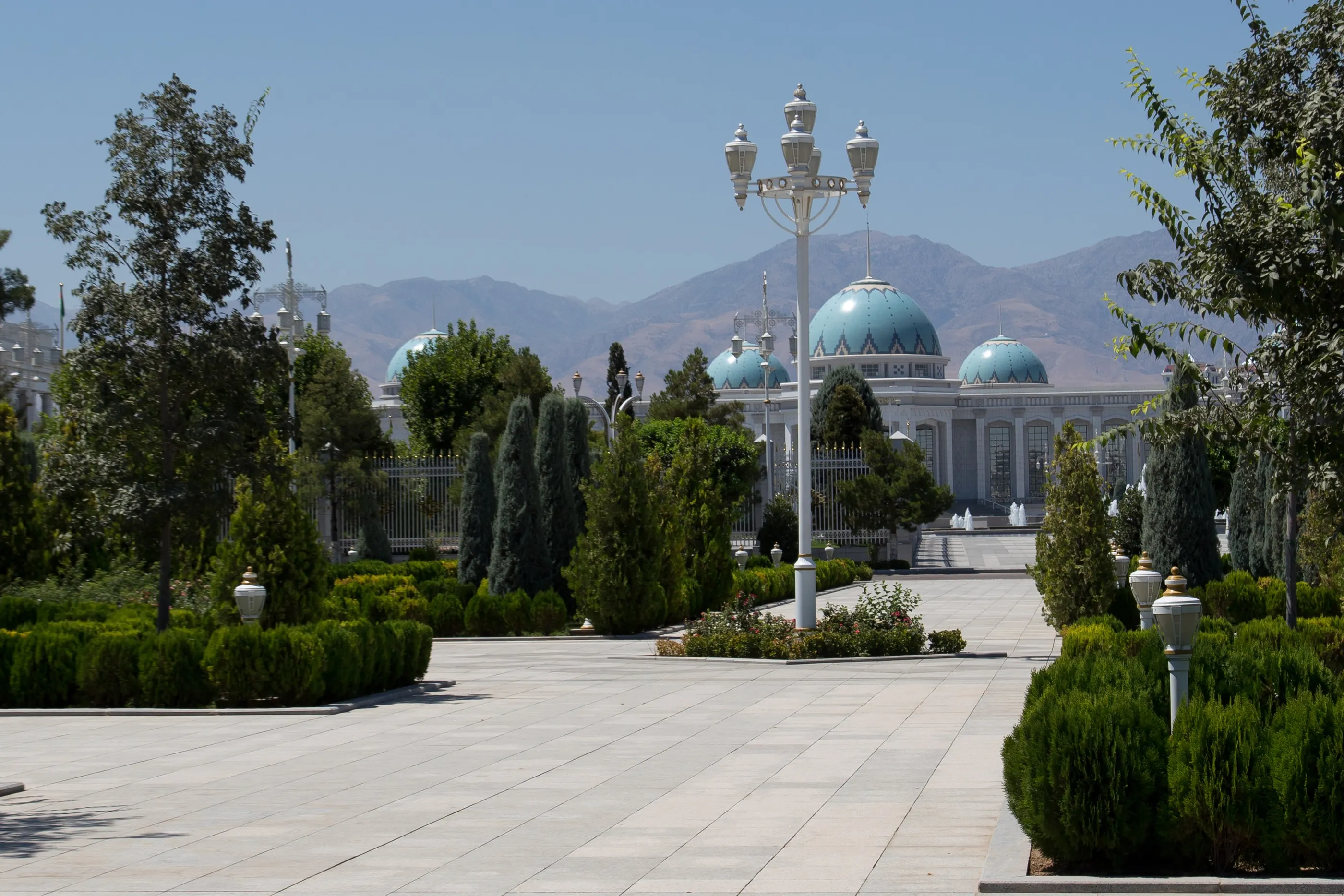
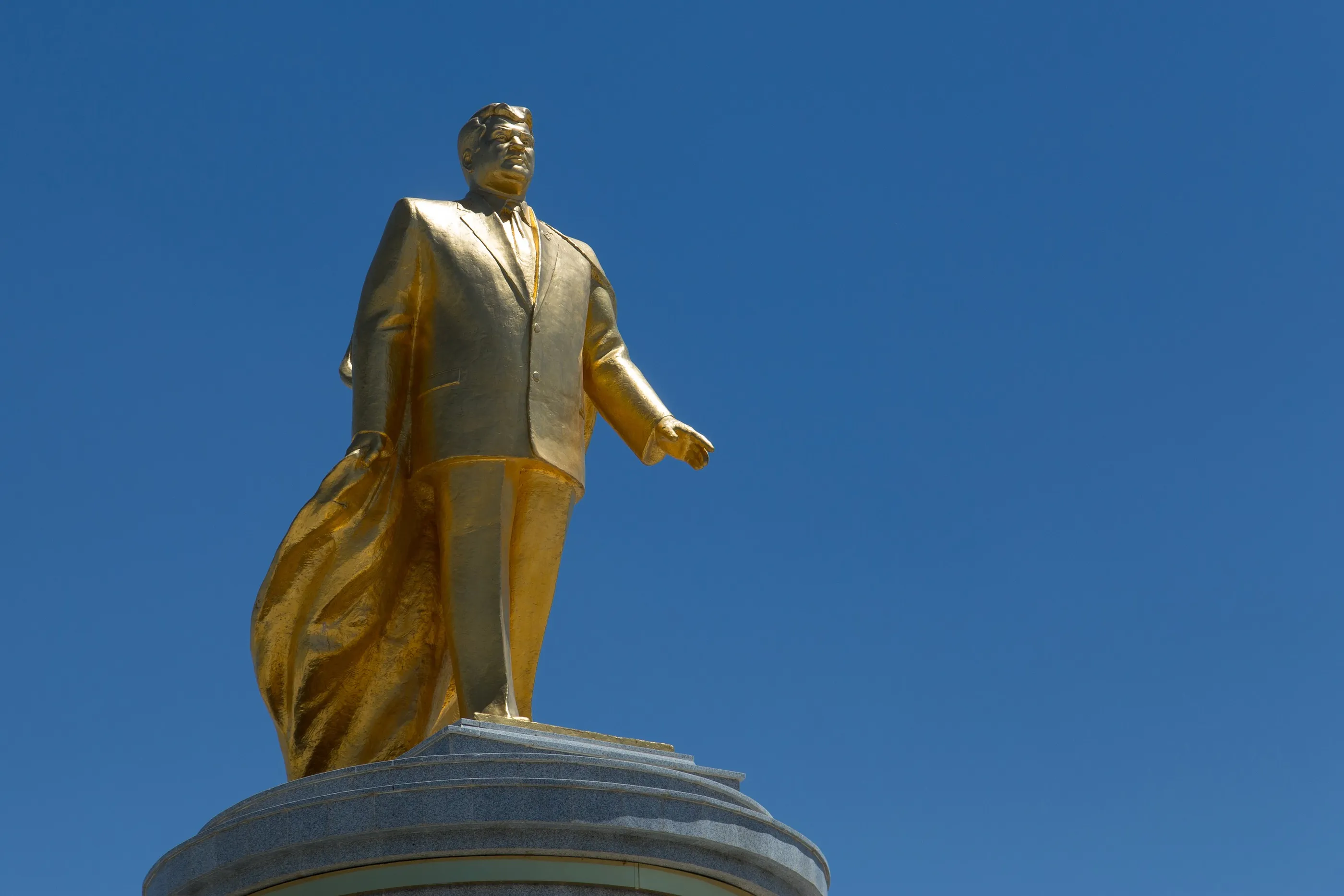
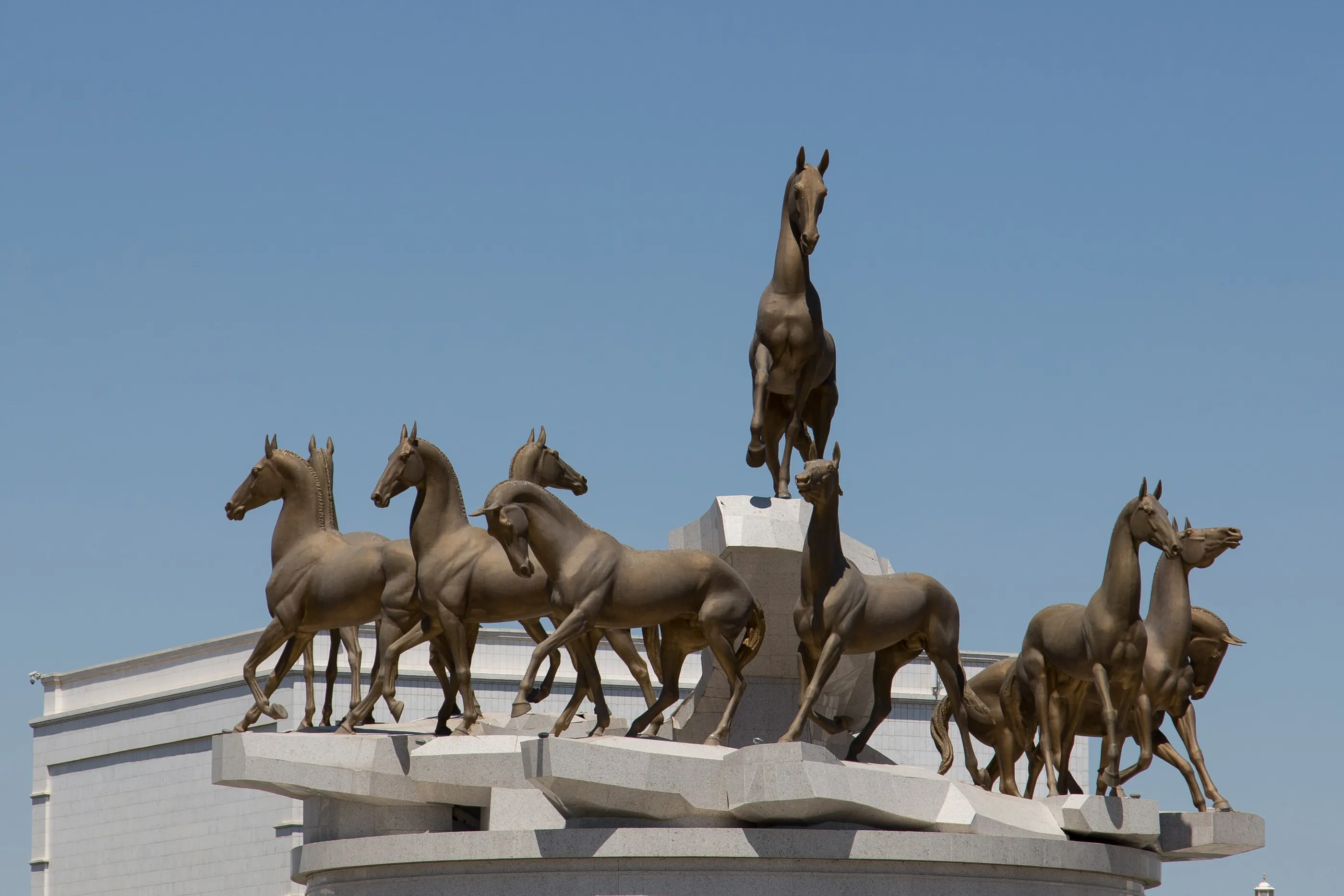
    Ashgabat, a white-marble capital risen from the desert at the foot of the Kopet Dag. Empty avenues, fountains, spotless palaces, the golden statue of Niyazov, the “Turkmenbashi”; even Lenin sits on a carpet-patterned pedestal. A stage-set city, immaculate and almost deserted, where you take pictures under the eye of the police.

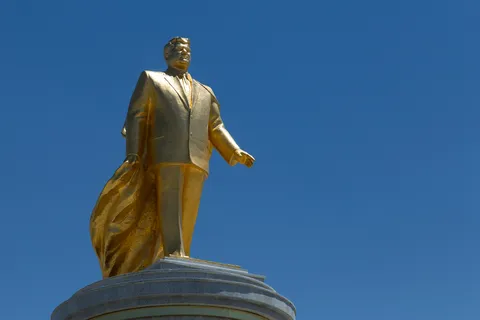
    Mosque and gardens in Ashgabat, Turkmenistan — Nicolas MarincicGolden statue of Niyazov, the Turkmenbashi, Ashgabat, Turkmenistan — Nicolas MarincicLenin statue on a carpet-patterned pedestal, Ashgabat, Turkmenistan — Nicolas MarincicWhite marble building in Ashgabat, Turkmenistan — Nicolas MarincicAkhal-Teke horse monument in Ashgabat, Turkmenistan — Nicolas Marincic
  9. By road↗ 255 km

    Days 17–18

    Darvaza Crater

    Turkmenistan

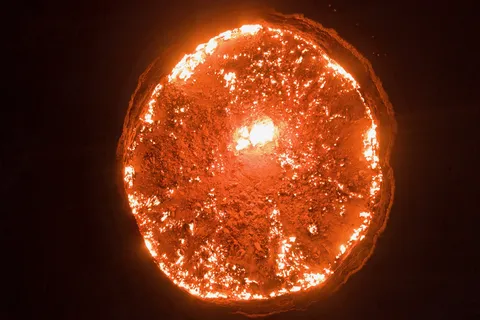
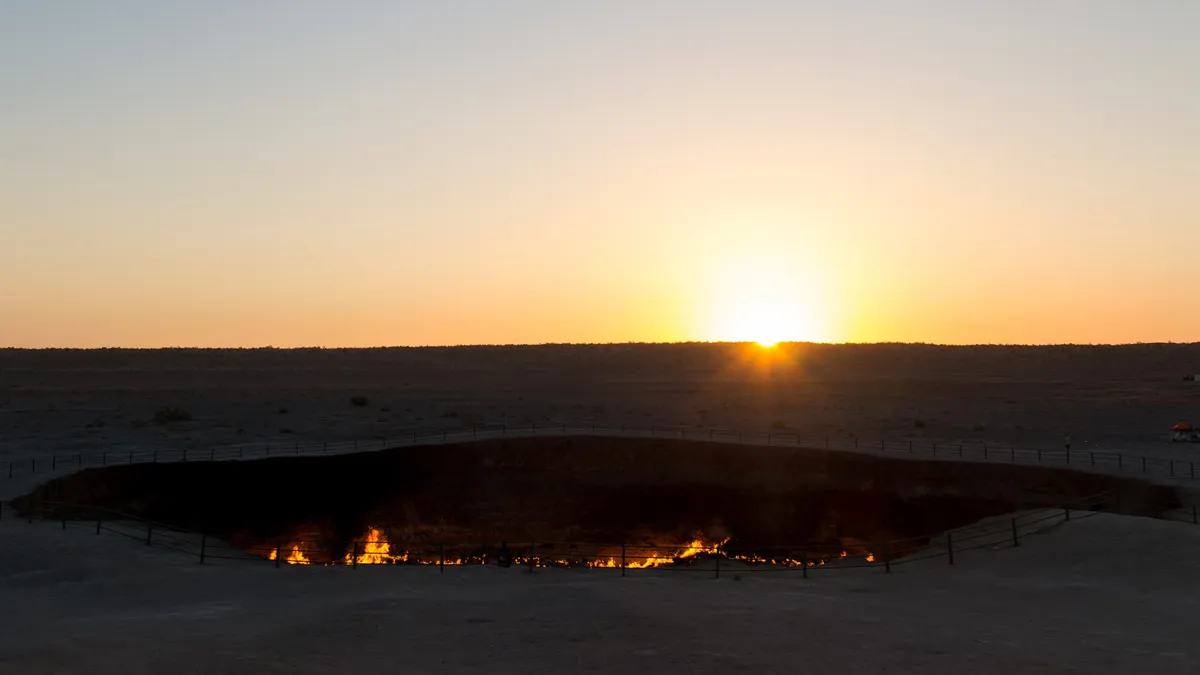
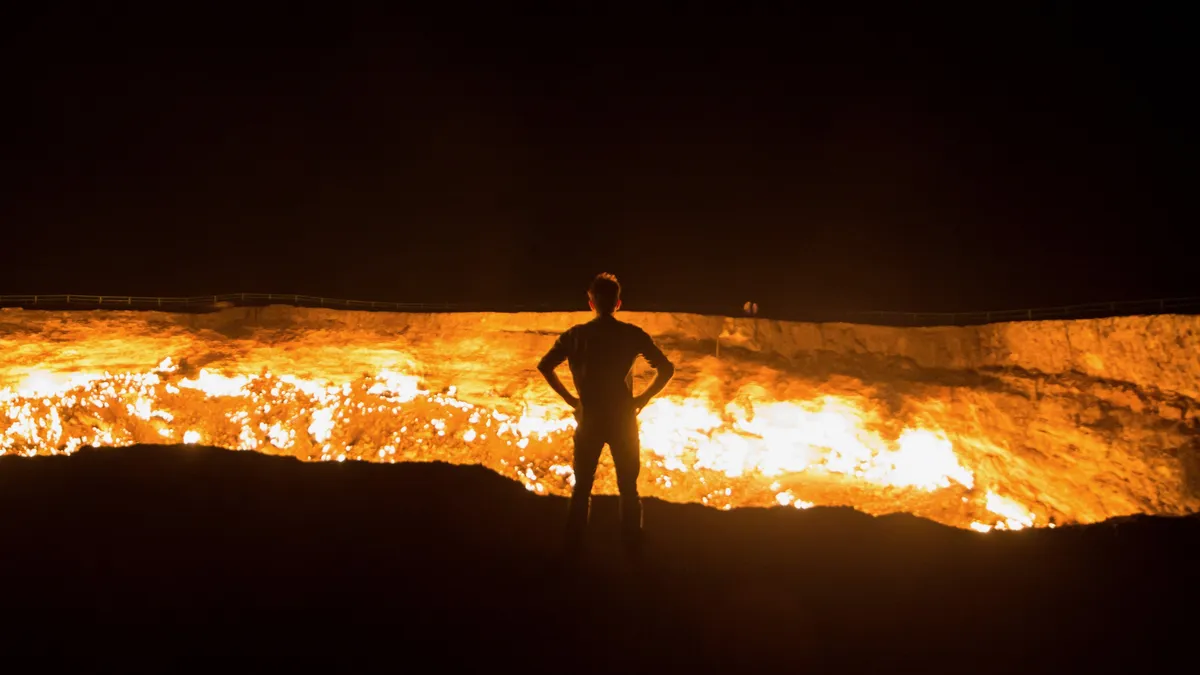
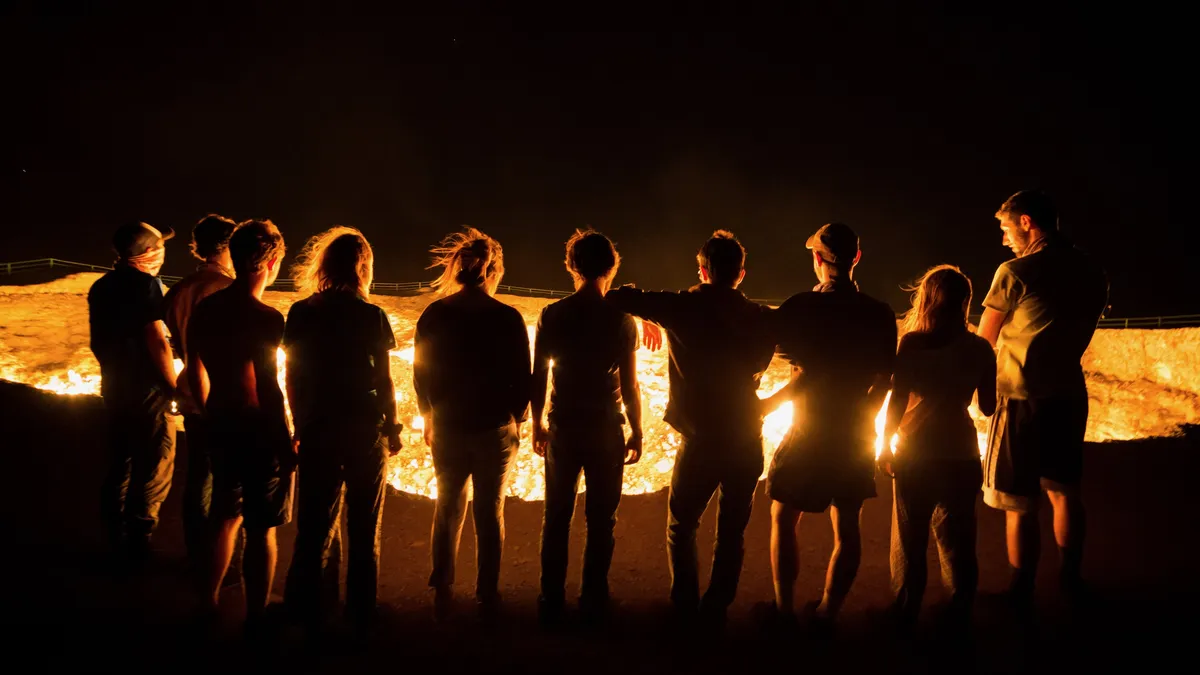
    In the heart of the Karakum, a gas crater has been burning non-stop for decades. From afar at night, only an orange glow above the dunes; at the rim the heat is almost unbearable. We sleep beside it, and sunrise slowly dims the “Gates of Hell”.
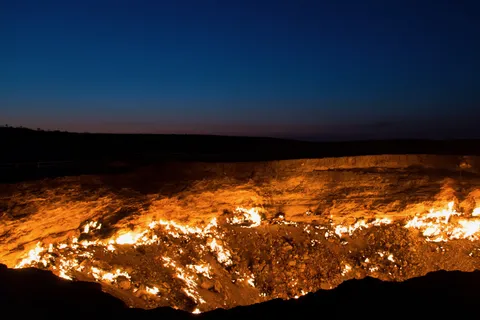
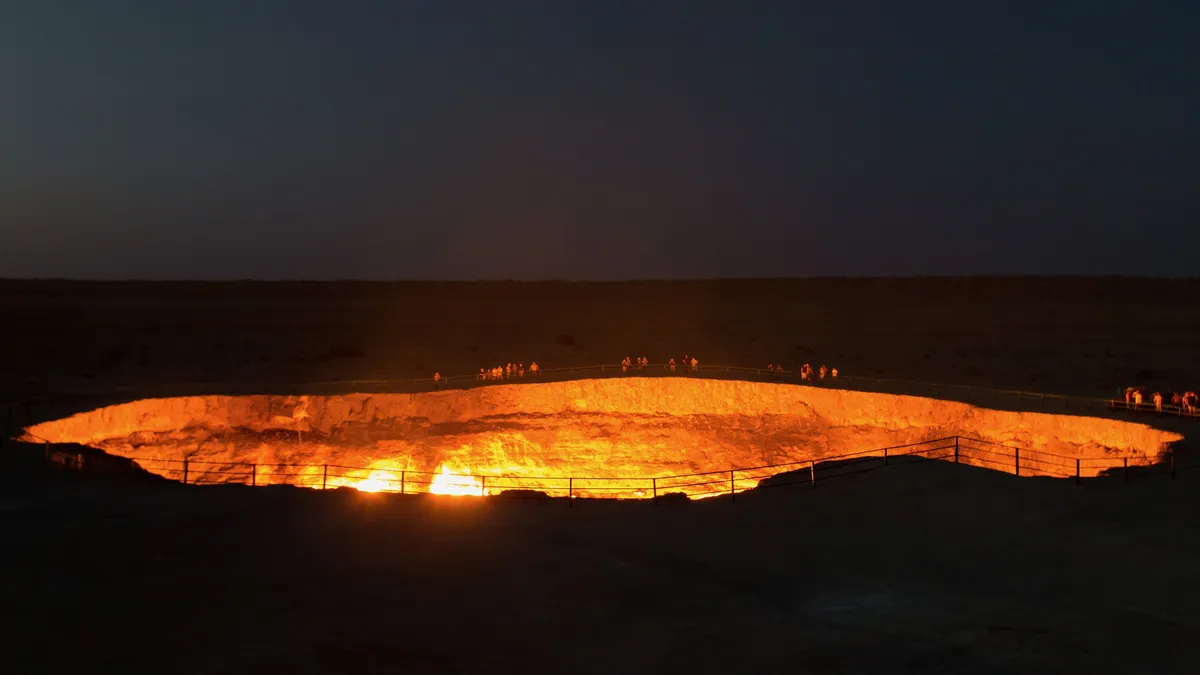
    Darvaza gas crater at blue hour, Turkmenistan — Nicolas MarincicDarvaza crater at night, Turkmenistan — Nicolas MarincicDarvaza gas crater from directly above, Turkmenistan — Nicolas MarincicSunset over the Darvaza crater, Turkmenistan — Nicolas MarincicLone silhouette against the burning Darvaza crater, Turkmenistan — Nicolas MarincicSilhouettes at the rim of the Darvaza crater, Turkmenistan — Nicolas MarincicDarvaza gas crater at dawn, Turkmenistan — Nicolas Marincic
  10. By road↗ 237 km

    Day 18

    Konye-Urgench

    Turkmenistan

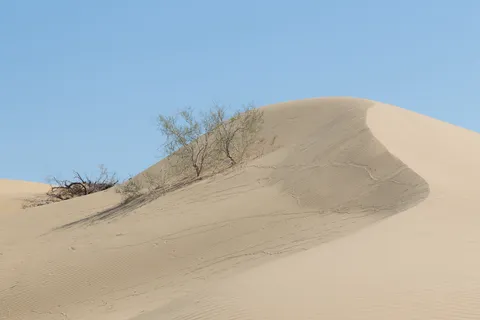
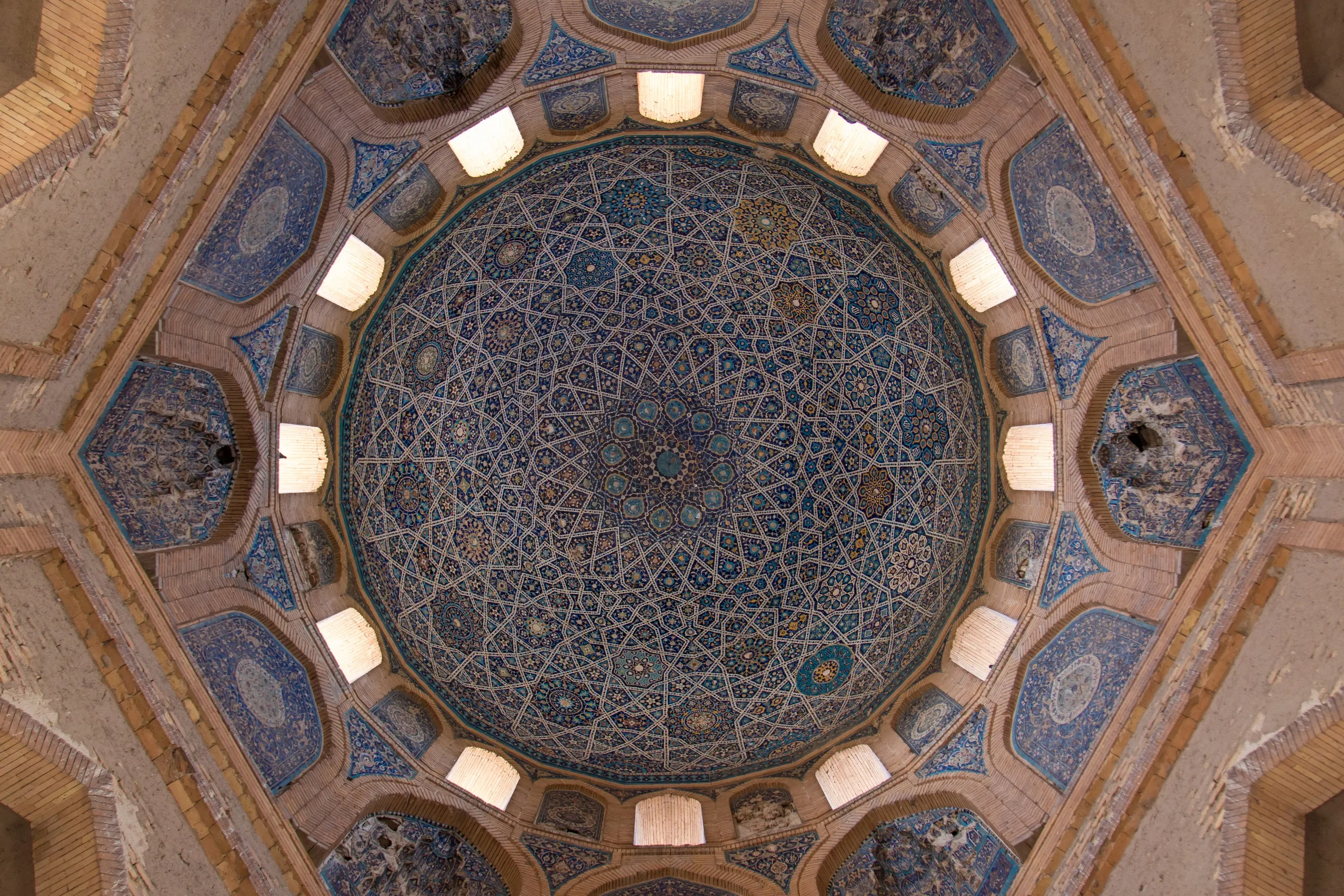
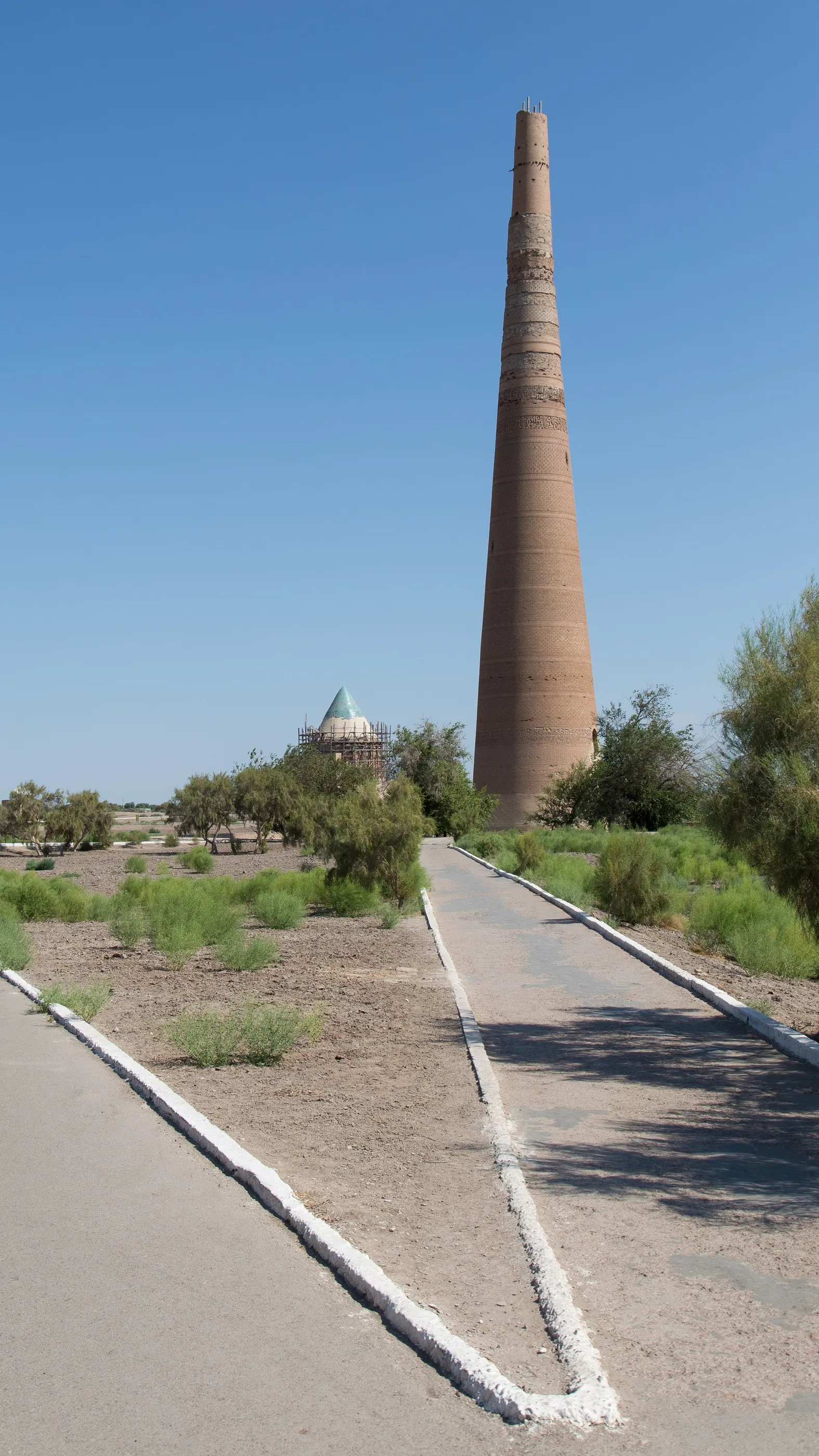
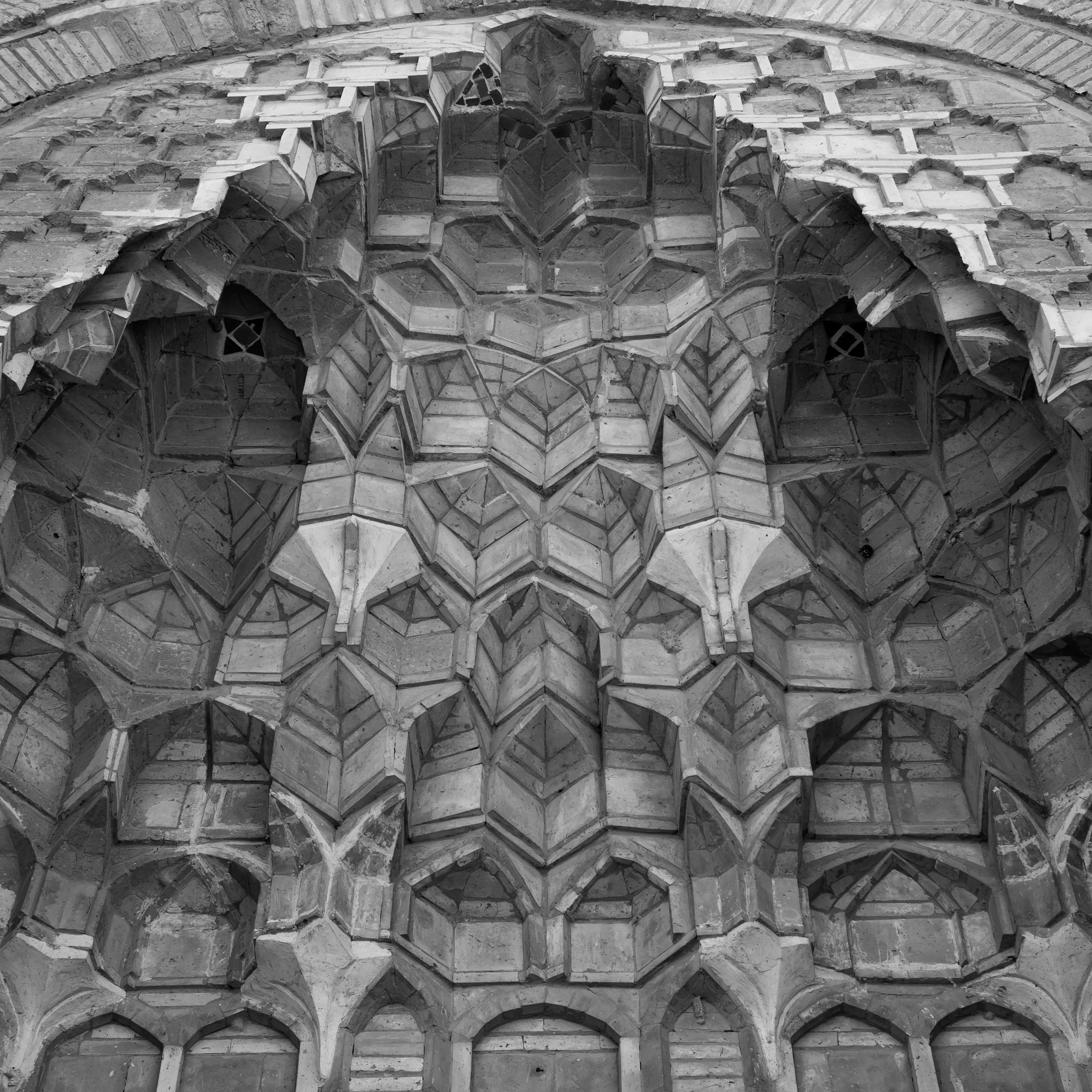
    To the north, near the Uzbek border, Konye-Urgench was the capital of Khorezm until Genghis Khan and then Tamerlane razed it. A few monuments remain, scattered across the steppe: the Kutlug Timur minaret, some sixty metres high, and the mausoleum of Turabek Khanum, whose dome unfolds a mosaic of 365 facets, one for each day of the year.
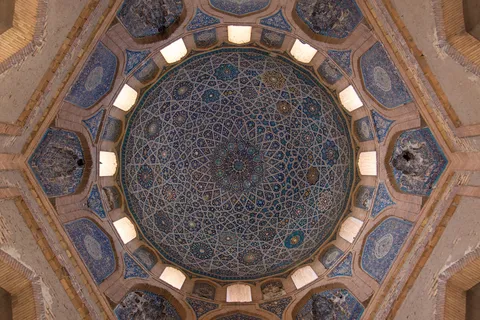
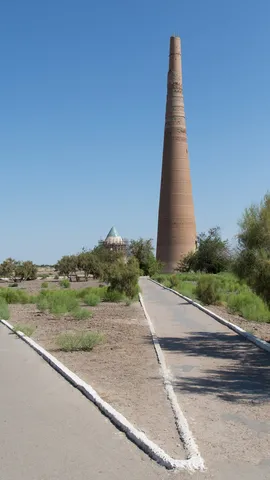
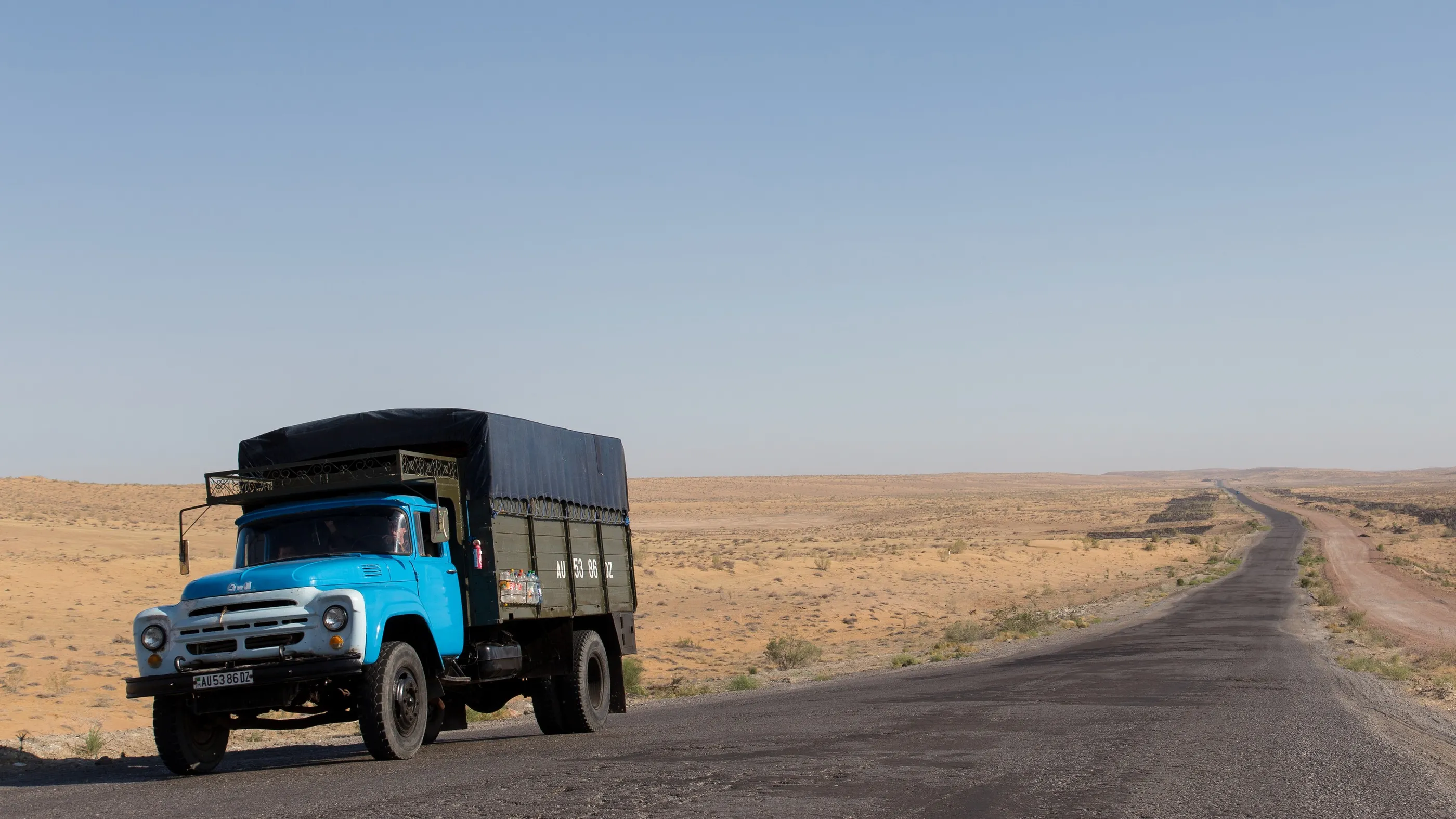
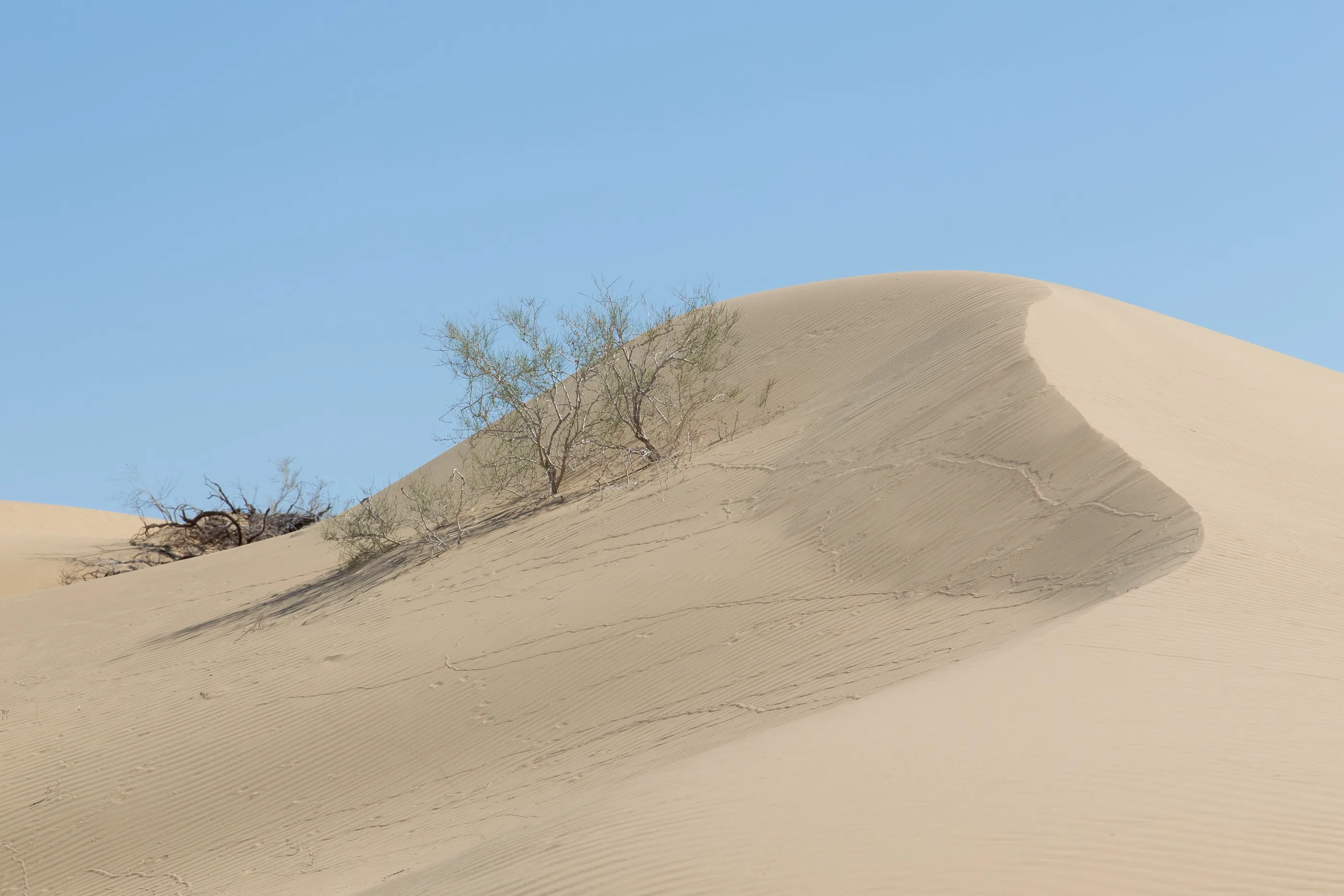
    Dome mosaic, Turabek Khanum mausoleum, Konye-Urgench, Turkmenistan — Nicolas MarincicKutlug Timur minaret, Konye-Urgench, Turkmenistan — Nicolas MarincicMuqarnas vault, Konye-Urgench, Turkmenistan — Nicolas MarincicZIL truck on a desert road, Turkmenistan — Nicolas MarincicSand dune and shrubs in the Karakum, Turkmenistan — Nicolas Marincic
  11. By road↗ 162 km

    Days 19–20

    Moynaq and the Aral Sea

    Uzbekistan

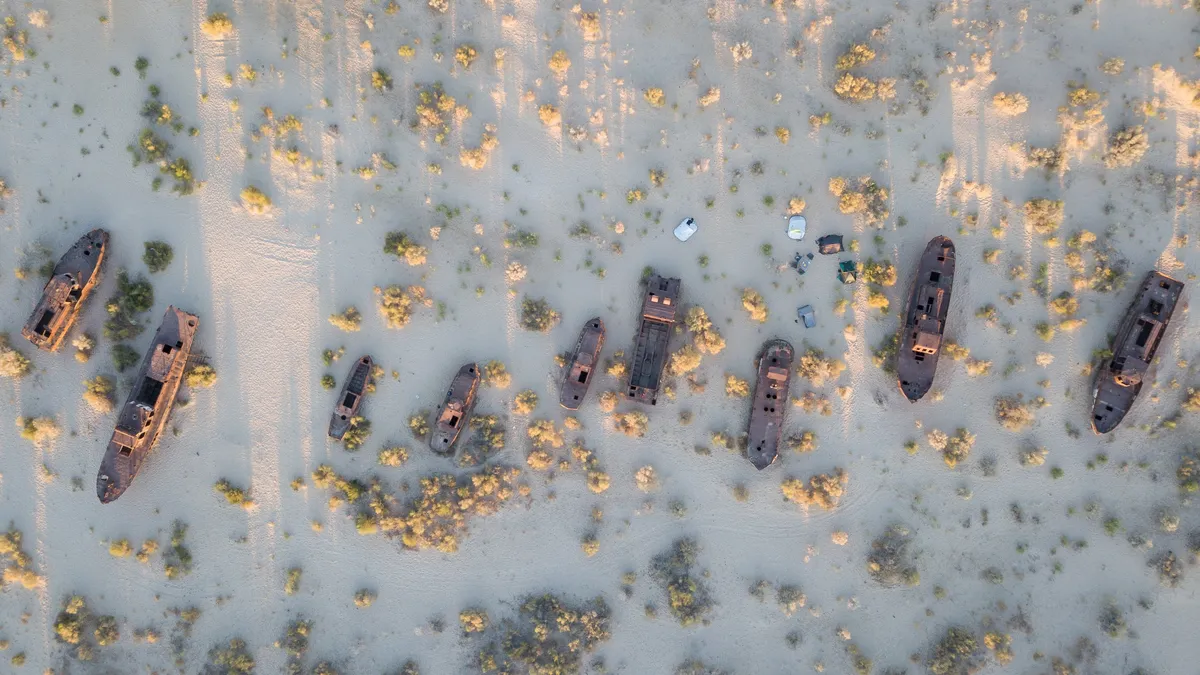
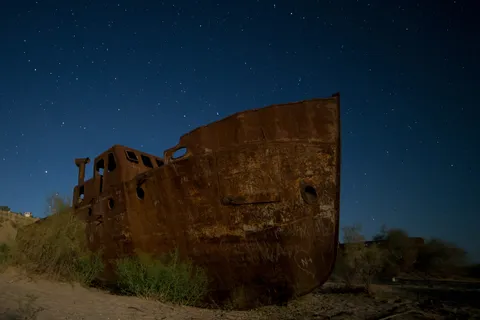
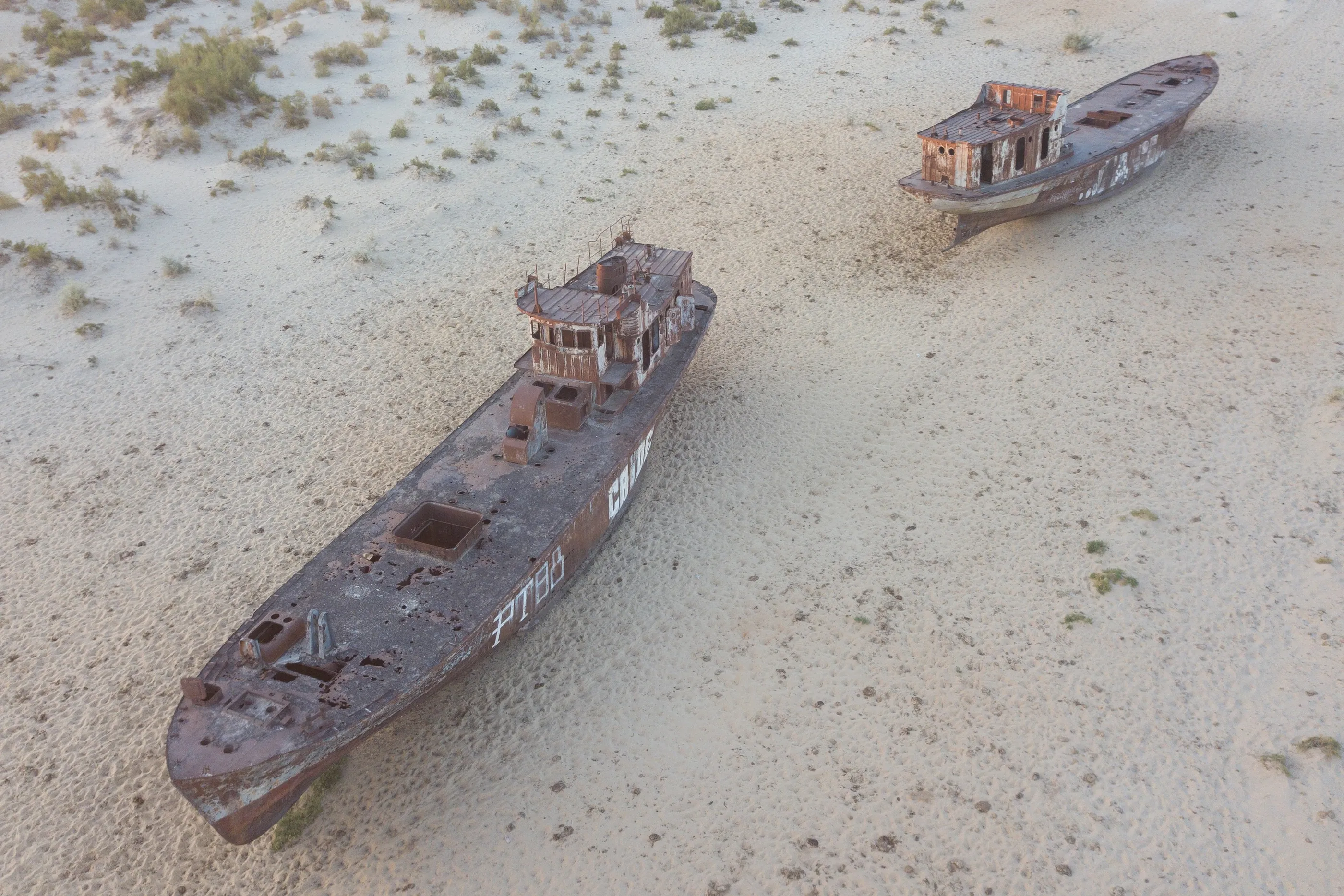
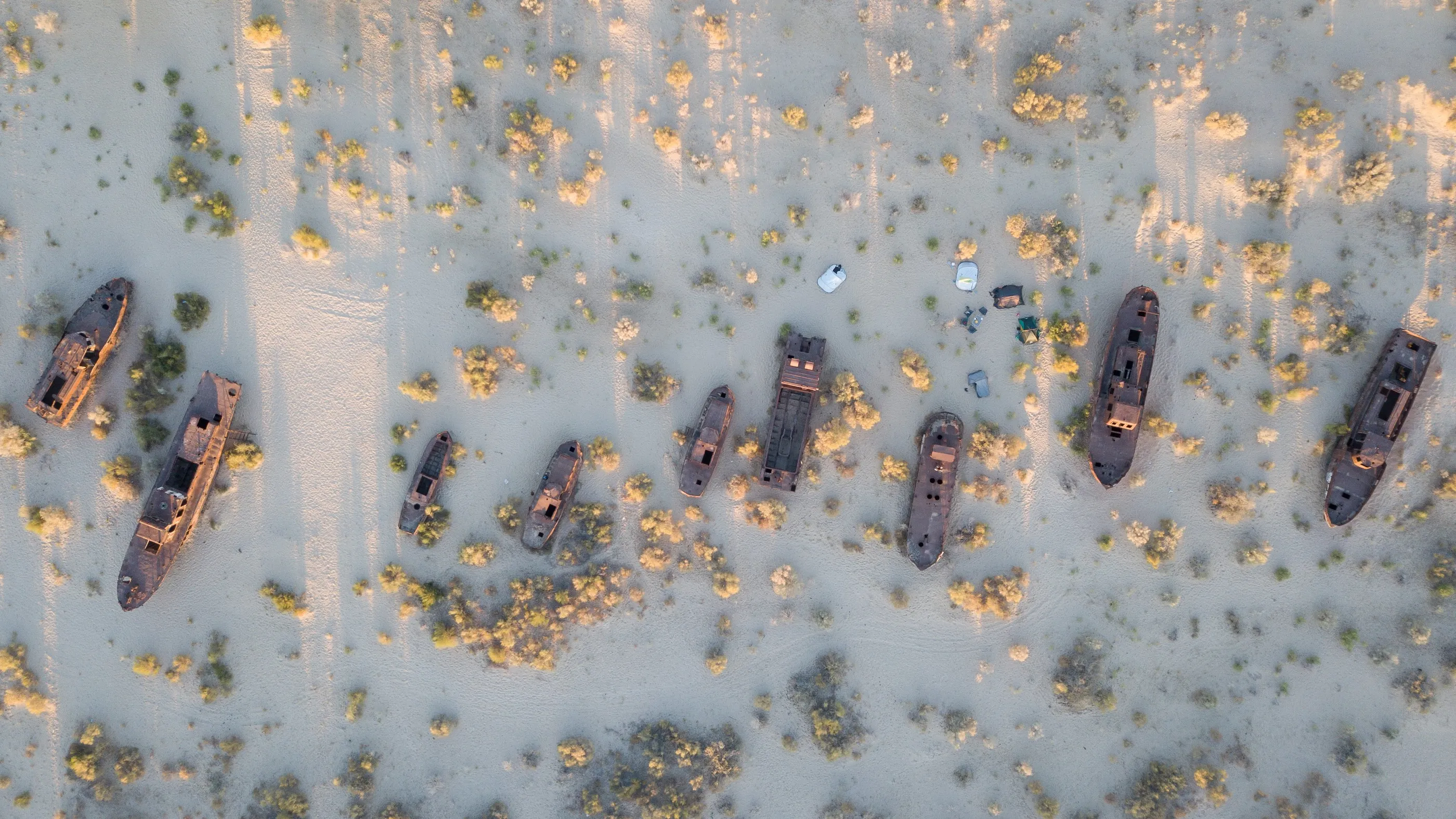
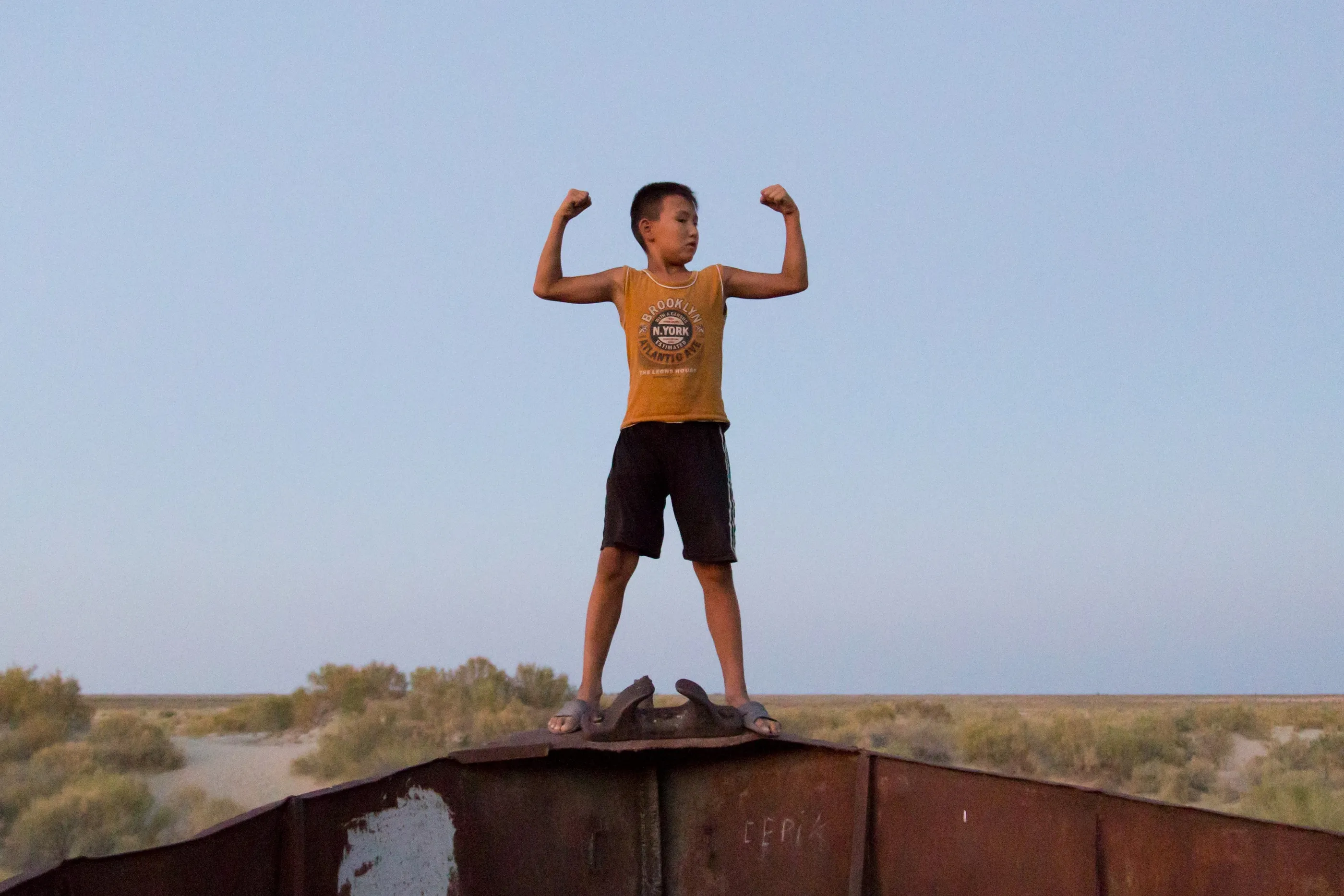
    Moynaq was a fishing port. The Aral Sea has retreated more than a hundred kilometres, and the trawlers now rust in the sand among the scrub. At night, under the Milky Way, this ship graveyard becomes one of the most striking landscapes of the whole journey.

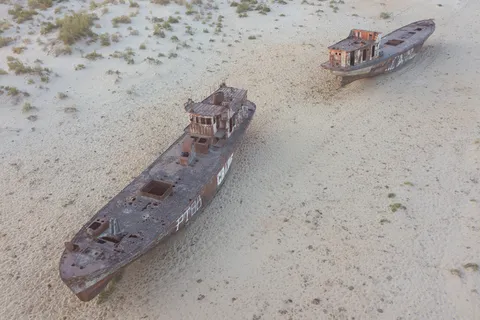
    Milky Way over the Moynaq ship graveyard, Uzbekistan — Nicolas MarincicMoynaq ship graveyard, Aral Sea, Uzbekistan — Nicolas MarincicMoynaq ship graveyard from above, Uzbekistan — Nicolas MarincicRusting shipwreck under the stars, Moynaq, Uzbekistan — Nicolas MarincicShip skeleton in the dried-up Aral Sea, Moynaq, Uzbekistan — Nicolas MarincicBoy standing on a wreck in Moynaq, Uzbekistan — Nicolas Marincic
  12. By road↗ 288 km

    Days 20–21

    Khiva

    Uzbekistan

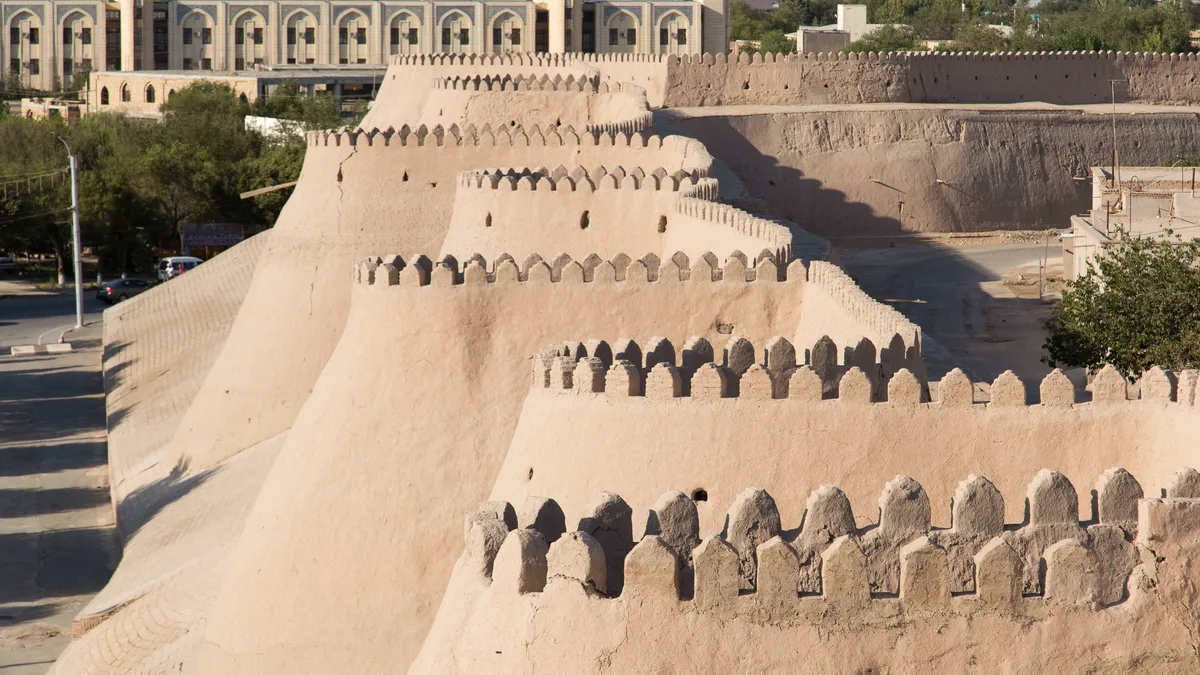
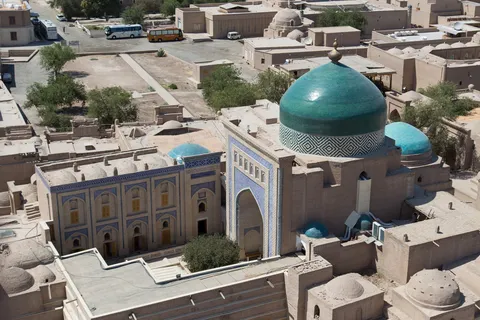
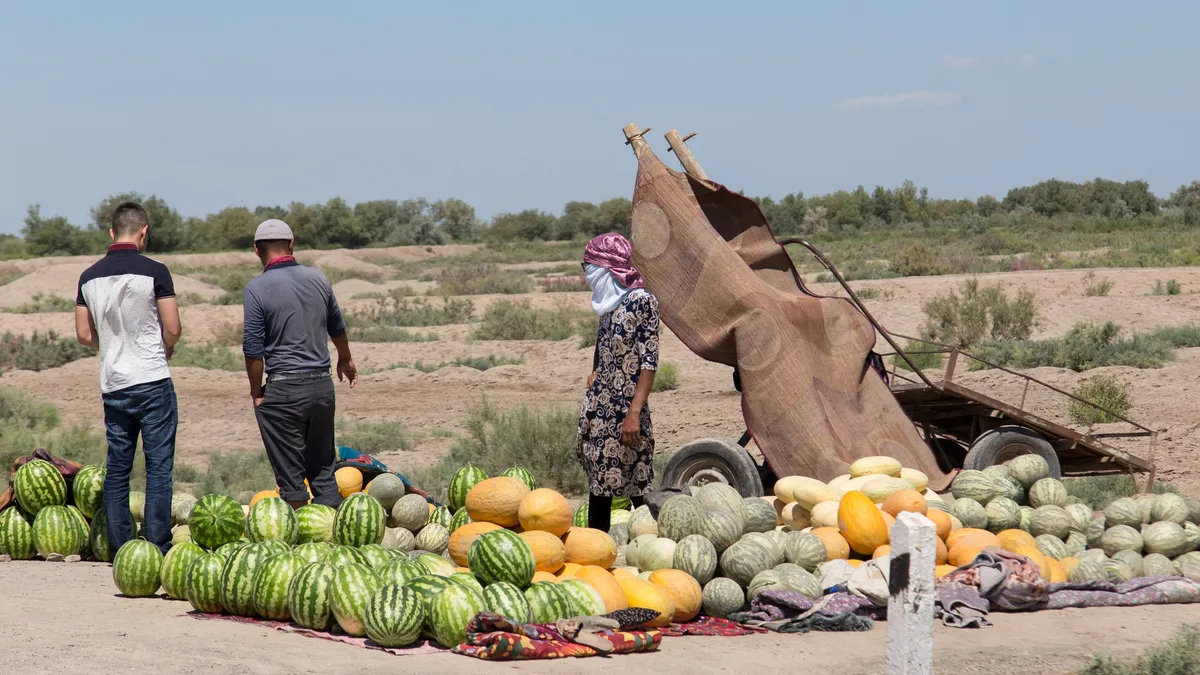
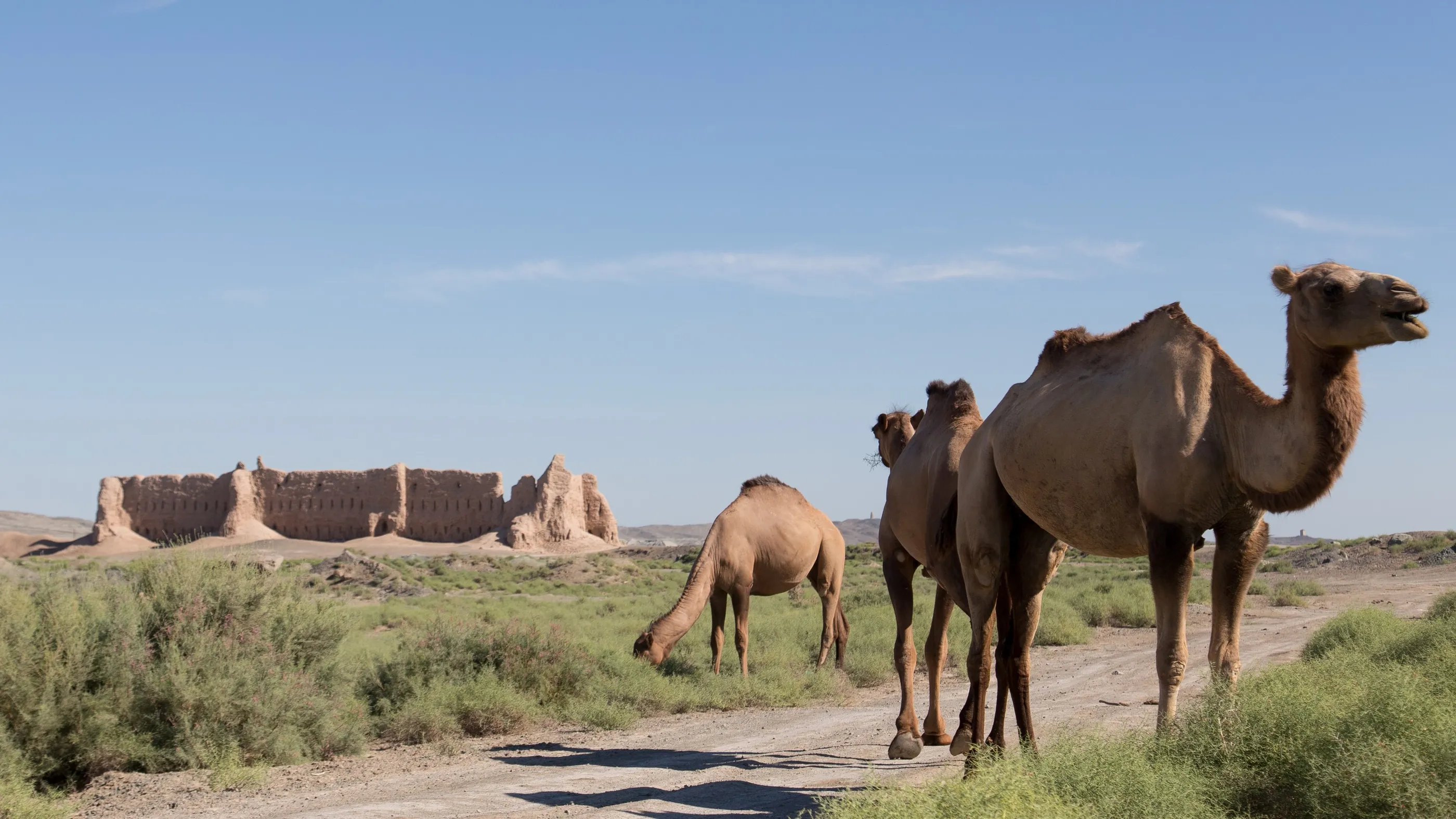
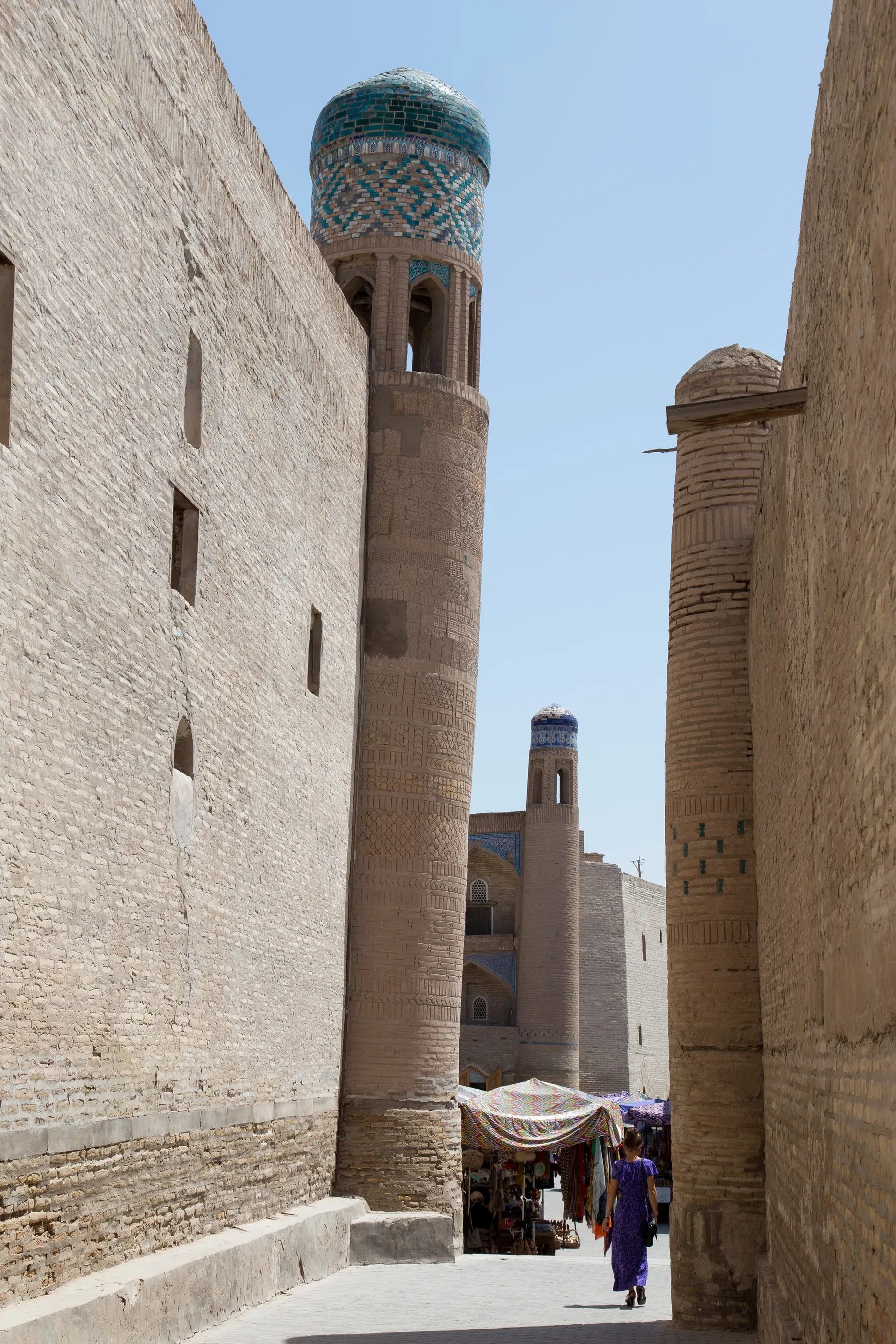
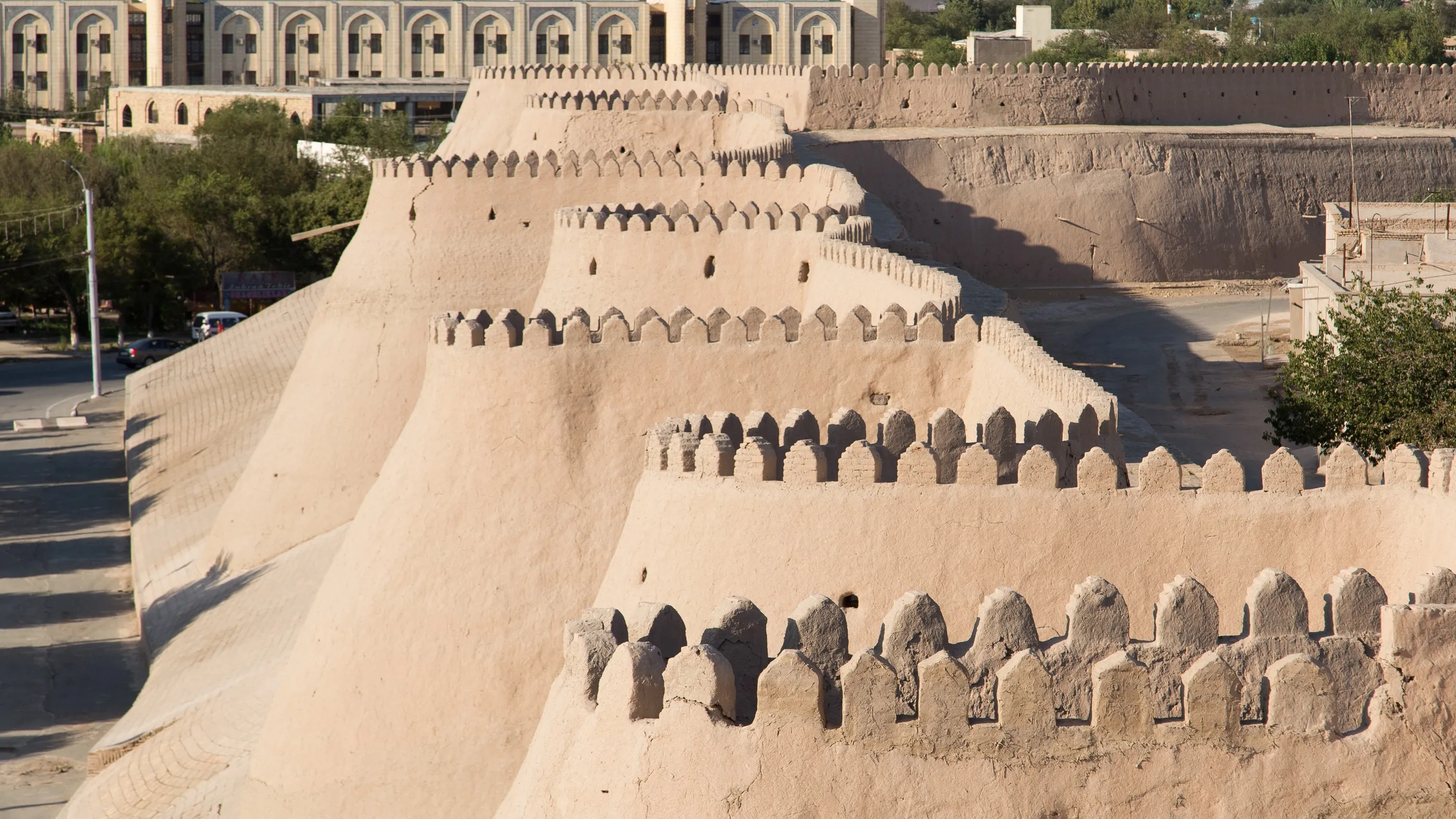
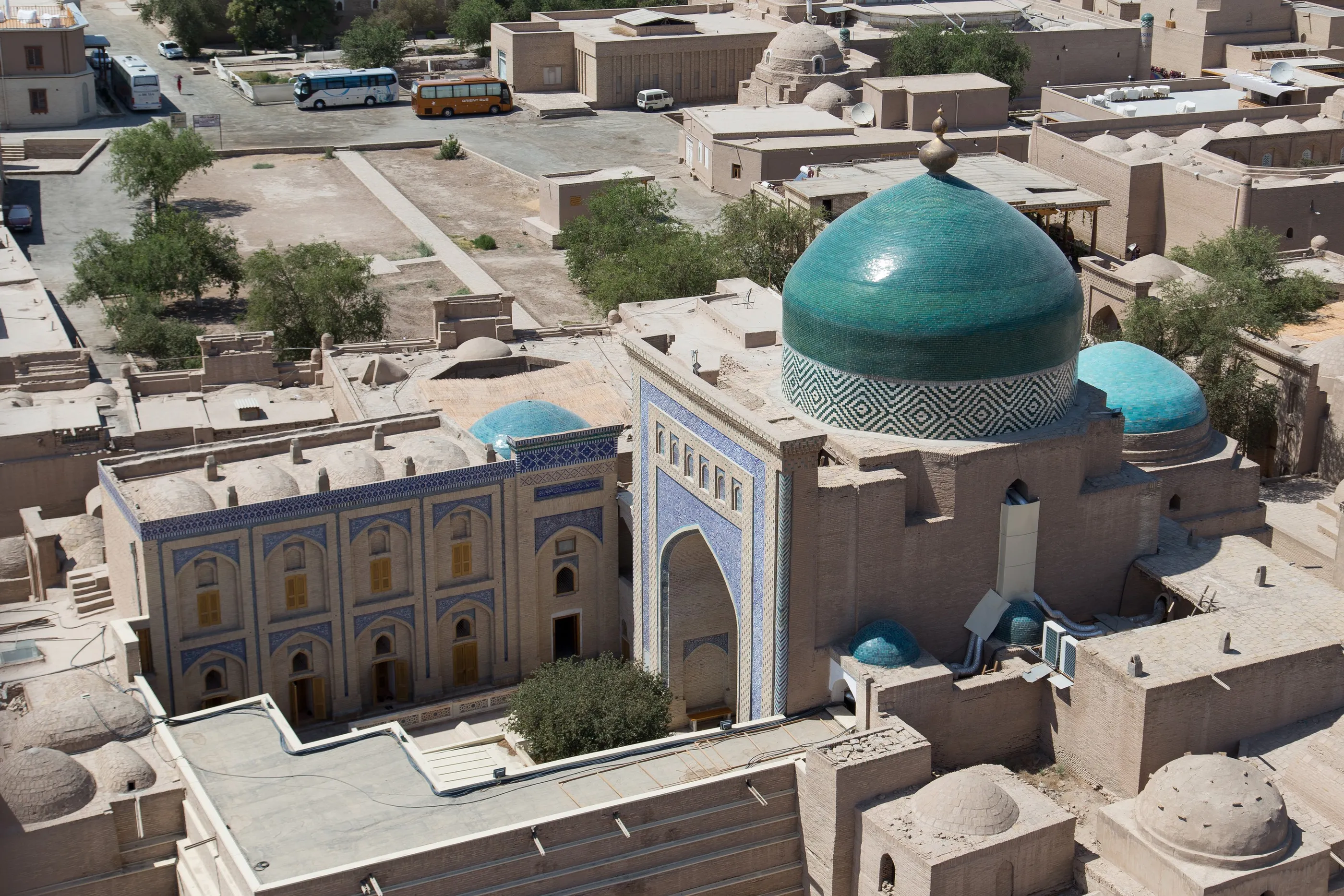
    On the road through Khorezm: mud-brick desert fortresses, donkey carts and mountains of melons. Then Khiva, a museum-city enclosed in clay ramparts, where the unfinished Kalta Minor minaret gleams with turquoise tiles.
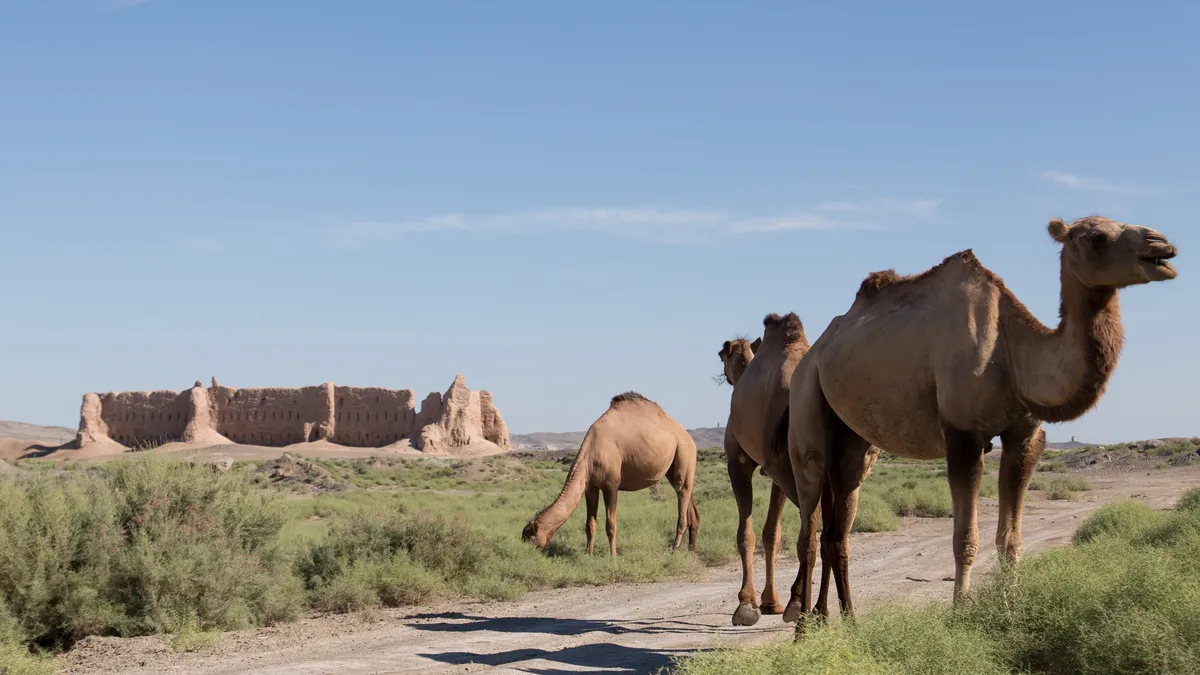
    Camels before a Khorezm desert fortress, Uzbekistan — Nicolas MarincicAlley and minaret in Khiva, Uzbekistan — Nicolas MarincicForest of carved columns, Juma Mosque, Khiva, Uzbekistan — Nicolas MarincicWalls of Itchan Kala, Khiva, Uzbekistan — Nicolas MarincicKhiva and the dome of the Pahlavan Mahmud mausoleum, Uzbekistan — Nicolas MarincicRoadside melon and watermelon sellers, Uzbekistan — Nicolas Marincic
  13. By road↗ 387 km

    Day 22

    Bukhara

    Uzbekistan

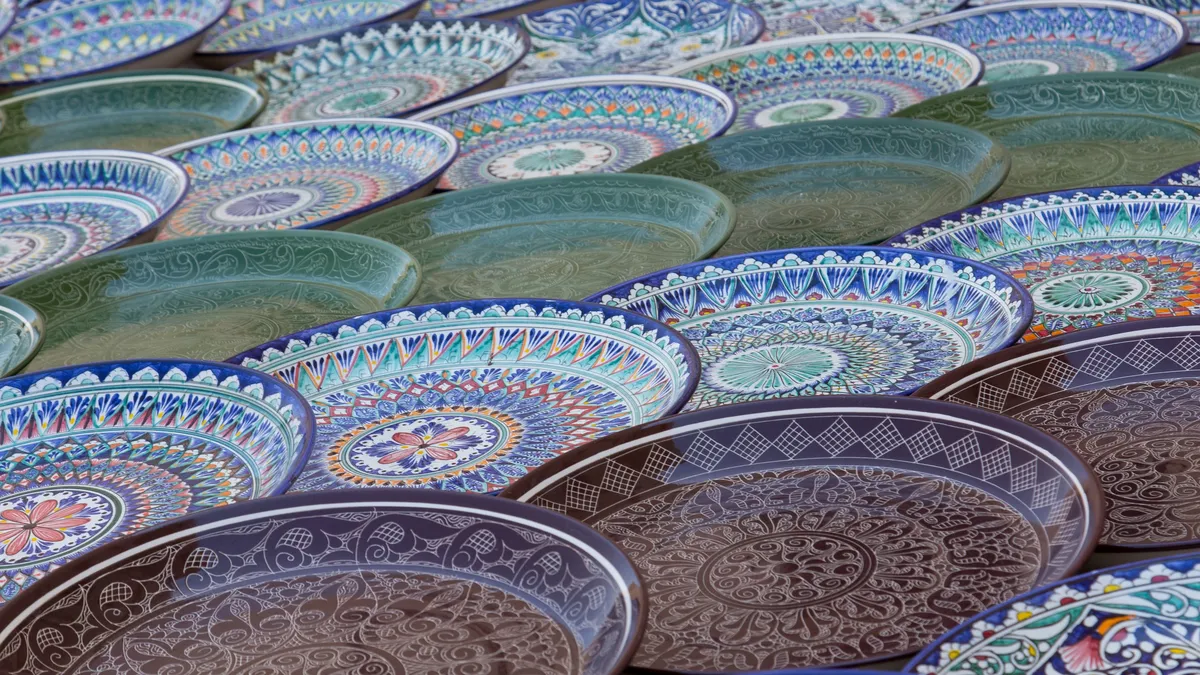
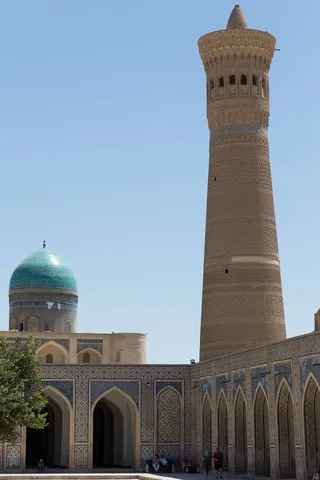
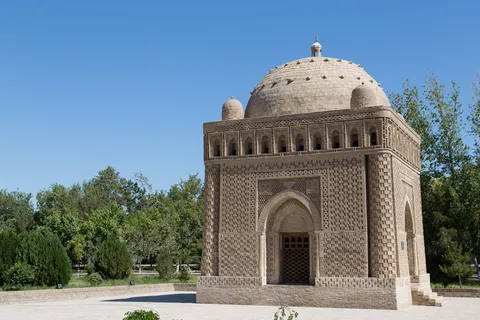
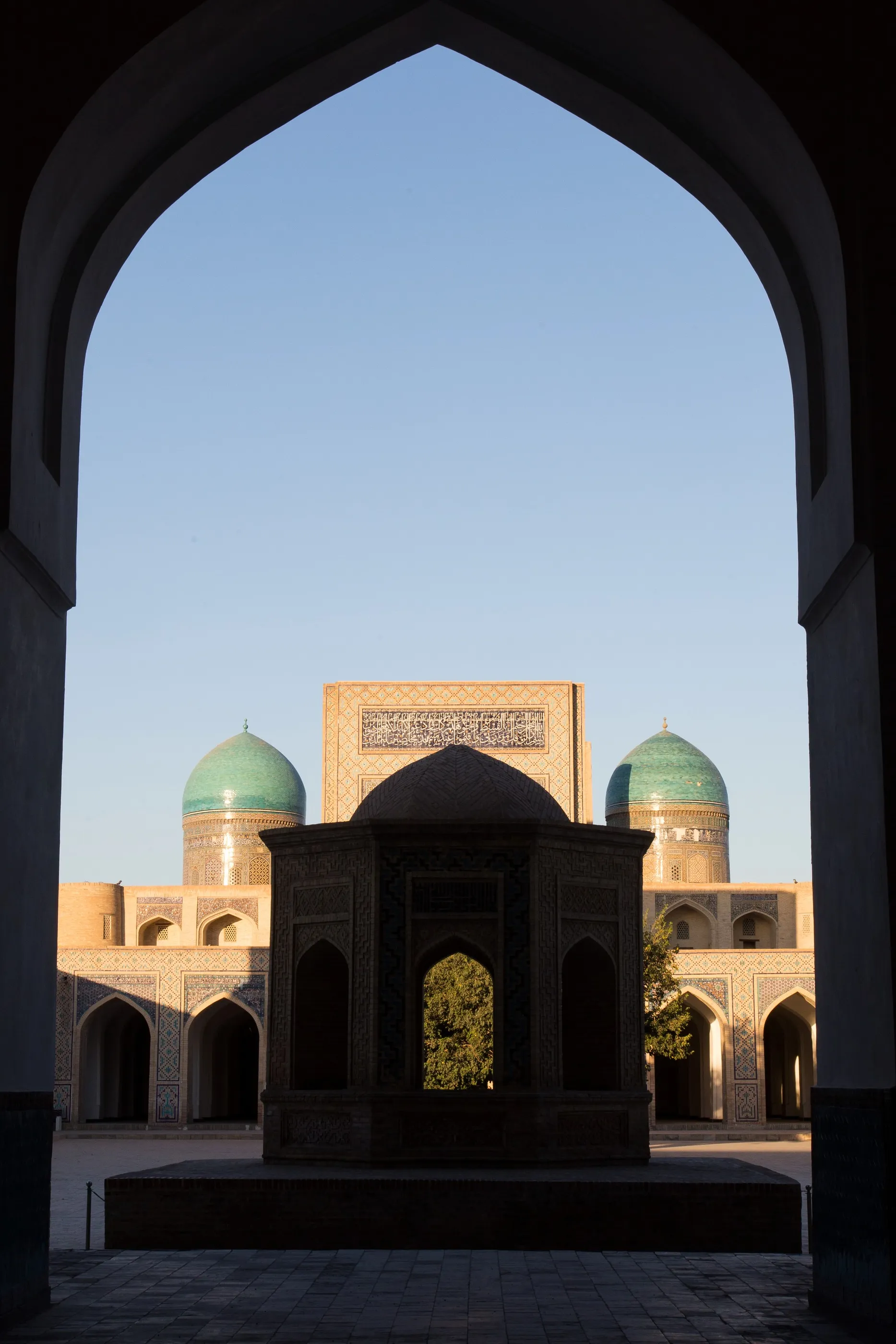
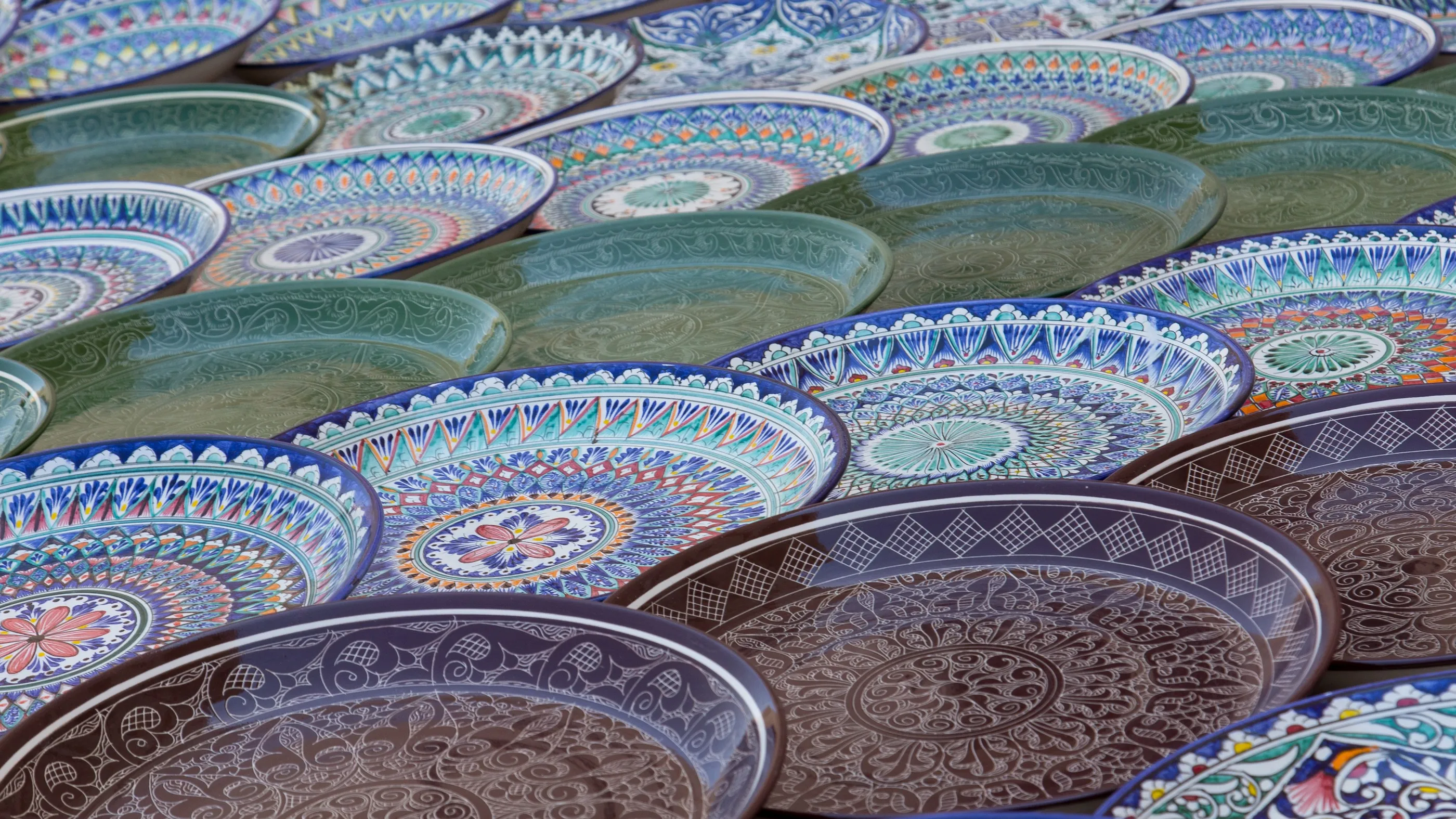
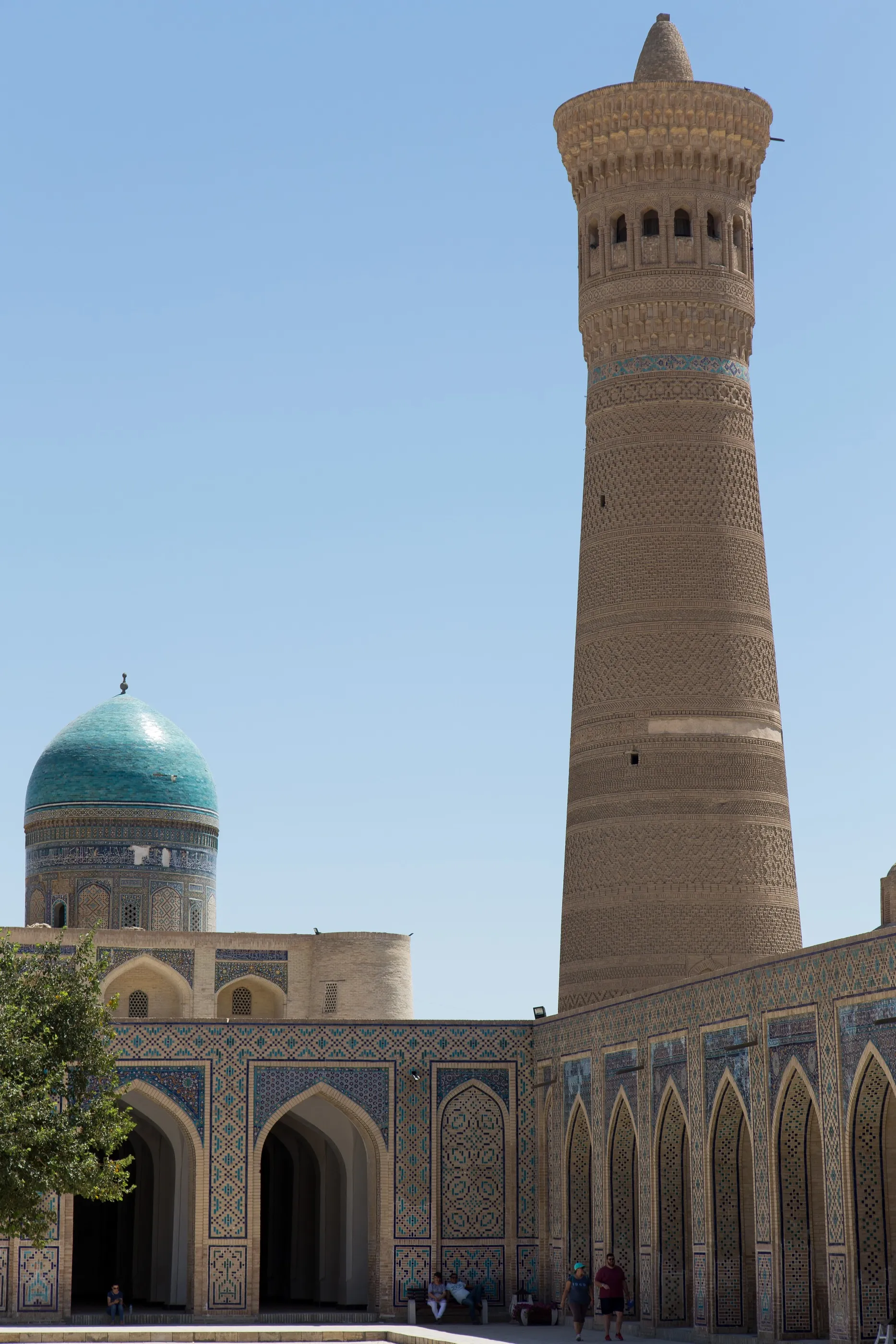
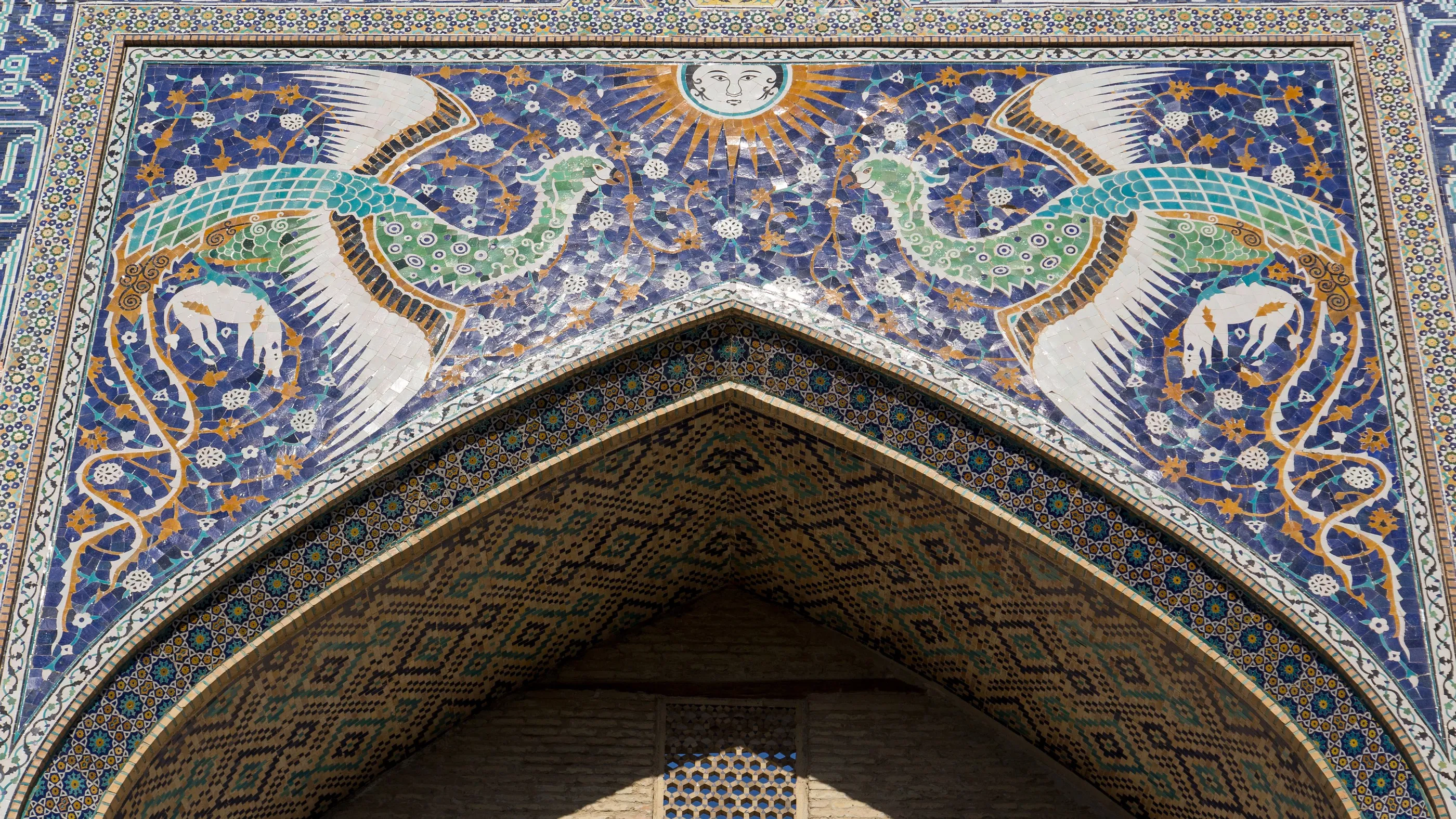
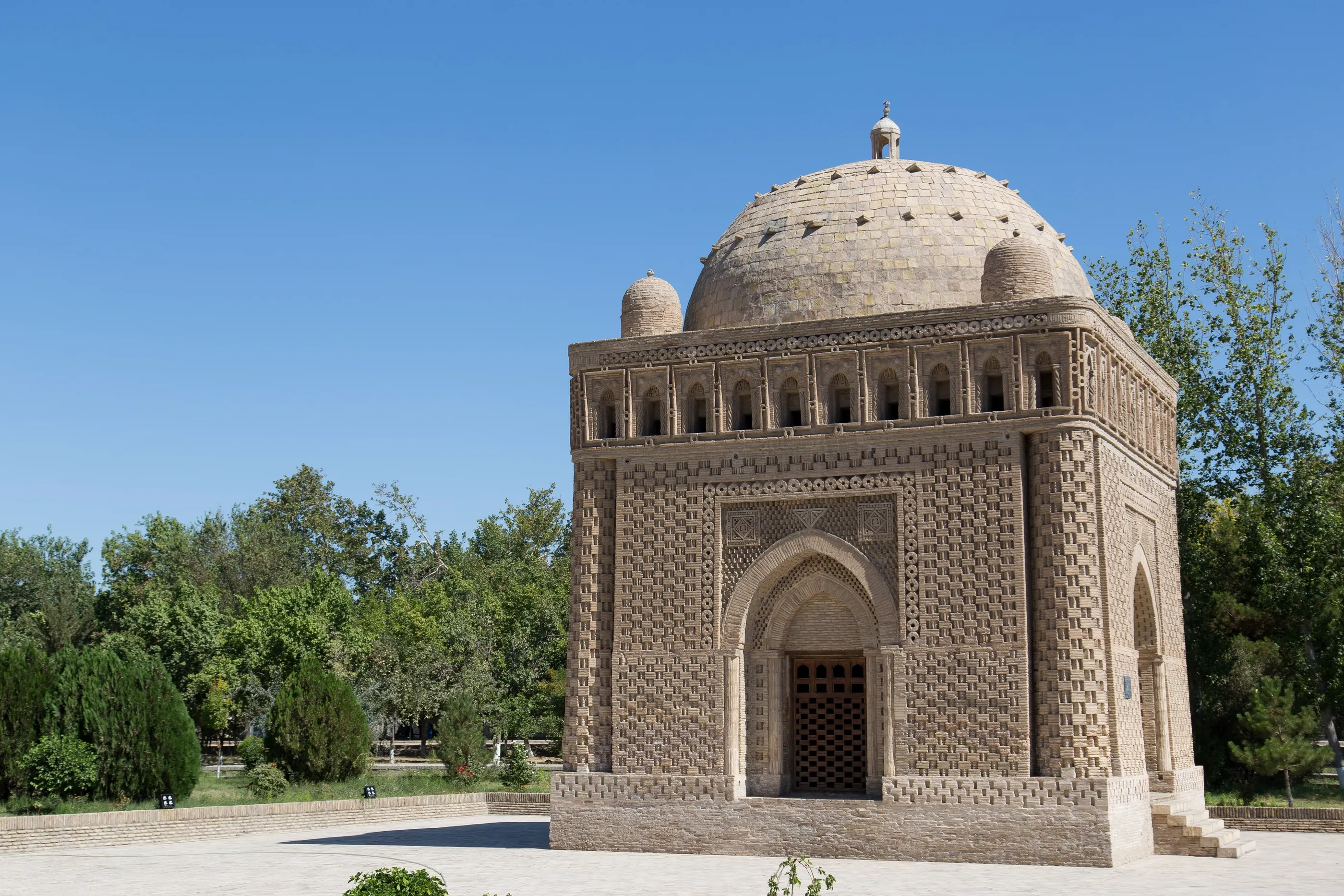
    Holy Bukhara, its madrasas and trading domes where caravans once crossed paths. In the afternoon heat, stalls of blue ceramics line up in the shade of the great portals.
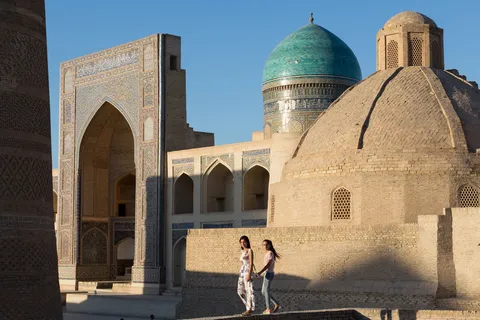
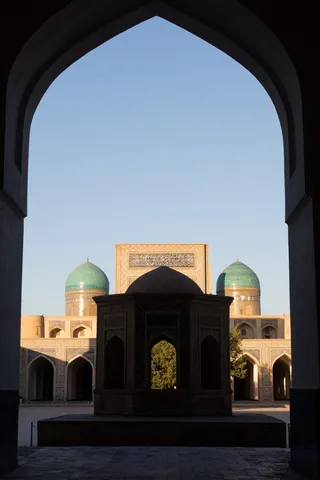
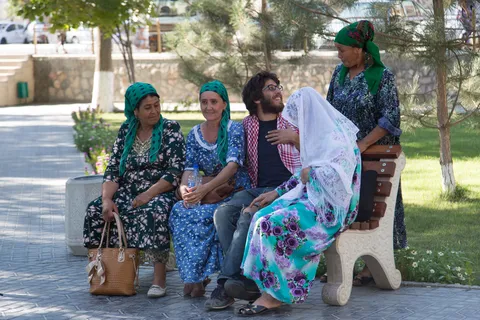
    Domes and madrasa in Bukhara, Uzbekistan — Nicolas MarincicPo-i-Kalyan madrasa framed by an arch at golden hour, Bukhara, Uzbekistan — Nicolas MarincicHand-painted ceramic plates, Uzbekistan — Nicolas MarincicKalon minaret and mosque courtyard, Bukhara, Uzbekistan — Nicolas MarincicSimurghs on the Nadir Divan-Begi madrasa portal, Bukhara, Uzbekistan — Nicolas MarincicSamanid mausoleum, Bukhara, Uzbekistan — Nicolas MarincicWomen in traditional dress on a bench, Uzbekistan — Nicolas Marincic
  14. By train↗ 218 km

    Days 23–24

    Samarkand

    Uzbekistan

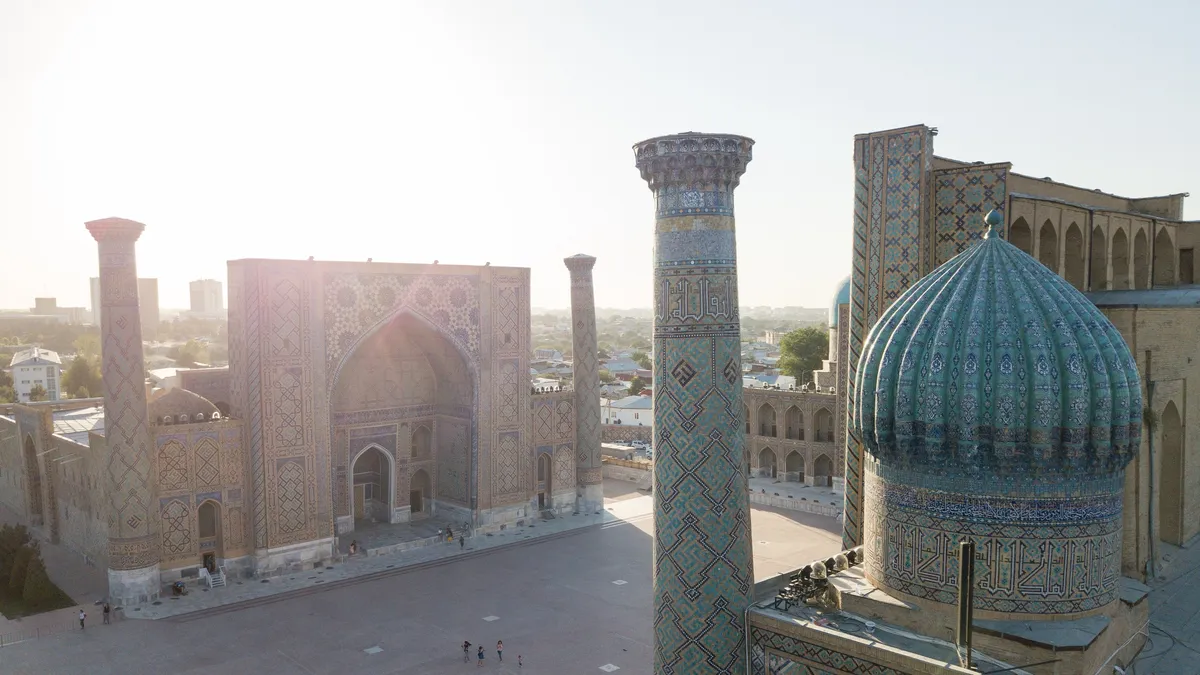
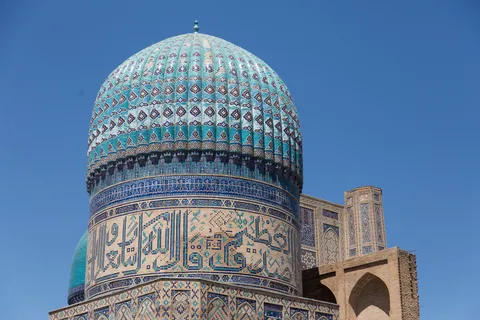
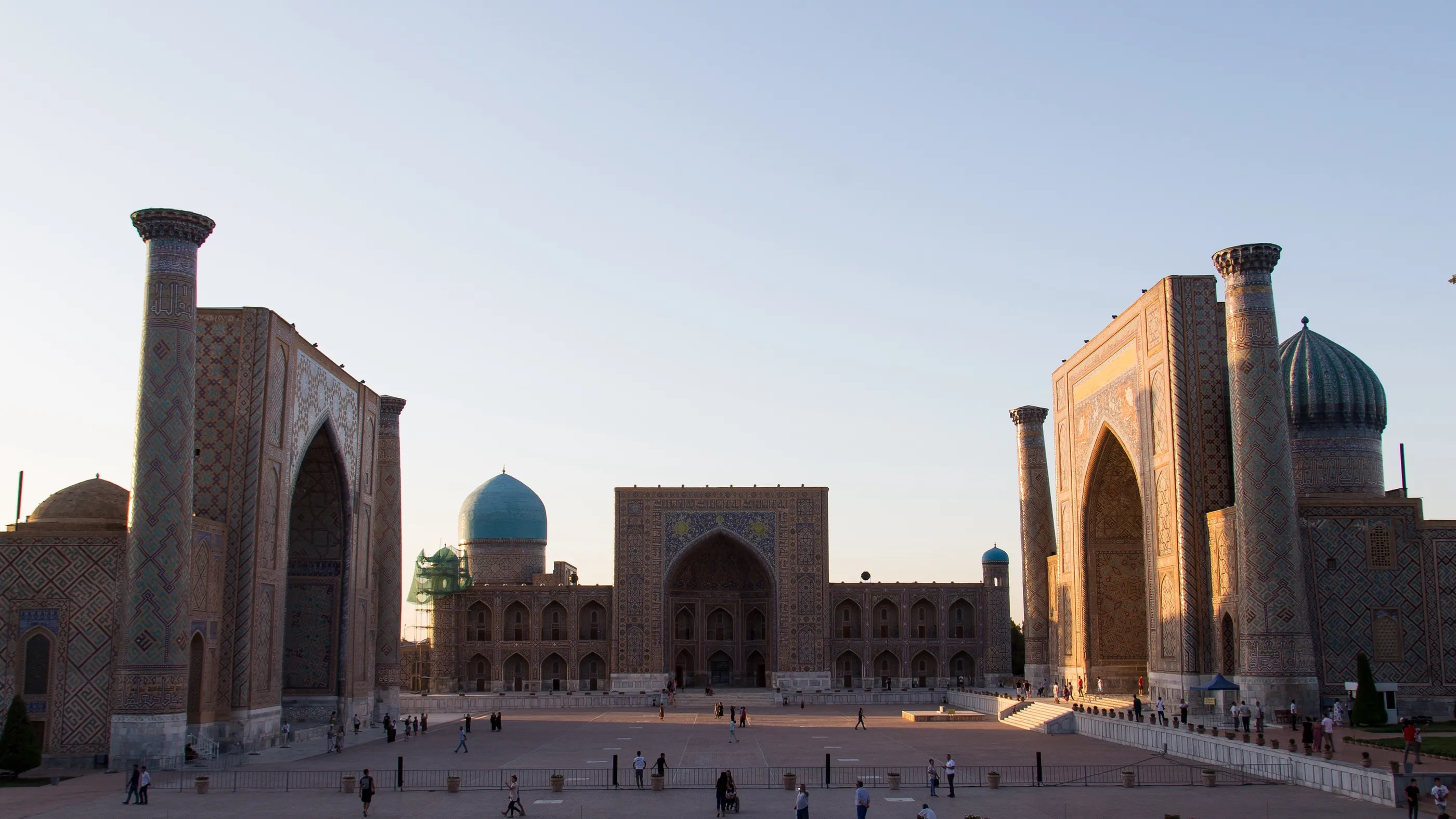
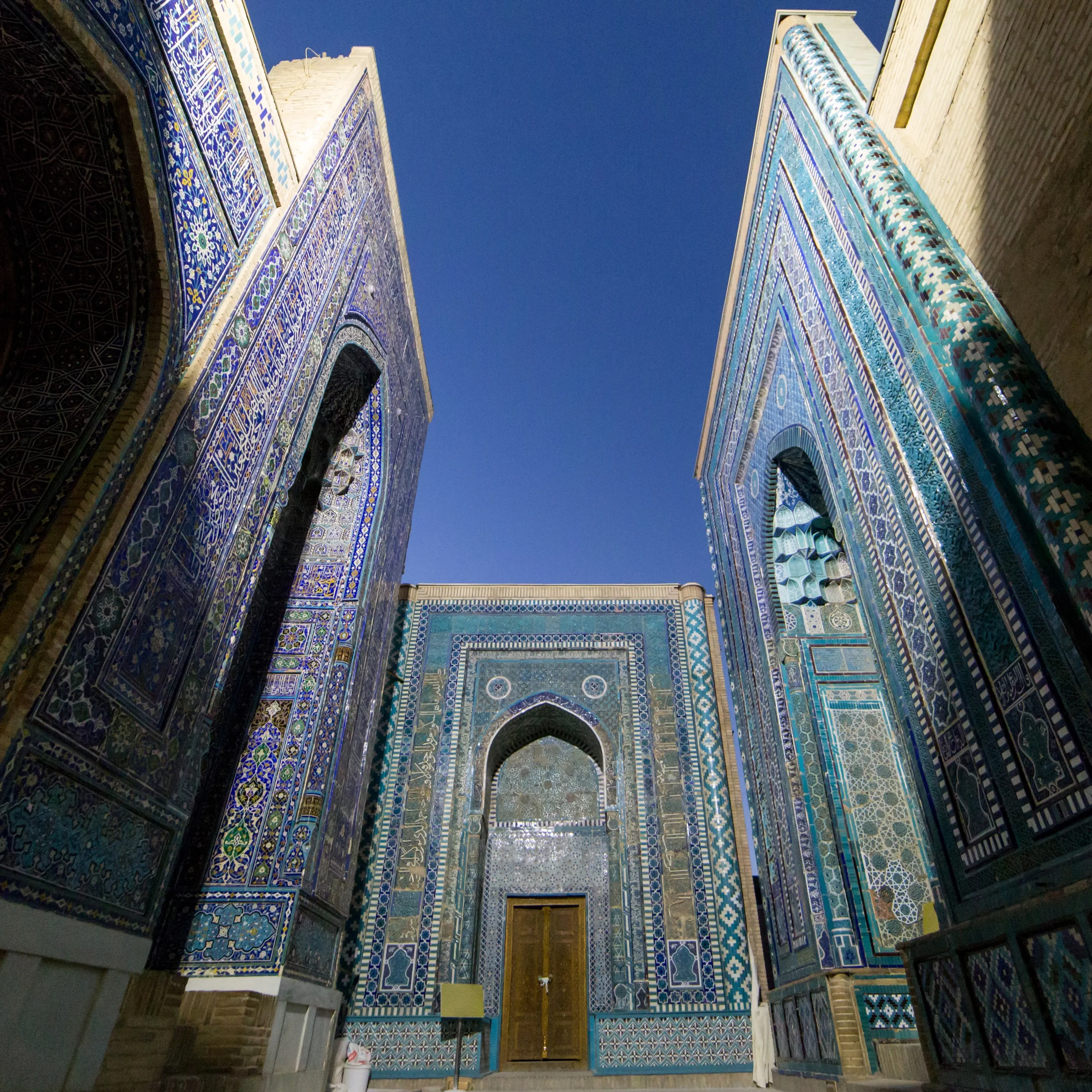
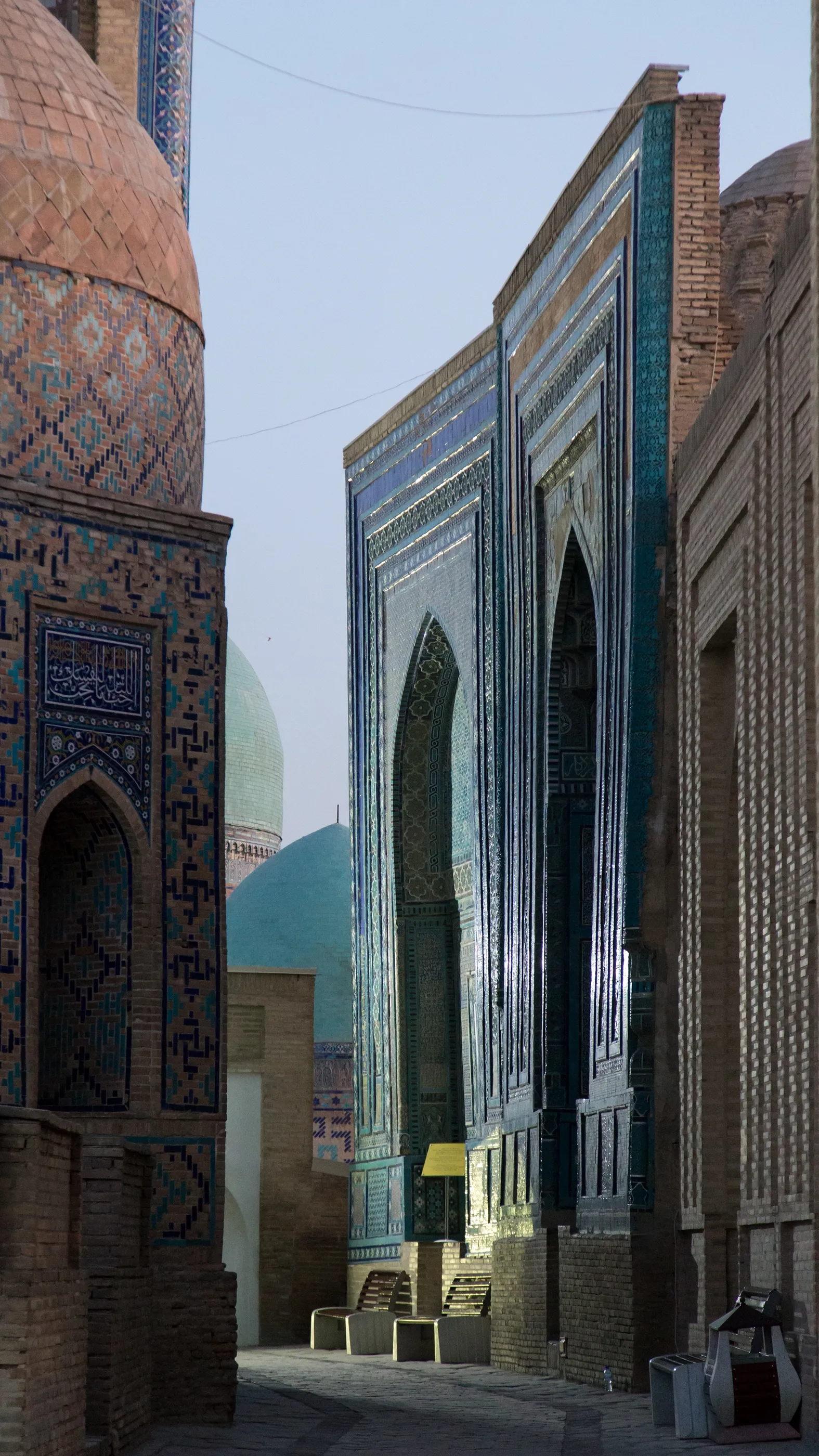
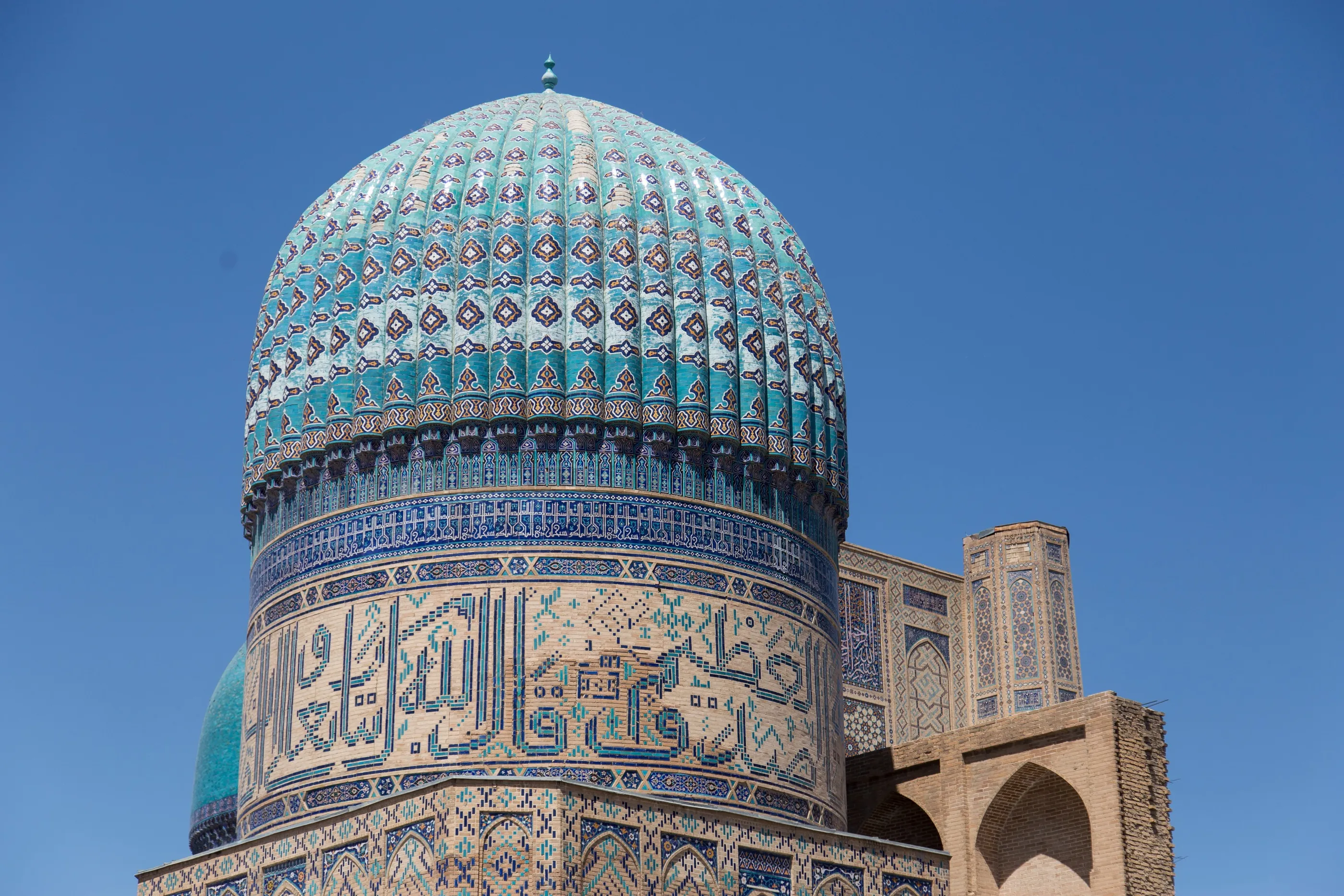
    Samarkand, a legendary name. The Registan at sunset, its three madrasas covered in mosaics; the Shah-i-Zinda necropolis, a lane of blue mausoleums. We are halfway between the Mediterranean and China.
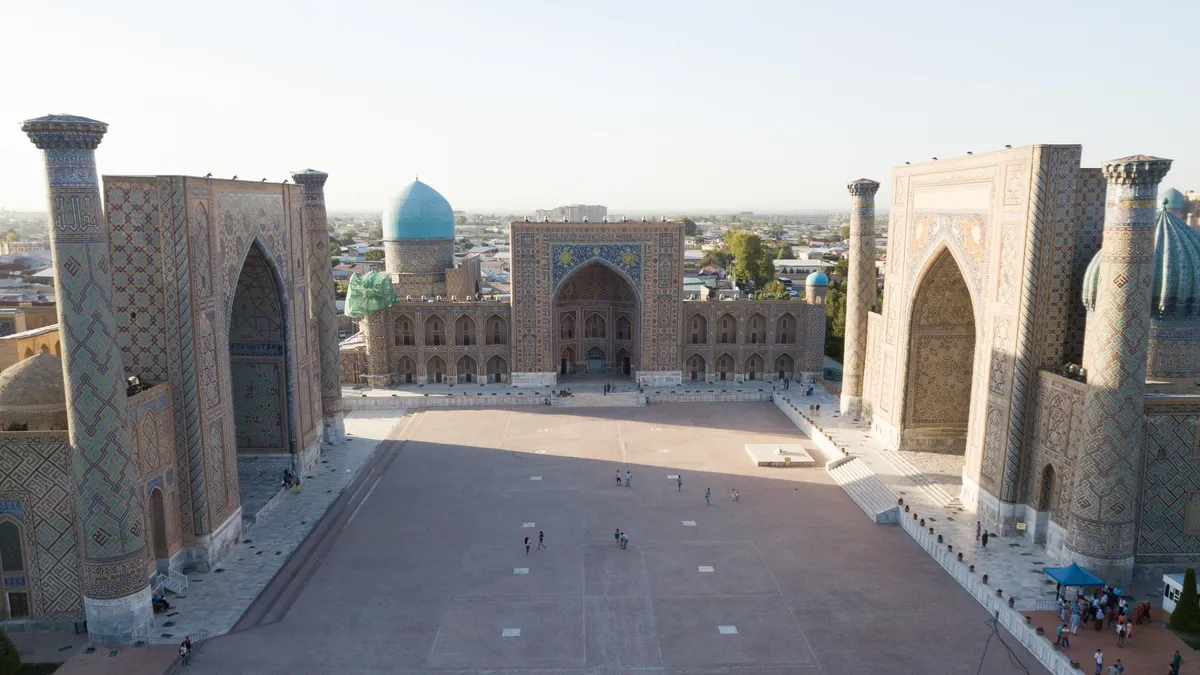
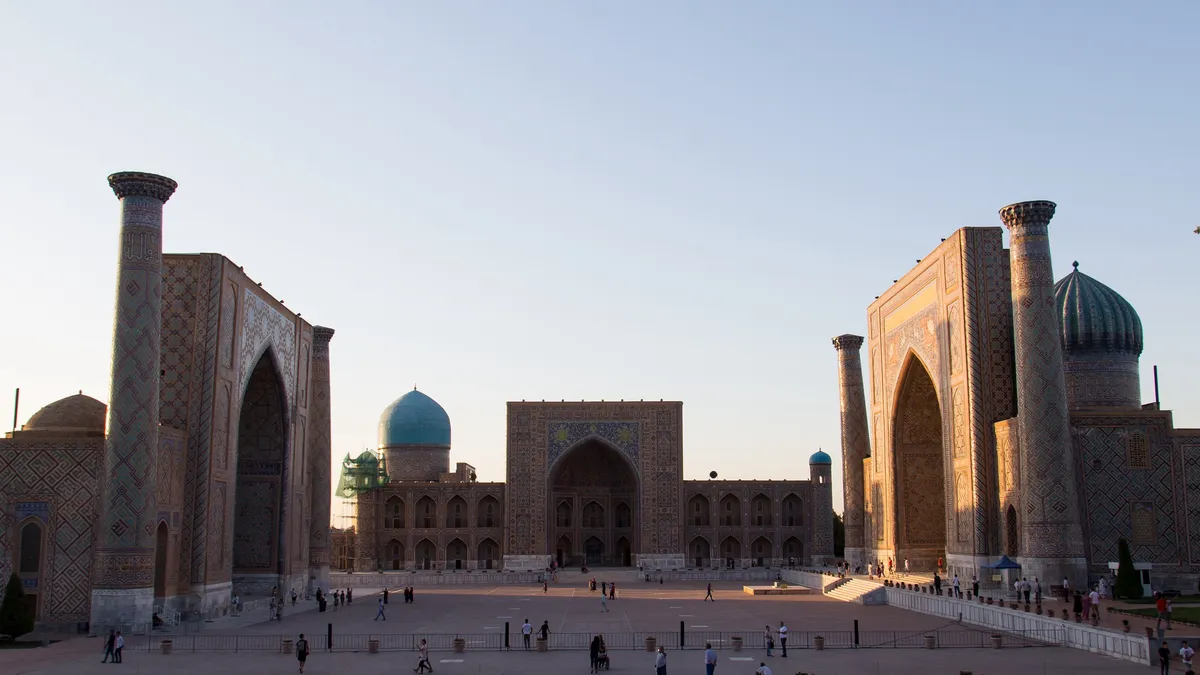
    The Registan from above, Samarkand, Uzbekistan — Nicolas MarincicRegistan Square in Samarkand, Uzbekistan — Nicolas MarincicAlley of tiled portals at Shah-i-Zinda, Samarkand, Uzbekistan — Nicolas MarincicLane in the Shah-i-Zinda necropolis, Samarkand, Uzbekistan — Nicolas MarincicTiger and sun mosaic, Sher-Dor madrasa, Samarkand, Uzbekistan — Nicolas MarincicThe Registan, Samarkand, Uzbekistan — Nicolas MarincicRibbed dome and kufic band, Bibi-Khanym, Samarkand, Uzbekistan — Nicolas Marincic
  15. By road↗ 236 km

    Day 25

    Khujand

    Tajikistan

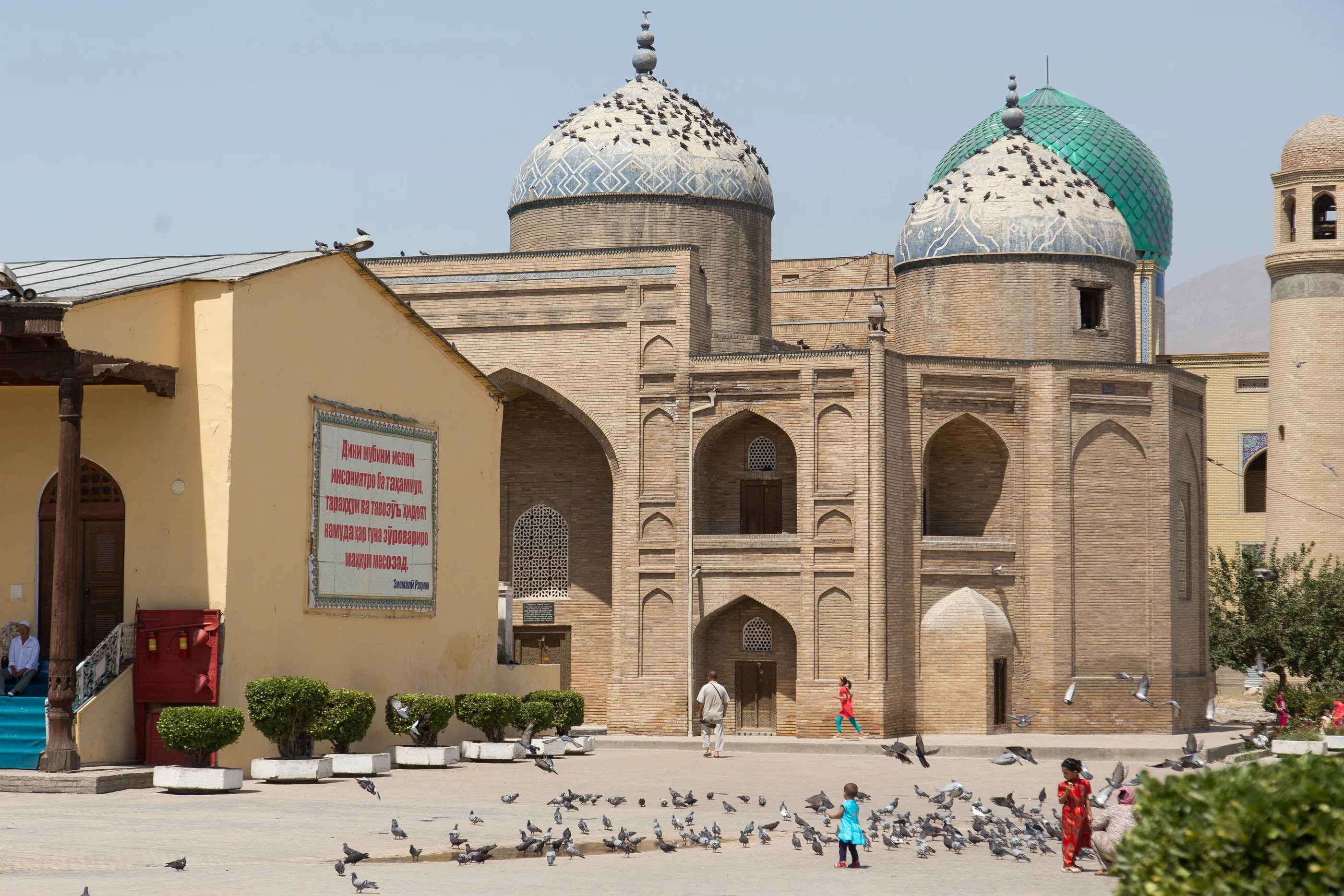
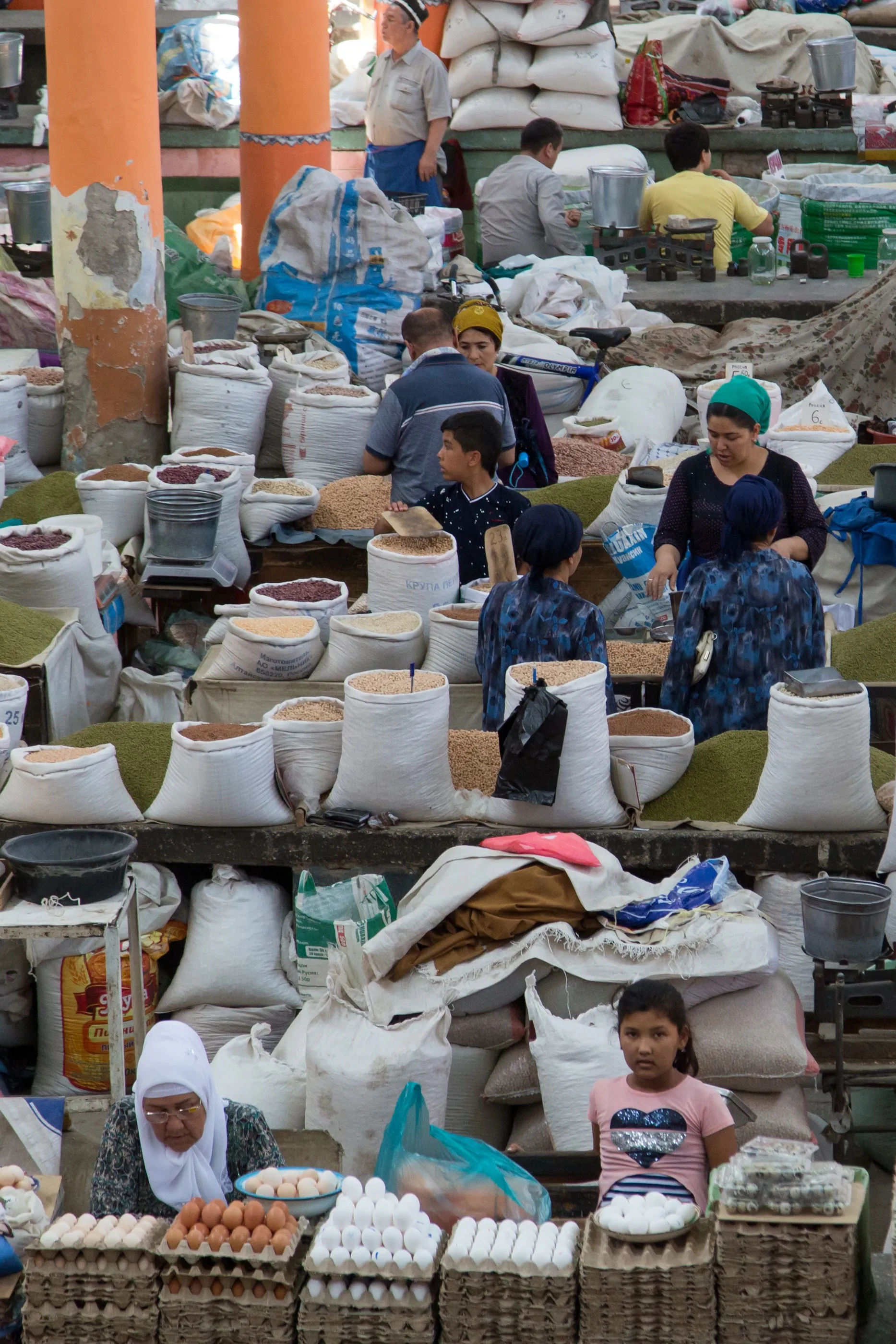
    Khujand, the Alexandria Eschate founded by Alexander the Great at the mouth of the Fergana Valley. Facing the mosque of Sheikh Muslihiddin, the Panjshanbe bazaar overflows with bread, spices and dried fruit beneath its pink arcades.
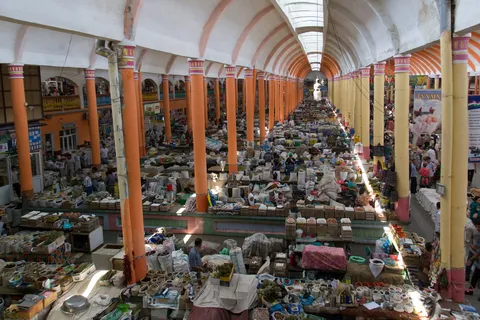
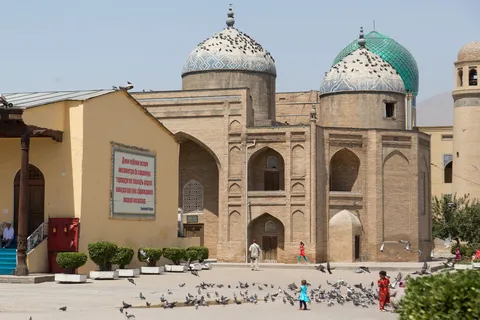
    Hall of the Panjshanbe Bazaar, Khujand, Tajikistan — Nicolas MarincicSheikh Muslihiddin Mausoleum, Khujand, Tajikistan — Nicolas MarincicSacks of grain and spices at the bazaar, Tajikistan — Nicolas MarincicMosque and minaret of the Sheikh Muslihiddin complex, Khujand, Tajikistan — Nicolas Marincic
  16. By road↗ 115 km

    Day 26

    Kokand

    Uzbekistan

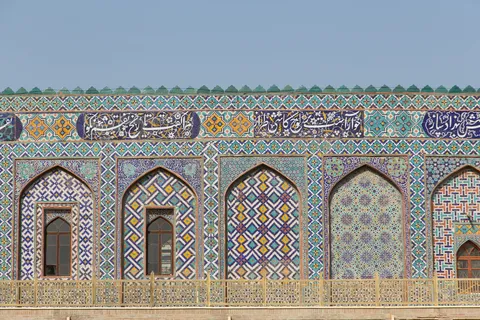
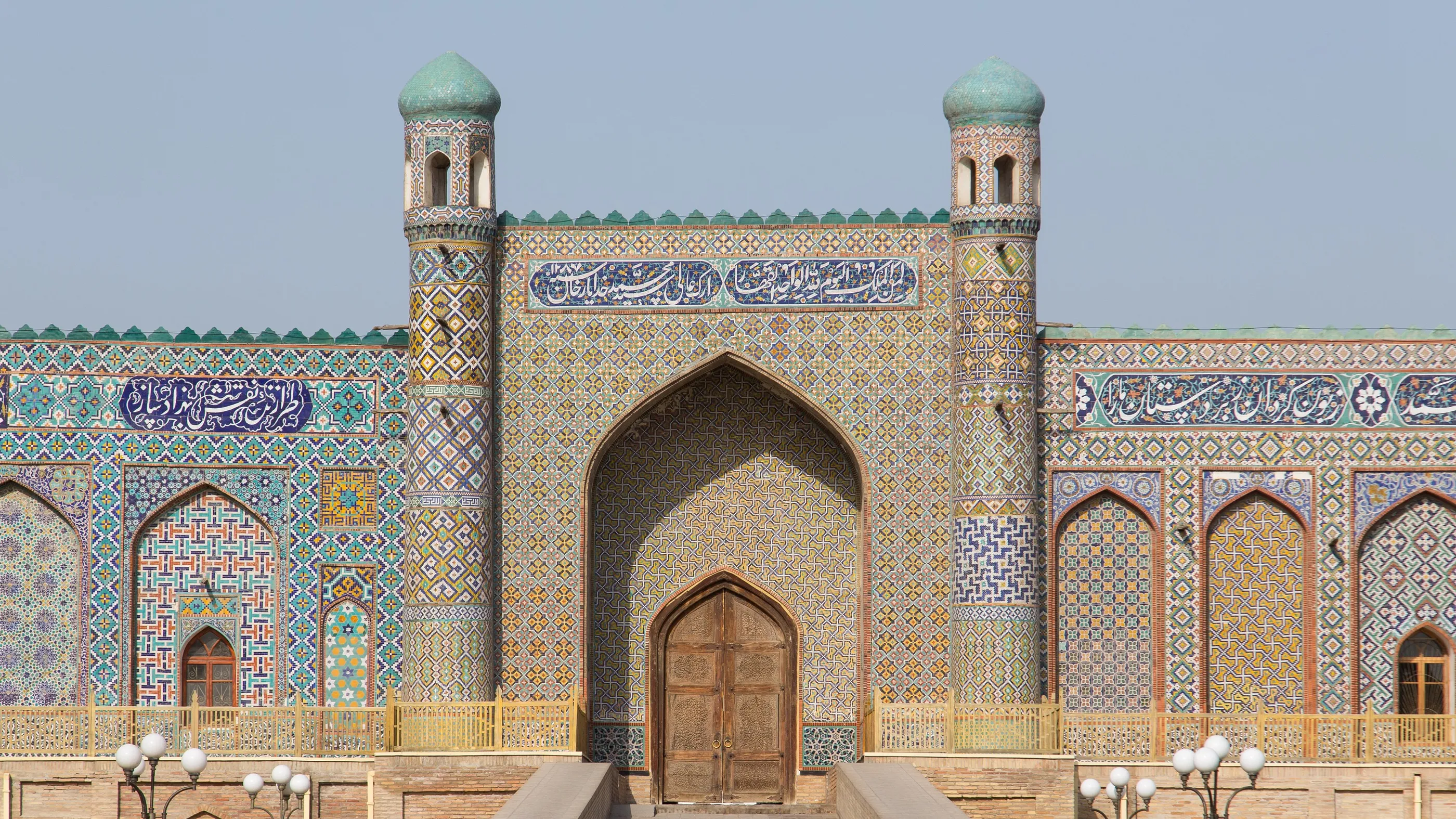
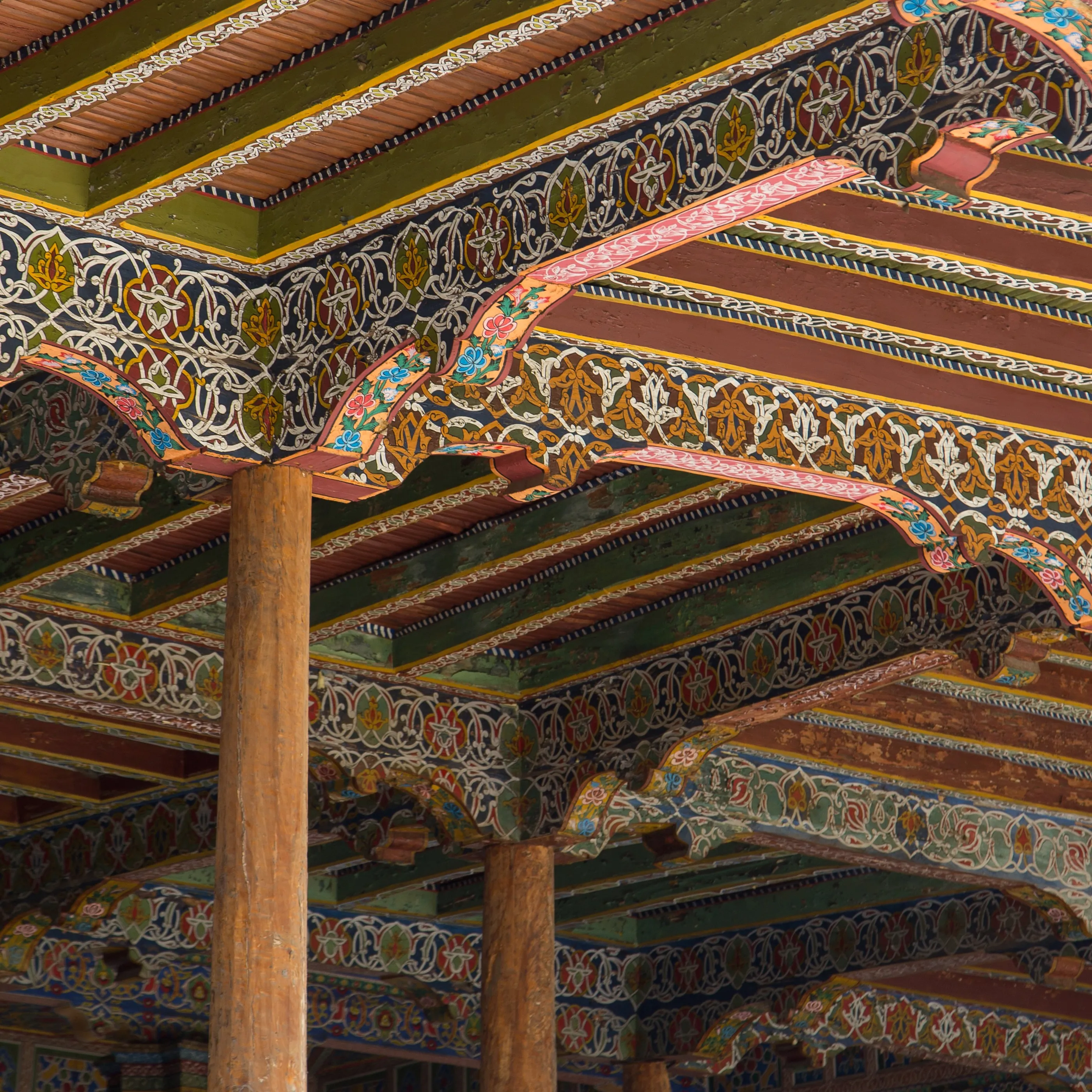
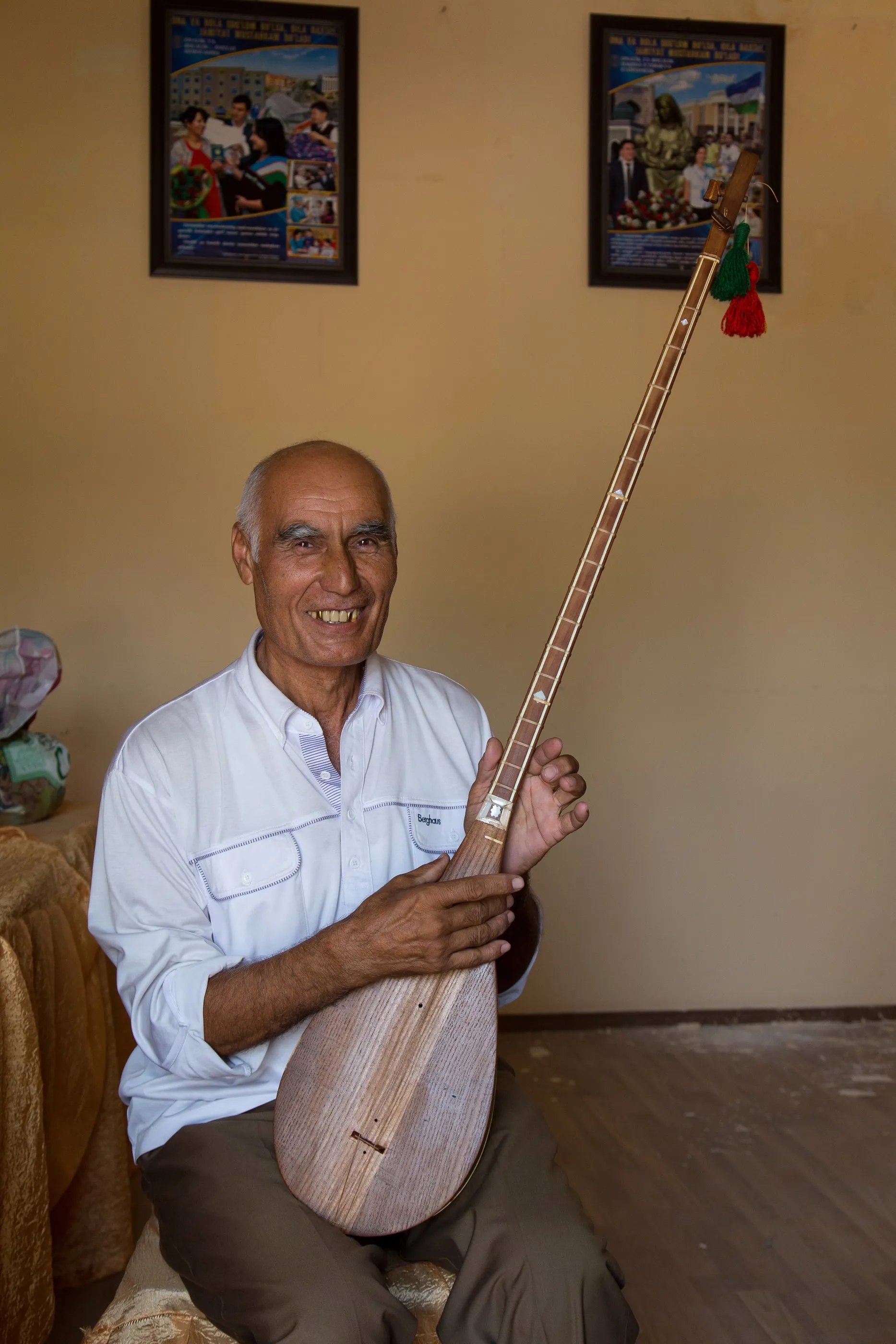
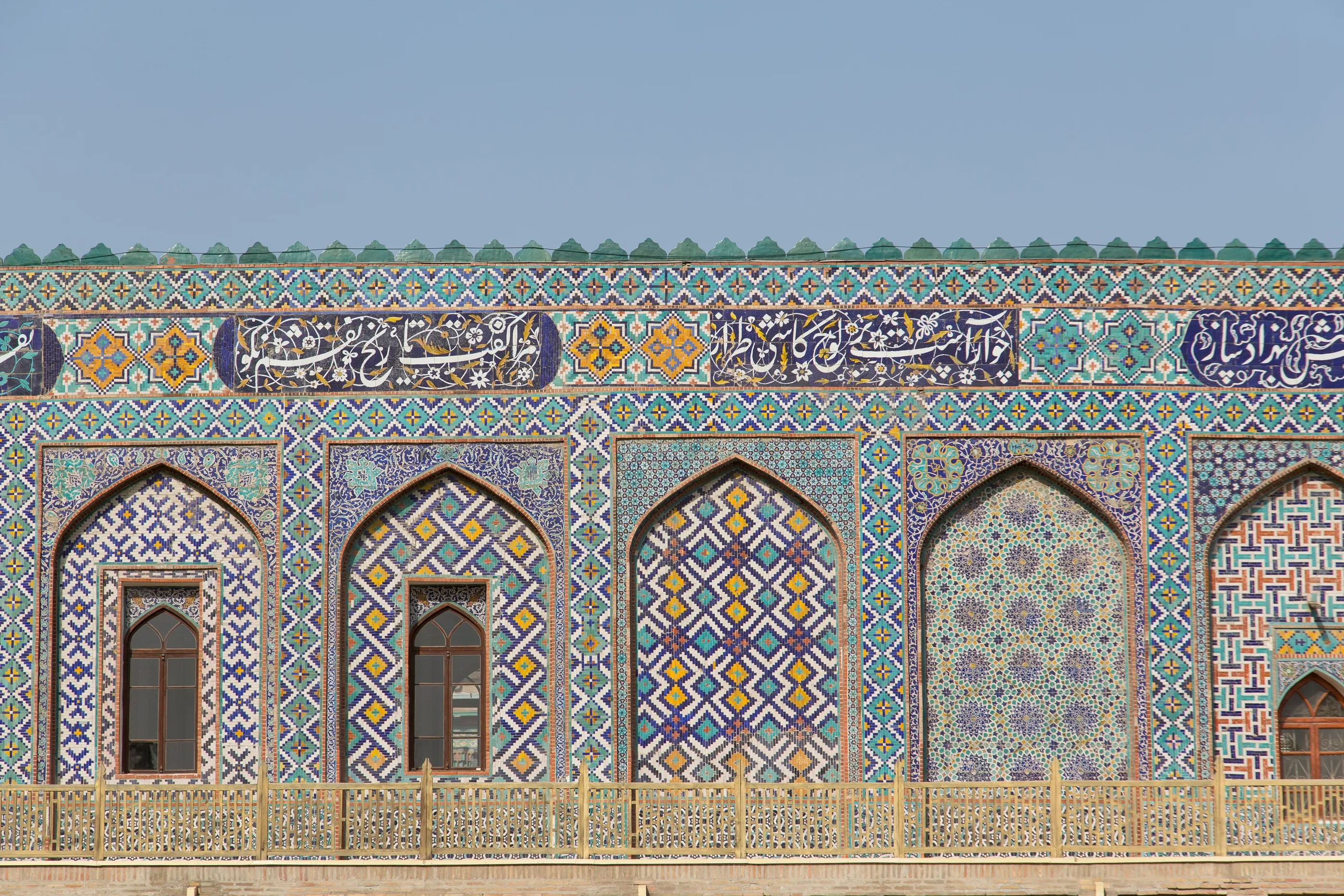
    Back in Uzbekistan, in the heart of the Fergana Valley. Kokand was the capital of a khanate until the Russian conquest of 1876, and the palace of Khudayar Khan still keeps its tiled façades. In the Friday Mosque, a forest of carved columns holds up a ceiling painted in a thousand colours; in a house nearby, an old man tunes his long-necked lute for us.

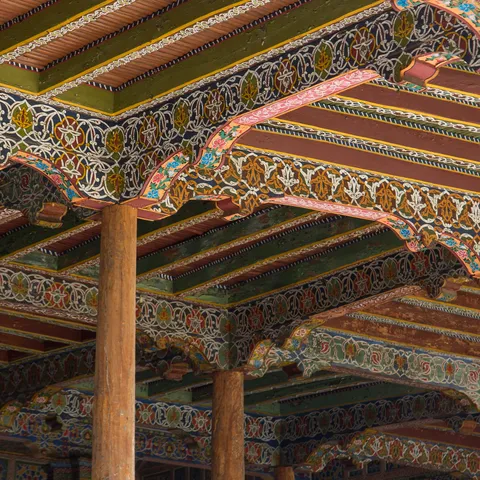
    Tiled facade of Khudayar Khan’s palace, Kokand, Uzbekistan — Nicolas MarincicPainted ceiling and carved columns, Juma Mosque, Kokand, Uzbekistan — Nicolas MarincicMusician with a long-necked lute, Tajikistan — Nicolas MarincicMinaret and colonnade of the Juma Mosque, Kokand, Uzbekistan — Nicolas MarincicBlue-tiled façade of a palace, Uzbekistan — Nicolas Marincic
  17. By road↗ 143 km

    Day 27

    Naryn Gorge and Toktogul

    Kyrgyzstan

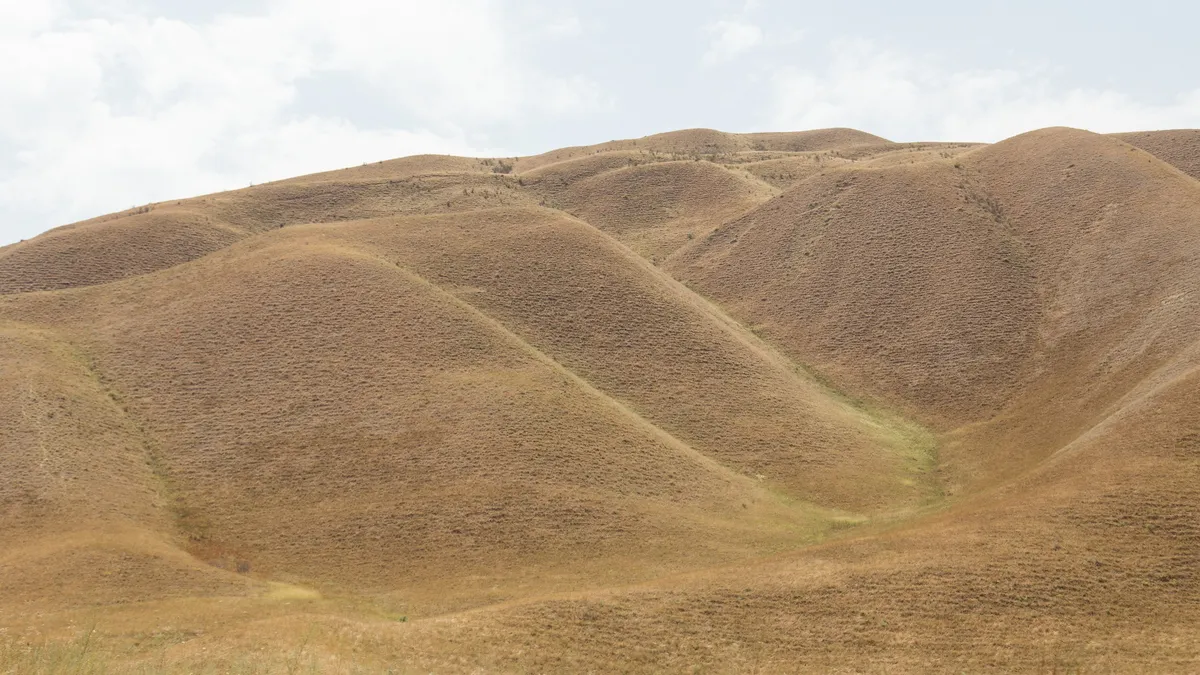
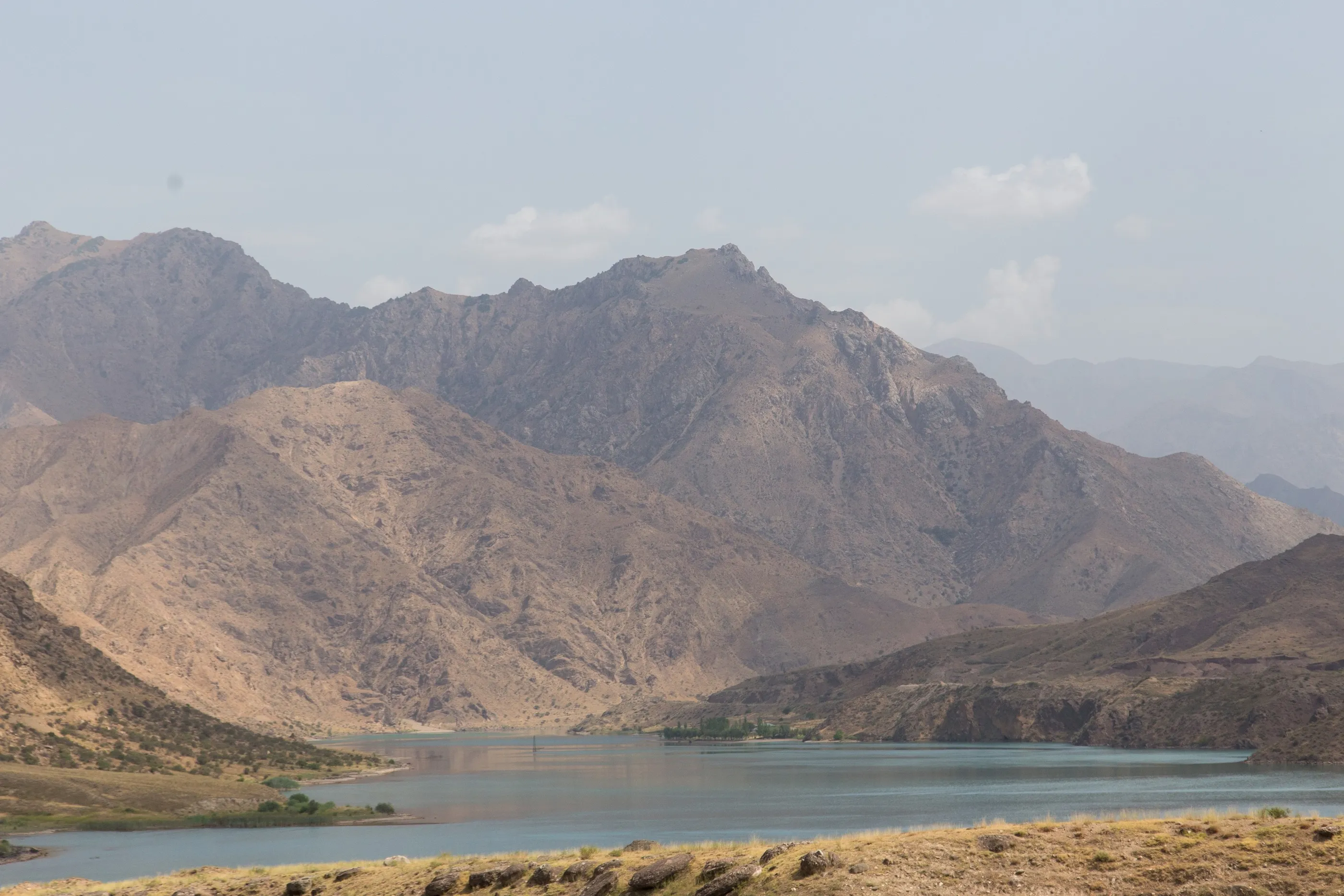
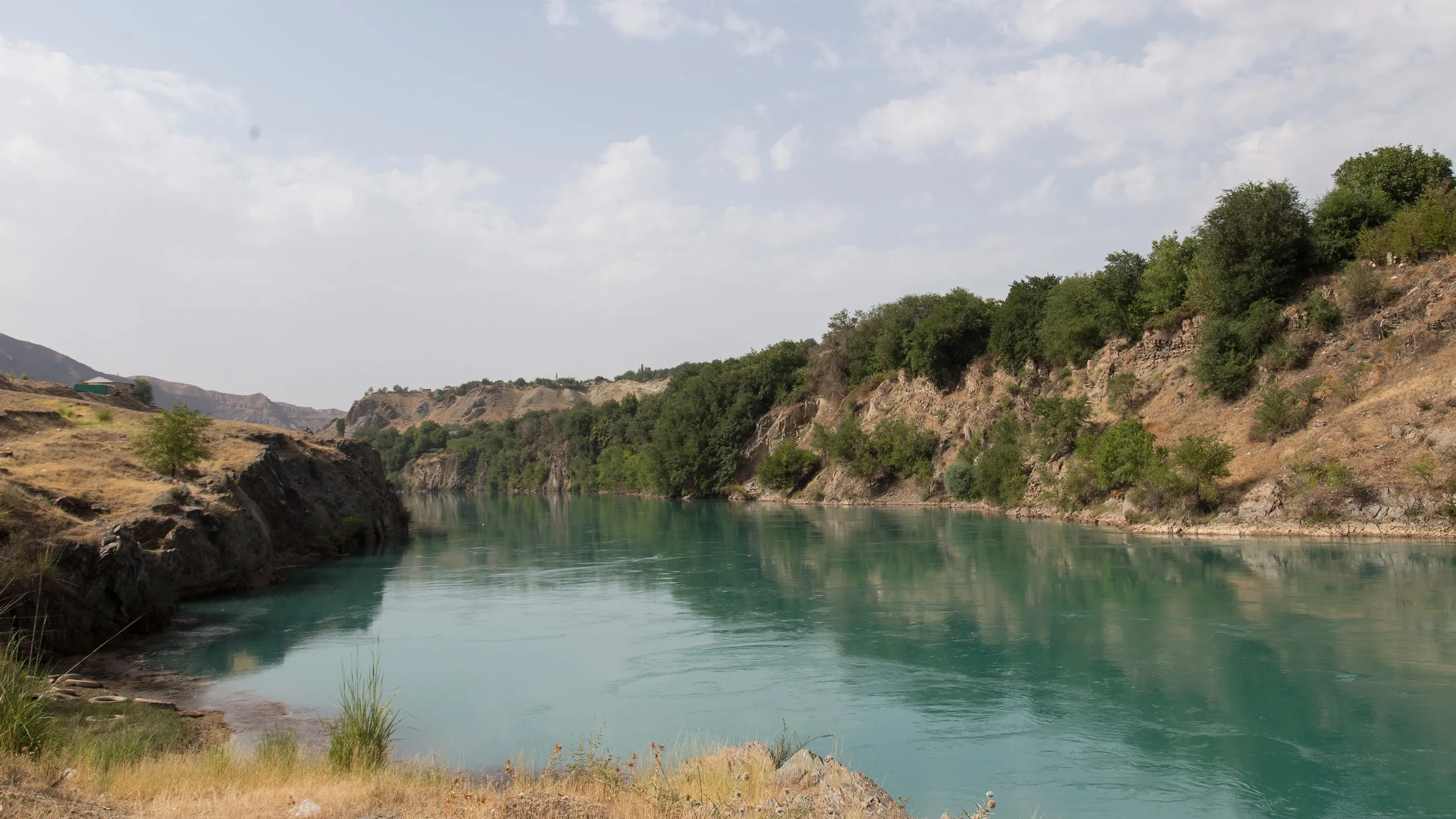
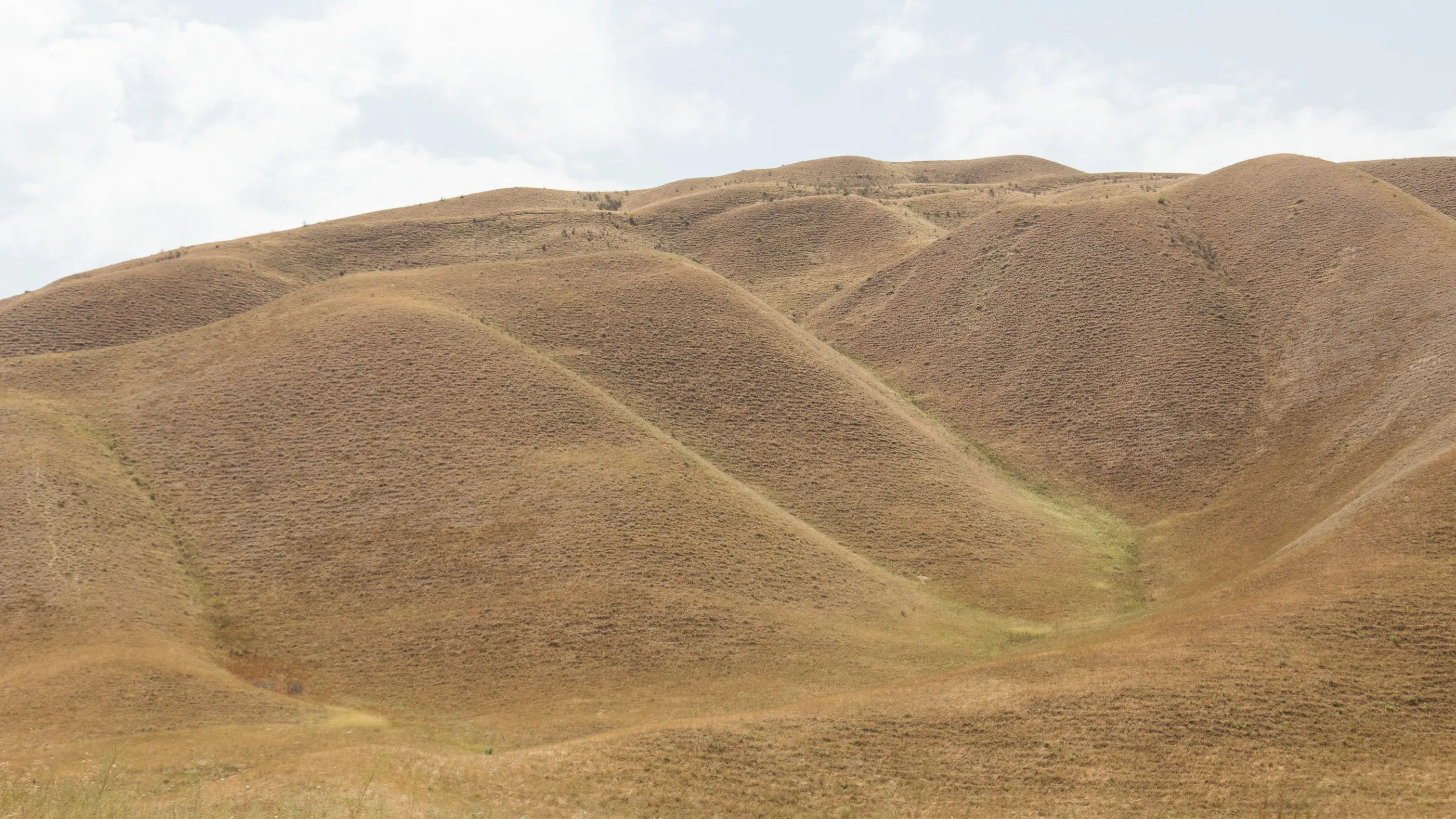
    Kyrgyzstan begins with a mountain road. The milky-turquoise Naryn cuts its gorges between arid hills, then spreads out into the Toktogul reservoir, ringed by bare mountains. Little by little, grass takes over the slopes.
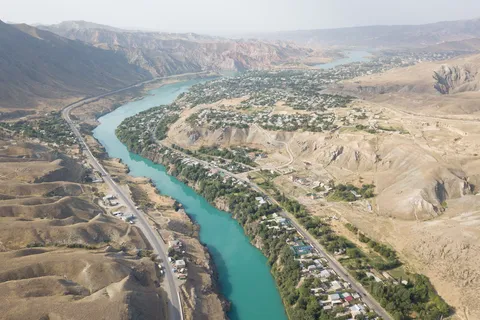
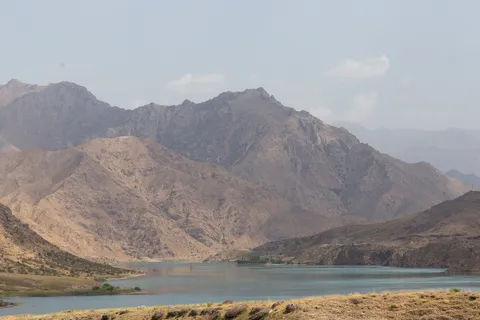
    Turquoise river in the Naryn canyon, Kyrgyzstan — Nicolas MarincicToktogul reservoir among bare mountains, Kyrgyzstan — Nicolas MarincicTurquoise river between cliffs, Kyrgyzstan — Nicolas MarincicGolden hills of the steppe, Kyrgyzstan — Nicolas Marincic
  18. By road↗ 246 km

    Days 27–28

    Tian Shan pastures (Song-Kul)

    Kyrgyzstan

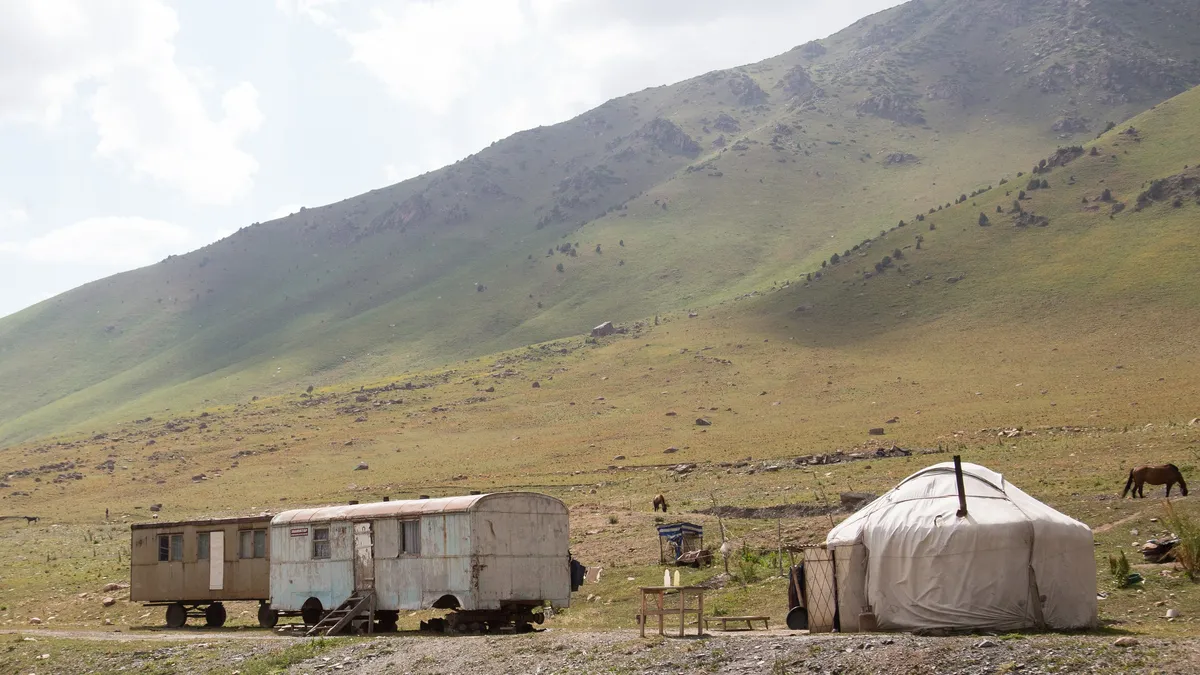
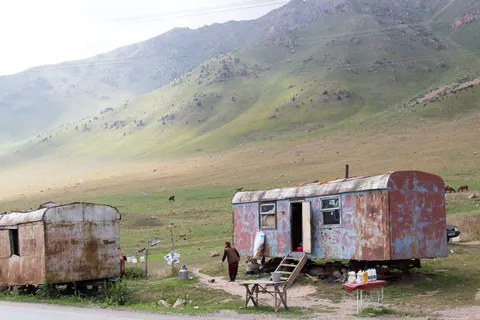
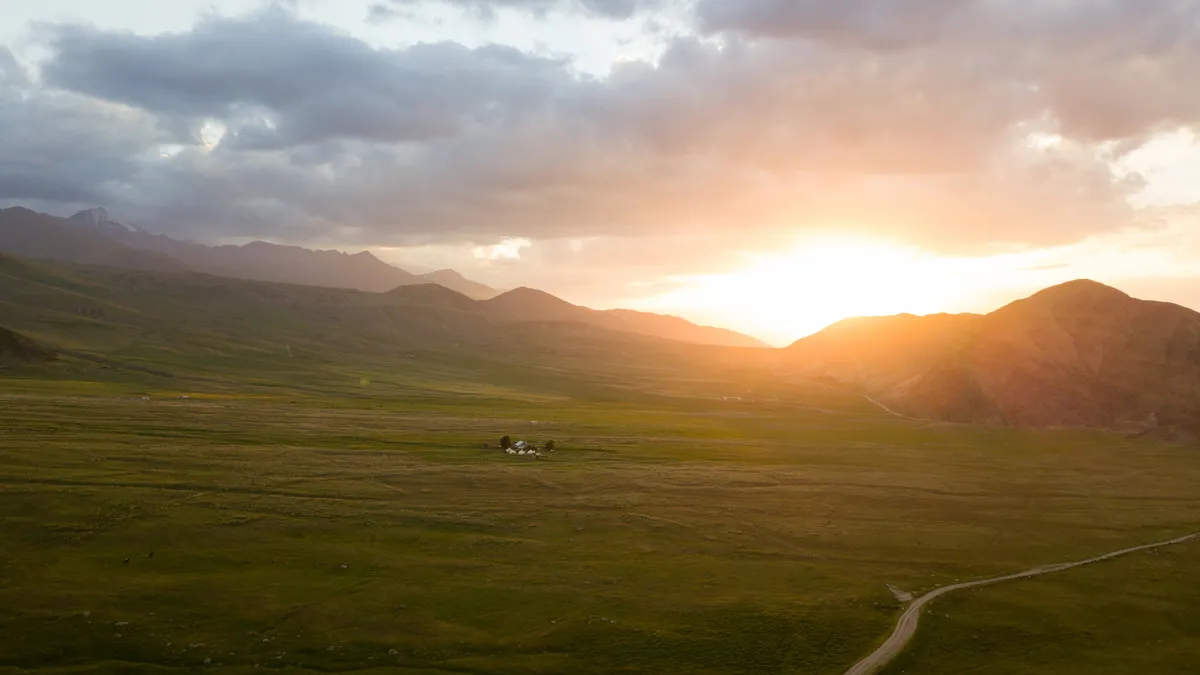
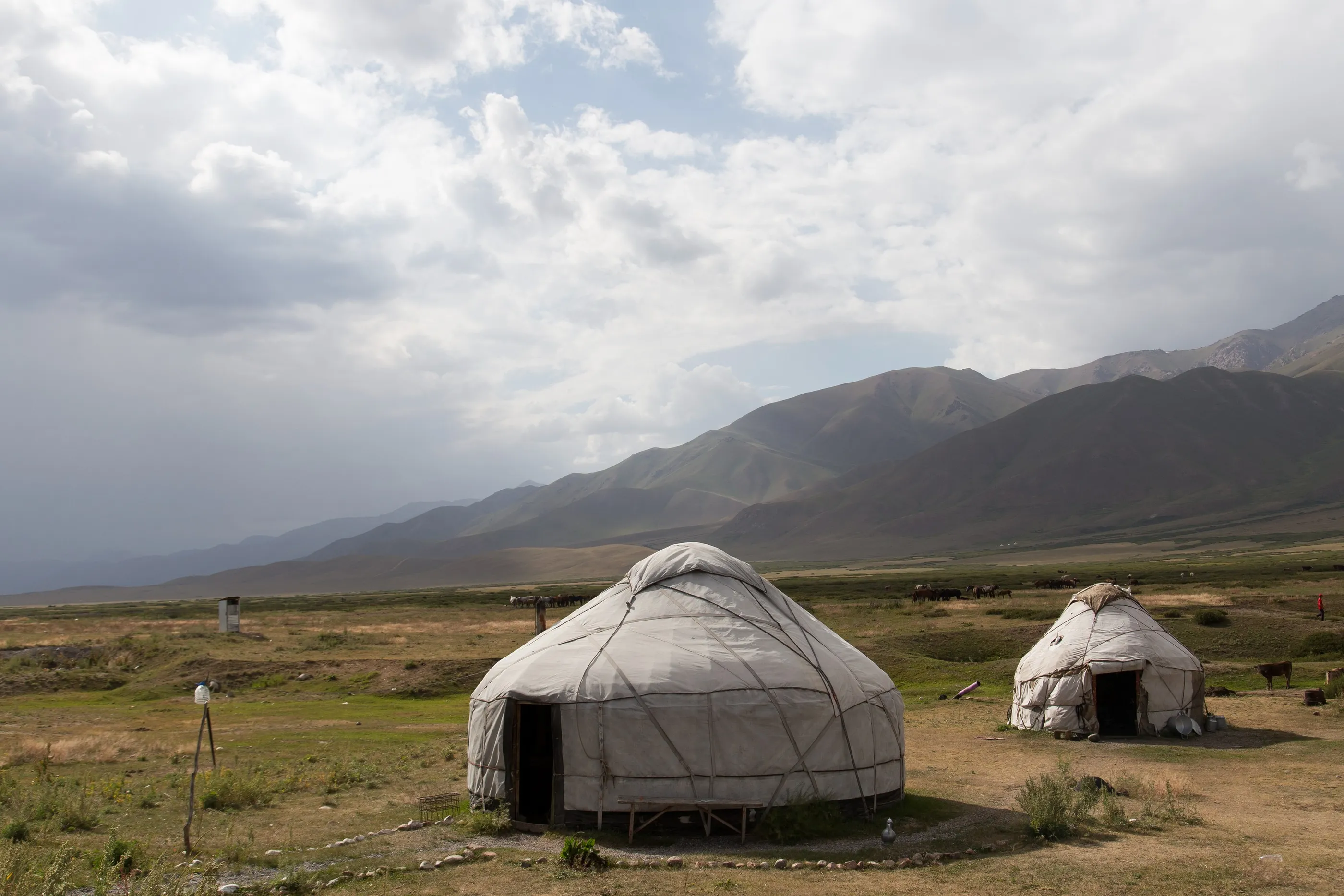
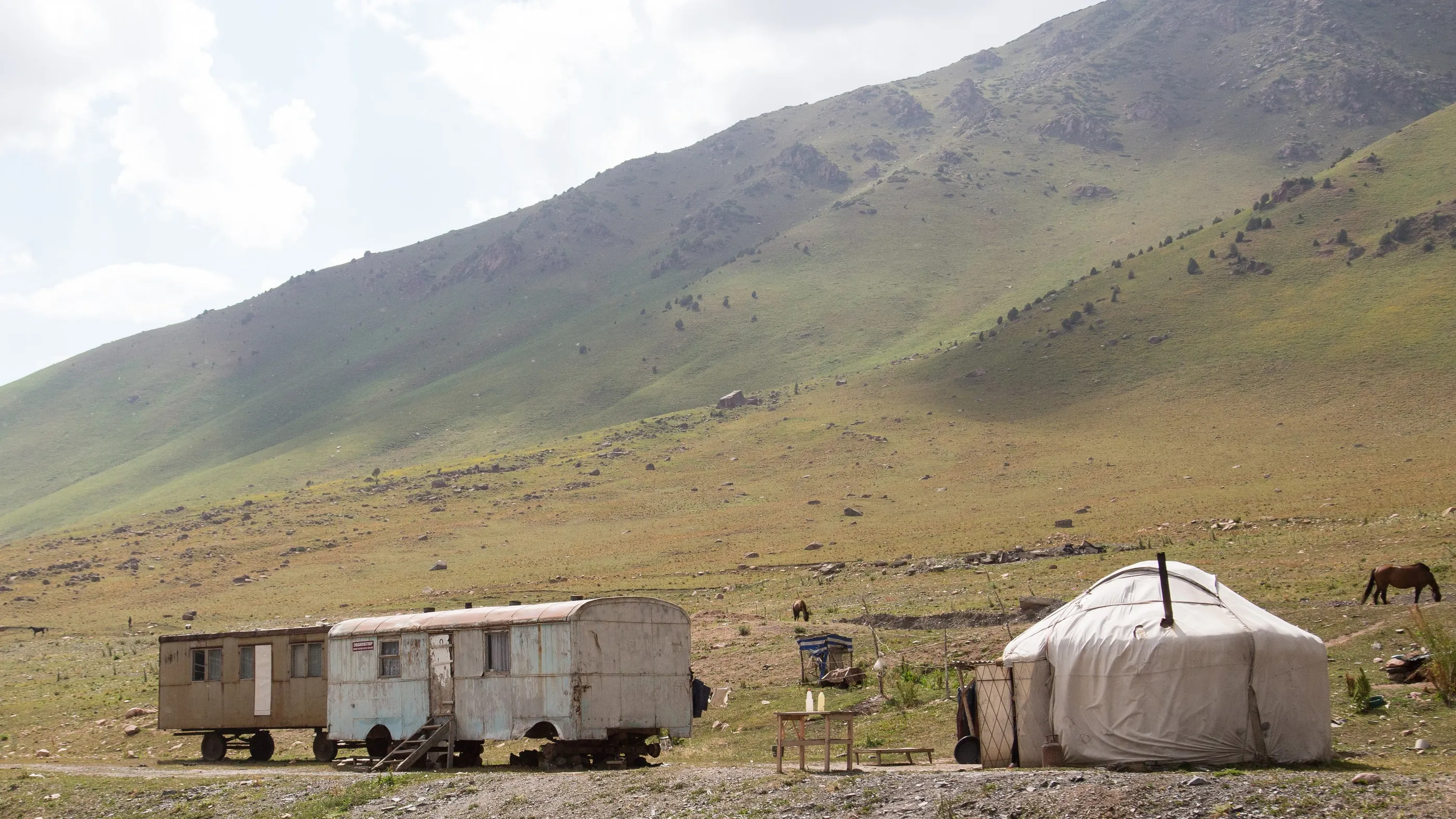
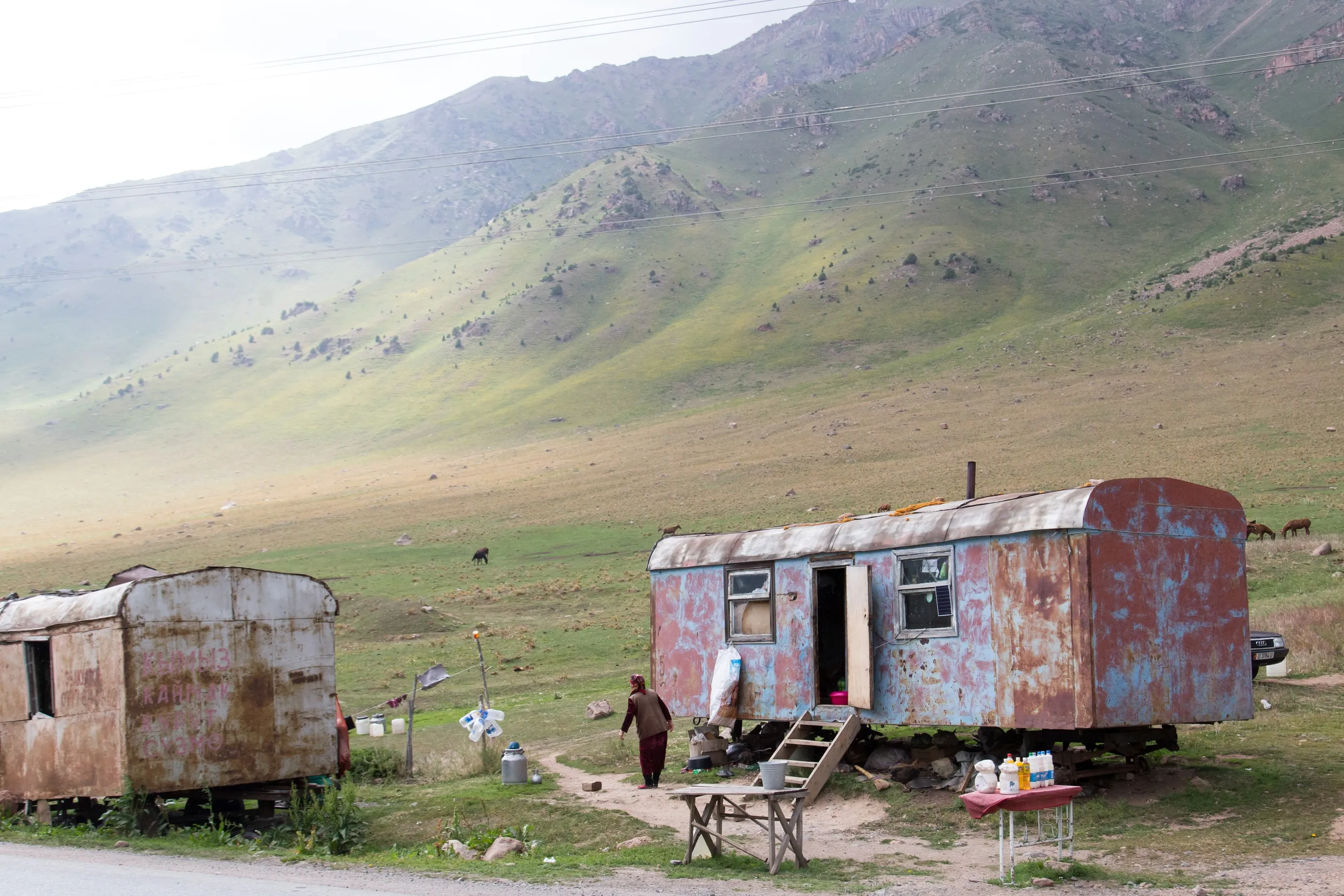
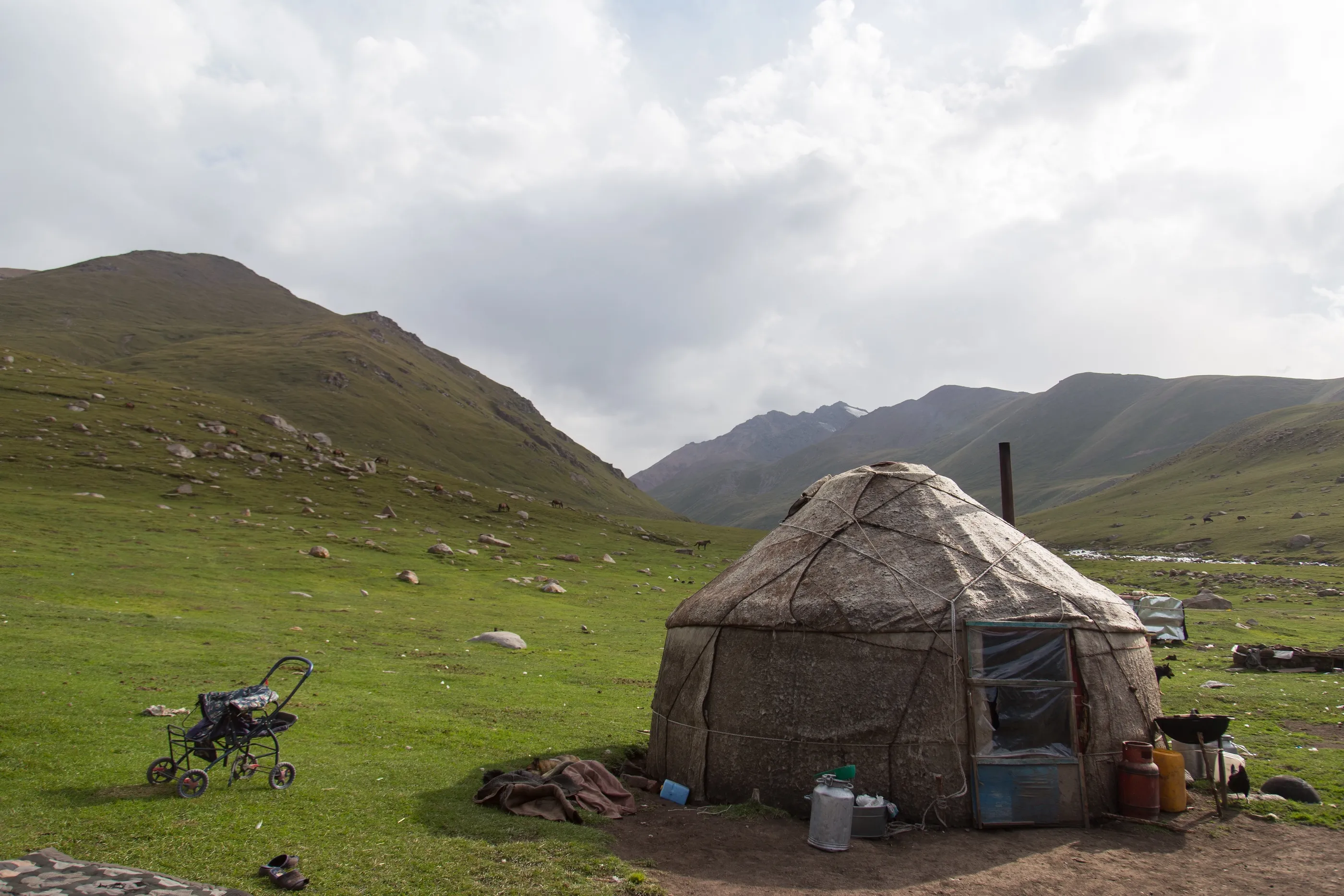
    Kyrgyzstan is first of all grass and sky. On the high pastures, nomadic families spend the summer in yurts or old caravans, among their horses. We share kumis, fermented mare’s milk, and sunsets stretch on endlessly over the mountains.
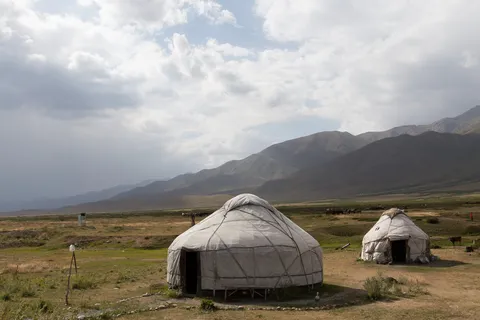
    Yurts on the steppe, Kyrgyzstan — Nicolas MarincicFlock of sheep on a high pasture, aerial view, Kyrgyzstan — Nicolas MarincicHerders’ yurt and caravans on a mountain pasture, Kyrgyzstan — Nicolas MarincicHerders’ caravans in the pastures, Kyrgyzstan — Nicolas Marincic
  19. By road↗ 158 km

    Days 28–30

    South shore of Issyk-Kul

    Kyrgyzstan

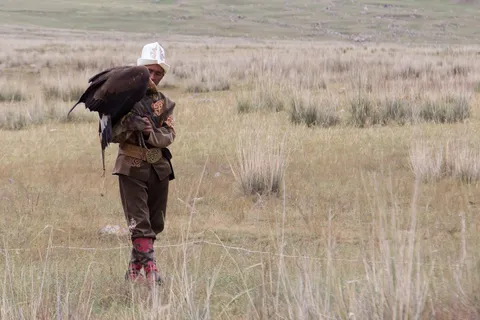
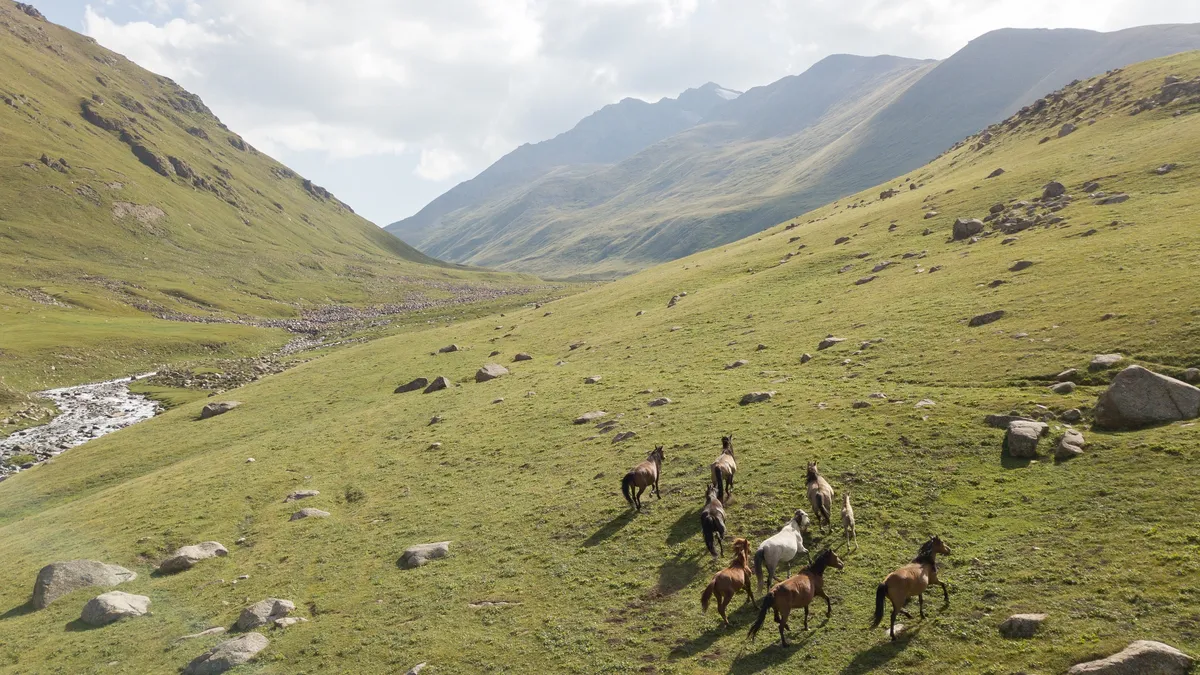
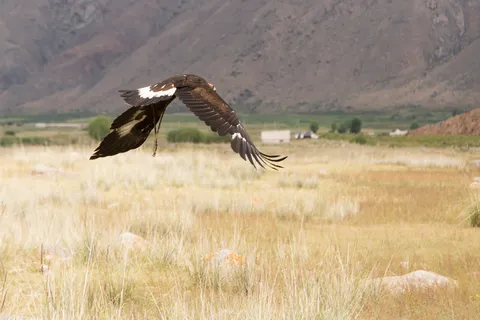
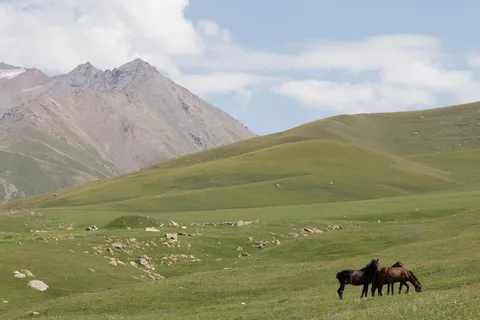
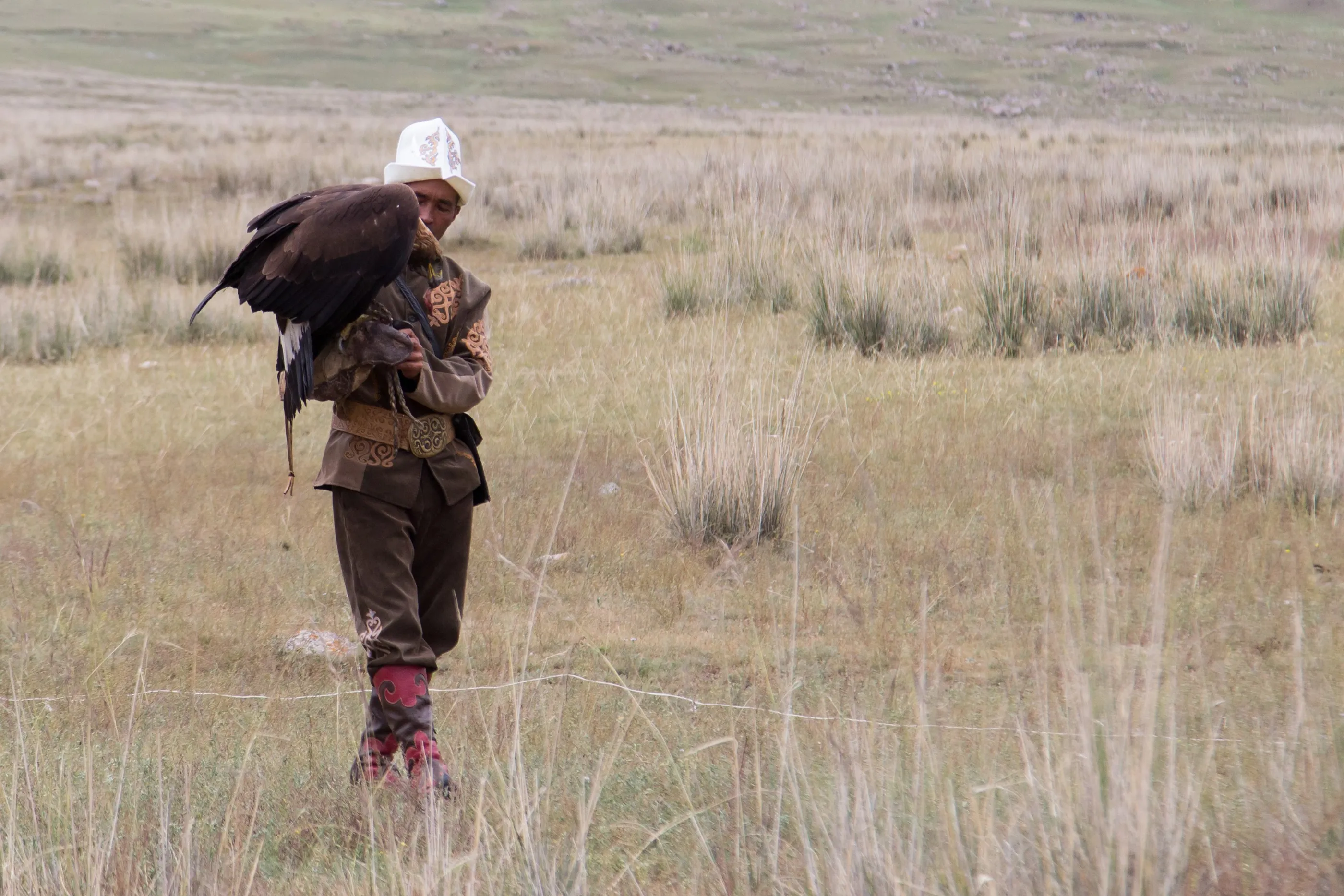
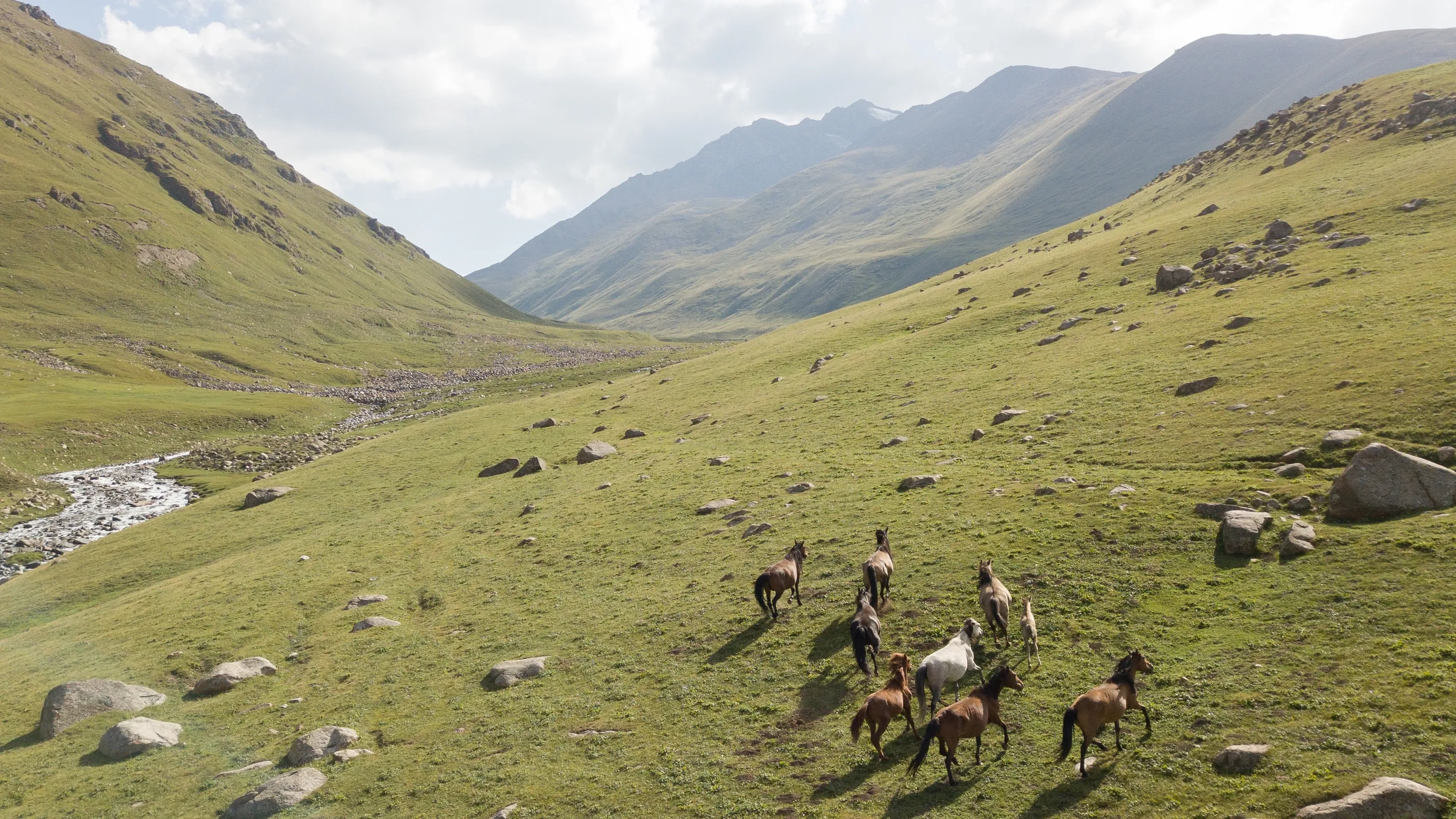
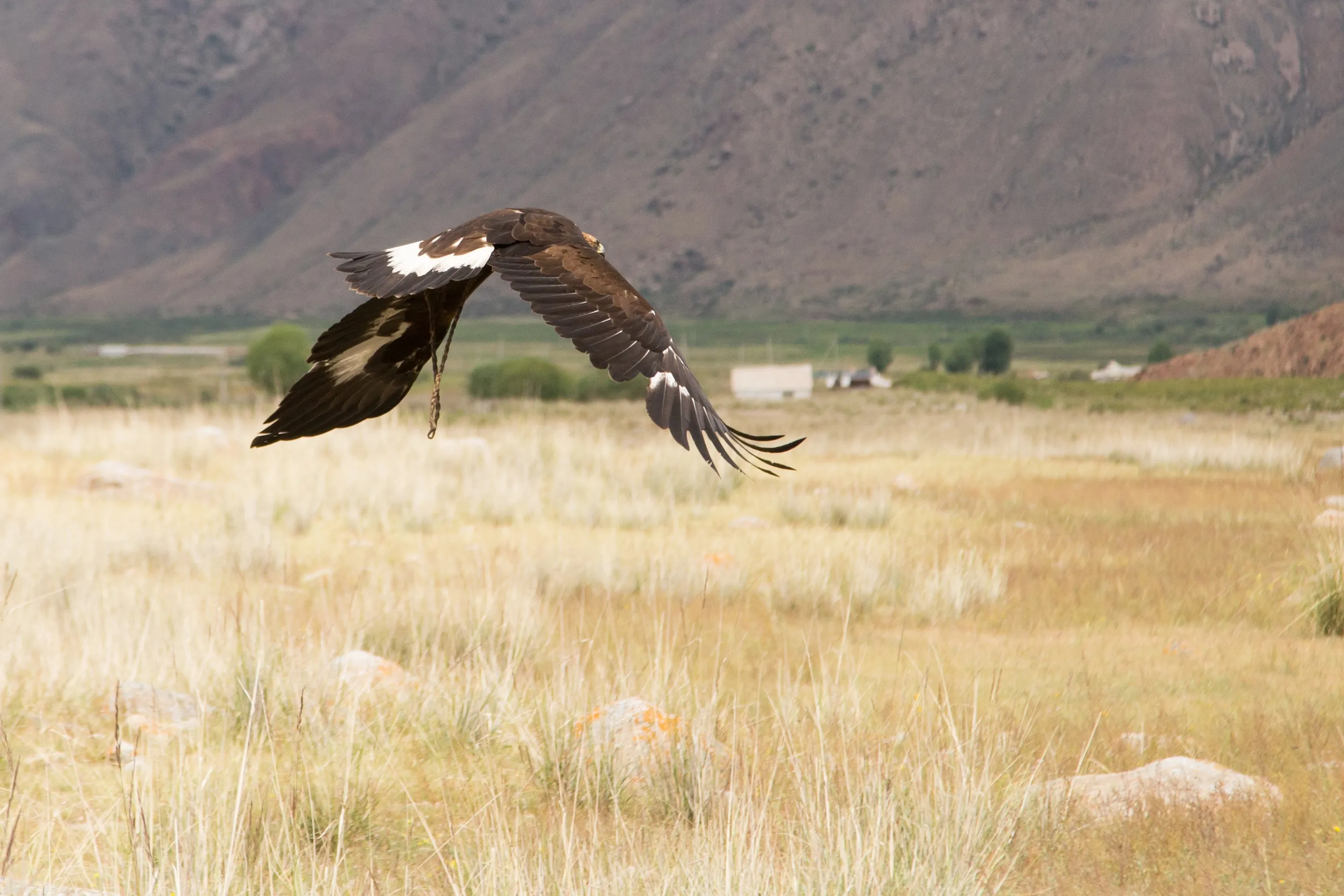
    Along the great lake, then up the valleys that climb from its southern shore to high pastures where horses graze. A berkutchi, an eagle hunter, flies his bird above the steppe: a nomadic tradition handed down for centuries. Further east, the spruce forests of the Tian Shan, only a few mountains away from China.
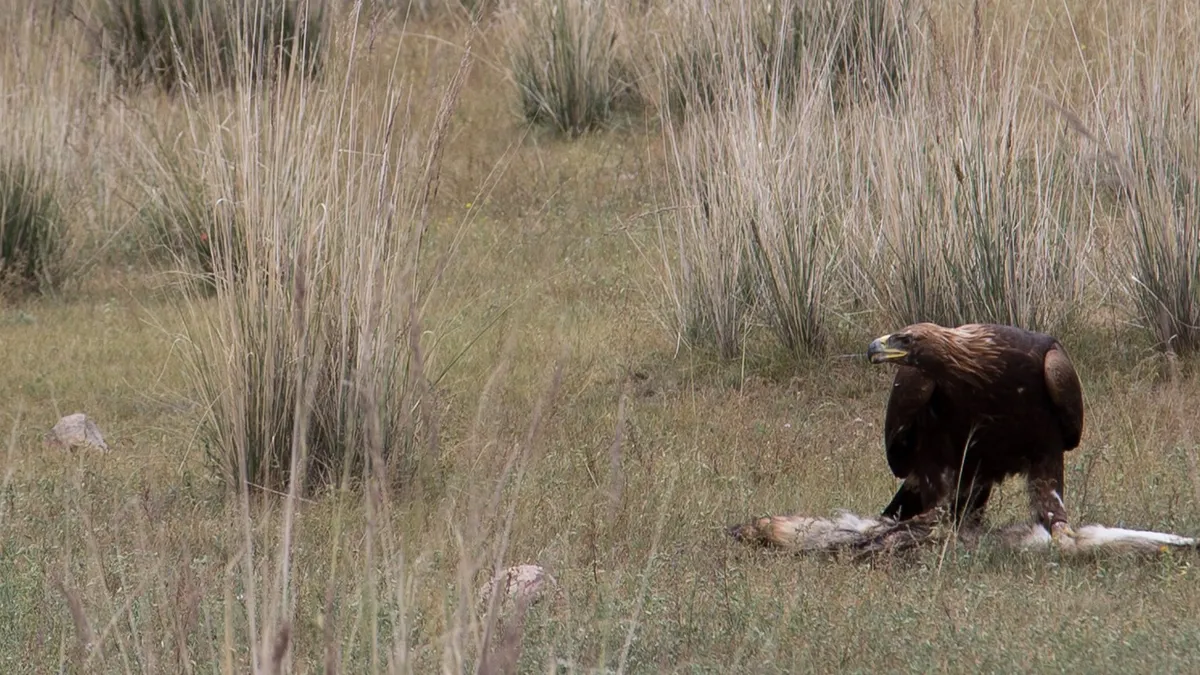
    Golden eagle on its prey, eagle-hunting demonstration, Kyrgyzstan — Nicolas MarincicIssyk-Kul shoreline from above, Kyrgyzstan — Nicolas MarincicEagle hunter with his bird, Kyrgyzstan — Nicolas MarincicSunset over the steppe and mountains, Kyrgyzstan — Nicolas MarincicHorses in a high mountain valley, Kyrgyzstan — Nicolas MarincicGolden eagle in flight over the steppe, Kyrgyzstan — Nicolas MarincicYurt in a mountain pasture, Kyrgyzstan — Nicolas MarincicHorses grazing at the foot of the mountains, Kyrgyzstan — Nicolas Marincic
  20. By road↗ 99 km

    Day 31

    Big Almaty Lake

    Kazakhstan

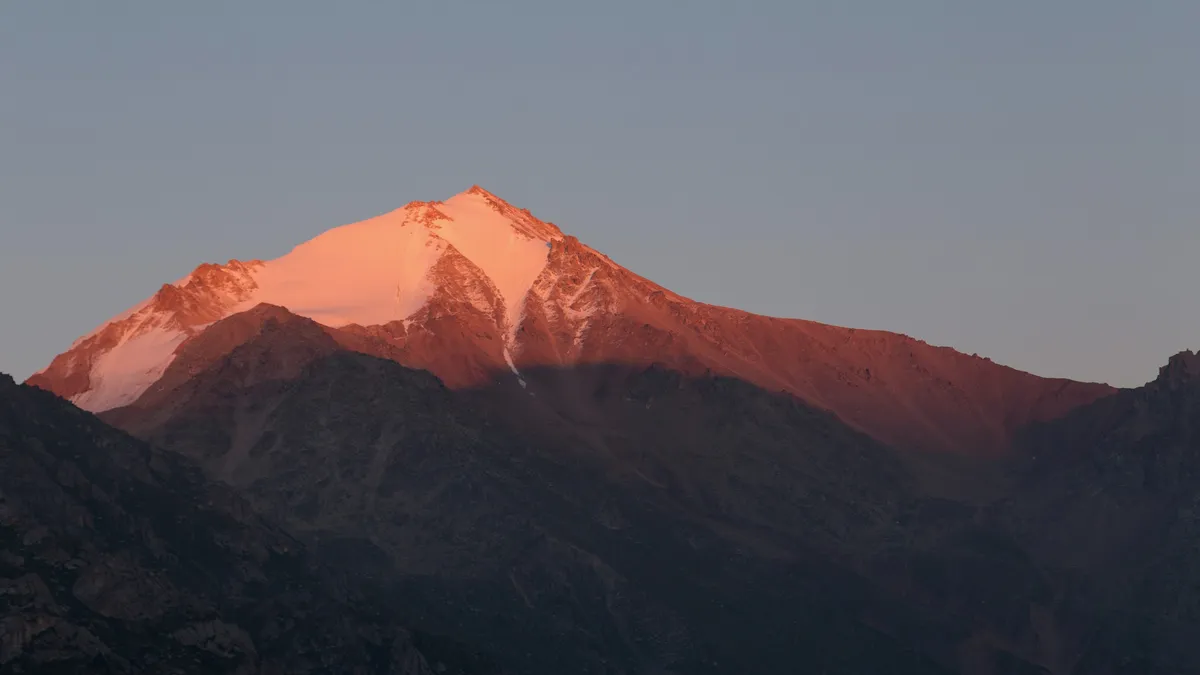
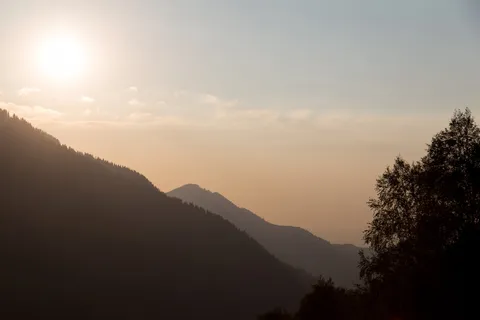
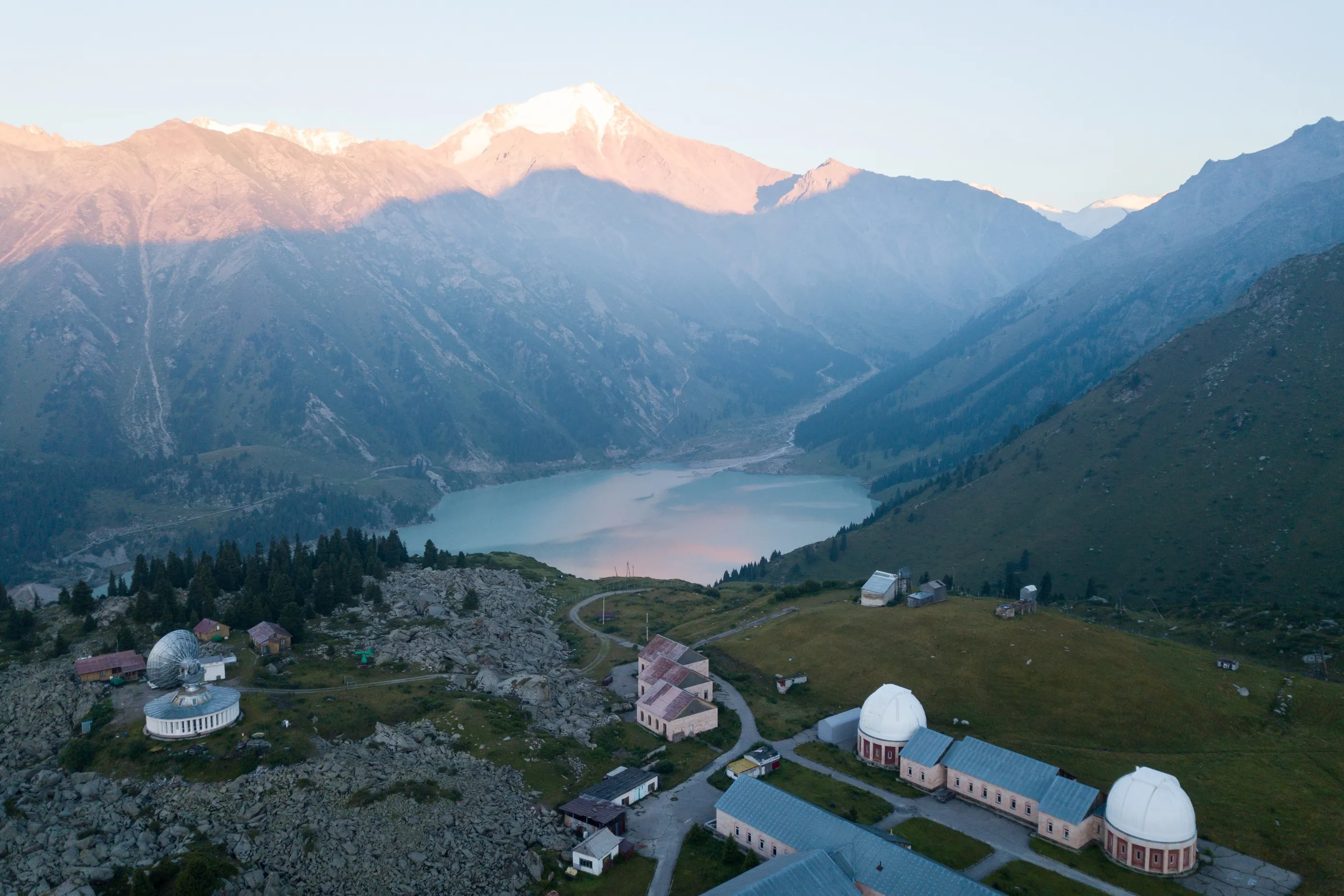
    Across the Kazakh border, we climb to Big Almaty Lake, at 2,500 metres, held in a cirque of Tian Shan peaks. On the ridge, the domes of the observatory watch the sky. At sunset, the summits catch fire one by one above the milky-green water.
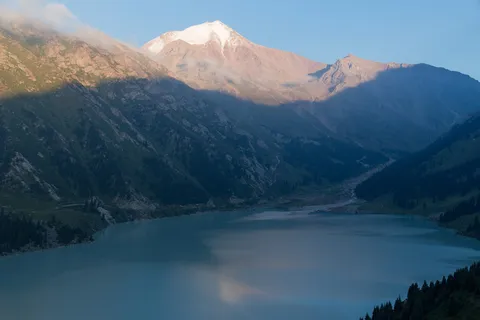
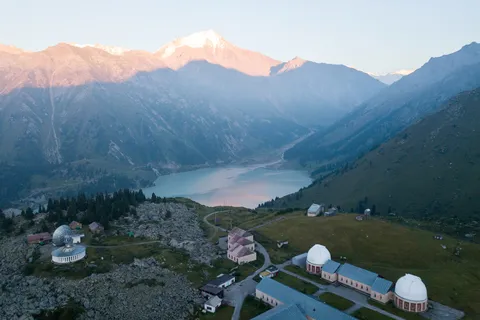
    Big Almaty Lake, alpenglow on the Tian Shan peaks, Kazakhstan — Nicolas MarincicBig Almaty Lake and the Tian Shan observatory domes, Kazakhstan — Nicolas MarincicAlpenglow on a Tian Shan peak above Big Almaty Lake, Kazakhstan — Nicolas MarincicHazy sunset over the forested valleys above Almaty, Kazakhstan — Nicolas Marincic
  21. By road↗ 22 km

    Day 32

    Almaty

    Kazakhstan

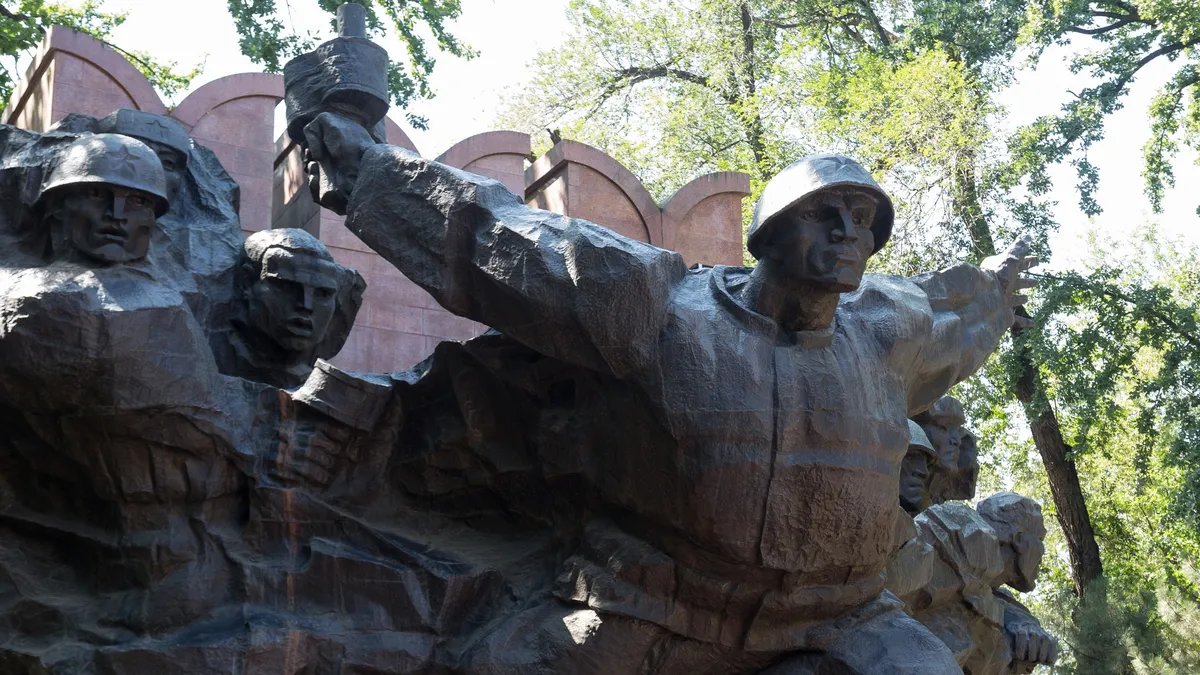
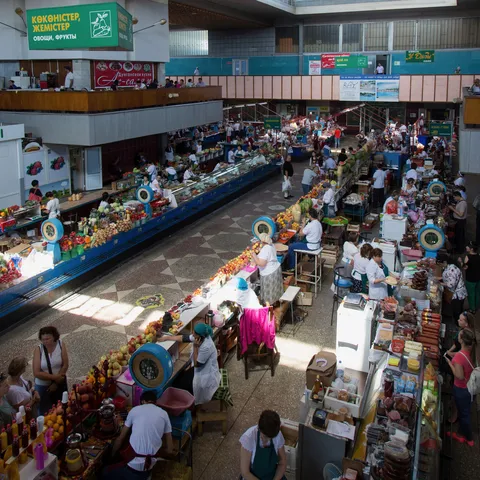
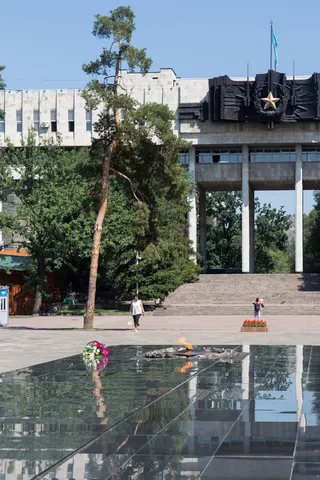
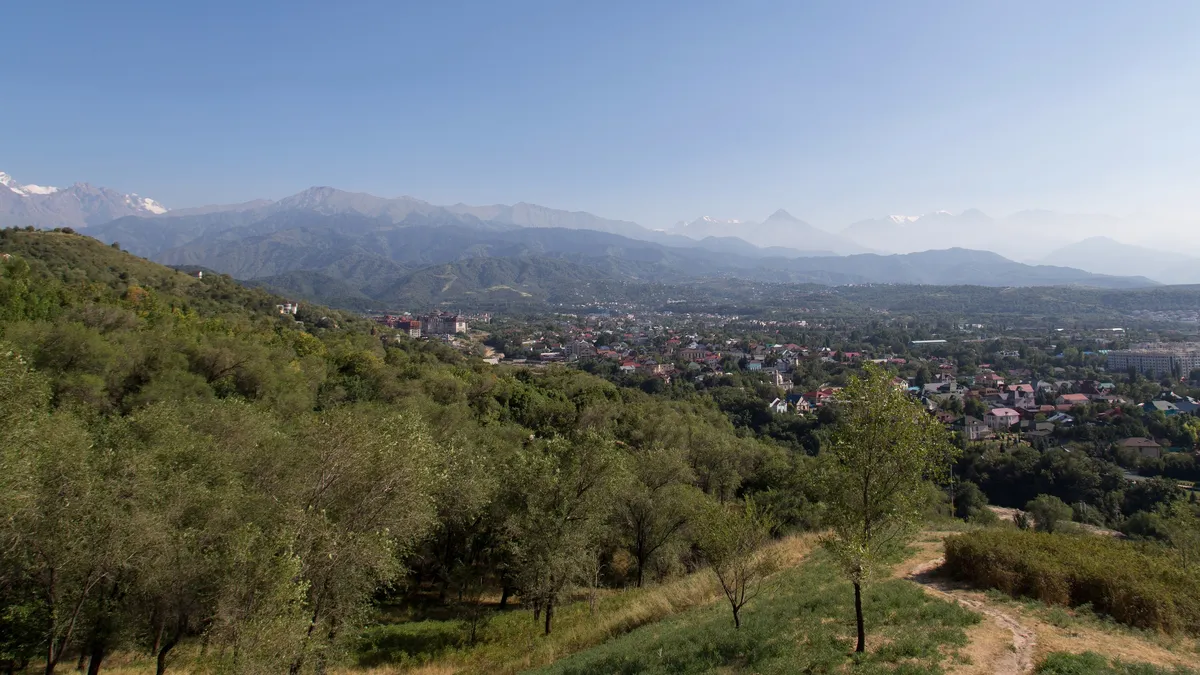
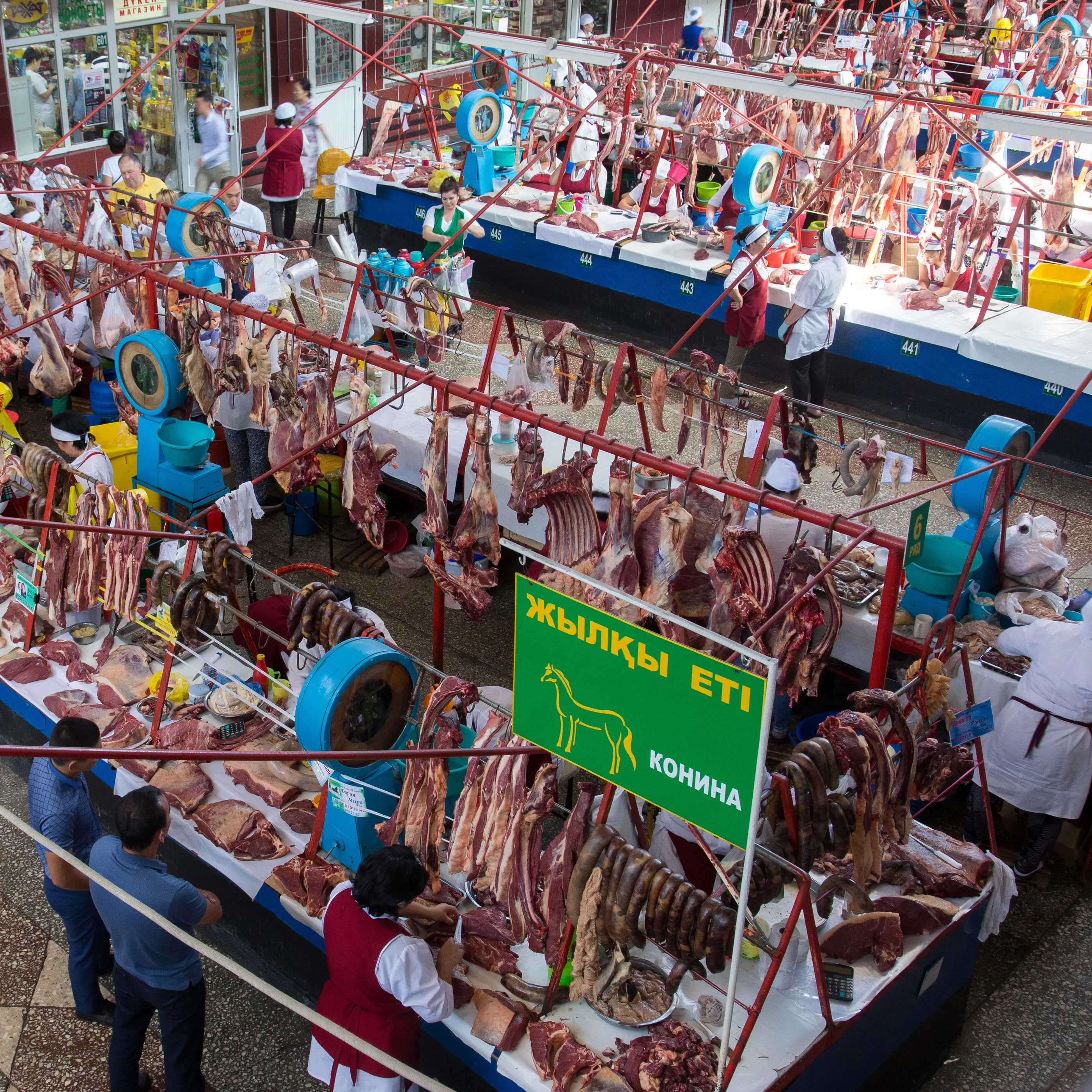
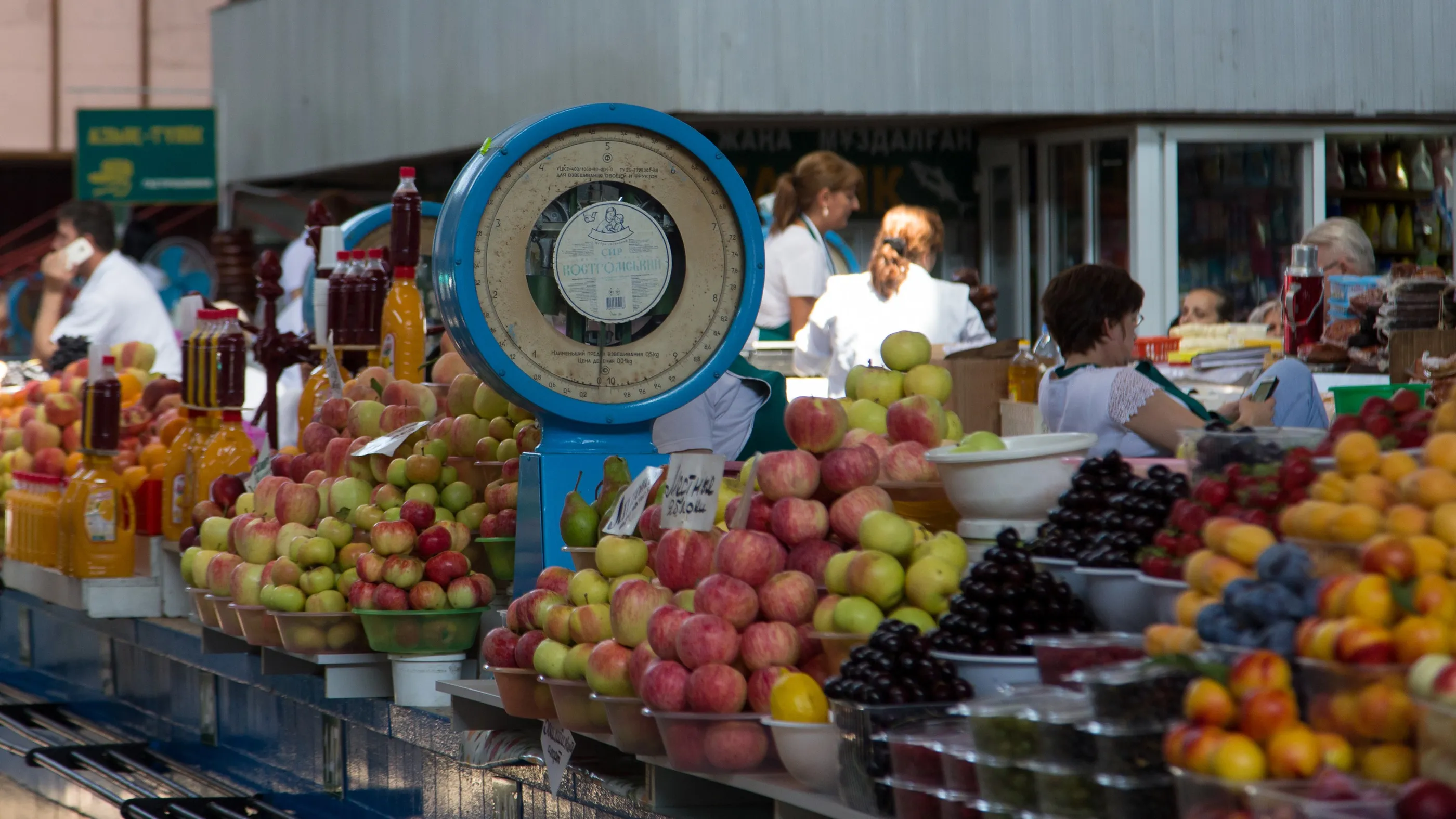
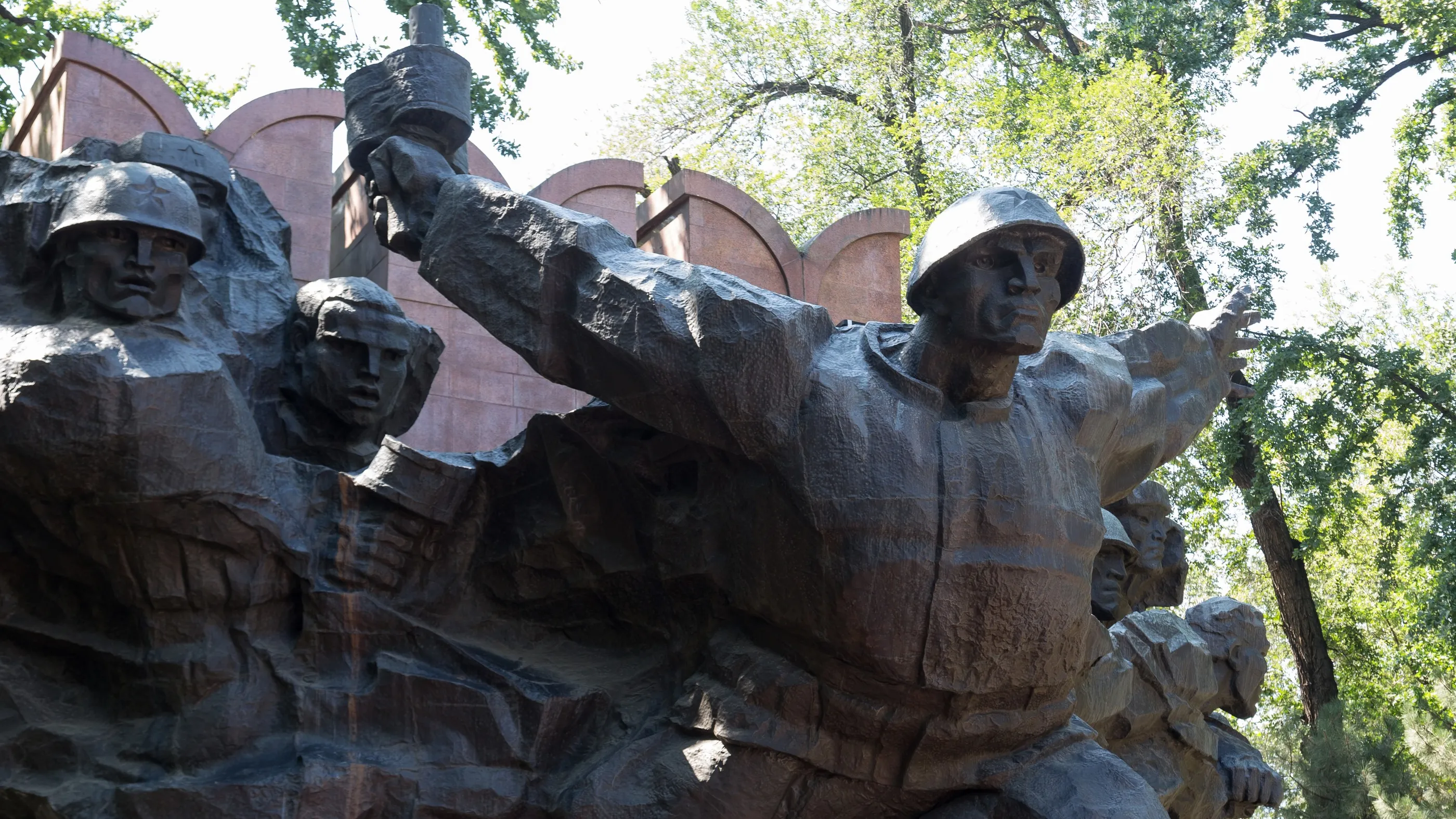
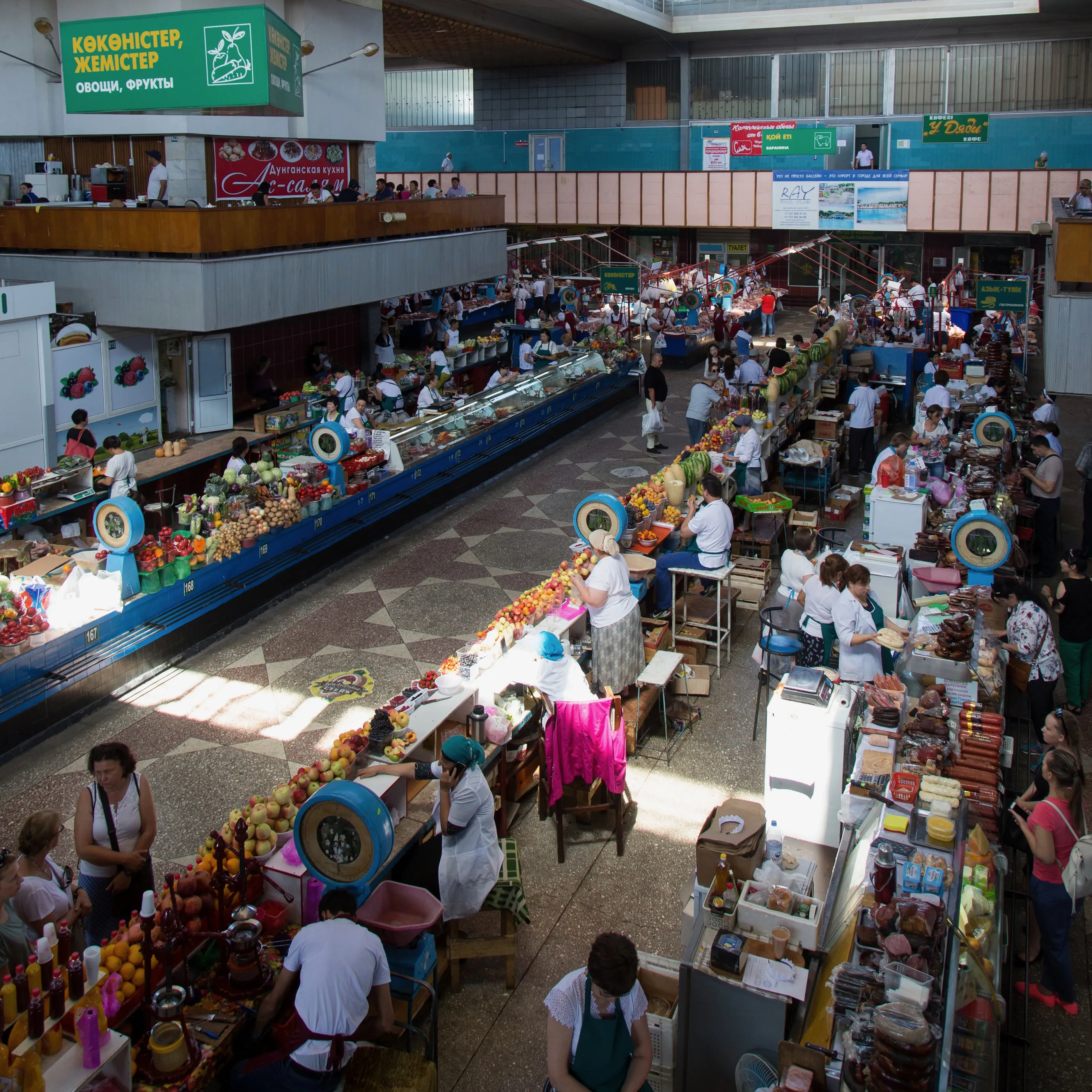
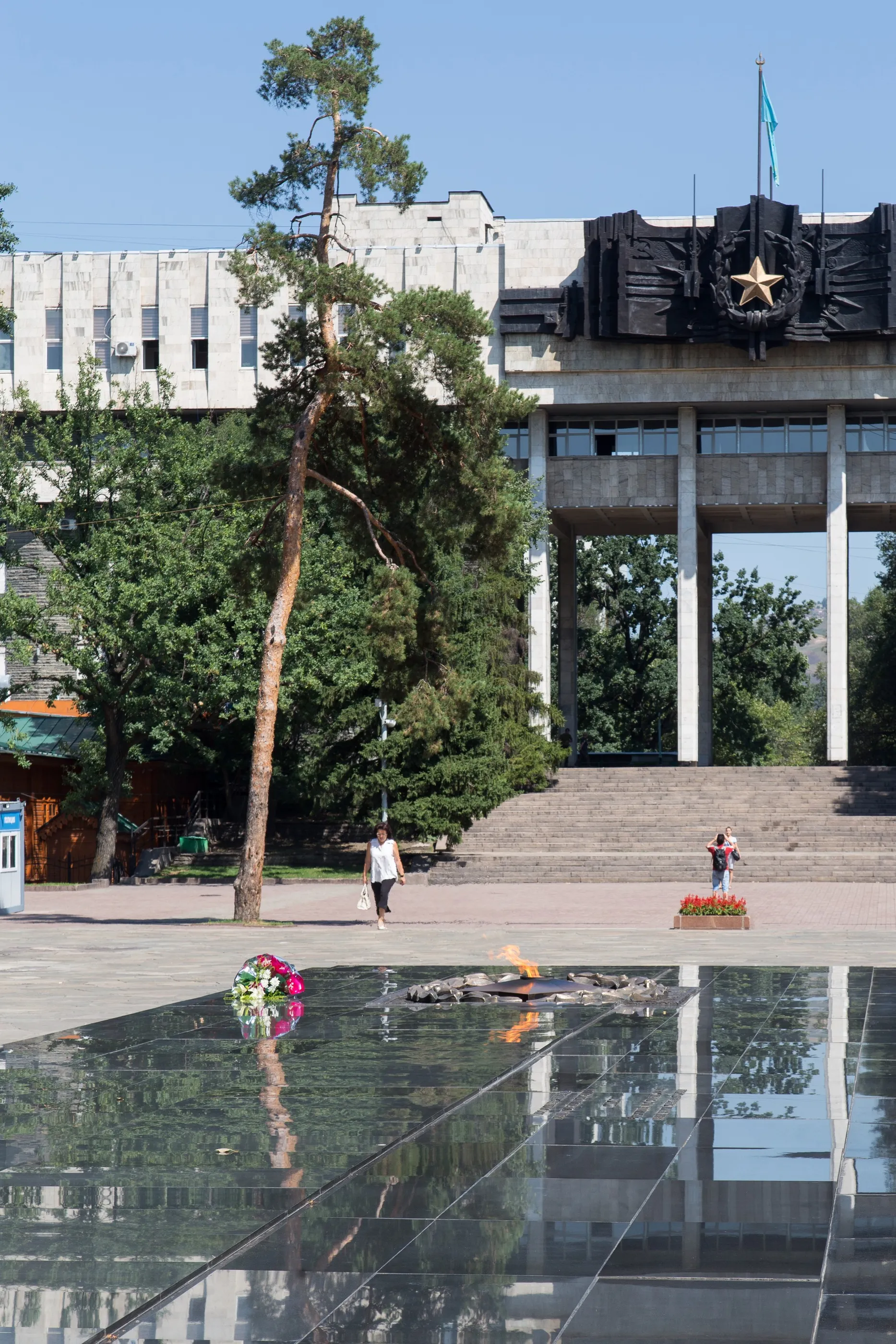
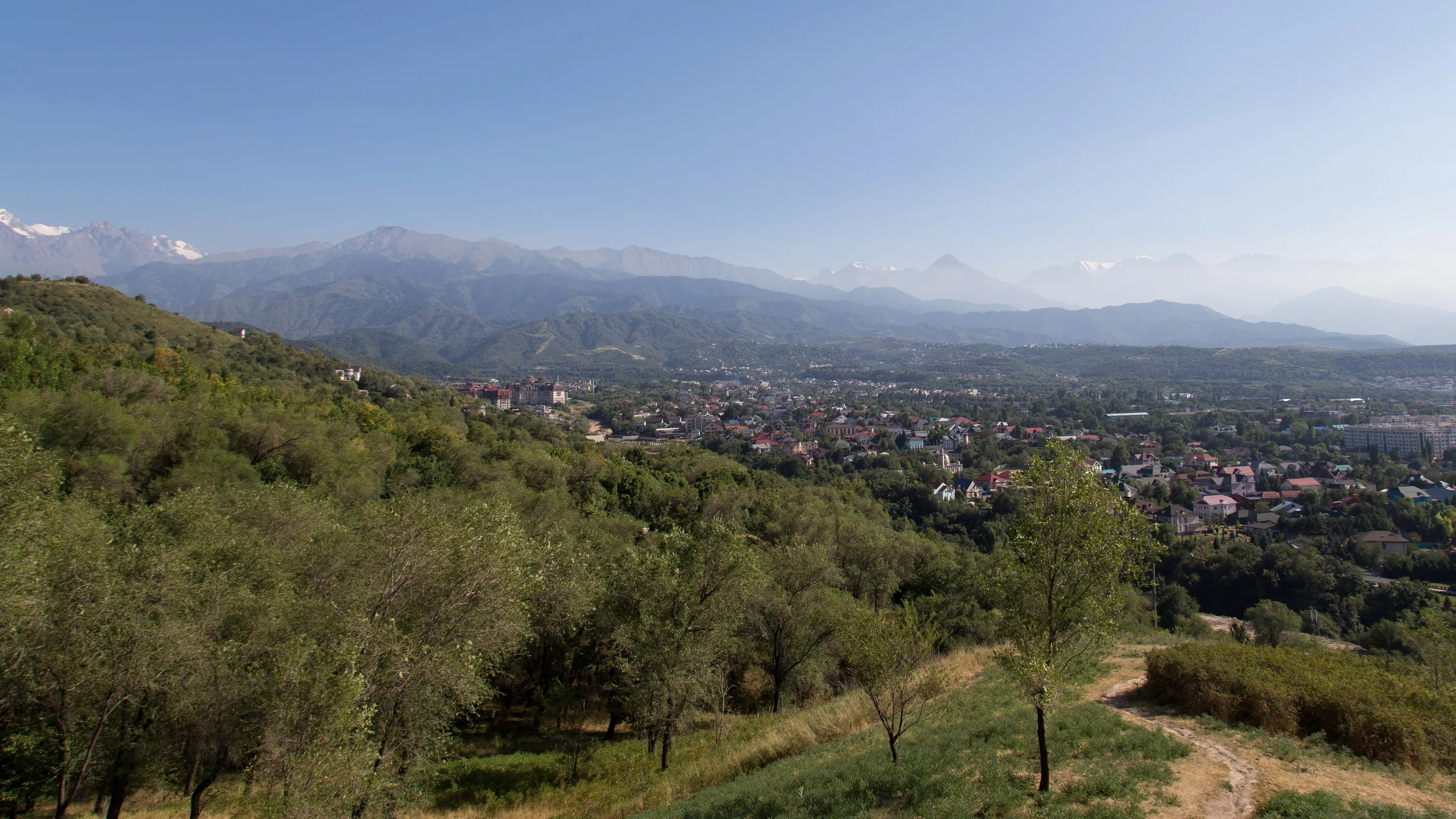
    The road comes back down to the steppe: Almaty spreads out at the foot of the snowy peaks of the Zailiyskiy Alatau. In the Green Bazaar, under the great hall, dried fruit, spices, horse meat and mare’s milk are still sold as in caravan times. In Panfilov Park the eternal flame burns before the 1941 memorial; from the top of Kok-Tobe, the city fades into the haze.
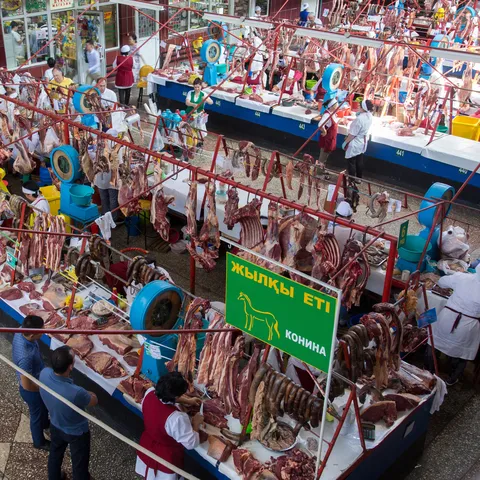
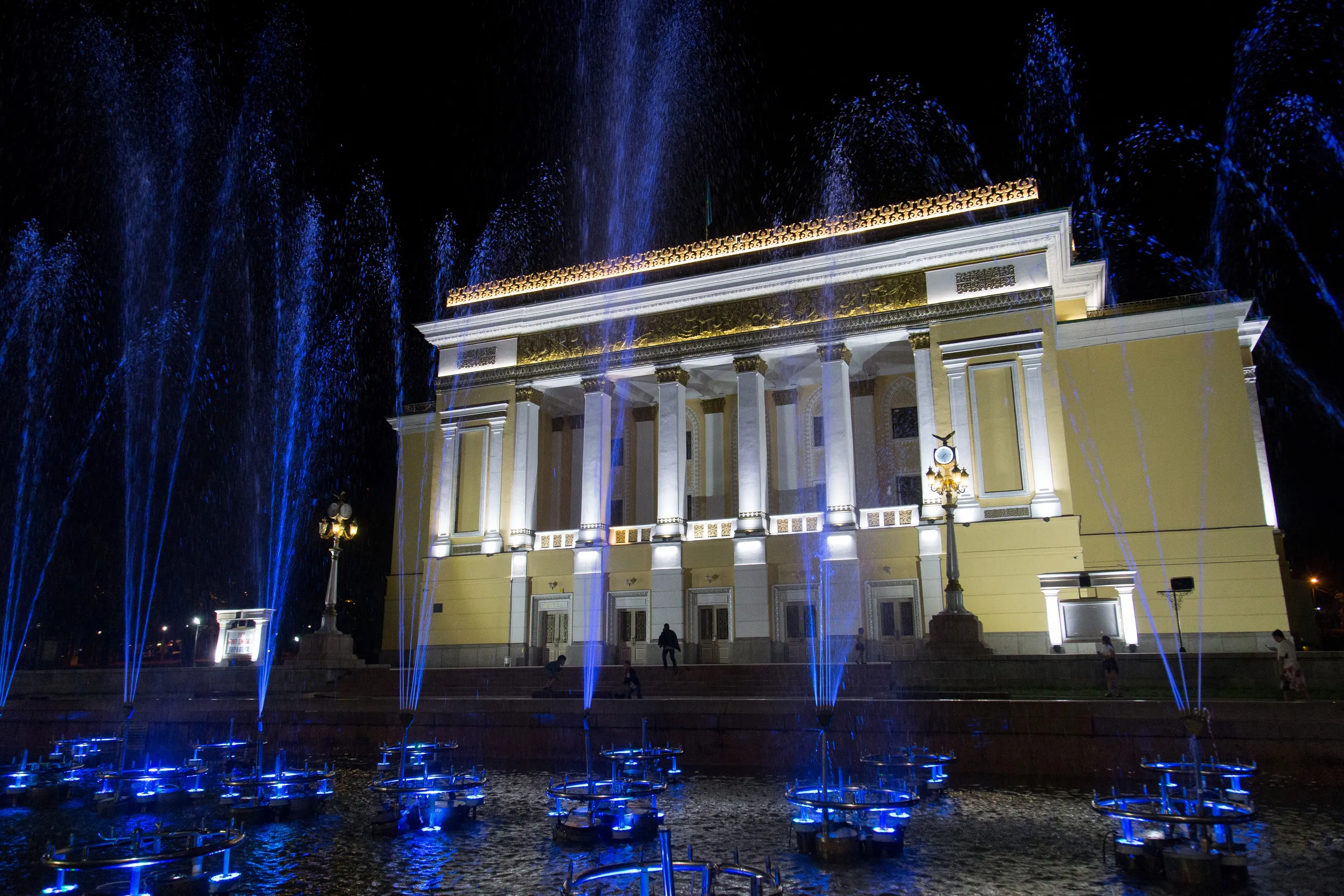
    Horse meat stalls at the bazaar, Kyrgyzstan — Nicolas MarincicFruit stall with a Soviet scale, Green Bazaar, Almaty, Kazakhstan — Nicolas MarincicSecond World War memorial, Panfilov Park, Almaty, Kazakhstan — Nicolas MarincicGreen Bazaar hall from the gallery, Almaty, Kazakhstan — Nicolas MarincicEternal flame and memorial, Panfilov Park, Almaty, Kazakhstan — Nicolas MarincicAlmaty and the mountains from Kok-Tobe hill, Kazakhstan — Nicolas MarincicTheatre facade and illuminated fountains at night, Almaty, Kazakhstan — Nicolas Marincic
  22. On foot↗ 14 km

    Days 33–34

    Kok-Zhailau

    Kazakhstan

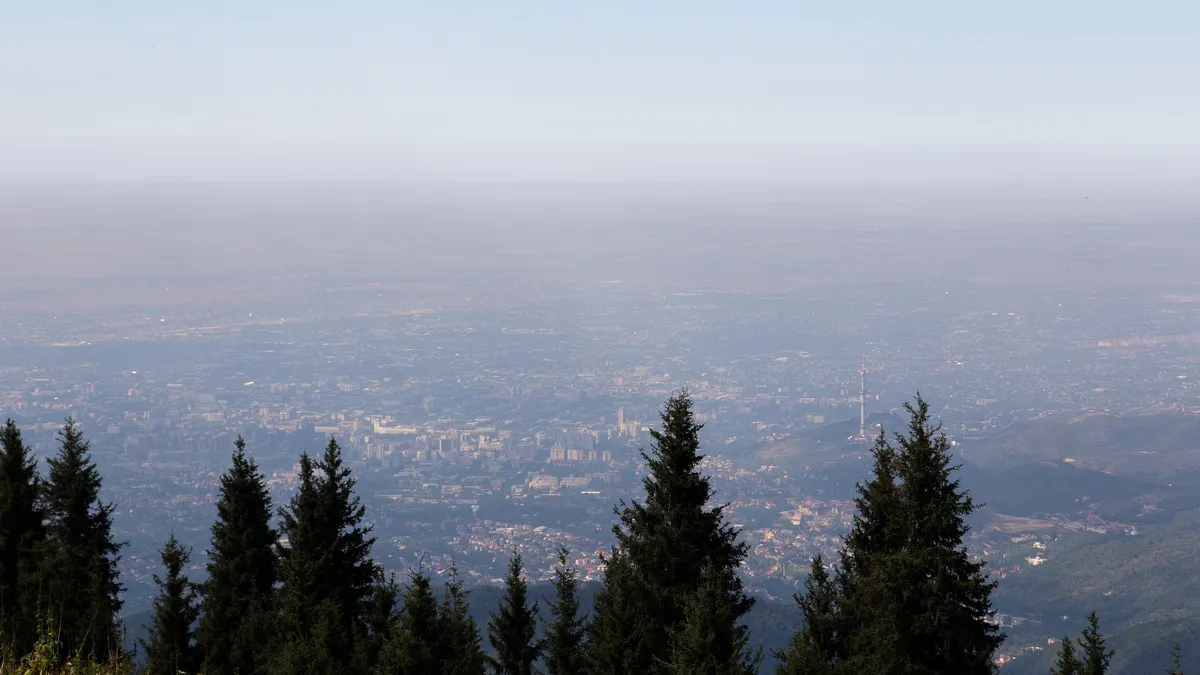
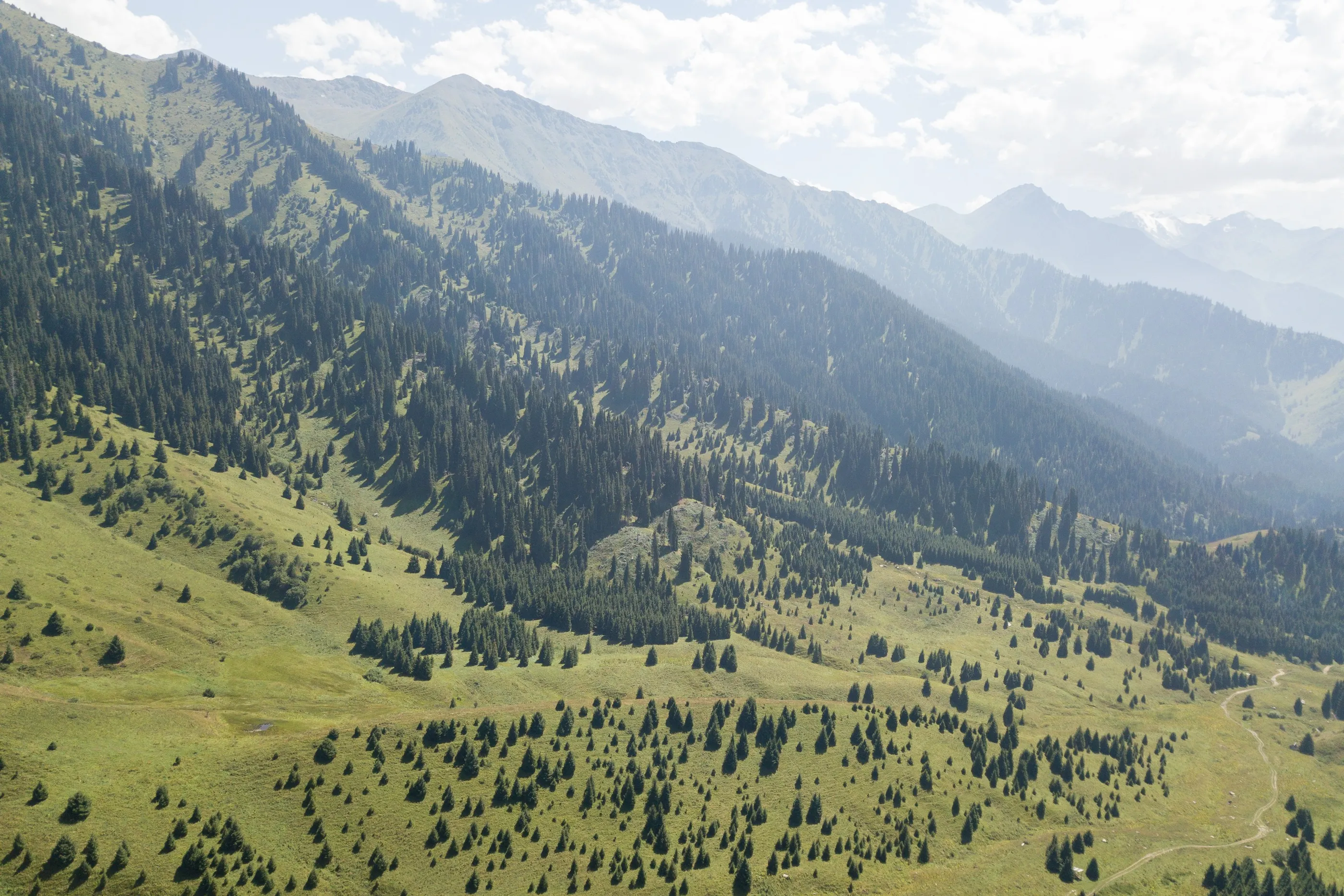
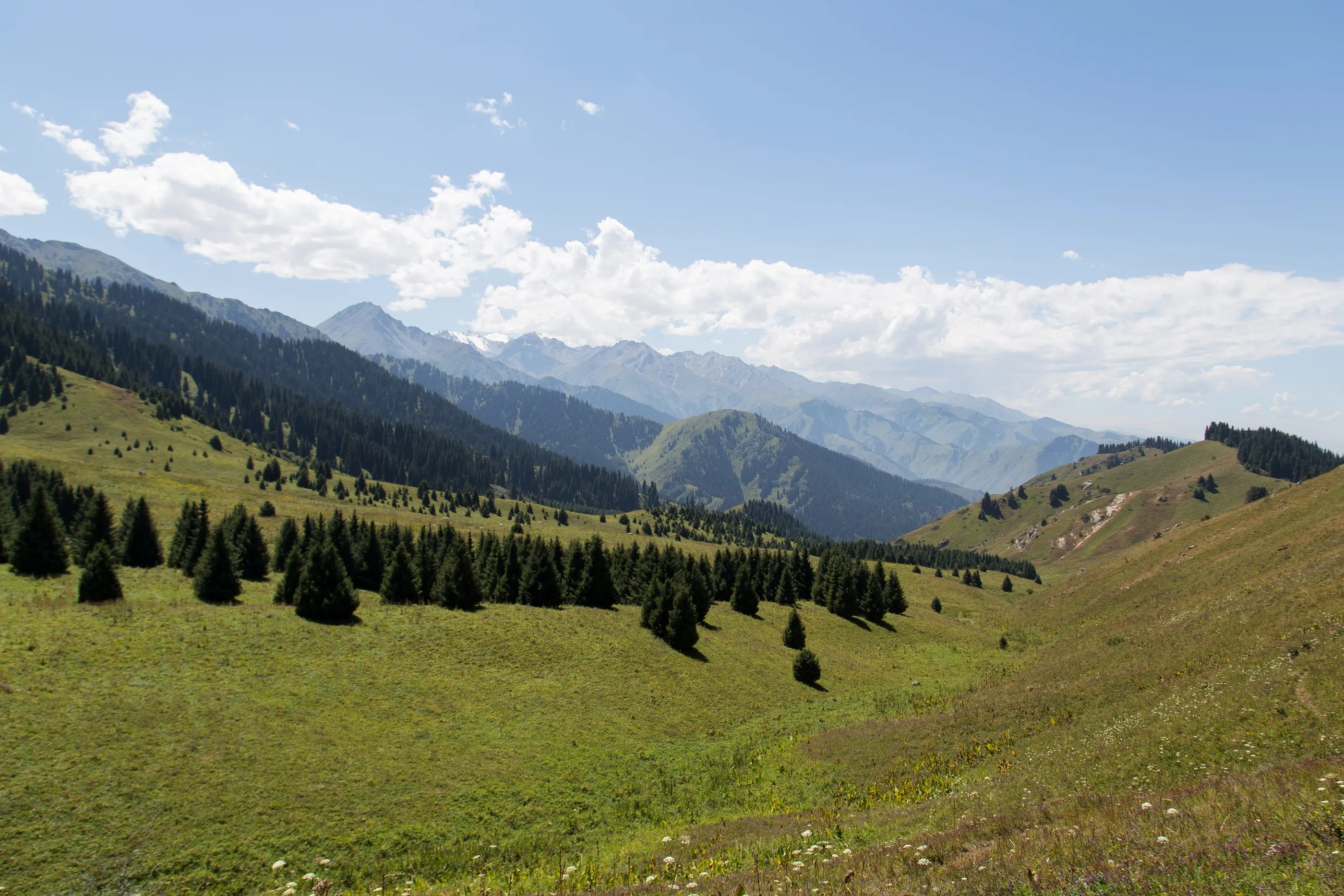
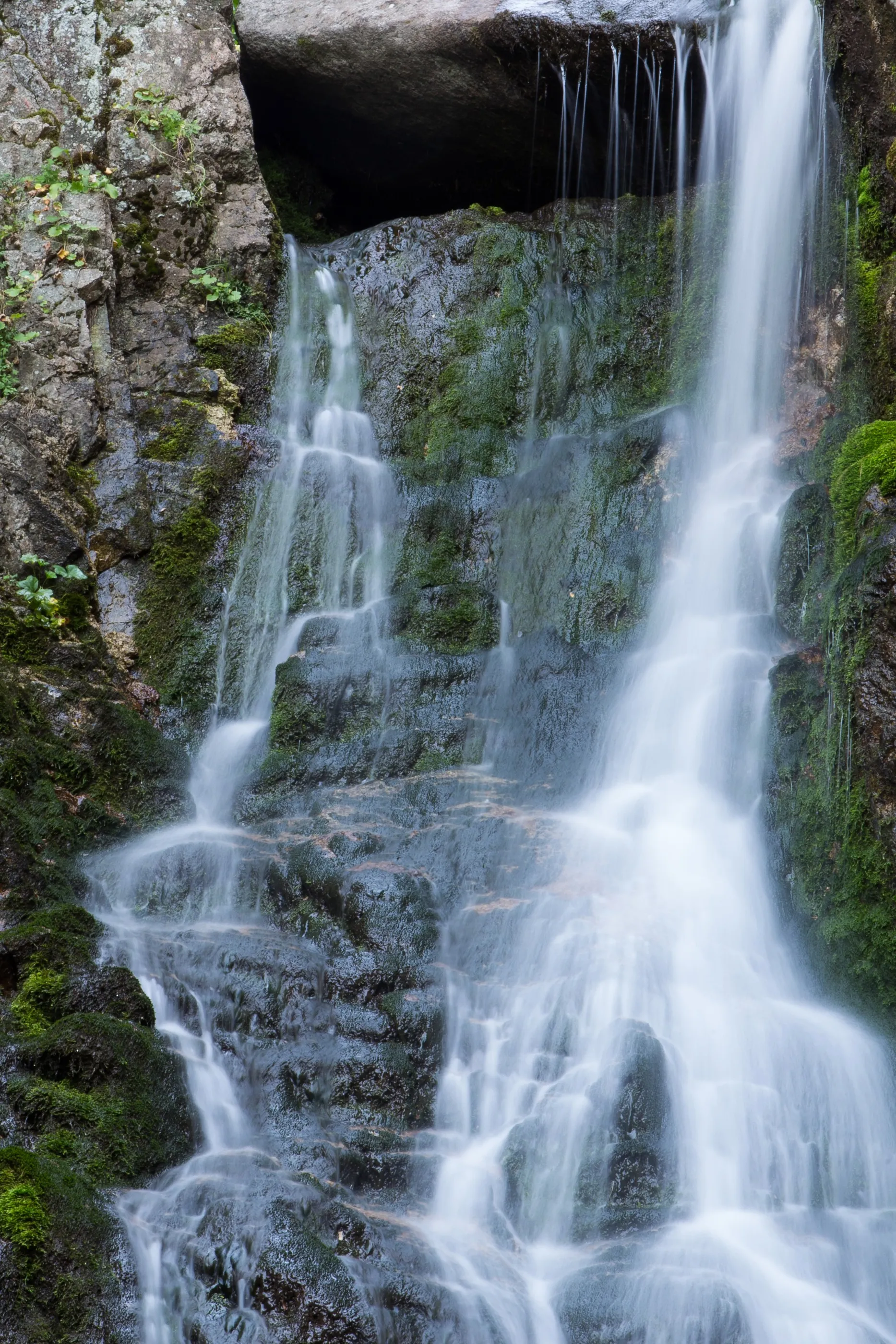
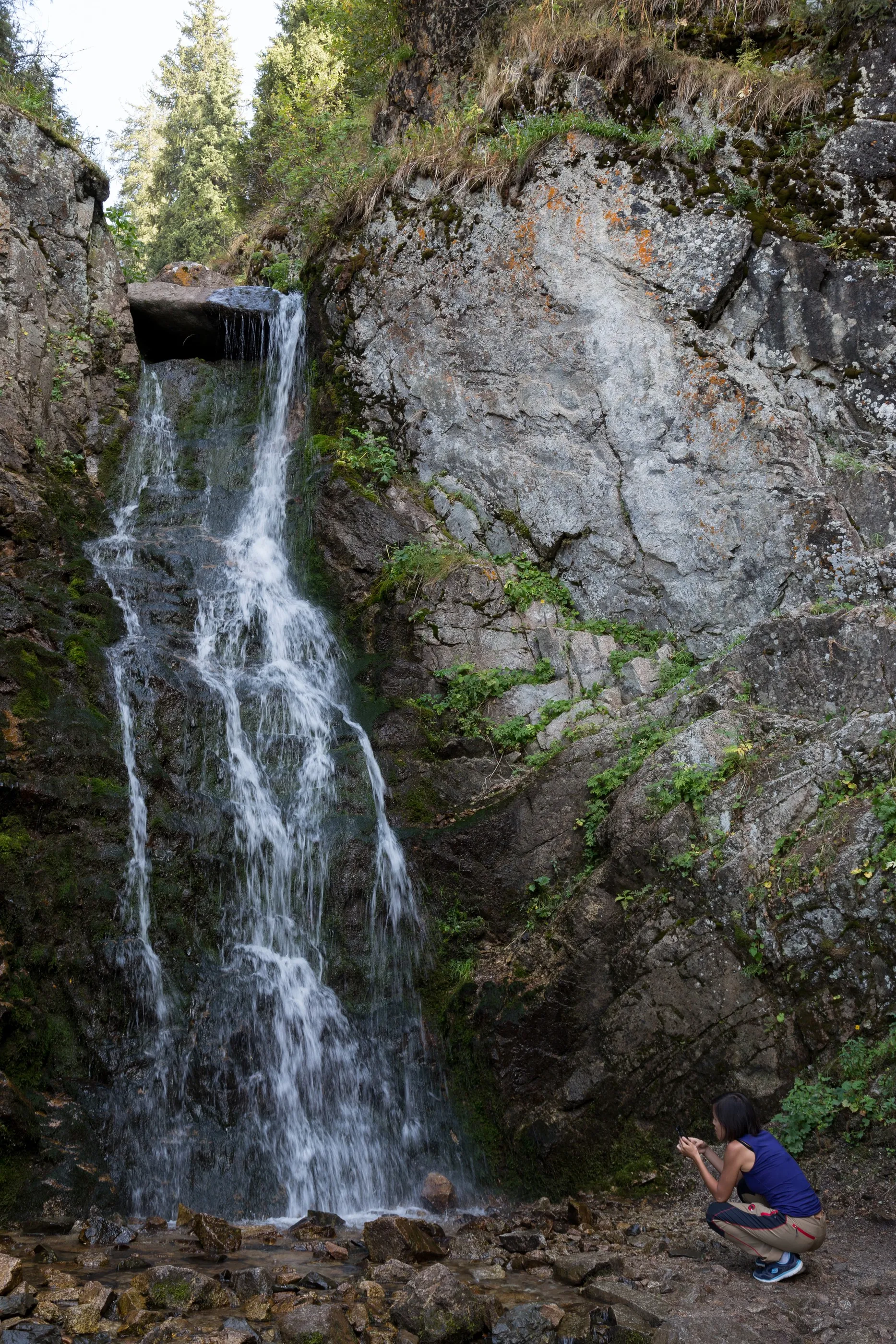
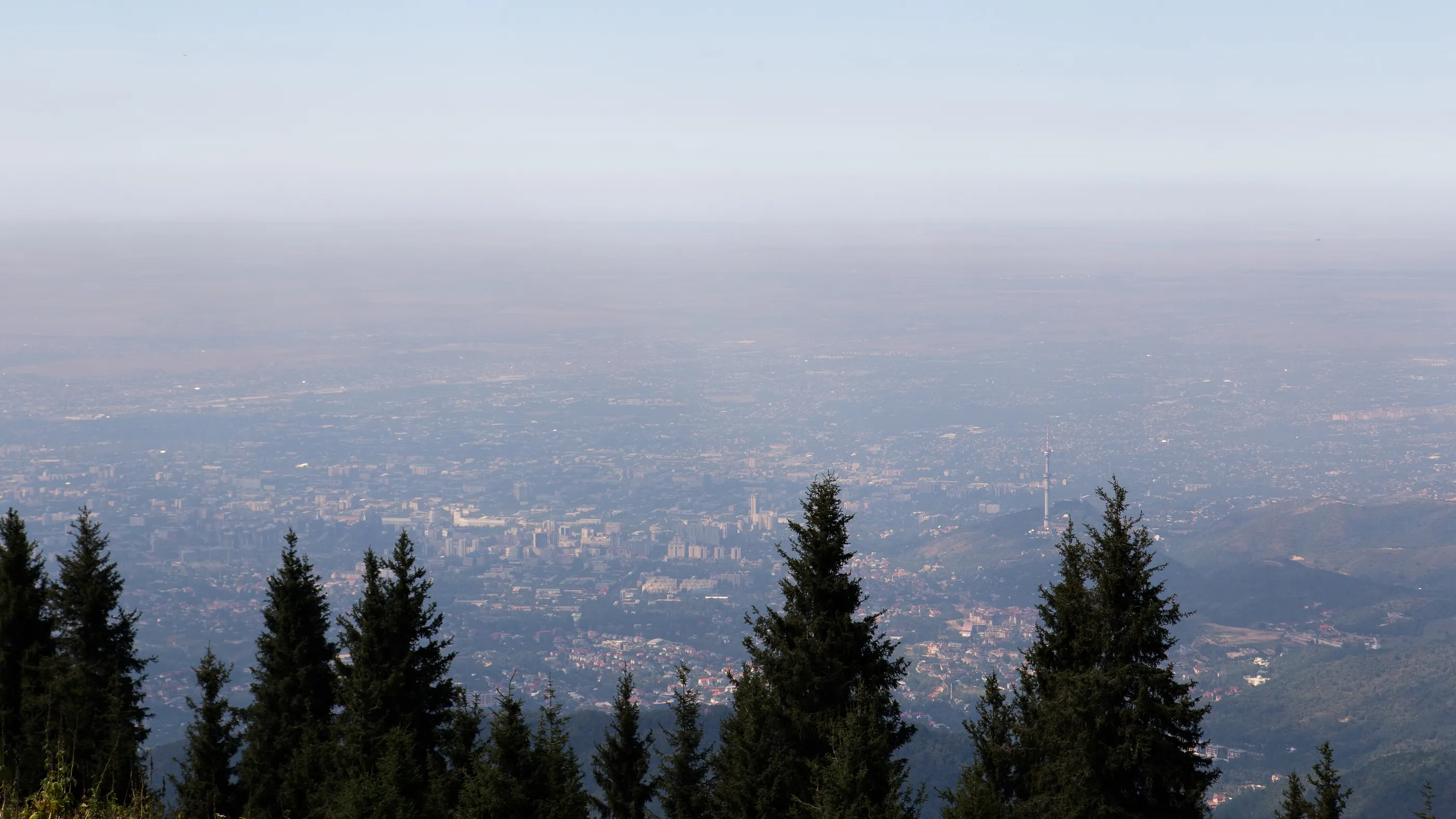
    On the last day we hike above the Medeu valley, up to the meadows of Kok-Zhailau, among the Tian Shan spruces. A waterfall deep in the gorge, the city drowned in haze far below: this is where our journey along the Silk Roads ends, without boarding a single plane.
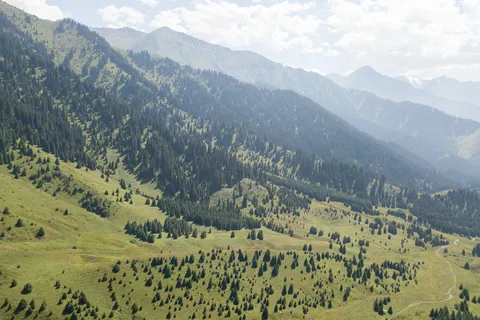
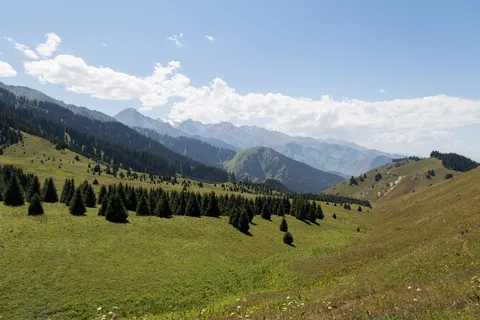
    Valley clad in spruce forest, Kyrgyzstan — Nicolas MarincicKok-Zhailau meadows and spruce forest above Almaty, Kazakhstan — Nicolas MarincicWaterfall in an Ile-Alatau gorge above Almaty, Kazakhstan — Nicolas MarincicWaterfall in a rocky gorge, Kazakhstan — Nicolas MarincicAlmaty in the haze from the mountains, Kazakhstan — Nicolas Marincic
  23. Arrival

    End of the journey

    34 days · 4,005 km · 22 stops

    Galleries of the countries crossed